 Bitaigen Research
 Decentralized Exchanges (DEX) – A Comprehensive Overview
Decentralized exchanges (DEX) provide a channel for buying and selling crypto assets without the involvement of centralized institutions. Users simply connect their wallet to the platform and can execute swaps, provide liquidity, or participate in staking directly on‑chain. The entire process is carried out automatically by smart contracts, and assets remain under the user’s control at all times, greatly enhancing trading autonomy and resistance to censorship.
In this article we systematically outline the core concepts and operating mechanisms of decentralized exchanges, offering a detailed analysis of automated market maker (AMM) liquidity pools, smart‑contract execution, and the on‑chain autonomy and risks of trading. Through structured exposition and real‑world examples, readers will quickly grasp the value and key usage points of DEXs. Subsequent sections will further explore platform features and practical techniques, making this a worthwhile read.
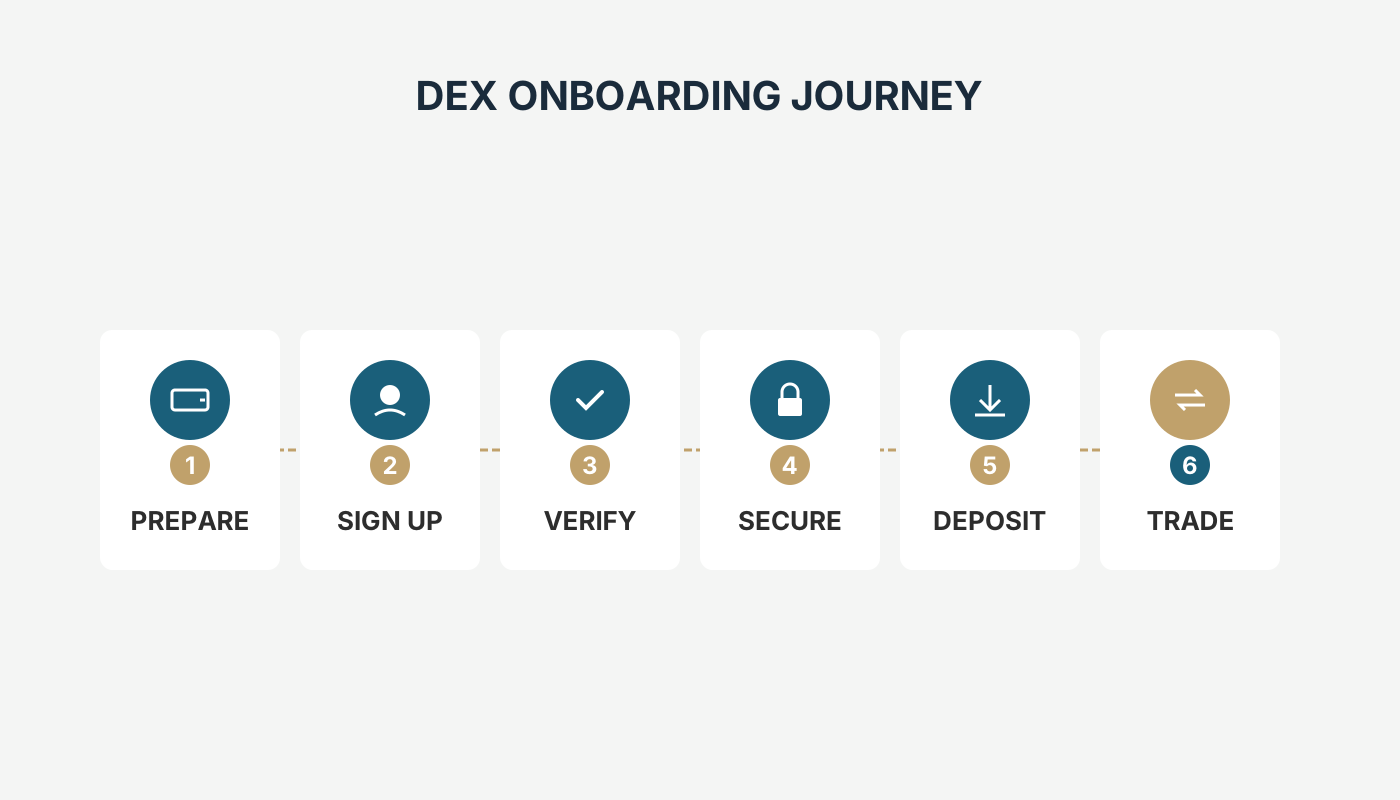
Decentralized Exchanges (DEX): Key Insights
The essence of a DEX lies in peer‑to‑peer asset flow. Unlike traditional centralized exchanges, it does not maintain a central order book; instead, it relies on liquidity pools seeded by community members, typically governed by an automated market maker (AMM) mechanism. When users swap tokens within a pool, a portion of the transaction fee is returned to the liquidity providers, creating a self‑reinforcing ecosystem.
While enjoying the freedom and privacy that decentralization brings, using a DEX can also entail higher gas costs, potential smart‑contract vulnerabilities, and relatively limited fiat on‑ramps.
What Is a Decentralized Exchange (DEX)?
A decentralized exchange is a blockchain‑based marketplace that allows token holders to trade directly on‑chain without depositing assets into the platform or undergoing third‑party verification. Trade execution depends entirely on smart contracts: when the preset conditions are met, the code automatically triggers the transfer of assets, achieving a trust‑less, peer‑to‑peer swap.
Definition and Core Concepts
- Non‑custodial: Users’ private keys stay in their own wallets; the platform only calls the contract when a trade is initiated.
- Transparent and Auditable: Every swap, liquidity addition, or removal is recorded on the blockchain and can be inspected by anyone.
- Censorship‑Resistant: Because there is no centralized control point, transactions are difficult to block or freeze unilaterally.
Types of DEX
- Automated Market Makers (AMM): Provide instant swaps through user‑supplied liquidity pools; notable projects include Uniswap, PancakeSwap, SushiSwap, and others.
- Order‑Book DEX: Retain the traditional matching logic of centralized exchanges, but the matching is performed by smart contracts, resulting in relatively limited liquidity.
- DEX Aggregators: Search across multiple DEXs for the best price, reducing slippage and improving execution efficiency.
Each implementation path has its own advantages, but the shared goal is to let users freely manage their assets in a decentralized environment while accessing sufficient market liquidity.
How Decentralized Exchanges (DEX) Work
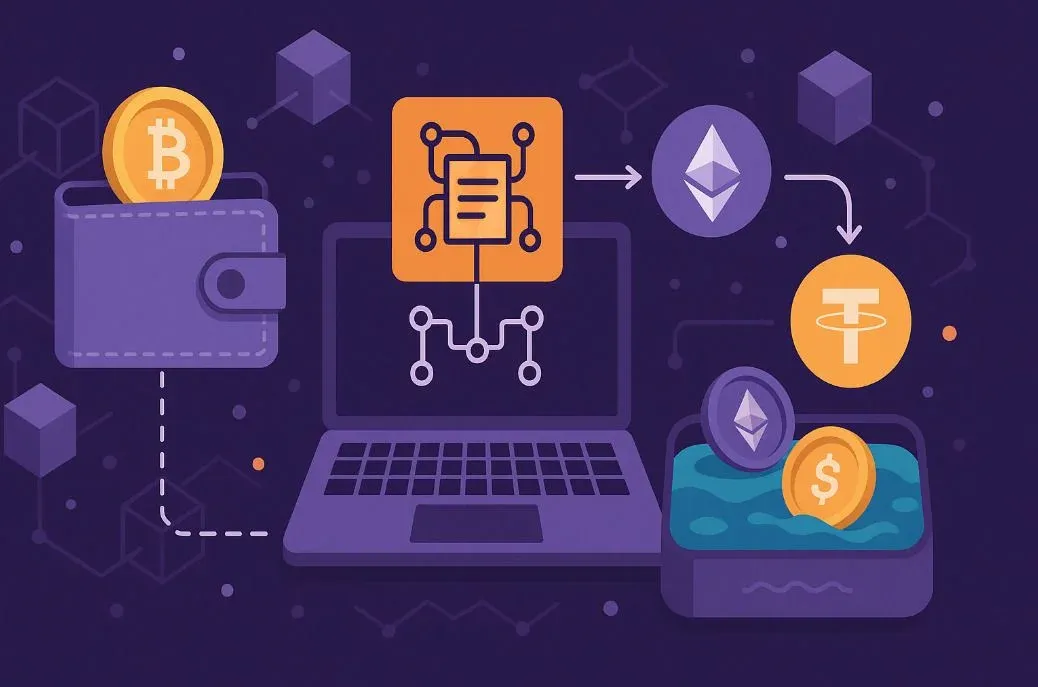
In a DEX, smart contracts replace the centralized matching engine. Users first link their wallet address to the platform via a browser extension or mobile wallet; the assets remain in the personal wallet. After submitting a trade request, the contract directly transfers tokens between the parties on‑chain, with no third‑party custody required.
Most modern DEXs use liquidity pools rather than traditional order books. Liquidity providers deposit equivalent pairs of tokens (e.g., ETH/USDT) into a pool, which then calculates swap prices according to a predefined mathematical formula. Every time a trade is executed, the pool distributes a portion of the fee to the providers, establishing a continuous incentive for capital provision.
All transaction details are permanently recorded on the blockchain, allowing users to query the full history of swaps, liquidity additions, or withdrawals at any time.
Platform Features and User Flow
The design of decentralized exchanges revolves around three principles: autonomy, transparency, and security. In addition to basic token swaps, many DEXs offer diversified services such as liquidity mining, staking rewards, and governance participation. Using a DEX typically requires a basic level of blockchain proficiency to safeguard assets.
Main Platform Functions
- Direct Wallet Connection: Supports popular wallets like MetaMask, Trust Wallet, Coinbase Wallet, etc., without the need for account registration or centralized deposits.
- Automatic Contract Execution: All trades, liquidity operations, and staking actions are performed by on‑chain code, eliminating manual approvals.
- Liquidity Pools & Rewards: Contributing assets earns a share of transaction fees or platform‑issued incentive tokens.
- Open Token Listing: Any token that complies with the contract standards can be traded on a DEX, greatly enhancing exposure for new projects.
- Full‑Chain Transparency: Every operation can be inspected on a block explorer; price, volume, and fund flows are fully traceable.
User Flow: From Connection to Swap
- Connect Wallet – Open the DEX website or app and authorize access via a browser extension or mobile wallet.
- Select Trading Pair – Choose the two assets you wish to exchange, for example swapping ETH for USDC.
- Confirm and Execute – Review the contract call permissions and quoted rate, then click confirm; the system creates a transaction and submits it to the blockchain.
- On‑Chain Confirmation – After the network reaches consensus, the transaction status updates and the wallet balance changes, usually within a few seconds.
Throughout this process, the user’s assets stay in their own wallet and only move on‑chain after confirmation, which is the fundamental distinction between DEXs and centralized custodial platforms.
Why Decentralized Exchanges (DEX) Matter
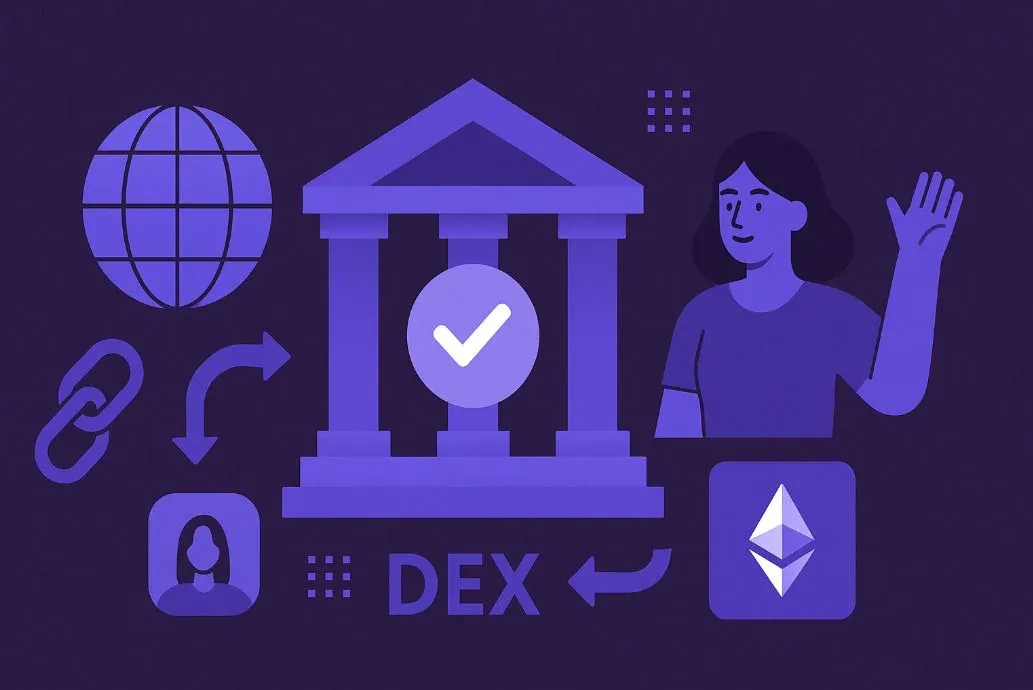
DEXs embody the core principle of blockchain’s disintermediation: value can be transferred without trusting a third party. All trades, liquidity provision, and fee distribution can be publicly verified on‑chain, removing the need to rely on the credit or operational security of a centralized entity.
This model breaks down geographic and regulatory barriers that constrain traditional finance, enabling anyone with a crypto wallet—anywhere in the world—to trade at any time without fear of account freezes or censorship. Simultaneously, DEXs serve as the backbone of the DeFi ecosystem, supplying the liquidity required for lending, yield farming, derivatives, and other innovative protocols.
The Role of Decentralized Exchanges (DEX) in the Crypto Ecosystem
Decentralized exchanges act as the crucial bridge linking digital assets, DeFi protocols, and emerging blockchain projects. By removing a centralized gatekeeper, any wallet holder can trade directly without involving banks or intermediaries.
Beyond basic swapping, DEXs provide liquidity sources for lending platforms, yield farms, synthetic asset markets, and more, accelerating the overall ecosystem’s iteration speed. Their open‑listing mechanism allows new projects to launch instantly without approval, dramatically shortening the innovation cycle.
Although early DEXs struggled with low trading volume, the gradual entry of institutional participants and the emergence of hybrid models—combining the efficiency of centralized matching with the transparency of decentralization—have driven steady growth in usage. Looking ahead, as regulatory frameworks mature and underlying infrastructure improves, DEXs are poised to become the primary conduit between traditional finance and blockchain networks.
Professional Tip: Before using any DEX, always verify the contract address and official website URL to avoid counterfeit platforms that could lead to asset loss.
Conclusion
Decentralized exchanges represent the purest form of crypto‑asset trading: open, borderless, and fully under user control. By substituting smart contracts for intermediaries, they minimize the risks of custodial theft and data leakage, standing as both a cornerstone of the DeFi ecosystem and a symbol of financial freedom for users.
As blockchain technology continues to evolve, DEXs are constantly refining their transparency, security, and user experience, enabling token holders to manage their digital wealth in ever‑safer and more autonomous environments.
Frequently Asked Questions
How do Decentralized Exchanges (DEX) differ from Centralized Exchanges (CEX)?
DEXs execute trades directly between users’ wallets via smart contracts, whereas CEXs hold user funds and match orders within an internal system.
Do I need to register or undergo identity verification to use a DEX?
No. Most DEXs only require you to connect a crypto wallet; there is no KYC or account registration.
Are DEXs safe to use?
Compared with custodial platforms, DEXs reduce the risk of hacks that steal stored funds. However, smart contracts can contain code vulnerabilities, so users should still conduct due diligence.
Can I use fiat currency directly on a DEX?
Generally, no. DEXs primarily facilitate crypto‑to‑crypto swaps. Acquiring fiat‑denominated assets usually requires a centralized gateway or fiat‑on‑ramp service (e.g., via SEPA/SWIFT transfers or USD‑based payment processors).
Tax considerations
Crypto gains may be taxable in your jurisdiction. Users should consult local tax regulations and consider reporting requirements, especially when converting between fiat (USD, EUR via SEPA/SWIFT) and crypto assets.
---
*Note for U.S. readers*: When accessing services that involve fiat on‑ramps or withdrawals, be aware that Binance.US is the regulated platform for U.S. customers, while the global Binance site is not available to U.S. residents. Always ensure compliance with local laws and platform terms.
Related Reading
- Hyperliquid DEX Review: HYPE Token, Tech Edge & Risks
- Hyperliquid DEX: Architecture, Trading Benefits & HYPE Token
- HyperLiquid DEX Review: Fast Perpetuals on Layer‑1
💡 Register on Binance with referral code B2345 for the maximum trading fee discount. See Binance complete guide.



