
 Bitaigen Research
 Recent Hong Kong Legislative Council Passes a Stablecoin Regulation Draft, Sparking Interest in the Supposed Stablecoin Issuers
On the OKX exchange, you can use C2C or Instant‑Trade functions to pay with Chinese yuan and select USDT or USDC, completing a deposit purchase. After the platform confirms the payment, the system automatically releases the tokens to your account.
In this article we walk beginners through the full process on OKX, from fiat deposit to acquiring USDT and USDC. We also dive deep into the nature of the two major stablecoins, their regulatory differences, and typical use‑cases. Mastering the key operational steps will help you get started quickly and trade with confidence. The subsequent sections contain valuable insights worth a careful read.
What Is a Stablecoin?
A stablecoin is a class of digital tokens that are pegged to the value of a fiat currency, most commonly the U.S. dollar. The mainstream dollar‑pegged stablecoins on the market are USDT and USDC.
- USDT – Each token is roughly equivalent to 1 USD, with minimal price fluctuation.
- USDC – Also pegged 1:1 to the USD, and its liquidity is comparable to USDT.
Unlike highly volatile crypto assets such as Bitcoin, stablecoins maintain a relatively steady value and are frequently used as trading pairs or stores of value.
Why Do We Need Stablecoins?
In the blockchain ecosystem, fiat money cannot be transferred directly. Traditional banking systems rely on SWIFT for cross‑border settlements, which is slow and costly. Stablecoins can complete global transfers within seconds, with comparatively low fees, dramatically improving the efficiency of blockchain‑based transactions.
Core Differences Between USDT and USDC
| Item | **USDT** | **USDC** |
|---|---|---|
| Issuing Company | **Tether** (British Virgin Islands) | **Circle** (Boston, USA) |
| Regulatory Standing | Asset transparency has been questioned; has been singled out by U.S. regulators | Recognised within the U.S. Treasury and financial‑regulatory frameworks |
| Primary Investors | Mainly crypto exchanges; user base concentrated in Asia and the Middle East | Wall Street institutions such as Goldman Sachs, BlackRock, Blackstone, etc. |
| Asset Composition | Includes USD cash, U.S. Treasury bonds, gold, and Bitcoin | Holds only USD cash and short‑term U.S. Treasury securities |
| Audit Disclosure | Few publicly released audit reports | Submits monthly audit reports to the U.S. Securities and Exchange Commission (SEC) |
| Regulatory Risk | May be forced out of the U.S. market if new rules are not met | Viewed as a “Wall Street good kid,” with a relatively favourable regulatory outlook |
Note: Although both aim for a 1:1 USD peg, slight deviations can occur during extreme market stress or regulatory storms. For example, during the 2022 Terra collapse USDT briefly fell to 0.95 USD; during the 2023 Silicon Valley Bank crisis USDC dipped below 0.99 USD.
Are Stablecoin Reserve Assets Compliant?
- USDT reserves contain USD cash, U.S. Treasury bonds, gold, and Bitcoin. The latest U.S. regulations require that the underlying assets of a stablecoin be limited to USD cash or U.S. Treasury securities; gold and crypto assets are not considered compliant, posing a potential risk for Tether.
- USDC keeps all reserves in U.S. banks, consisting solely of USD cash and short‑term Treasury securities, and publishes monthly audit reports, giving it a stronger compliance profile.
What Other Stablecoins Exist on the Market?
Beyond USDT and USDC, other notable stablecoins include Dai, Binance’s BUSD, and the now‑defunct Terra series. U.S. regulatory pressure has caused the market share of these alternatives to shrink dramatically. Currently, the first two dominate more than 90 % of the global stablecoin market.
Could a Stablecoin Issuer Run Away With Funds?
If the underlying assets are non‑compliant, a massive redemption wave occurs, or funds are misappropriated, the issuing entity indeed faces a “blow‑up” risk. The collapse of FTX serves as a cautionary example.
Why Doesn’t the United States Issue a Digital Dollar Directly?
Launching a digital dollar involves balancing the interests of entrenched stakeholders, potentially undermining traditional banks’ deposit bases and raising regulatory and privacy challenges. Consequently, the U.S. prefers to let compliant private firms (e.g., Circle) pilot the concept first, while it refines the regulatory framework.
Similarities Between Stablecoins and Alipay’s Yu’e Bao
Alipay’s Yu’e Bao is essentially a digitised version of the Chinese yuan, operating within a closed financial system that is settled centrally by Ant Group. Stablecoins, by contrast, circulate on open blockchain networks where anyone can hold and transfer them. The underlying logic is similar, yet transparency, regulatory treatment, and risk characteristics differ markedly.
---
OKX (OKX) Beginner Guide: Full Process for Purchasing USDT and USDC
- Create an OKX Account
- Official registration link: <https://www.bitaigen.com/binance>
- APP download link: <https://www.bitaigen.com/binance/download>
- Using the invitation code `B2345` yields up to 50 USDT as a sign‑up bonus (the code must be entered).
- For users in the United States: please use Binance.US or another U.S.-compliant platform; the global Binance link above is not available in the U.S.
- Navigate to the C2C Buying Page
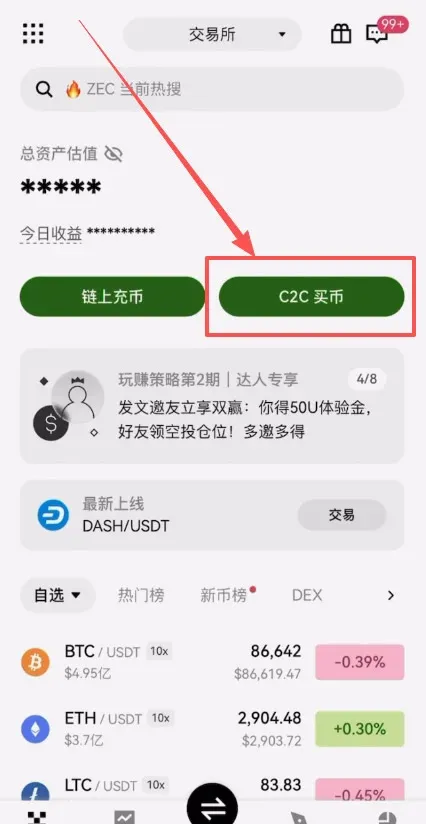
Open the OKX app and tap C2C Buy.
- Select a Trading Mode
- Instant Trade: Ideal for fast deposits; enter the purchase amount (e.g., 1000 CNY or the equivalent in USD via SEPA/SWIFT) and the system instantly shows the amount of USDT/USDC you will receive.
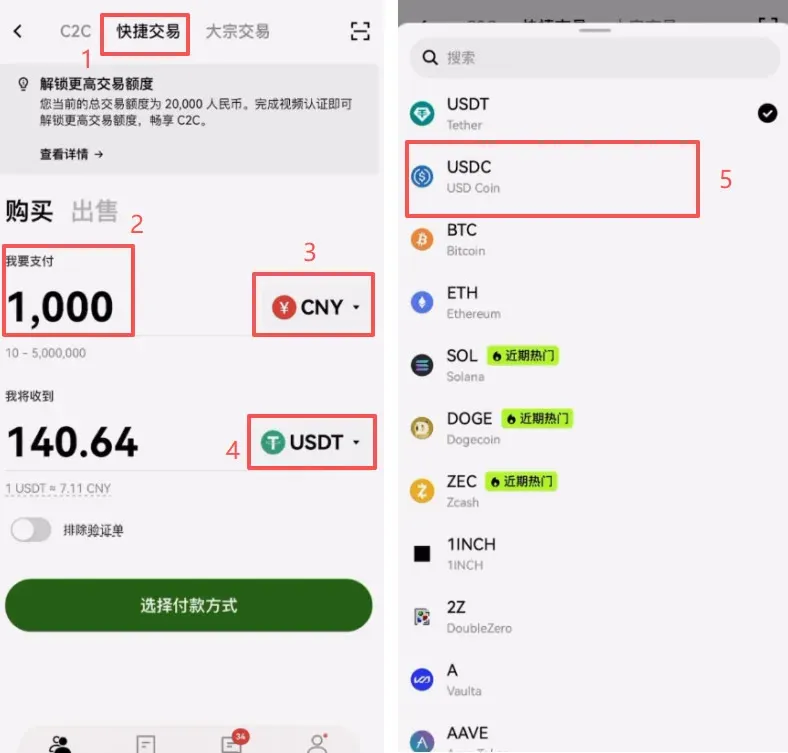
- C2C Trade: Allows you to manually select a counter‑party, suitable for users who have stricter requirements on the seller.
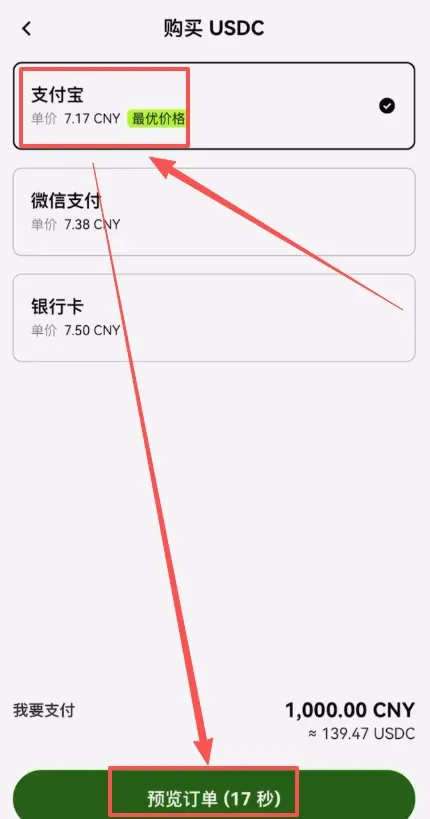
- Choose a Payment Method
- Options include Alipay, WeChat Pay, and bank card transfers. Using Alipay as an example, tap Preview Order, then confirm slippage tolerance and any price‑adjustment details.
- Place the Order and Communicate with the Seller
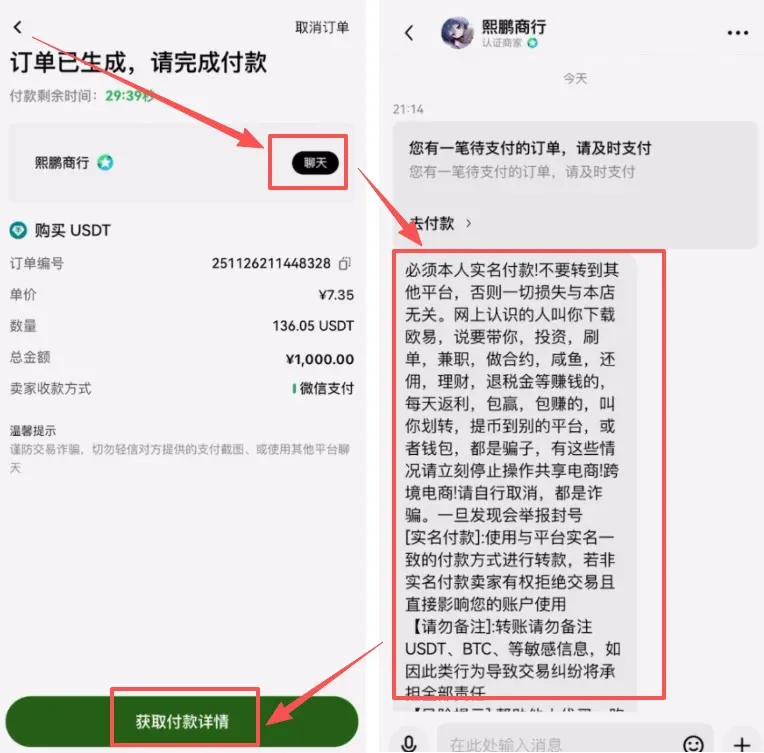
- After tapping Place Order, an order is generated. You can then use the built‑in Chat function to view the seller’s requirements (e.g., real‑name transfer, no remarks, instant receipt, etc.).
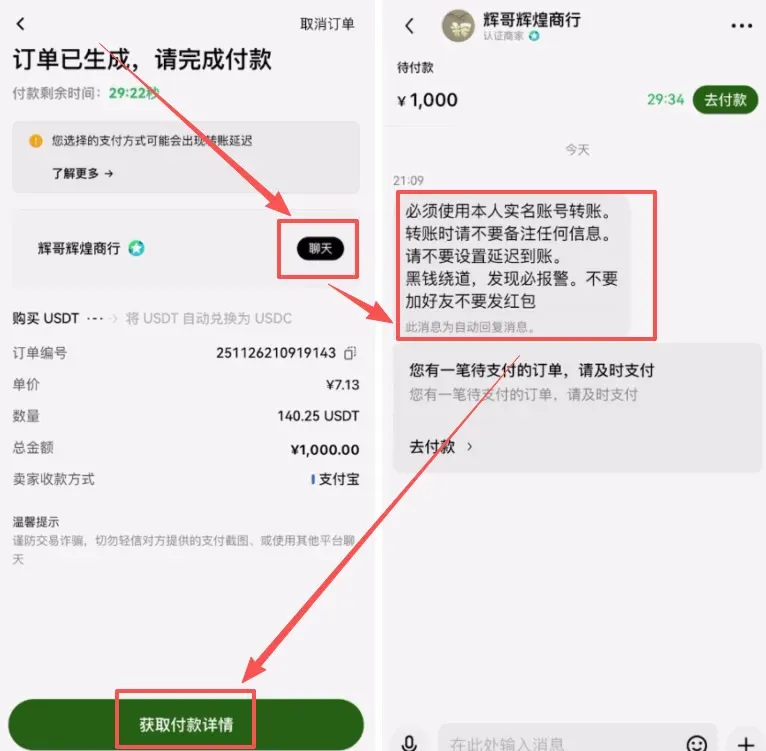
- Complete the Payment
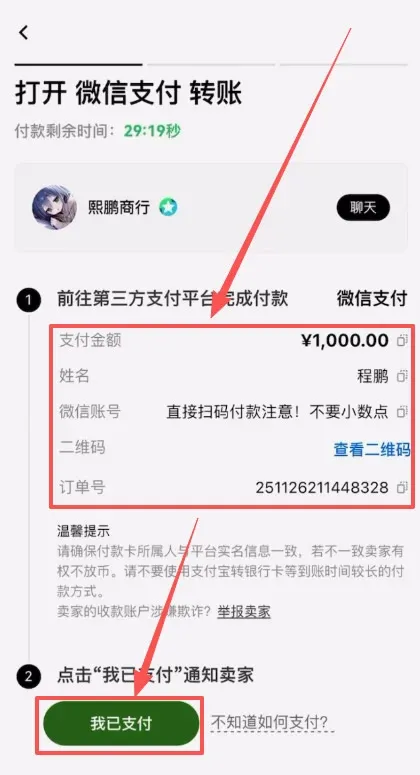
- Transfer the funds in Alipay, WeChat, or via your bank (SEPA/SWIFT) according to the seller’s provided payment details. Once the transfer is finished, return to OKX and click I Have Paid. The platform will verify receipt and release the tokens.
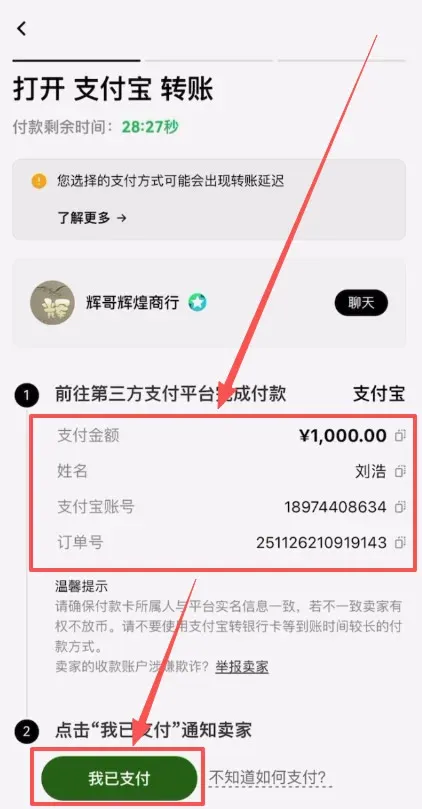
- Protection Measures
- All listed sellers must post a security deposit with the platform. If fraudulent activity occurs, the deposit is used to compensate the affected user, and the seller’s account is permanently banned, reducing risk.
Example: Buying USDT via C2C
- Switch the currency on the C2C page to USDT and input 1000 CNY (or the USD equivalent via SEPA/SWIFT).
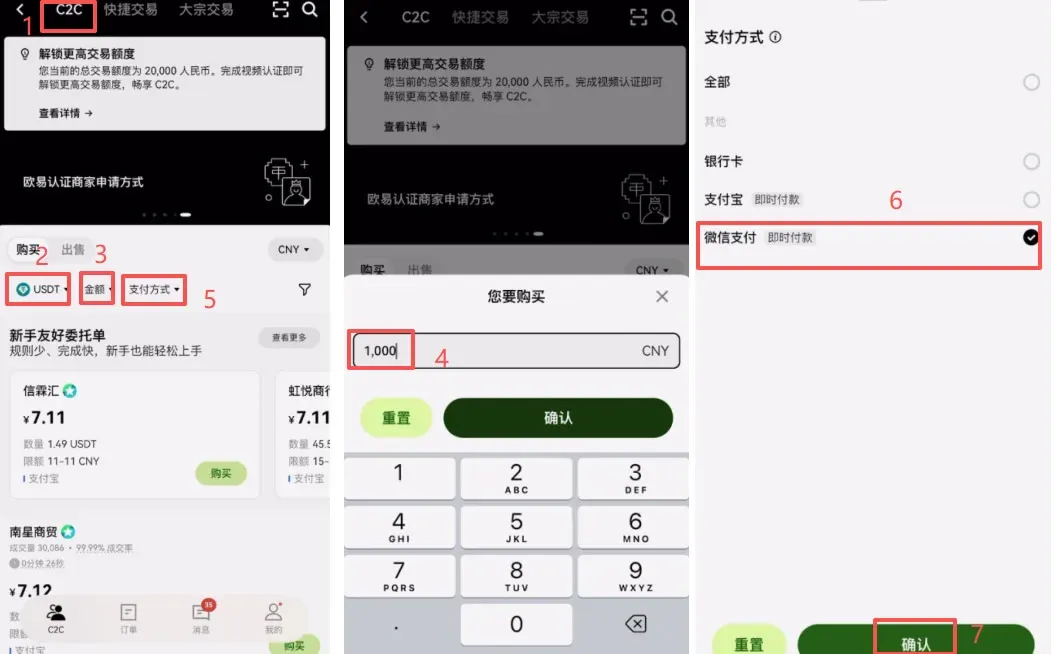
- Open the left‑hand filter panel, tick Show only non‑verified orders and Beginner‑friendly listings to simplify the verification process.
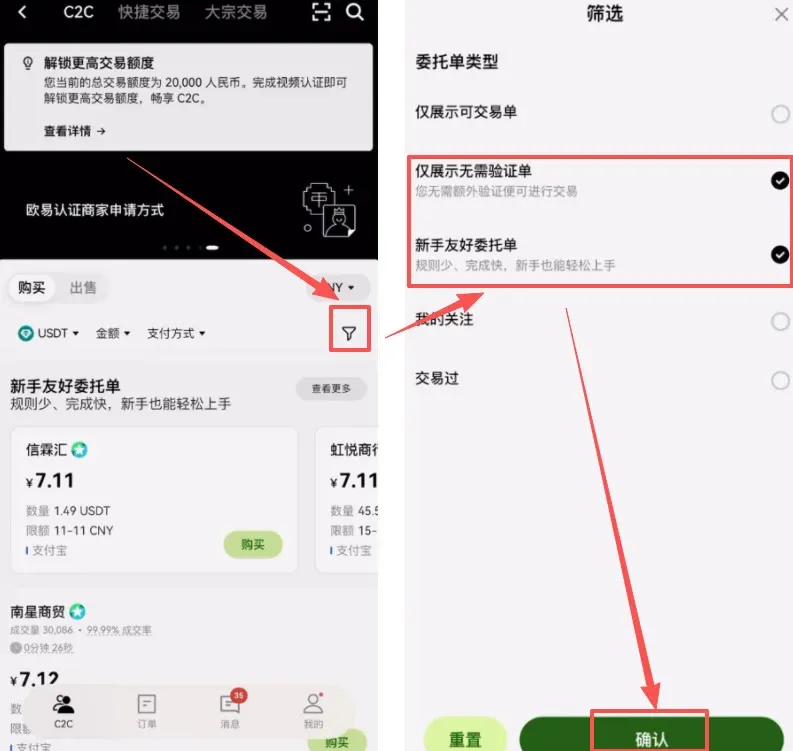
- Choose a seller with high trade volume, a high completion rate, and at least one year of operating history; then review the seller’s reputation on their profile page.
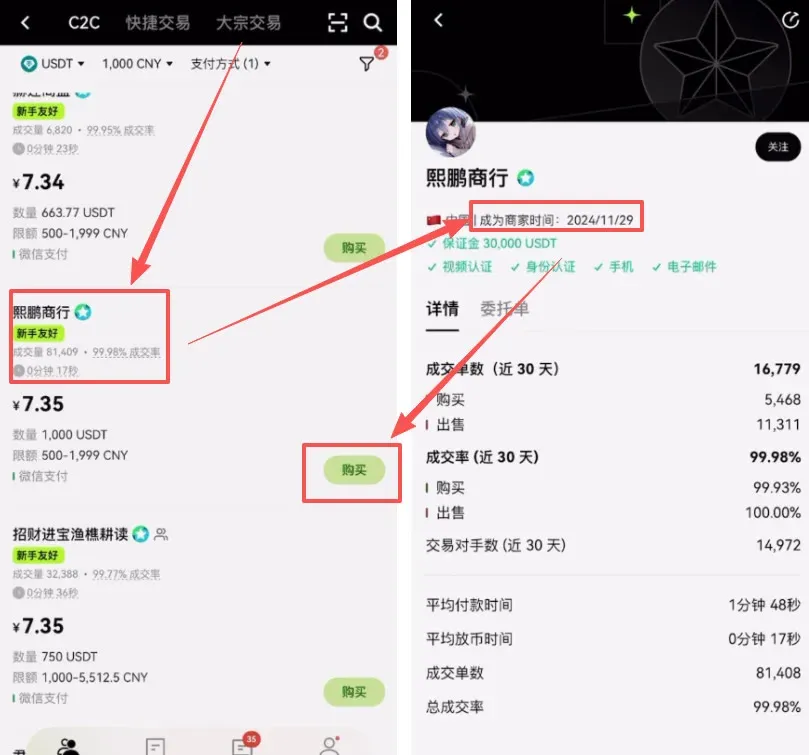
- Click Buy → enter the amount → select 0 Fee Purchase of USDT.
- Confirm the seller’s payment instructions, obtain the QR code or WeChat ID, and complete the transfer.
- After the transfer, click I Have Paid and wait for the platform to release the tokens.
---
The guide above serves as a OKX (OKX) beginner’s handbook, helping you smoothly purchase USDT and USDC on the platform. For additional deposit tutorials and practical tips, feel free to explore other articles published by Bitaigen.
Tax Reminder: Cryptocurrency transactions may generate taxable events in many jurisdictions. Be sure to consult local tax regulations or a qualified tax professional to determine whether your crypto gains are subject to reporting and taxation.
Related Reading
- OKX C2C Withdrawal Freeze Compensation Guide 2024
- How to Securely Withdraw or Liquidate on OKX in 2026
- How to Use OKX C2C Sell USDT for Fast Fiat Withdrawal
💡 Register on Binance with referral code B2345 for the maximum trading fee discount. See Binance complete guide.



