
 Bitaigen Research
 In this article we systematically outline MDEX’s founding background, core functionalities, and multi‑chain deployment, helping readers quickly assess its position and competitive advantages within the DeFi ecosystem. By deeply analyzing the trading model, governance mechanisms, and user experience, you will obtain comprehensive reference information, and later sections will provide hands‑on guides for further exploration.
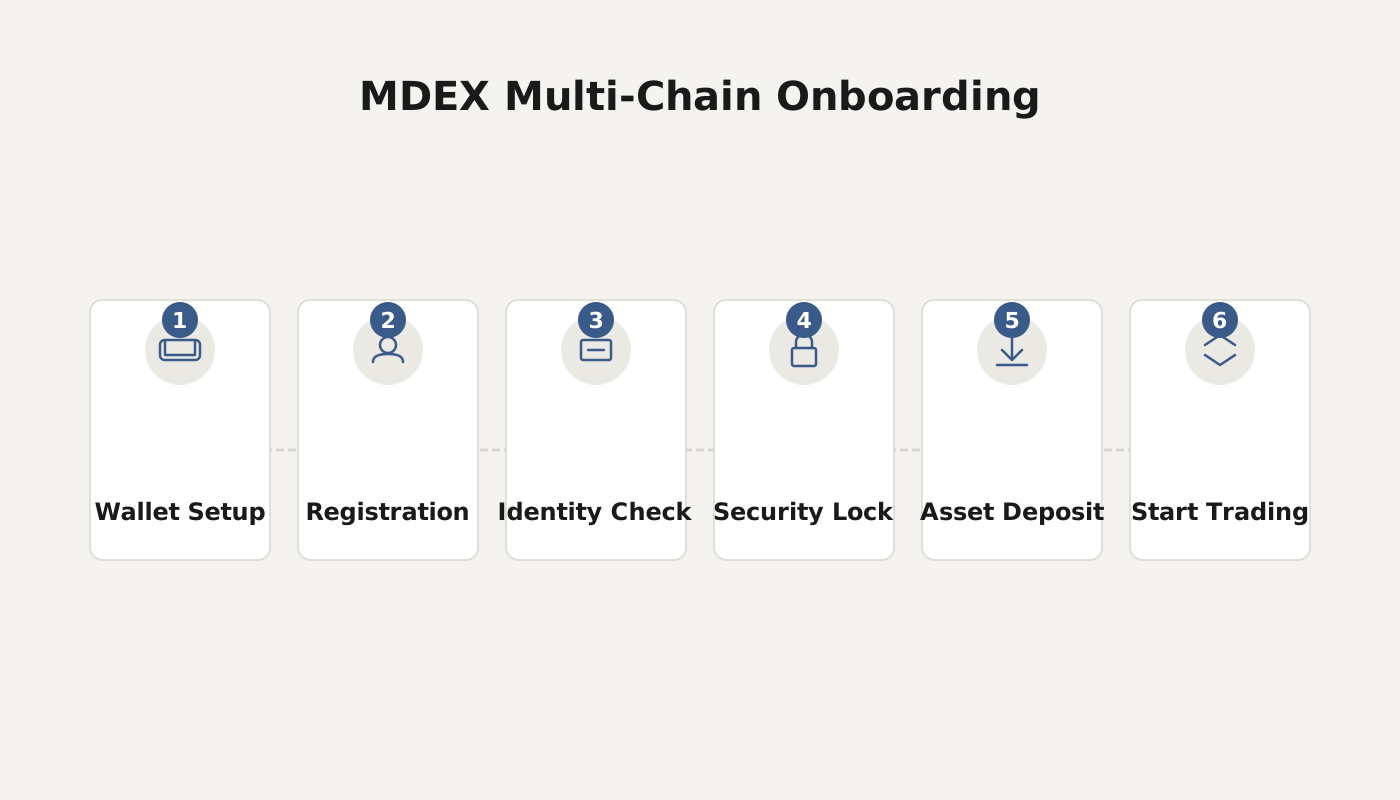
How does the MDEX exchange perform?
MDEX was incorporated in the United States in November 2018 and positions itself as a DeFi platform that combines three major functions: DEX, IMO and DAO. Through a cross‑chain protocol the platform supports BSC, HECO and Ethereum, aiming to leverage multi‑chain benefits to build an efficient, composite decentralized trading ecosystem. It adopts a fee‑buy‑back‑burn model to create a self‑reinforcing value‑capture system. *(For fiat on‑ramps, USD transfers via SEPA or SWIFT are commonly used in the global market. U.S. residents should use Binance.US rather than the international Binance platform.)*
---
Overview of Trading Data
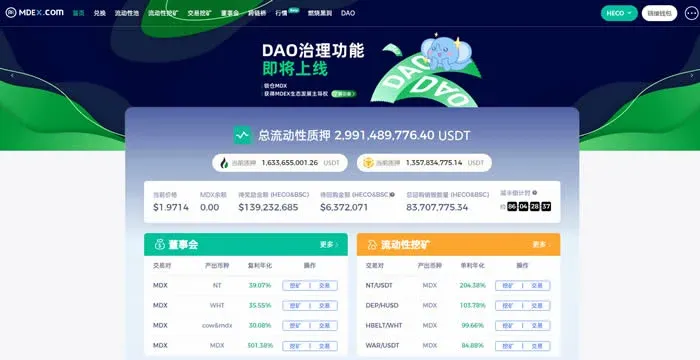
As of the latest market snapshot on September 2 2021 10:09 UTC, MDEX’s 24‑hour trading volume reached $403 million USD, placing it outside the top 100 global cryptocurrency exchanges. The platform lists 75 tokens, offering 96 trading pairs, and supports both spot and decentralized trading. KYC verification details have not been publicly disclosed.
---

---
Mobile Wallet Information (Android)
- Name: MDEX Exchange Wallet for Android v1.32.2
- Category: Banking & Finance
- Size: 122.16 MB
- Language: Simplified Chinese
- Last Updated: 2022‑01‑13
---
Core Modules of MDEX
MDEX revolves around five major functional blocks:
- Swap (including transaction mining)
- Supports the majority of tokens on HECO and BSC.
- Users can receive fee subsidies during swaps (not all pairs qualify; see the Transaction Mining page for details).
- Liquidity Mining
- Rewards users who provide liquidity on HECO or BSC with MDX tokens.
- Rewards are limited to selected pairs; the specific list is available on the Liquidity Mining page.
- Boardroom
- Allows staking of LP tokens or single‑token assets. Participants earn MDX that the project team repurchases on the secondary market and distributes.
- Eligible trading pairs can be viewed on the Boardroom page.
- IMO (Decentralized Initial Offering Swap)
- Implements the IMO V1 mechanism to conduct public swaps, supplying ample liquidity for projects and enhancing fair participation.
- Detailed operational guides and an overview are provided on the IMO page; entry point: https://imo.mdex.com.
- Fun Buyback
- After depositing MDX into the burn pool, users receive a random number. If the number matches a predefined “winning” code, the user wins a reward (e.g., random number 123 matches the “Jupiter Prize” code, making the user a winner).
---
Cross‑Chain Asset Interoperability
MDEX has integrated Huobi Eco‑Chain (HECO) and Binance Smart Chain (BSC). Users can employ the MDEX Bridge to move assets across HECO, Ethereum and BSC, thereby improving capital efficiency.
---
Risk Notice
When participating in liquidity mining, in addition to the common risk of hacking attacks, users should also be wary of unlimited token minting, which can dilute value. Thoroughly understand these potential risks before deciding to engage in mining activities. *(Note: Crypto gains may be taxable under the laws of your local jurisdiction; consult a tax professional for guidance.)*
---
For more details about MDEX, feel free to follow Bitaigen (比特根) for future related articles.
Related Reading
- DeFi & NFTs: Security, Governance & Innovation Challenges
- NEST Network: Decentralized Oracle, Token Utility & DeFi
- DeFi: Transforming Blockchain Apps via Decentralized Finance
💡 Register on Binance with referral code B2345 for the maximum trading fee discount. See Binance complete guide.



