
 Bitaigen Research
In this article we systematically outline OKEx’s fee structure, helping users quickly identify the charging rules for different trading scenarios such as fiat, spot, margin and futures, and we provide practical examples of the calculation methods. Once you understand the details, you can plan costs more accurately and optimise your trading strategy. Continue reading for the full breakdown.
What fees are incurred when buying crypto on OKEx?
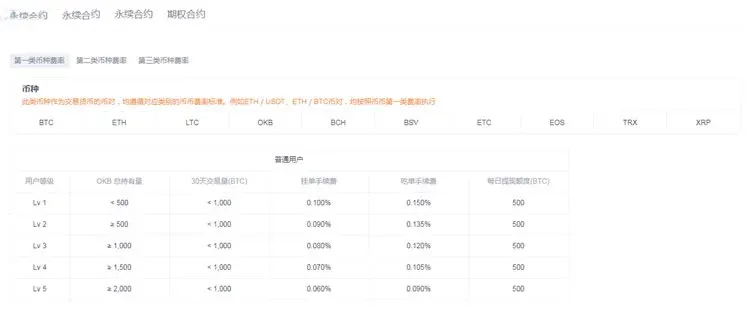
When purchasing crypto on OKEx, fiat‑to‑crypto trades are fee‑free, spot trading carries a rate of 0.1%‑0.15%, margin borrowing is charged at 0.01%‑0.098%, and futures trading incurs fees of 0.02%‑0.05%.
Fee structure overview
- Fiat transactions (e.g., USD via SEPA/SWIFT): no trading fee.
- Spot (crypto‑to‑crypto) trading: 0.10%‑0.15% (varies with membership tier and trading volume).
- Margin borrowing: 0.01%‑0.098%, changing with leverage level and loan term.
- Futures contracts: 0.02%‑0.05%, also affected by membership tier.
How does OKEx calculate trading fees?
Bitcoin network fees are determined by the built‑in rules of the blockchain protocol and mainly depend on the size of the transaction data and the level of network congestion.
- UTXO model: each transaction consists of a number of inputs (UTXOs) and outputs; the more inputs, the larger the data payload, and the higher the required fee.
- Typical transaction size: a standard single‑input, double‑output transaction (including change) is about 200 bytes. Fees are usually quoted as 0.0001 BTC per 1 kB, so a typical transaction costs roughly 0.001‑0.002 BTC.
- Fee calculation formula:
\[
\text{Fee} = \frac{\text{Transaction bytes}}{1000}\times0.0001\text{ BTC}
\]
- Fee adjustment: modern wallets automatically recommend the optimal fee based on real‑time network conditions; users can manually increase the fee if they need faster confirmation.
Key factors that influence the fee
- Number of transaction inputs – more inputs mean a larger data footprint.
- Output structure – a change output adds extra bytes.
- Network congestion – when nodes confirm slowly, the recommended fee rises accordingly.
- Custom fee setting – users may set a higher fee to accelerate confirmation.
Tip: Choosing a platform that offers transparent fee disclosure and publicly posted rates is the foundation for keeping trading costs low. Fee policies differ markedly between exchanges, so be sure to read the official fee schedule before registering.
The above outlines the fee items for buying crypto on OKEx and the Bitcoin network fee calculation method. For more details about OKEx’s trading specifics, stay tuned to Bitaigen’s upcoming articles.
*Note: Crypto gains may be subject to taxation in your local jurisdiction; consult a tax professional for guidance.*
Related Reading
- Isolated Margin Mode: Risks, Leverage & Perpetual Contracts
- Crypto Futures Trading: Guide to Leverage & Margin
- OKX Coin vs USDT Contracts: Beginner Guide & Comparison
💡 Register on Binance with referral code B2345 for the maximum trading fee discount. See Binance complete guide.



