
 Bitaigen Research
 Summary
- Cloud mining enables anyone to participate in mining Bitcoin and other cryptocurrencies without owning or managing hardware themselves.
- For individuals lacking resources or technical expertise, cloud mining offers a low‑entry‑barrier way to get involved.
- The sector is also riddled with scams, so thorough verification of a company’s credentials is essential before investing.
In this article we systematically outline the concept and operating principles of cloud mining, compare it with solo mining, mining pools, ASIC, GPU/CPU mining and other mainstream methods, and help readers quickly distinguish legitimate platforms from potential risks. After mastering the fundamentals, you can decide whether to give it a try.
What Is Cloud Mining?
Cloud mining refers to users renting computing power from remote data‑center farms to mine cryptocurrencies, eliminating the need to purchase or maintain their own mining rigs; common mining approaches include solo mining, mining pools, ASIC, GPU/CPU and cloud mining itself.
After paying a rental fee, users lease hash power from a company that owns and operates the hardware, and share the block rewards with that company once a block is found.
The term “cloud mining” derives from the cloud computing concept—using remote servers hosted on the internet for storage and processing. Similar to cloud computing, cloud mining rents out computing power in the “cloud” rather than on a local machine.
What Are the Main Cryptocurrency Mining Methods?
Before diving into cloud mining, it’s useful to understand other mainstream mining options:
1. Solo Mining
The miner purchases hardware and runs it independently, receiving the full block reward and transaction fees when a block is successfully mined. As the network difficulty of Bitcoin and other major coins rises, the probability of solo success drops dramatically.
2. Mining Pools
Multiple miners combine their hash power into a single pool, collectively solving block puzzles. When a block is found, rewards are distributed proportionally to each participant’s contributed hash rate, improving income stability.
3. ASIC Mining
ASIC (Application‑Specific Integrated Circuit) devices are purpose‑built chips optimized for a specific cryptocurrency algorithm. They deliver massive hash power but come at a high price, and are typically used by professional operators either solo or within pools.
4. GPU/CPU Mining
Some cryptocurrencies can be mined with ordinary CPU (central processing unit) or GPU (graphics processing unit) hardware. Bitcoin originally used CPU/GPU mining, but as difficulty surged, the industry shifted to far more efficient ASICs. GPU/CPU mining still remains viable for many altcoins.
Profitability of each method depends on the coin’s algorithm, hardware cost, electricity rates, and the current network difficulty.
How Does Cloud Mining Work?
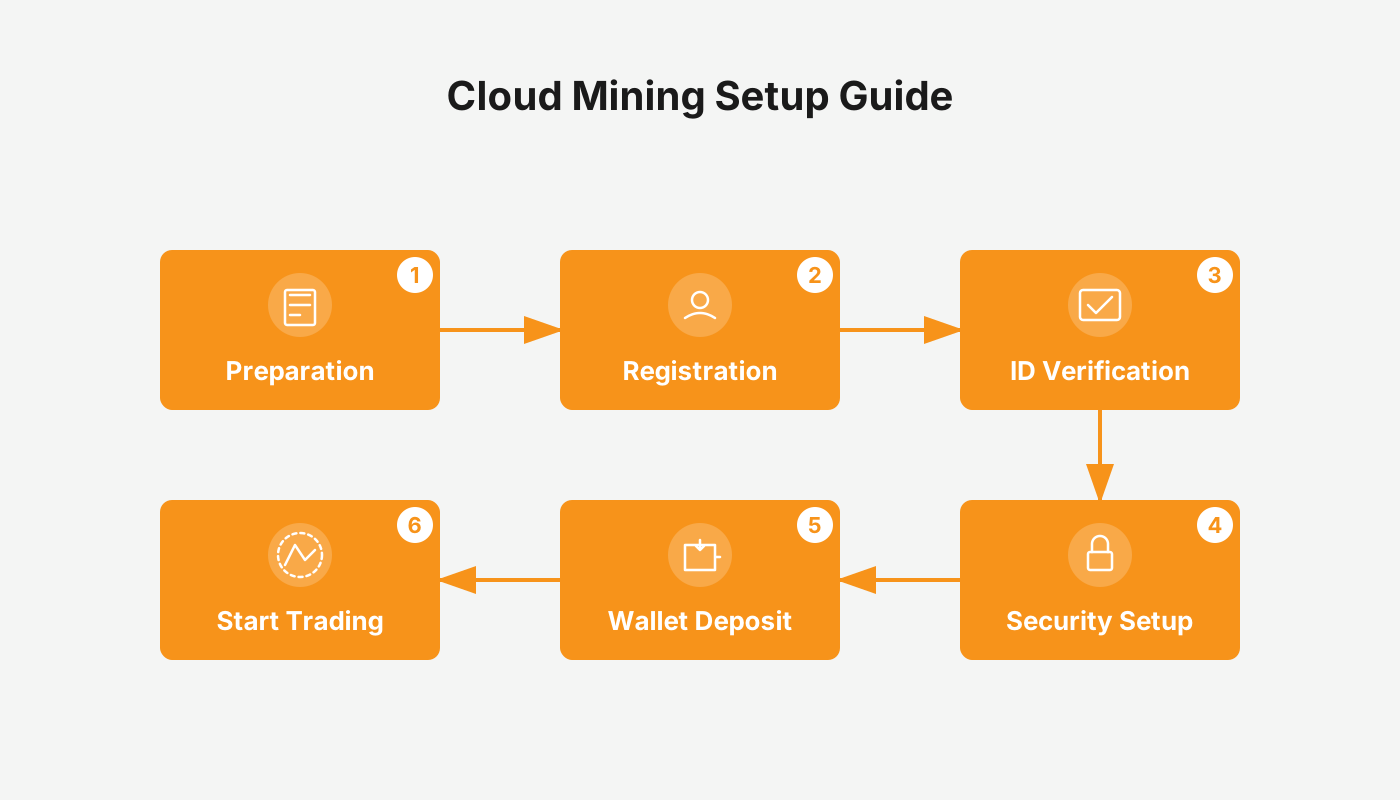
At its core, cloud mining is the rental of data‑center hash power. A typical workflow looks like this:
Step 1: Choose a Reputable Cloud‑Mining Provider
Research the provider’s background, user reviews and industry reputation to avoid fraud.
Step 2: Select a Mining Package
Pick a contract based on the amount of hash power you need and the rental duration. Larger hash rates promise higher potential returns but also increase the upfront cost.
Step 3: Choose a Mining Pool (Optional)
Some platforms let you designate which pool the rented power will join, allowing you to fine‑tune reward distribution.
Step 4: Pay the Rental Fee
Most services accept payment in cryptocurrencies; a few also accept fiat via SEPA, SWIFT or USD transfers.
Step 5: Mining Starts
The provider handles hardware configuration, maintenance and the actual deployment of hash power.
Step 6: Receive Rewards
Earnings are allocated according to your share of the rented hash power. You must supply a compatible crypto wallet address to receive payouts.
Note: In many jurisdictions crypto‑related gains may be taxable. Users should consult local tax regulations to determine reporting obligations.
Key Metrics Used in Cloud Mining
| Metric | Meaning | Remarks |
|---|---|---|
| **Hash Rate** | Number of calculations performed per second (H/s, KH/s, MH/s, GH/s, TH/s, PH/s, EH/s) | Higher rates increase the chance of finding a block |
| Energy Consumption | Power draw of the mining hardware, expressed in watts (W) or joules per terahash (J/TH) | Lower J/TH indicates greater efficiency |
| Cost per Hash | Contract price ÷ total hash power purchased | Useful for comparing the cost‑effectiveness of different contracts |
| Mining Difficulty | Network‑wide difficulty adjustment that scales with total hash power | Higher difficulty requires more hash power to maintain profitability |
| Block Reward | Number of coins awarded for mining a new block (often halves every four years) | Directly impacts revenue |
| Cryptocurrency Price | Current market price, which determines the fiat value of rewards | Volatility can dramatically affect profitability |
| Pool Fee | Percentage taken by the mining pool when you join one | Reduces net earnings |
Understanding these metrics helps you evaluate the feasibility and expected return of a cloud‑mining contract.
Advantages of Cloud Mining
- No Technical Expertise Required – The platform takes care of hardware deployment, maintenance and software configuration; you only rent the hash power.
- Zero Up‑Front Hardware Costs – No need to purchase expensive ASICs or GPUs, avoiding the risk of rapid hardware obsolescence.
- Eliminates Noise and Heat Issues – Mining rigs are housed in professional data centers, so you are not exposed to high temperatures or loud fans.
- Potential for Passive Income – After paying for the contract, the provider runs the operation automatically and you receive periodic payouts.
Risks Associated with Cloud Mining
- Scam Risk – The industry has seen numerous projects disappear with investors’ funds; always verify the legal standing of the provider.
- Limited Profit Margins – Service fees and platform commissions can make earnings lower than solo mining or simply holding the asset.
- Lack of Control – The provider decides which coin to mine and when to sell; operational or legal issues on their side can affect your payouts.
- Transparency Gaps – Some companies do not disclose fee structures or operational data, making risk assessment difficult.
- Market Volatility – Sharp price swings in cryptocurrencies directly affect the fiat value of rewards.
- Regulatory Uncertainty – Mining and crypto‑asset regulations vary widely across jurisdictions; you must stay informed about local rules.
Before committing, conduct comprehensive research and weigh potential returns against these risks.
Cryptocurrency Mining Guide
The step‑by‑step guide below helps beginners launch a mining project (details may vary by method):
- Choose a Cryptocurrency
Mining difficulty changes with total network hash power. Major coins like Bitcoin require high‑hash‑rate ASICs and pools; smaller or newer coins such as Dogecoin or Ethereum Classic have lower hardware thresholds and are suitable for modest miners.
- Select Mining Equipment
- ASIC – High‑efficiency chips built for a specific algorithm.
- GPU – Versatile cards that support multiple algorithms (e.g., the former Ethereum PoW).
- Specialized Devices – For example, Helium nodes that use radio frequency instead of traditional hashing.
- Set Up a Crypto Wallet
Download an official or reputable wallet (e.g., Trust Wallet) to receive mining payouts securely.
- Install and Configure Mining Software
Obtain the official software from the cryptocurrency’s website, verify its authenticity, and configure the pool address, wallet address and electricity‑cost monitoring.
- Consider Joining a Mining Pool
Pools aggregate hash power to improve block discovery odds; rewards are split proportionally, which benefits miners with limited individual power.
- Monitor Operating Costs
Track electricity expenses, equipment depreciation and maintenance fees to ensure projected earnings exceed total outlays.
Closing Remarks
Before investing in cloud mining, perform deep due‑diligence on the platform: read user reviews, check industry reputation, and audit operational records. Prioritize providers with a proven track record, transparent fee structures and scalable operations. Understand which costs—electricity, maintenance, etc.—are baked into the contract, and treat cloud mining as one component of a diversified asset strategy rather than a sole income source.
For more practical information on cryptocurrency mining, follow additional articles on Bitaigen (比特根).
*If you are based in the United States, please note that you must use Binance.US rather than the global Binance platform for any fiat‑on‑ramp services.*
Related Reading
- Cloud Mining Profitability, Costs & Security Overview
- Cloud Mining Power: Rent Crypto Mining Without Hardware
- Top 10 Cloud Mining Platforms for 2026 – Best Choices for Investors
💡 Register on Binance with referral code B2345 for the maximum trading fee discount. See Binance complete guide.



