
 Bitaigen Research
 With the rapid development of blockchain technology, the cryptocurrency market is advancing in step with the digitization of the banking sector. Crypto banks are institutions that focus on providing financial services related to cryptocurrencies, combining traditional banking deposit, withdrawal and payment functions while leveraging blockchain technology to enable innovative services such as asset custodianship, lending and investment.

In this article we systematically outline the concept of crypto banks and their core functions, dissect the key points of security technology and asset management, and list representative industry players. With this information, readers can quickly grasp how crypto banks bridge fiat and digital assets, helping you decide whether they merit attention.
Note for U.S. readers: cryptocurrency transactions should be conducted via Binance.US rather than the global Binance platform.
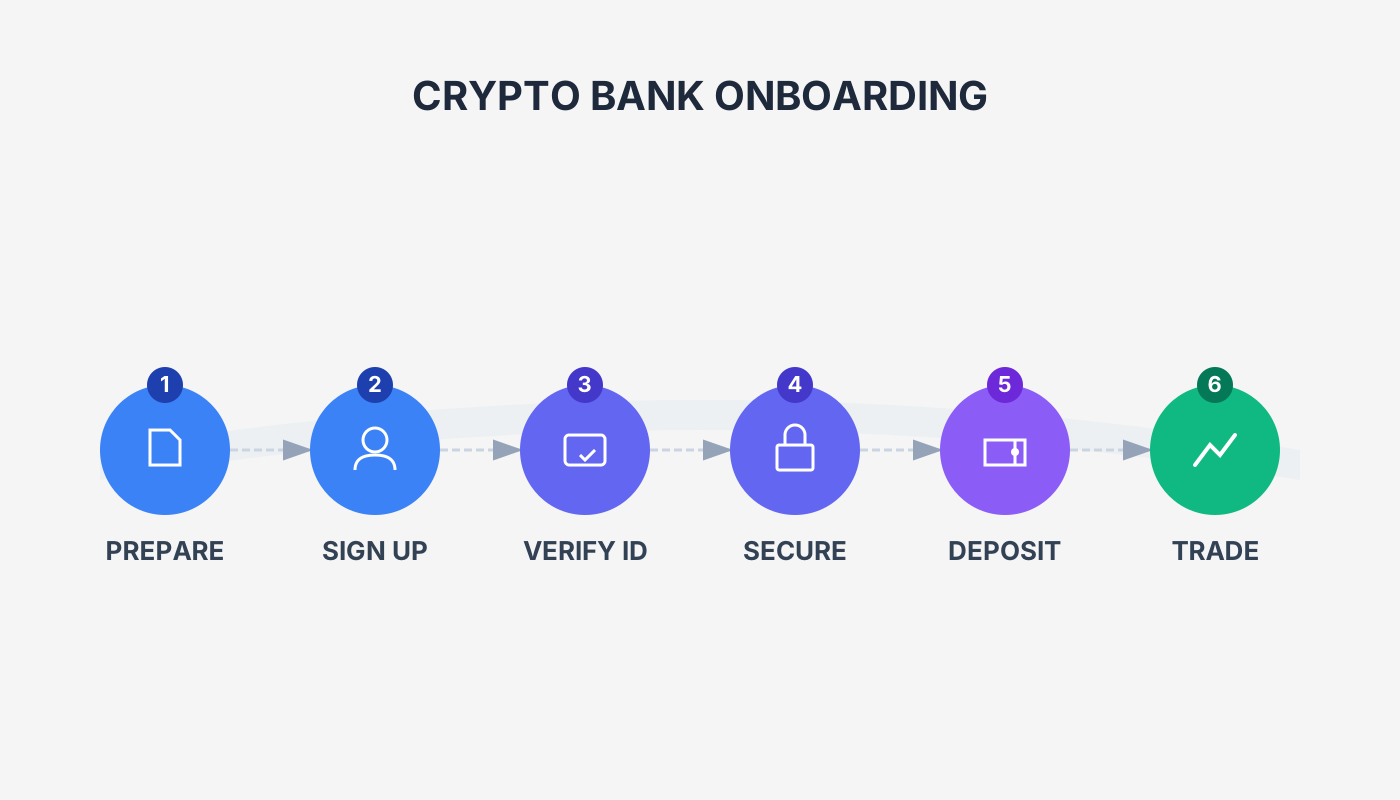
What Is a Crypto Bank?
Crypto banks are financial service providers focused on cryptocurrencies; they may be a branch of a traditional bank or a wholly new bank built on blockchain. They bridge fiat and crypto assets, helping users manage and use digital assets more conveniently.
Core Advantages and Security Measures
- Multi‑signature technology: Requires multiple private keys to jointly authorize a transaction, enhancing fund security.
- Cold storage: Stores the majority of digital assets on offline devices, preventing hacker intrusion.
- Whitelisted address management: Limits counterparties, reducing fraud and money‑laundering risk.
Main Services
- Loans, deposits, interest‑bearing accounts
- Investment products
- Payments and transfers
- One‑on‑one asset management consulting
These services enable users to manage and utilize their digital assets more efficiently.
Which Crypto Banks Exist?
The institutions listed below each hold some form of crypto‑financial licensing, and although their service models differ, they all advance the integration of traditional finance and digital assets.
- Ally Bank
A well‑known U.S. online bank that does not directly offer crypto trading, but enables crypto‑asset investment and trading through partner integrations.
- Revolut
A UK fintech founded in 2015 that integrates over 50 cryptocurrencies (including Bitcoin, Ethereum, Solana) into its mobile app, offering an easy entry point for both beginners and seasoned traders.
- Wirex
An innovative platform whose mission is to “bridge traditional finance and digital finance,” seamlessly linking crypto services with conventional financial products and adopting a crypto‑first business model.
- Juno
Dedicated to deep integration of blockchain with traditional finance, providing professional digital banking solutions for individuals and enterprises, redefining the banking experience for the digital age.
- Monzo
A digital bank known for its user‑friendly approach; while it does not directly offer crypto trading, it provides a convenient platform to link traditional accounts with crypto accounts.
These entities are licensed financial institutions that can manage customers’ USD and crypto assets. However, they generally do not have the loan‑issuing capabilities of traditional banks and are not covered by the Federal Deposit Insurance Corporation (FDIC); users should carefully assess the risks.
Crypto banks combine traditional banking services with blockchain innovation, offering diversified services such as storage, trading, lending and payments, and have become a key component of the digital‑asset ecosystem. Understanding and wisely selecting a suitable crypto bank can improve the efficiency and security of digital‑asset usage.
Related Reading
- Cryptocurrency Bank: Definition, Services & How It Differs
- Understanding Liquid Staking: Concepts & Operational Flow
- Tokenized US Stocks Rise, Crypto Brokers Disrupt Brokers
💡 Register on Binance with referral code B2345 for the maximum trading fee discount. See Binance complete guide.



