
 Bitaigen Research
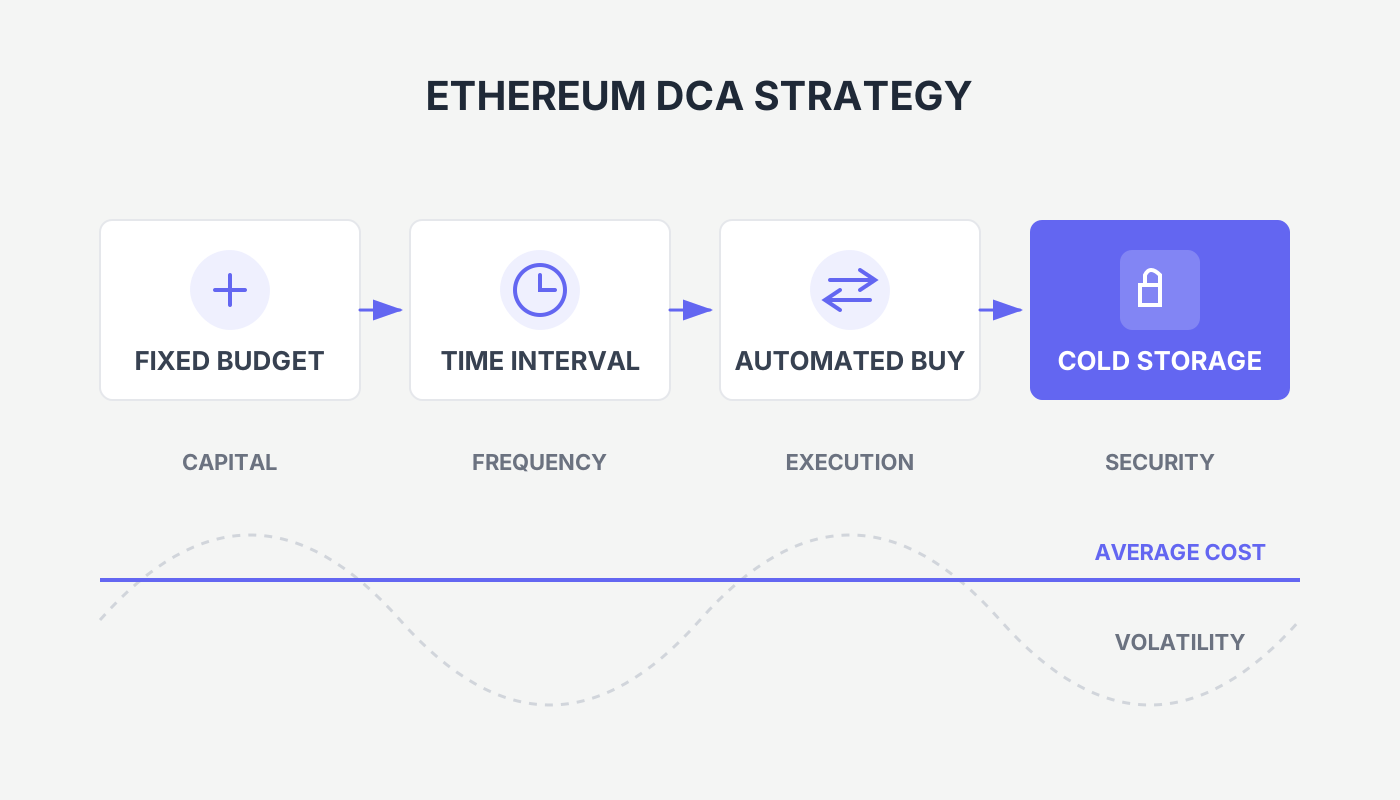
 Dollar‑cost averaging (DCA) is an investment method that involves buying a fixed amount of an asset at regular intervals, regardless of market conditions. By spreading purchases over time, investors can smooth out the average entry price and reduce timing risk. Ethereum, the second‑largest cryptocurrency by market capitalization, boasts a mature ecosystem and technical advantages, making it a popular DCA target for many investors.
When Ethereum is held over the long term, a DCA approach can still generate profits, but the returns are influenced by market volatility, the DCA frequency, and the individual’s strategy. Proper risk management and patience are therefore essential.
In this article we outline the core principles of DCA‑ing Ethereum and the key variables that affect returns. We explain how, in a volatile market environment, a sensible choice of interval, amount, and risk‑diversification strategy can enhance the profit potential of long‑term holding. For practical implementation tips and risk‑management guidelines, keep reading.
Can DCA‑ing Ethereum Still Be Profitable?
DCA‑ing Ethereum can produce returns, but the exact outcome depends on multiple factors, including market swings, the chosen investment strategy, and the DCA schedule. Ethereum’s price is driven by supply‑and‑demand dynamics, technological developments, and regulatory environments, leading to relatively high volatility. Using a fixed‑amount, regular‑interval approach can, to some extent, smooth out this volatility, and a long‑term holding horizon may yield attractive results.
- Develop a sound investment plan: Set a consistent DCA interval and amount, and adjust flexibly according to market conditions.
- Diversify risk: Allocate a portion of capital to other assets to lessen the impact of a single‑asset price movement.
- Monitor technical developments: Keep track of Ethereum’s upgrade roadmap and community ecosystem to refine the investment plan promptly.
Long‑term holding is the cornerstone of DCA. Short‑term price fluctuations are inevitable, but as the leading platform for blockchain technology, Ethereum’s value is expected to rise alongside protocol upgrades and expanding use cases. Investors should maintain patience and confidence, aligning their asset allocation with long‑term objectives.
Is It Really Possible to Make Money by DCA‑ing Ethereum?
There remains a possibility of earning profits through DCA‑ing Ethereum, yet actual profitability hinges on several critical factors:
- Market trend: When the overall market is bullish, DCA returns become more evident.
- Investment horizon: The longer the holding period, the more pronounced the smoothing effect on price swings.
- Crypto‑market volatility: High volatility can produce paper losses in the short run.
- Personal strategy: An appropriate balance of purchase frequency and amount is a prerequisite for achieving gains.
Ethereum benefits from a robust ecosystem that supports smart contracts, DeFi, NFTs, and Web 3.0 applications, all built on its blockchain. Its transition from proof‑of‑work (PoW) to proof‑of‑stake (PoS) under Ethereum 2.0 has improved scalability, energy efficiency, and security, providing a solid foundation for long‑term value appreciation.
Historical data shows that, since its launch, long‑term holders have generally realized substantial returns. For instance, between 2020 and 2022, despite several corrections, the overall price trajectory was upward. Nevertheless, past performance does not guarantee future results; investors should evaluate fundamentals, regulatory developments, and macro‑economic conditions before making decisions.
How to Set Up a DCA Plan for Ethereum?
Choosing a suitable platform is the first step. Below we use OKX (formerly known as OKEx) as an example to walk beginners through the process:
- Download and open the OKX app
- Visit the official links: Official Registration, Official Download.
- Note for U.S. residents: The global Binance link points to Binance.com, which is not available in the United States. U.S. users should use Binance.US or another compliant exchange.
- On the home screen tap [Trade] → [Strategy].
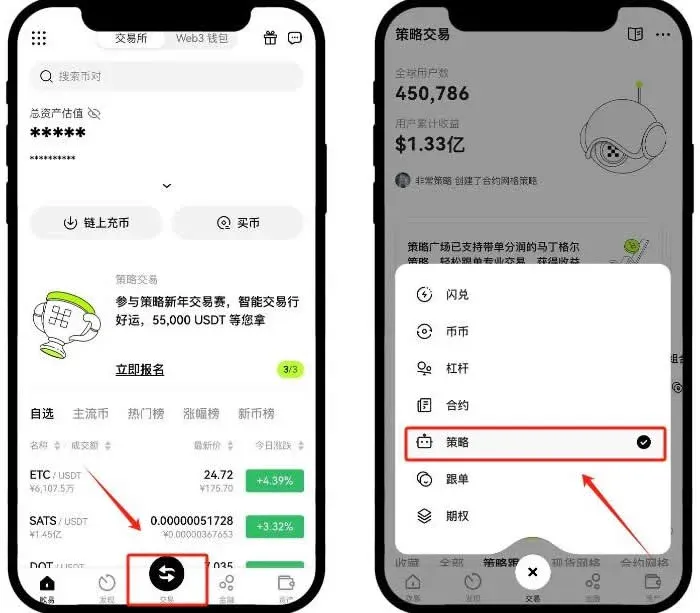
- Enter the Strategy Marketplace
- Choose [Average Cost] → [DCA Strategy].
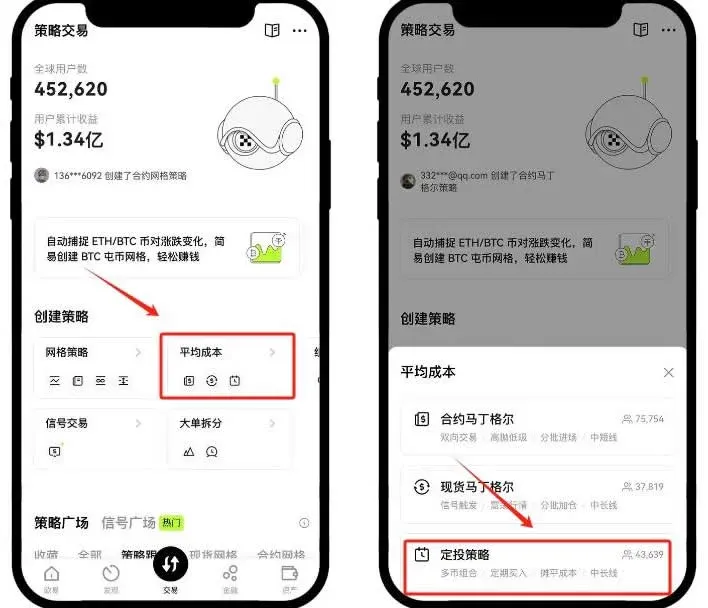
- Create a DCA Strategy
- In the creation screen, select the cryptocurrency ETH, set the DCA interval (e.g., weekly or monthly) and the fixed fiat amount (use USD, SEPA or SWIFT for fiat deposits where supported), then tap [Create Strategy].
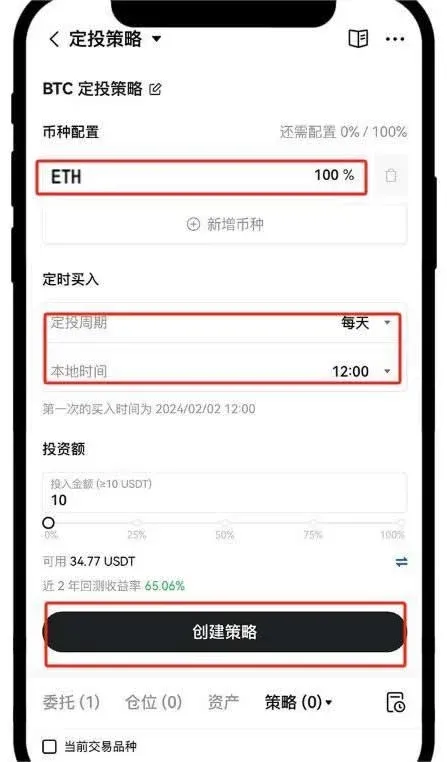
Following these steps completes the basic DCA configuration for Ethereum. It is important to remember that while DCA can lower the risk associated with timing a single purchase, it does not eliminate all investment risk. Investors should fully understand the market, the technology outlook, and their own risk tolerance before deciding how much capital to allocate and should be prepared for a long‑term holding period.
Tax reminder: In many jurisdictions, gains from cryptocurrency transactions are taxable. Be sure to consult local tax regulations or a professional advisor to determine your reporting obligations.
Related Reading
- ERC‑20 Explained: Ethereum Token Standard, Benefits & Limits
- BNB Dollar‑Cost Averaging: Long‑Term Returns & Risk
- How Dollar‑Cost Averaging Boosts Crypto Gains and Reduces Risk
💡 Register on Binance with referral code B2345 for the maximum trading fee discount. See Binance complete guide.



