
 Bitaigen Research
 On‑chain token staking is technically sound, but its safety depends on multiple factors such as the project's legitimacy, the staking platform, and individual operational practices. Therefore, thorough research and proper private‑key management are essential before committing.
We examine the reliability and potential risks of on‑chain token staking from three angles: technical fundamentals, project compliance, and platform security. This step‑by‑step analysis will help you do your homework and avoid common pitfalls before you decide. To learn more about the staking mechanism details and security best practices, keep reading.
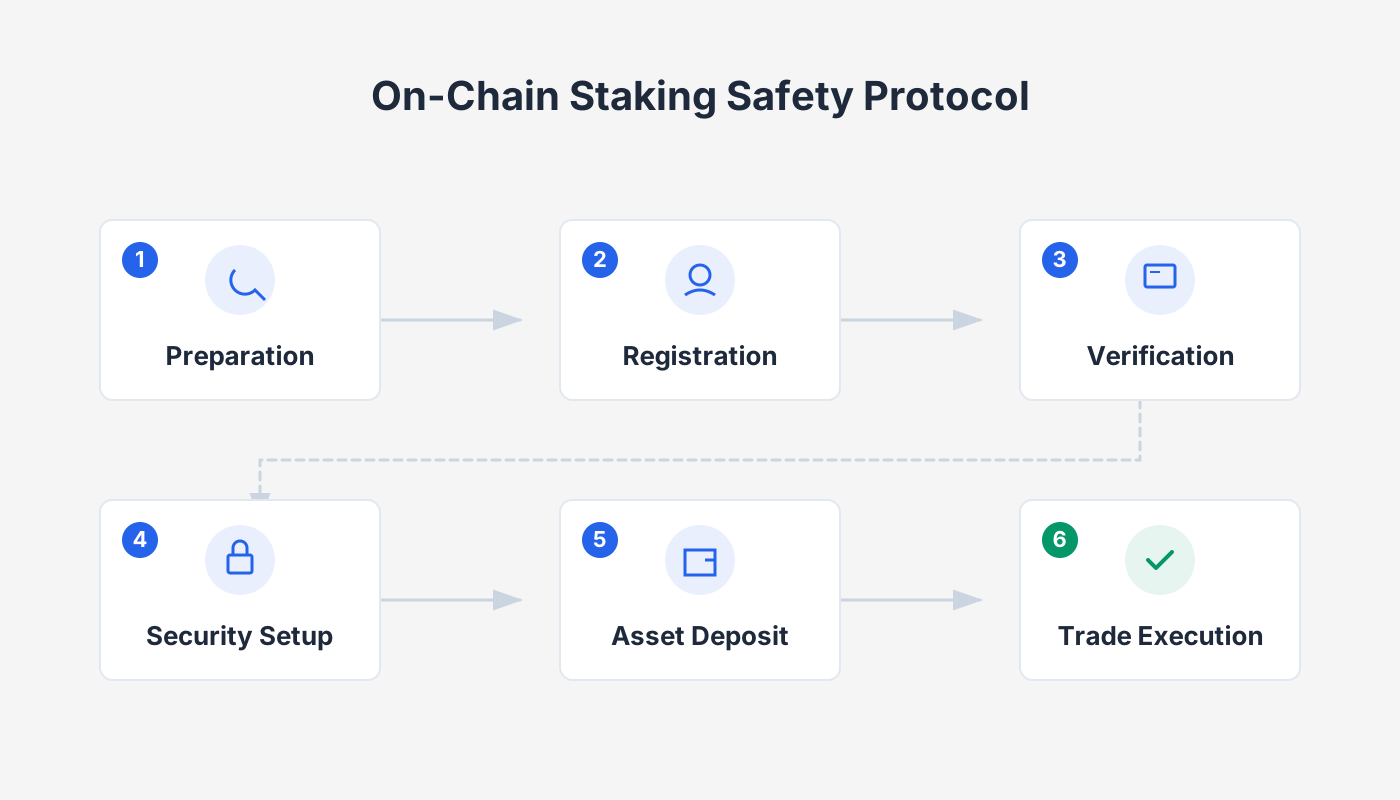
Reliability Analysis of On‑Chain Token Staking
On‑chain token staking is technically reliable, but its actual safety and profitability are influenced by the following factors:
- Project legality and technical soundness
- Choose well‑known projects: Prioritize projects with mature public‑chain ecosystems and active communities.
- Avoid high‑yield traps: New projects that promise unusually high returns often come with fraud or Ponzi‑type risks.
- Staking platform security
- Official staking: Staking directly within the blockchain protocol usually carries the lowest risk.
- Third‑party platforms: Staking services offered by wallets or exchanges are convenient, but you must assume the platform’s operational risk.
- Staking mechanism design
- Unlock periods: Some mechanisms require assets to be locked for days to months, during which the funds cannot be freely moved.
- Price‑volatility risk: The market value of the staked asset may decline as the token price fluctuates.
- Technical risk
- Smart‑contract bugs: If the contract that handles staking contains defects, the assets could be stolen.
- Node risk: Delegating to under‑performing or non‑compliant validator nodes can lead to slashing (penalties) of your assets.
Security Highlights for On‑Chain Token Staking
The safety of on‑chain token staking is also constrained by several factors:
- Asset control: Except for custodial staking services, users retain their private keys, and ownership is recorded on‑chain with transparent, immutable properties.
- Smart‑contract risk: Vulnerable contracts expose assets to potential attacks.
- Third‑party service risk: Exchanges or custodial platforms that suffer hacks, mismanagement, or fraud can cause asset loss.
- Node‑behavior risk: Offline or cheating validators are penalized, which directly impacts stakers’ returns.
- Market‑volatility risk: A sharp drop in token price or a decline in reward‑token value can offset or exceed the earnings from staking.
- Liquidity constraints: Funds locked during the staking period cannot be withdrawn on demand, limiting access in emergencies.
- Private‑key management risk: Exposure or loss of seed phrases or private keys results in permanent loss of assets; insecure network environments also increase attack vectors.
Risk‑Management Recommendations
- Opt for mainstream public chains or reputable staking platforms.
- Diversify staked assets to avoid concentrating risk in a single project or validator.
- Store seed phrases and private keys securely, preferably using hardware wallets or offline storage to reduce theft probability.
- Continuously monitor project updates and market conditions, and adjust your staking strategy as needed.
- Before staking, read the official documentation and smart‑contract audit reports thoroughly to assess both technical and legal risks.
In summary, on‑chain token staking is technically reliable, while its safety hinges on project legality, platform credibility, contract security, and personal risk‑management practices. By conducting a reasoned evaluation and implementing appropriate safeguards, you can keep risks within an acceptable range.
*Note: Crypto earnings may be subject to taxation in your jurisdiction; consult local tax regulations for guidance.*
Related Reading
- Crypto Custody Explained: Key Management, Multi‑Sig & MPC
- Jaxx Wallet Review: Cross‑Platform Features, Private‑Key Management & Security
💡 Register on Binance with referral code B2345 for the maximum trading fee discount. See Binance complete guide.



