
 Bitaigen Research
In this article we review the security features and user experience of the most widely used USDT wallets. By combining practical requirements with core considerations such as tiered storage, private‑key management, and protocol verification, we help you strike a balance between everyday transactions and large‑value storage, thereby reducing the risk of attacks. Continue reading to obtain actionable guides for both newcomers and institutional users.
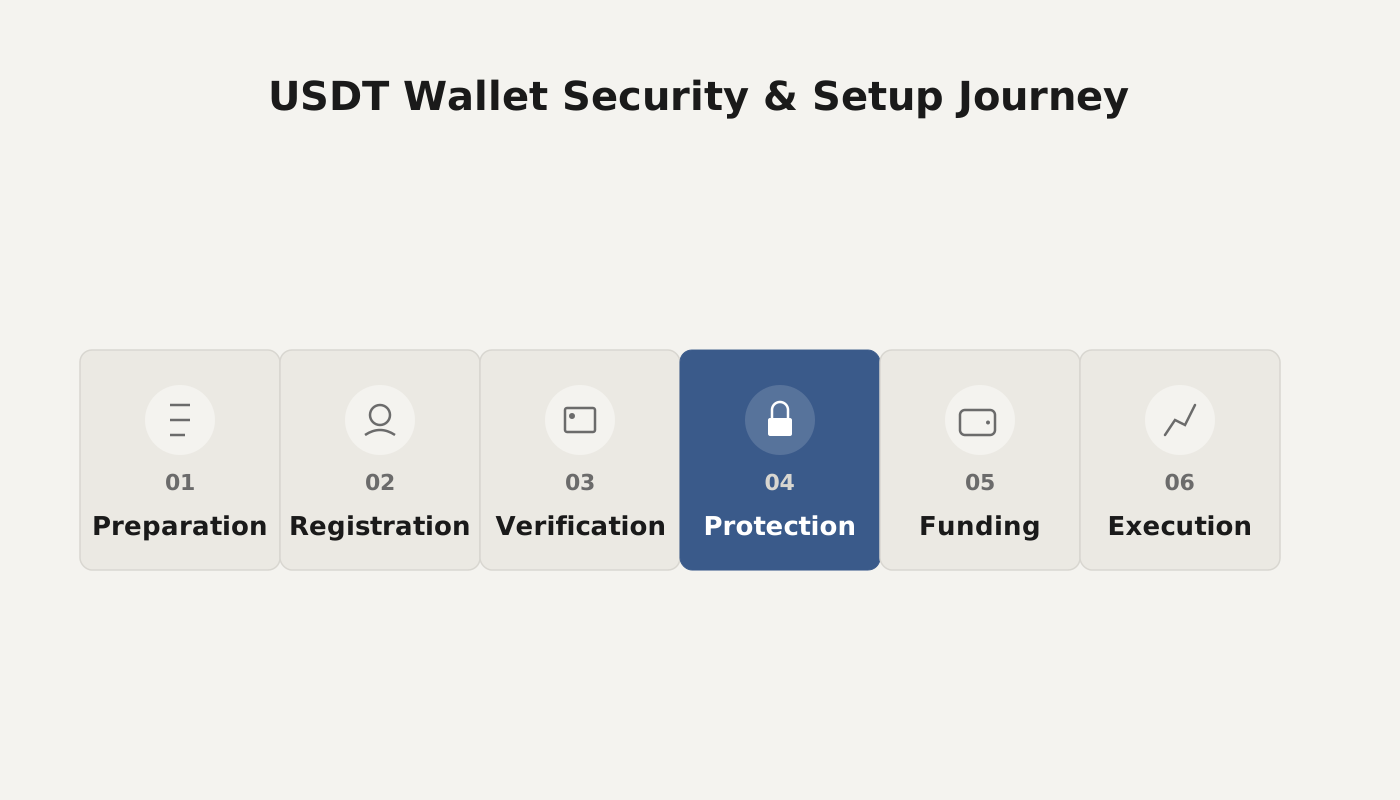
4. Core Recommendations for Safe Use
Regardless of the type of wallet you ultimately select, the following operating principles can significantly lower the probability of a successful attack:
- Tiered storage: Keep large amounts of USDT in a cold wallet, and use a hot wallet only for small, daily transactions.
- Private‑key custody: Write down the seed phrase by hand and store it offline; never keep it in the cloud or as a screenshot.
- Protocol verification: Before sending, confirm which USDT protocol you are using (e.g., a TRC‑20 address begins with `T`) to avoid loss caused by chain mismatches.
- Stay up‑to‑date: Regularly upgrade wallet firmware or client software and stay vigilant against phishing links that masquerade as DApps.
---
3. Wallet Selection Guided by User Needs
Depending on how frequently you use the wallet, the size of the assets you manage, and the blockchain ecosystems you are familiar with, you can refer to the following matching schemes:
- Beginner entry: Trust Wallet, which offers a clean interface and quick onboarding, or Zengo, which eliminates the need for a seed phrase.
- Large‑value storage: Ledger Nano X (or Nano S Plus) paired with MetaMask to achieve a hot‑/cold‑wallet separation.
- High‑frequency DeFi: The MetaMask browser extension provides convenient contract interaction.
- Specific‑chain users: TronLink is the first choice for the TRON ecosystem, while Phantom is recommended for Solana.
✅ USDT Wallet Recommendation Table
| User Need | Recommended Wallet Type | Example Products |
|---|---|---|
| Large‑value long‑term storage | Hardware wallet | Ledger Nano X, Trezor Model T |
| Daily trading / DeFi | Software wallet | MetaMask, Trust Wallet |
| Specific public‑chain usage | Chain‑dedicated wallet | TronLink (TRON), Phantom (Solana) |
| Beginner | Easy‑to‑use software wallet | Trust Wallet, Zengo |
| Portable cold storage | Smart‑card wallet | Tangem |
---
2. Software Wallets (Hot Wallets) – Suitable for Daily Trading and DeFi Scenarios
Hot wallets win on convenience and are ideal for small‑amount, frequent operations. Nevertheless, they should be used together with biometric authentication, two‑factor verification, and other security measures. Below are several solutions that enjoy strong community reputations:
MetaMask
- Platforms: Browser extension + mobile app
- Features: Deep integration with the Ethereum DApp ecosystem, supports ERC‑20 USDT transactions and cross‑chain swaps.
- Target audience: High‑frequency DeFi participants. It is recommended to keep only a modest amount of assets in MetaMask and pair it with a hardware wallet for added security.
Trust Wallet (now rebranded as Polygon Wallet)
- Platforms: Mobile only
- Features: Developed by Binance, compatible with ERC‑20, BEP‑20, TRC‑20 and other USDT implementations across multiple chains, includes a built‑in DEX aggregator for easy cross‑chain moves.
- Security: Seed phrase is encrypted locally; anti‑phishing verification is built in.
Zengo
- Innovation: Utilises multi‑party computation (MPC) to discard the traditional private‑key and seed‑phrase model, relying on biometric data, cloud and email as three factors for account recovery.
- Target audience: Users who are uncomfortable managing seed phrases and who seek a high level of security.
Chain‑specific wallets
- TronLink: Focused on the TRON ecosystem, enables low‑fee TRC‑20 USDT transfers and can connect to a Ledger device via Bluetooth.
- Phantom: The go‑to wallet for the Solana chain, featuring an integrated swap function and NFT management tools.
---
1. Hardware Wallets (Cold Storage) – The Preferred Choice for Large‑Value Assets and Long‑Term Holding
The primary advantage of cold wallets is that private keys never leave the device, effectively isolating them from network‑based attacks. Below are the most reputable products currently available:
| Wallet | Price (USD) | Security Rating | Ideal Use Cases |
|---|---|---|---|
| Ledger Nano X / Nano S Plus | $90 – $149 | ★★★★★ | Multi‑chain support, large‑value storage |
| Trezor Model T | $159 – $219 | ★★★★★ | Open‑source transparency, physical security |
| Tangem | $40 – $60 (per set of 2‑3 cards) | ★★★★☆ | Portable, loss‑resistant, everyday use |
Ledger Nano X / Nano S Plus
- Functionality: Compatible with ERC‑20, TRC‑20, BEP‑20 and other USDT standards, supports Bluetooth or USB‑C connections, and works with Ledger Live for asset management.
- Security: Utilises a secure element certified to CC EAL5+ standards; private keys never leave the device.
- Target audience: Holders with sizable portfolios who need cross‑chain capabilities for long‑term storage.
Trezor Model T
- Functionality: Open‑source hardware with a touchscreen, capable of storing USDT across multiple protocols.
- Security: Follows a “zero‑trust” design; even if the device is physically dismantled, the private key remains protected.
- Target audience: Users demanding the highest security level and who prefer a flexible user interface.
Tangem (Smart‑Card Wallet)
- Functionality: NFC‑enabled contactless cards supporting over 16,000 tokens, no seed phrase required, and redundancy can be achieved through multiple cards.
- Security: Built with a bank‑grade CC EAL6+ secure chip, water‑ and pressure‑resistant.
- Target audience: Everyday users who want a portable, card‑based cold storage solution.
---
Summary
When selecting a USDT wallet, the key is to balance security, convenience, and functionality:
- Hardware wallets (e.g., Ledger, Trezor) act as a vault for assets and are best suited for long‑term, high‑value holdings.
- Software wallets (e.g., MetaMask, Zengo) deliver flexible trading experiences ideal for daily use or DeFi, but they must be operated under strict security hygiene.
If you are just entering the crypto space, starting with a user‑friendly option such as Trust Wallet can help you become comfortable with the basics. As you gain experience, consider transitioning to a hybrid approach that combines a hardware wallet for core assets with a software wallet for everyday transactions, thereby achieving both secure storage and operational ease.
*Note: Cryptocurrency gains may be taxable in your jurisdiction. Be sure to consult local tax regulations and, for U.S. residents, use Binance.US for fiat on‑ramps where applicable.*
Related Reading
- Binance Web3 Wallet Guide: Setup, Transfers & Private Key Management
- OKX vs Binance Web3 Wallet Comparison: Which Is Best for You?
- imToken Wallet: Crypto Storage & $500B Transfer Record
💡 Register on Binance with referral code B2345 for the maximum trading fee discount. See Binance complete guide.



