
 Bitaigen Research
By combining futures basis, ETF cash‑flow data and U.S. Treasury yields, Bitcoin appears to have found a critical support level around $75,000, making a short‑term bottom highly plausible.
Using multiple data streams—including futures basis, ETF fund flows and U.S. Treasury yields—we outline the underlying logic behind Bitcoin’s recent formation of a key support zone. The article dissects the capital movements behind the market pull‑back, shifts in safe‑haven sentiment and the easing of macro‑risk, helping readers spot potential bottoming signals. Continue reading to see the evidence base and possible forward scenarios.
Key Takeaways
- Bitcoin fell to $74,680 after a massive forced liquidation in the futures market, yet derivatives data show no panic or extreme bearish sentiment.
- Spot Bitcoin ETFs have seen a net outflow of $3.2 billion, representing less than 3 % of total assets under management.
Market Pull‑back and Capital Flows
Bitcoin (BTC) price slipped to $74,680 on Monday. Since the market correction that began last Thursday, $1.8 billion of long‑leveraged bullish positions have been cleared. Traders have shifted toward cash and short‑term government bonds, a move that became even more pronounced after silver posted a 41 % drop over three days. Concerns over elevated tech‑sector valuations have prompted investors to adopt a more cautious, risk‑off stance.
Primary Concerns
- Gold is still viewed as a clear store of value, with a market cap of roughly $33 trillion and an 18 % gain over the past three months.
- Four key indicators suggest Bitcoin could hold the $75,000 threshold throughout 2026.
- Macro‑economic risks are showing signs of easing.
- Traders may be over‑estimating the impact of capital outflows and BTC derivatives.
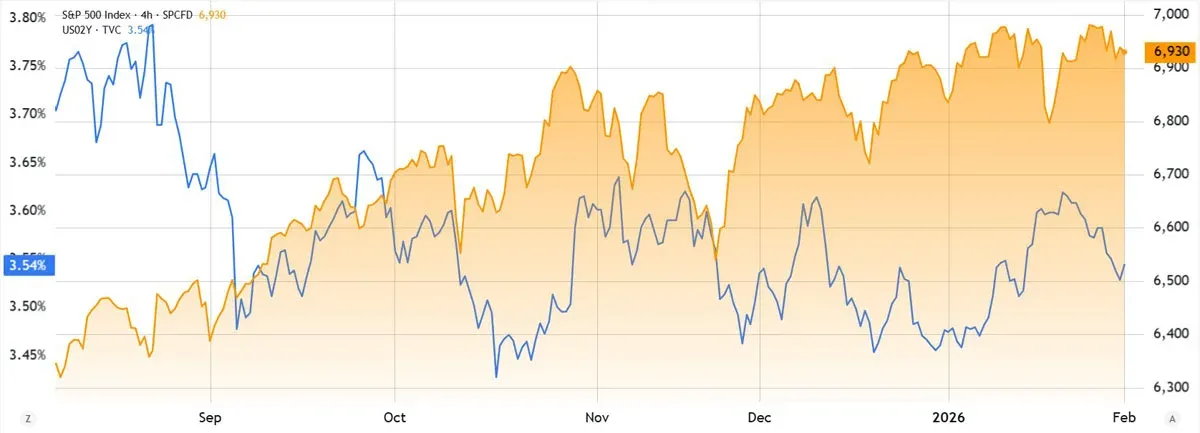
U.S. Treasury Yields and the S&P 500
- U.S. 2‑year Treasury yield (left) is holding at 3.54 %, unchanged from three weeks ago. Should demand for Treasuries surge, the yield could dip below 3.45 %, reminiscent of the October 2025 U.S. government shutdown episode.
- S&P 500 index (right) was only 0.4 % below its all‑time high on Monday, indicating strong confidence that any partial U.S. government shutdown can be resolved quickly. House Speaker Mike Johnson told Fox News that a related agreement is expected by Tuesday.
Bitcoin Derivatives Show Resilience During a 40.8 % Decline
According to CNBC, technology giant Oracle (ORCL US) announced plans to raise up to $50 billion in 2026 through debt and equity financing to meet cloud‑service contract obligations, easing market concerns around the artificial‑intelligence sector. Previously, Oracle’s expansion into AI had briefly pushed its share price down 50 %.
The sturdiness of Bitcoin derivatives indicates that, despite Bitcoin’s 40.8 % slide from its $126,220 October 2025 peak, professional traders have not turned aggressively bearish. Normally, an excess of short‑bias demand would cause futures contracts to trade at a discount to the spot market (a “backwardation”).
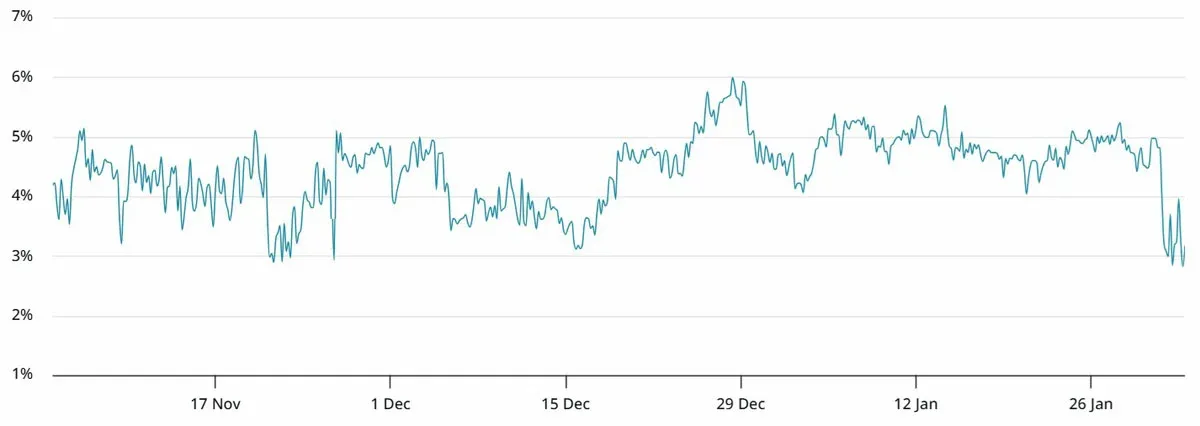
Futures Basis Rate
- The 2‑month Bitcoin futures basis rate (source: Laevitas.ch) stood at 3 % on Monday, indicating weak bullish leverage demand. In a neutral environment, this metric typically ranges between 5 %–10 % to compensate for the longer settlement period.
- Open interest in Bitcoin futures remains robust at roughly $40 billion, only a 10 % decline from 30 days earlier.
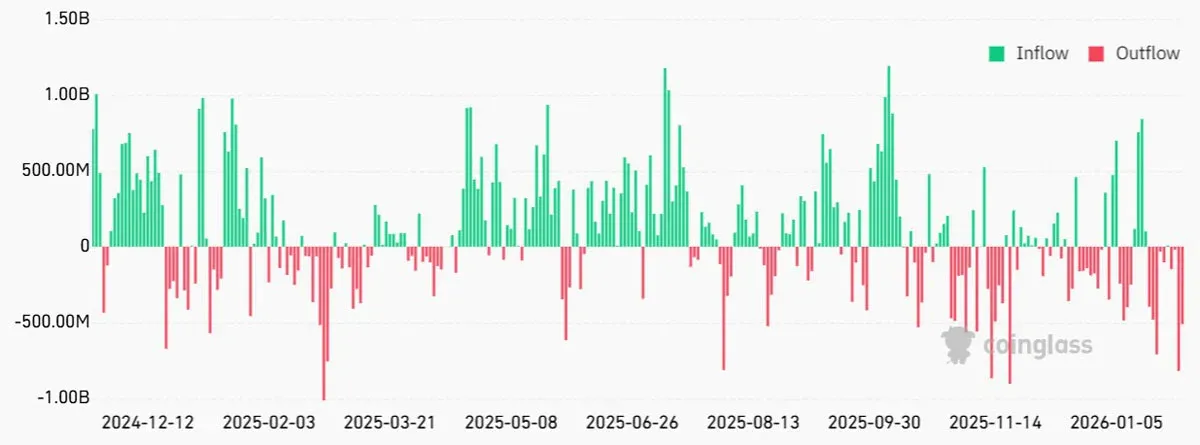
Spot ETF Cash Flows
- The U.S.–listed spot Bitcoin ETF has recorded a cumulative net outflow of $3.2 billion since January 16, which, while causing some concern among traders, still represents under 3 % of the product’s total managed assets.
- Strategy (MSTR US) has been subject to unfounded speculation, causing its share price to trade below net asset value. The market worries that the firm might sell part of its Bitcoin holdings. Strategy disclosed in December 2025 that it holds $1.44 billion in cash reserves to cover dividend and interest obligations.
Conclusion
Even though outflows and certain macro factors continue to exert pressure on Bitcoin (BTC), a combination of futures basis levels, ETF size, and U.S. Treasury yields suggests that the $75,000 support zone remains relatively resilient. A short‑term bottom may already be forming around the $75k mark.
These are the four main reasons why Bitcoin’s 2026 price may have already bottomed near $75,000. For further analysis, stay tuned to Bitaigen’s upcoming reports.
Related Reading
- Bitcoin Near $90,000 as Trump Promises Crypto Bill
- Bitcoin Decline: Deleveraging, AI Pull‑Back, Quantum Risks
- Bitcoin Hacker Ilya Lichtenstein Freed Under Trump Act
💡 Register on Binance with referral code B2345 for the maximum trading fee discount. See Binance complete guide.



