
 Bitaigen Research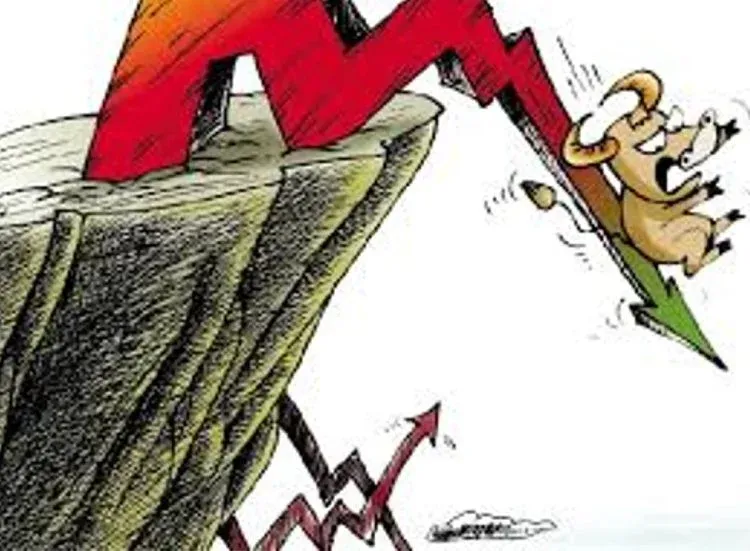
A massive crash repeats.
The current sharp decline in Bitcoin is the result of multiple factors converging, including heightened geopolitical risk, expectations of tighter liquidity from the U.S. Federal Reserve, and continued net outflows from spot ETFs, which have rapidly compressed market risk appetite.
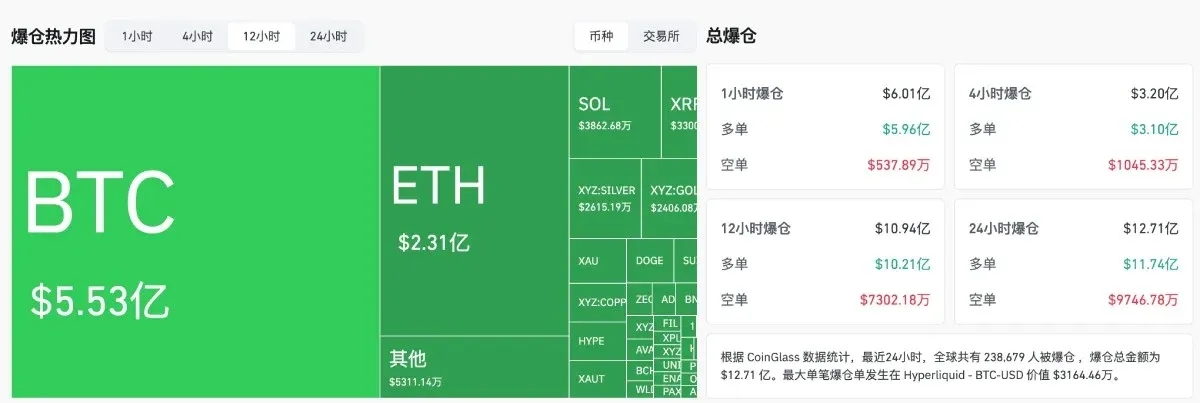
OKX market data shows that from last night to this morning Beijing time, Bitcoin (BTC) plunged quickly from around $88,000, briefly falling below $81,200, a 24‑hour drop of more than 7%; Ethereum (ETH) slid from a low of $2,940 to $2,690, a 24‑hour decline of nearly 10%; Solana (SOL) retreated from $123 to around $112, a 24‑hour fall of over 8%. Coinglass figures indicate that in the past 12 hours the market saw liquidations totalling $1.094 billion, with long‑position liquidations alone reaching $1.021 billion; nearly 240 000 traders were liquidated in the last 24 hours.
This decline was not triggered by a single negative catalyst; rather, it is the outcome of several factors releasing pressure simultaneously.
In this article we outline the multiple drivers behind Bitcoin’s recent sharp correction—from geopolitical tension to Federal Reserve liquidity tightening, to spot‑ETF outflows—providing a comprehensive analysis of how market sentiment shifted toward risk aversion. Charts and data are used to help readers identify potential trends and manage risk effectively.
Tensions Suddenly Escalate, Geopolitical Risk Resurfaces in the Market
- Geopolitical risk: Although recent events have not escalated into outright conflict, the “highly opaque, unverifiable, and unpredictable” environment alone is enough to influence market behaviour.
- In an already tight‑liquidity context where risk appetite has been waning, the uncertainty surrounding geopolitics is quickly priced in, prompting capital to reduce directional exposure rather than continue betting on high‑volatility assets.
FOMC “Hawkish Landing” Reprices Liquidity Expectations
The Federal Reserve kept its benchmark rate unchanged at the 3.50%‑3.75% range during the January FOMC meeting and emphasized in the statement that unemployment had stabilized while inflation remained elevated. Although the messaging aligned with market expectations, it delivered a “expectations close‑out” on the sentiment front—the market’s vague hopes of near‑term rate cuts or a policy pivot were formally compressed, if not erased.
- Situations where “positive news can no longer be overstretched” often trigger a pull‑back in risk assets. Since 2025, Bitcoin has repeatedly retreated after FOMC meetings, following the same mechanism: liquidity did not arrive as early as anticipated.
- When positions pile up and leverage rises, this “boot‑on‑the‑ground” confirmation can unleash risk release, becoming a key catalyst for a domino effect.
Not Only Crypto Is Falling, US Stocks and Precious Metals Turn Red Simultaneously
- US equities: The Nasdaq‑100 fell about 1.6%, the S&P 500 dropped roughly 0.75%, and the Dow Jones Industrial Average slipped around 0.2%. The technology sector was especially weak, dragging down overall risk appetite.
- Precious metals: Gold, after a recent rally, suffered a sharp correction as traders took profits; silver also retreated quickly from its highs, showing a pronounced pull‑back.
These moves indicate that capital is not simply rotating from risk assets to traditional safe‑haven assets, but is broadly reducing exposure across the board in a volatile environment.
Continuous ETF Outflows Diminish Crypto Market Absorption Capacity
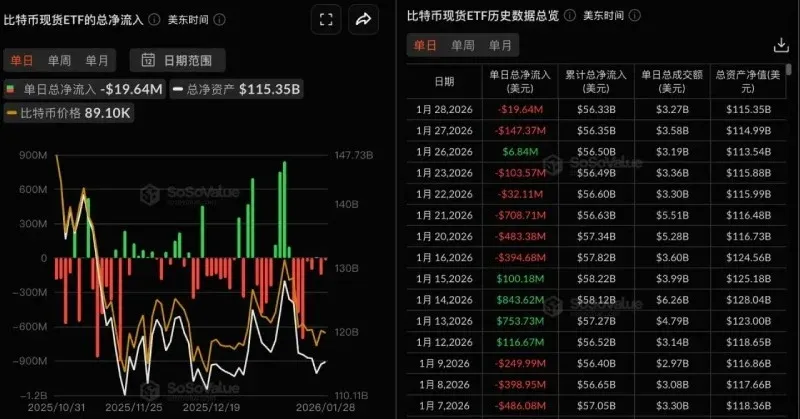
- Spot Bitcoin ETF data shows sustained net outflows over the past week, with several days seeing single‑day withdrawals exceeding $100 million and total net outflows surpassing $1 billion.
- More importantly, the outflows are continuous, multi‑day, and trend‑like, suggesting that institutional capital is not “buying the dip” to provide a bottom, but rather is trimming overall risk exposure while awaiting clearer macro and market signals.
In the absence of ongoing ETF purchases, the market relies more heavily on existing capital to absorb selling pressure. Once key support levels are breached, sell pressure quickly dominates, buy orders lag behind, and price can only find a new equilibrium by falling further.
Not a Black Swan, but a Concentrated Release of Forced Risk‑Off
The essence of Bitcoin’s current decline is a market‑wide repricing of risk assets after multiple risk factors converged:
- Escalating geopolitical uncertainty;
- Revised macro‑liquidity expectations;
- Persistent net outflows from ETFs, creating a structural gap in demand.
Together, these drivers prompted the market to “hit the brakes.” With long‑term capital and passive buying absent, the price slipped below the heavily watched 100‑week moving average (around $85,000), a level that has acted as a “safety net” several times since last year and serves as a default defense for trend models and leveraged positions.
Key outlook
- If the price can reclaim and hold crucial technical zones, it may provide a foundation for stabilization;
- At the same time, monitoring whether risk capital is willing to re‑enter the market for pricing will be essential.
Until then, high volatility and low confidence may remain the prevailing short‑term theme.
That concludes this analysis of how geopolitical tension and tightening liquidity have dragged Bitcoin (BTC) into an uncontrolled rally. For more Bitcoin‑related content, search the Bitaigen (比特根) archive or continue browsing the articles below. Thank you for supporting Bitaigen (比特根)!
*Disclaimer: Cryptocurrency gains may be subject to taxation in your jurisdiction. Users in the United States should access Binance.US rather than the global Binance platform.*
Related Reading
- Bitcoin 2026 Price Forecast: Global Trends & Market Drivers
- Why Bitcoin Plummeted Below $60K: 3 Key Theories Explained
- Bitcoin Mining Difficulty Hits Record High as Ethereum Stablecoin Supply Soars t
💡 Register on Binance with referral code B2345 for the maximum trading fee discount. See Binance complete guide.



