 Bitaigen Research
 In this article we compile the research of ESG specialist Daniel Batten, systematically deconstructing the nine most common misconceptions surrounding Bitcoin’s energy debate. By citing multiple peer‑reviewed academic studies and empirical grid‑level data, we clarify the real impact of mining on electricity prices, energy mix, and grid stability. If you want to see the most authoritative clarifications and analyses in the industry, keep reading.

In a recent post on the X platform, ESG researcher Daniel Batten highlighted that the nine frequent accusations leveled at Bitcoin (BTC) mining have been disproved by several peer‑reviewed academic papers as well as empirical data from power‑grid operations. He stresses that any emerging, disruptive technology typically faces misinformation, data gaps, and public concern during its early rollout.
Bitcoin mining has not caused electricity prices to rise
Batten points out that, to date, there is no reliable statistics showing that ordinary households are paying higher electricity bills because of mining activity. He references multiple studies indicating that, in some regions, mining operations actually help lower local electricity prices by providing flexible load‑shifting capabilities. At the same time, directly comparing Bitcoin’s total energy consumption with a nation’s overall consumption can be misleading— the Intergovernmental Panel on Climate Change (IPCC) focuses more on the transformation of the energy mix than on raw consumption numbers alone.
“Although the Bitcoin network’s total energy use now exceeds that of Thailand or Poland, this does not mean it is driving ‘wasteful’ energy consumption.” — Batten
Resource consumption is decoupled from transaction volume, enhancing grid stability
The claim that each Bitcoin transaction consumes large amounts of electricity, water, and e‑waste is, according to Batten, unsupported by empirical evidence. Four peer‑reviewed studies have demonstrated that the correlation between Bitcoin’s energy usage and its transaction count is extremely low; in other words, an increase in transaction volume does not directly translate into a proportional rise in resource demand. The Cambridge University 2025 Digital Mining Industry Report corroborates this finding.
At the grid level, Batten notes that mining activity in regions with a high share of renewable generation—such as Texas—often supplies dispatchable load that smooths out fluctuations, thereby contributing positively to grid reliability.
Proof‑of‑Stake (PoS) is not automatically greener
Addressing the common narrative that Ethereum’s (ETH) shift to Proof‑of‑Stake (PoS) makes it inherently greener, Batten offers a counter‑argument. He believes equating energy consumption directly with environmental harm presents a one‑sided view. While the 2022 *Australian Financial Review* mentioned that Ethereum’s pre‑merge electricity usage was comparable to that of Chile, Batten points out that the Proof‑of‑Work (PoW) mechanism still holds unique advantages in reducing methane emissions, boosting grid resilience, and monetising otherwise idle renewable capacity. To date, no economically viable large‑scale alternative has emerged to utilise by‑products such as landfill gas.
Mining improves the utilisation efficiency of renewable energy
Batten emphasizes that the notion Bitcoin mining “steals” renewable energy from other users is a misconception. On the contrary, miners in many jurisdictions are directly consuming locally generated wind and solar power, turning energy that might otherwise be curtailed into productive work. For example, Africa’s “Gridless” project has already supplied renewable electricity to roughly 28,000 people.
He also cites peer‑reviewed research by Moghimi et al. and by Lai and You, which shows that Bitcoin mining can dramatically reduce curtailment rates for solar and wind power—often pushing utilisation above 90%—and improve the economics of micro‑grids. Batten further clarifies that “energy waste” is not an objective technical assessment but a value judgement; only when energy fails to generate human‑beneficial outcomes can it truly be called waste.
Re‑examining carbon‑emission perspectives
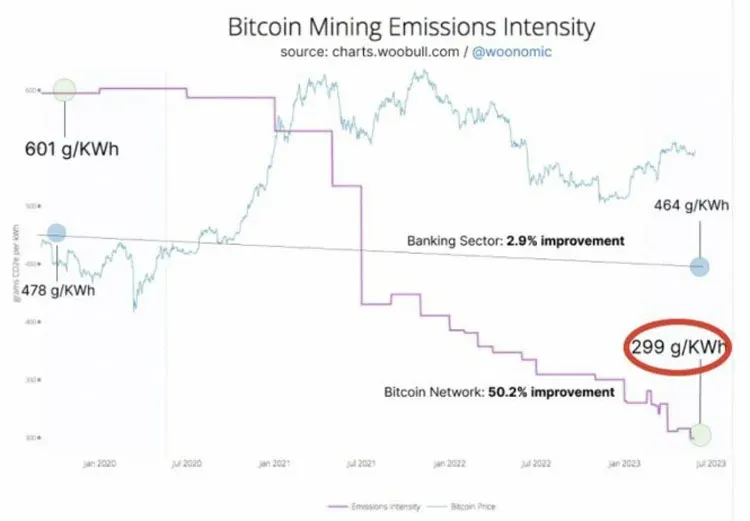
Although the media frequently label Bitcoin as a “high carbon‑footprint” project, Batten notes that mining itself does not emit carbon directly; the only Scope‑2 emissions stem from the electricity source used. Notably, over 50 % of global Bitcoin hash power now runs on sustainable energy, a proportion that is uncommon in many other sectors.
The above sections summarise the nine Bitcoin‑energy myths that ESG experts have refuted with data. For more details, follow the coverage from Bitaigen (比特根).
💡 Register on Binance with referral code B2345 for the maximum trading fee discount. See Binance complete guide.



