
 Bitaigen Research
In this article we outline the common price formations Bitcoin exhibits during periods of declining inflation, and the macro‑economic logic behind them. The goal is to help readers understand how policy, liquidity, and energy‑cost dynamics jointly shape BTC’s narrative and price action. To see how these patterns have driven market moves historically, keep reading.
4. Typical Price Patterns During Cooling Inflation
When inflation gradually eases, Bitcoin’s price often displays four recurring behavioral traits:
- Early‑stage volatility spikes as the market debates the possibility of a policy shift;
- A strong, relatively sustained rally triggered when expectations of rate cuts or a pause in hikes strengthen;
- High correlation with technology stocks at first, which then wanes as the macro environment stabilises;
- Reversals or the start of a new up‑trend frequently become visible before inflation actually hits bottom.
The underlying logic includes: lower discount rates raising the present value of scarce assets, overall liquidity improvements making risk assets more attractive, reduced economic uncertainty boosting long‑term confidence, and stabilising energy costs benefiting mining operations. Historically, the super‑position of these factors has often coincided with bullish Bitcoin phases.

3. How Cooling Inflation Influences Bitcoin’s Trajectory
The fall in inflation rates does not map one‑to‑one onto Bitcoin’s price; instead it creates multi‑layered effects through changes in the macro environment:
- From an inflation‑hedge to a beneficiary of accommodative policy – As inflation pressure eases, hedging demand diminishes and investors gravitate toward assets that perform well in a looser monetary setting. Bitcoin typically receives a boost when central banks signal a pause or cut in rates, real yields stabilise, and liquidity expectations rise.
- Renewed focus on store‑of‑value qualities – A softer inflation outlook brings more stable economic expectations, prompting market participants to revisit Bitcoin’s fixed supply as a long‑term store of value.
- Speculative sentiment and retail participation rebound – With macro‑risk easing, market mood shifts from fear to speculation, leverage usage climbs, alt‑coin trading activity spikes, and retail buying pressure intensifies.
- Institutional positioning becomes more aggressive – Lower uncertainty makes institutions more comfortable allocating Bitcoin within portfolios, driving ETF inflows and balance‑sheet holdings upward.
1. Inflation, the Macro‑Economic Cycle, and Bitcoin’s Dual Role
In modern economic cycles, inflation is a pivotal variable that steers policy direction. High inflation typically leads central banks to raise rates and tighten liquidity, pushing investors toward safer assets; a decline in inflation usually coincides with looser liquidity, higher risk appetite, and a market focus on growth opportunities.
Within this macro backdrop, Bitcoin serves two contrasting functions:
- Store of value – Its capped supply and predictable issuance schedule give it a gold‑like scarcity characteristic.
- High‑volatility tech‑style asset – Driven by liquidity, market sentiment, and broader risk cycles, its price can swing dramatically.
Cooling inflation often forces these two roles to intersect—or even clash—at different stages, creating a distinctive market narrative.
2. Historical Examples: Bitcoin’s Behaviour During Past Inflation‑Cooling Phases
Reviewing previous economic cycles helps illustrate how declining inflation concretely impacts Bitcoin’s price and volatility.
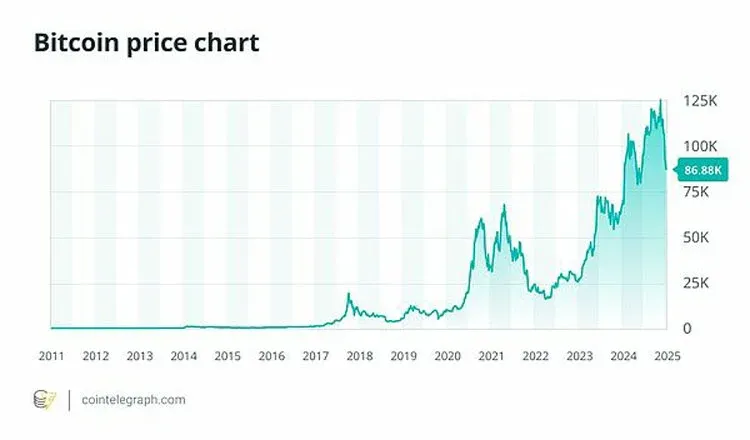
2022‑2024: Bitcoin’s Shift Toward a Macro Asset
Inflation peaked at a 41‑year high in 2022 and then receded throughout 2023‑2024. During this interval Bitcoin displayed several hallmarks:
- It was no longer viewed as a direct inflation hedge;
- Sensitivity to liquidity and interest‑rate expectations rose sharply;
- ETF launches, institutional capital inflows, and tokenisation narratives deepened.
As inflation eased and risk appetite recovered, Bitcoin gradually migrated from a crisis‑defence posture to a growth‑oriented asset role.
2018‑2019: The Dawn of Institutional Participation
After Bitcoin’s 2017 peak, central banks worldwide tightened monetary policy and inflation began to cool. Throughout 2018‑2019 Bitcoin largely traded within a range, yet a few pivotal developments occurred:
- U.S.‑based financial institutions started assessing Bitcoin’s non‑correlated hedge potential;
- Custody services and futures markets were introduced;
- The “store of value” concept gained traction among industry participants. Although the inflation cooldown did not instantly trigger a price rally, it laid the groundwork for later institutional entry.
2013‑2015: Early Digital‑Gold Narrative
Following Bitcoin’s first major surge in 2013, global inflation rates fell and risk appetite tightened, ushering in a prolonged consolidation phase. Investors began likening Bitcoin to gold, treating it as a prospective long‑term store of wealth. Price action flattened, but the underlying fundamentals gradually strengthened.
Bitcoin price chart
5. Cooling Inflation: Why Bitcoin’s “Safety Signal” May Be a Misconception
While a decline in inflation is often read as a positive sign for economic health, historical cycles show that subsequent pullbacks or sudden risks can still materialise. Common misreads include:
- Over‑optimism about rate‑cut expectations;
- Assuming a brief dip in inflation will stay low indefinitely;
- Ignoring abrupt risk‑aversion events;
- Underestimating potential regulatory shocks.
Moreover, each Bitcoin cycle is powered by a distinct mix of drivers. The current inflation‑cooling environment differs from past episodes in several new variables:
- Spot Bitcoin ETFs have launched, creating fresh institutional demand;
- Tokenisation and stable‑coin ecosystems have reached a mature stage;
- Scarcity‑centric narratives now sit at the core of Bitcoin’s selling proposition;
- Investors display a more nuanced understanding of Bitcoin’s reaction across varying liquidity conditions.
Thus, while declining inflation can reinforce Bitcoin’s store‑of‑value appeal and macro‑sensitivity, it should not be treated as a singular “safety signal.” Market participants must continue to monitor macro‑economic developments, regulatory updates, and other risk factors.
---
This systematic overview explains how cooling inflation shapes Bitcoin (BTC) narrative and price dynamics. For deeper analysis of Bitcoin’s performance in inflationary environments, follow additional articles from Bitaigen.
*Note: Cryptocurrency gains may be taxable in your jurisdiction; consult local tax regulations. U.S. readers should use Binance.US for any exchange activity, while other regions may access the global Binance platform.*
Related Reading
- Dormant Bitcoin Wallet Fires $10M Transfer, Market Reacts
- Fed Rate Cuts, QE Fuel Bitcoin Bull Post‑CPI
- Arkham Traces Massive Mt. Gox Bitcoin Moves, Market Impact
💡 Register on Binance with referral code B2345 for the maximum trading fee discount. See Binance complete guide.



