
 Bitaigen Research
 Bitcoin is currently the cryptocurrency with the highest market capitalization and the greatest influence, but it remains controversial in the realm of traditional fiat currencies; its largest holder is the anonymous founder Satoshi Nakamoto, estimated to own about 1.1 million coins.
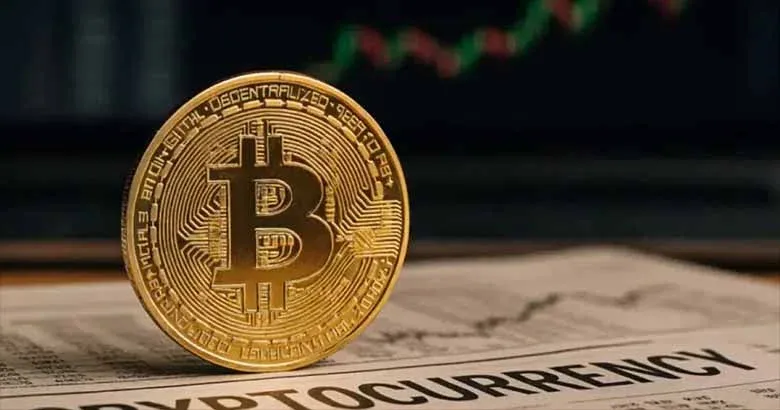
In this article we outline Bitcoin’s market cap and functions, dissect whether it deserves the title “the biggest currency in history,” and trace clues about its largest holder’s identity. By means of multi‑dimensional comparisons and recent case studies, we help readers clarify Bitcoin’s real standing and potential impact, making it worth a careful read.
Is Bitcoin the biggest currency in history?
Bitcoin is hailed as the “king of cryptocurrencies,” and its market capitalization has repeatedly broken the $1 trillion threshold, regularly ranking among the top five global asset classes. Compared with traditional fiat currencies, Bitcoin’s market cap at several points has exceeded the circulating value of major fiat currencies such as the Swiss franc (CHF) and the US dollar (USD).
Nevertheless, whether it can be called “the biggest currency in history” remains debated:
- Legal perspective: Most jurisdictions classify it as a digital commodity or a high‑risk investment product rather than legal tender.
- Functional perspective: Its price volatility is high, and whether it can fully serve the value‑measurement role of traditional money is still uncertain.
Despite these issues, Bitcoin has gained broad recognition in the following areas:
- Store of value: Often described as digital gold, it possesses inflation‑resistant characteristics.
- Cross‑border transfer: Leveraging the blockchain, it enables peer‑to‑peer settlement that is fast and lowers trust costs.
- Statutory adoption: Countries such as El Salvador have declared it legal tender.
Fundamentally, Bitcoin is a decentralized digital asset with a fixed supply of 21 million units, and it has become the benchmark for global digital assets.
Is Bitcoin reasonable?
The reasonableness of Bitcoin does not stem from it perfectly meeting every monetary attribute; rather, it offers an alternative that operates independently of the traditional financial system. Evaluating its reasonableness should consider several dimensions:
- Technical innovation: As the first successful application of blockchain, Bitcoin demonstrates that global value can be transferred peer‑to‑peer without centralized credit backing.
- Asset properties: Its fixed supply creates scarcity, making it an experimental hedge against the devaluation of fiat credit in high‑inflation environments; price volatility reflects a nascent asset seeking its fair value.
- Regulatory challenges: Because of its pseudonymous nature, it can be misused for illicit activity, and its sharp price swings make it difficult to fully replace sovereign fiat currencies for everyday transactions.
Who is Bitcoin’s largest holder?
The largest holder currently known is Satoshi Nakamoto, estimated to control roughly 1.1 million Bitcoin, mined in the early days and never moved, spread across multiple dormant addresses. In addition to individual holdings, major institutions and governments also possess substantial amounts of Bitcoin:
| Holder | Notes |
|---|---|
| **Satoshi Nakamoto** | Approximately 1.1 million BTC, long‑term untouched |
| Institutional investors (e.g., BlackRock, Fidelity) | Hold BTC via Bitcoin ETFs and exchange‑based custody |
| Governments (e.g., United States) | Acquire BTC through law‑enforcement seizures or auctions |
The identity of Satoshi Nakamoto remains unresolved in both academia and industry:
- Some view the name as a single anonymous individual who may have concealed their identity for security or decentralization reasons.
- Others speculate that Satoshi Nakamoto could be a collective of cryptographers, computer scientists, and economists, or even a project of a large technology corporation.
To date, none of the theories regarding the true identity have been officially confirmed.
---
This article addresses the questions “Is Bitcoin the biggest currency in history?” and “Who is Bitcoin’s largest holder?” to help readers understand Bitcoin’s position within the digital asset ecosystem and the distribution of its major holders. For more history and technical details about Bitcoin, feel free to search for reports on Bitaigen or continue browsing the related articles below.
Related Reading
- Bitcoin MVRV & MVRV‑Z: Spot Bottoms Using On‑Chain Metrics
- BIP-110: Enhancing Bitcoin Node Access & Block Space
- Bitcoin Price Decline Slows Yet Bear Market Persists
💡 Register on Binance with referral code B2345 for the maximum trading fee discount. See Binance complete guide.



