
 Bitaigen Research
 Is Buying and Selling Bitcoin in Mainland China Illegal?
This guide aims to clarify a fundamental question: Is it currently illegal to buy and sell Bitcoin in Mainland China?
In Mainland China, individuals holding and trading Bitcoin are not in themselves committing a crime. However, if the cryptocurrency is used for illegal foreign exchange, money laundering, financing, gambling, payment for illicit goods, or any other activity that violates financial regulations, such conduct is deemed unlawful. It may result in administrative penalties, fines, account freezes, or even criminal liability, and further legal repercussions could follow.
In this article we outline the regulatory landscape surrounding Bitcoin transactions in Mainland China for readers who are new to crypto assets. We clarify which actions are considered compliant, which may breach the law, and we provide a step‑by‑step safe‑operation workflow along with practical introductory tutorials. This will help you stay within the legal framework while minimizing risk. Keep reading for the details.
Core Question: Is Trading Bitcoin Illegal?
For newcomers preparing to enter the cryptocurrency space, the primary concern is legality. Holding Bitcoin and engaging in ordinary buy‑sell activities does not attract criminal prosecution; it is treated as an investment asset, and earning profit from price differentials is permitted.
The decisive factor, however, is the purpose of the transaction. If the digital asset is employed for illegal foreign exchange, money laundering, or other prohibited financial activities, the user will be violating relevant statutes.
Four Typical Illegal‑Behavior Cases
Below are four representative categories of illicit conduct, designed to help you clearly identify the legal red lines.
Case 1: USDT “Arbitrage” (Brick‑Moving) – Unwittingly Becoming an Accomplice to Money Laundering
The essence of USDT arbitrage, often called “brick‑moving,” is: you purchase USDT on an exchange using your real identity, then resell it at a markup to a user who needs to “clean” illicit funds. The counterpart sends you “dirty money,” and you return “clean” USDT to them.
By doing so, you act as a “buffer” within a money‑laundering chain, assisting criminals in converting illegal proceeds into hard‑to‑trace crypto assets. Under Chinese law, such behavior can lead to a three‑to‑five‑year prison sentence.
Case 2: Cash‑Out Operations – High‑Risk Actions That Make It Hard to Prove Innocence
Many users believe that converting crypto to cash on the street is safer and can avoid bank account freezes. In reality, if any portion of the cash you receive is tainted, the entire batch is regarded as proceeds of crime. Judicial authorities will find it difficult to determine whether you were aware of the illicit origin.
Conversely, using a bank transfer leaves an audit trail that can help demonstrate that you unintentionally received questionable funds. Cash transactions are far more likely to be judged as “knowing participation.”
Case 3: Falling for “Mining” Scams – Pyramid Schemes and Total Loss of Capital
After acquiring USDT or Bitcoin, some users are lured into so‑called “Dogecoin mining machines,” “USDT mining machines,” and similar projects. In practice:
- Traditional proof‑of‑work (PoW) mining is no longer viable for ordinary retail investors; the hashing power is heavily concentrated in professional mining farms.
- The majority of apps or projects that market themselves as “mining” are, in fact, pyramid‑type Ponzi schemes.
- If you earn commissions by recruiting down‑line participants, you may be violating laws against organizing or leading a pyramid scheme.
- If the scheme collapses without any profit, the capital you invested is lost entirely.
Case 4: Using a USDT Card to Withdraw Cash from Domestic ATMs – An Act That Actively Exposes You to Legal Risk
Some users obtain a USDT Card, linking their crypto holdings to a physical bank card. Using the card for everyday purchases carries a relatively moderate risk, but withdrawing cash from an ATM inside China triggers several red flags:
- ATMs are equipped with high‑definition cameras and facial‑recognition technology that compare the cardholder’s face with the card’s registered attributes.
- When a Chinese citizen attempts to withdraw using a foreign‑issued card, the bank’s risk‑control system automatically flags the transaction as high‑risk, which can quickly generate a regulatory alert.
Therefore, even if you own a USDT Card, you should avoid cash withdrawals at domestic ATMs.
How to Buy and Sell Bitcoin Safely and Compliantly?
Step 1: Purchase USDT (Funding Your Account)
1. Open the C2C “Buy Crypto” Interface
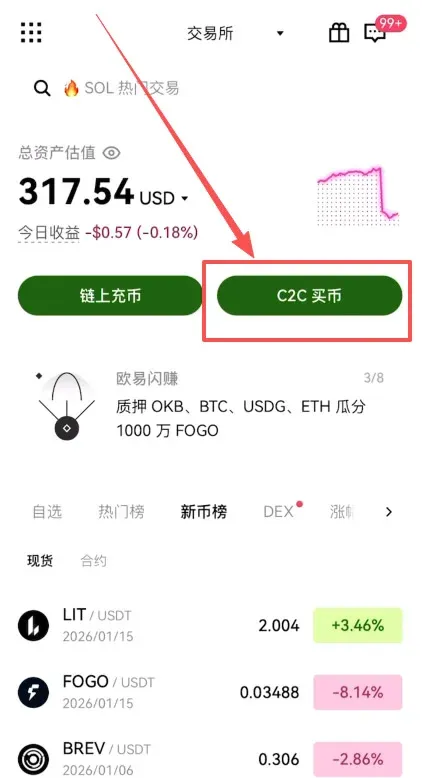
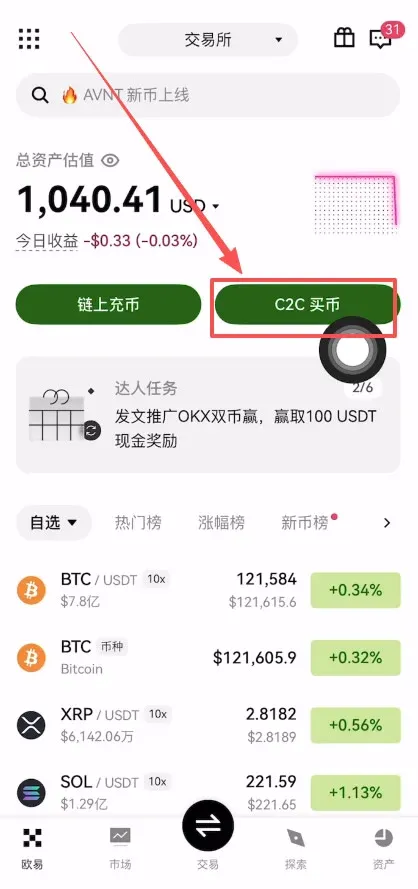
Launch the OKX (formerly known as OKEx) mobile app – you can register via the official registration page or download the app from the official download link – and tap the “C2C Buy” button at the top of the home screen.
We recommend checking the boxes for “Show only unverified orders” and “Beginner‑friendly orders” to filter out sellers that require cumbersome identity verification.
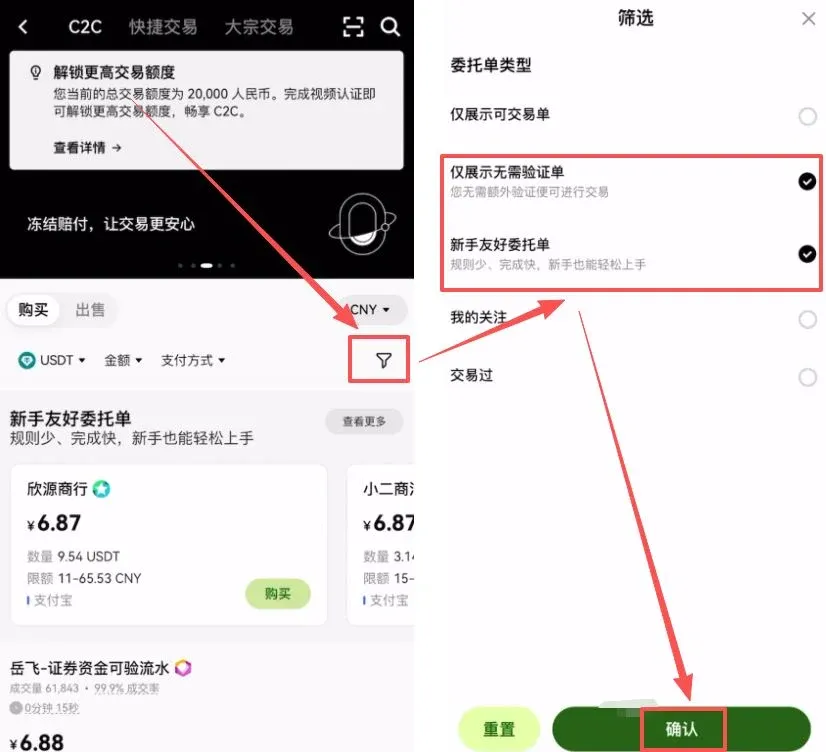
2. Choose a Payment Method
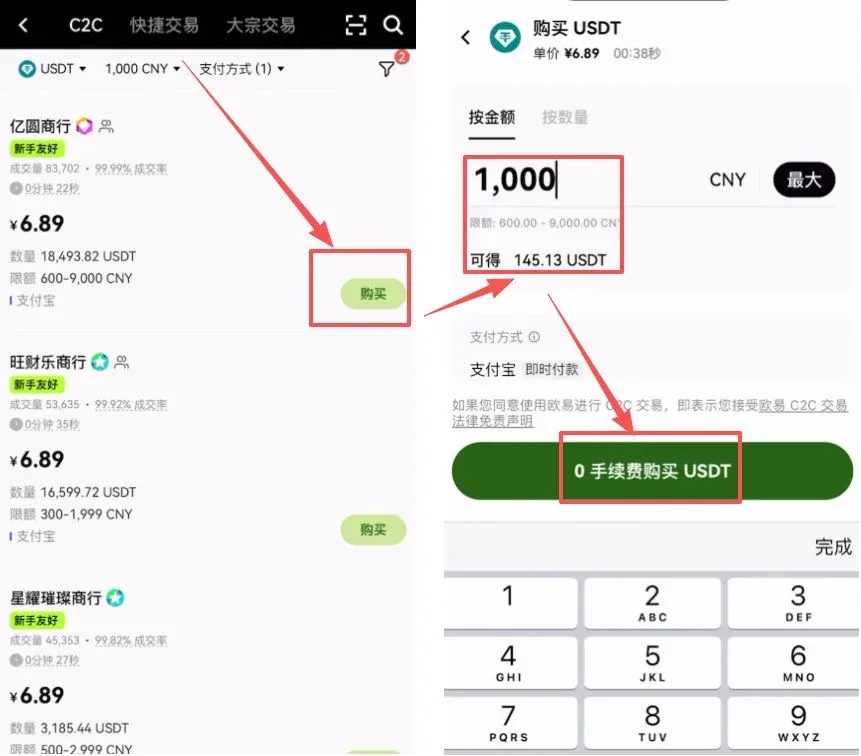
Select either WeChat Pay or Alipay according to your personal habit, and set your desired purchase amount (for example, CNY 1,000).
3. Identify a Trustworthy Seller
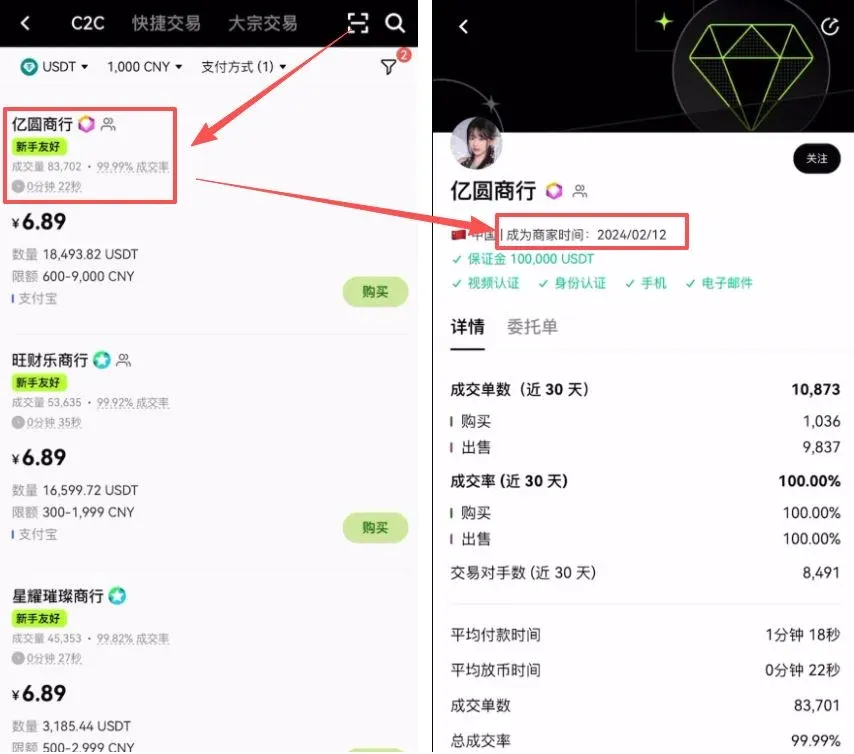
Pay close attention to the seller’s trading volume and completion rate. Prioritize merchants who have been on the platform for more than six months; the longer an account has survived, the more experience the operator likely has in handling funds safely.
Step 2: Secure Payment and Risk Prevention
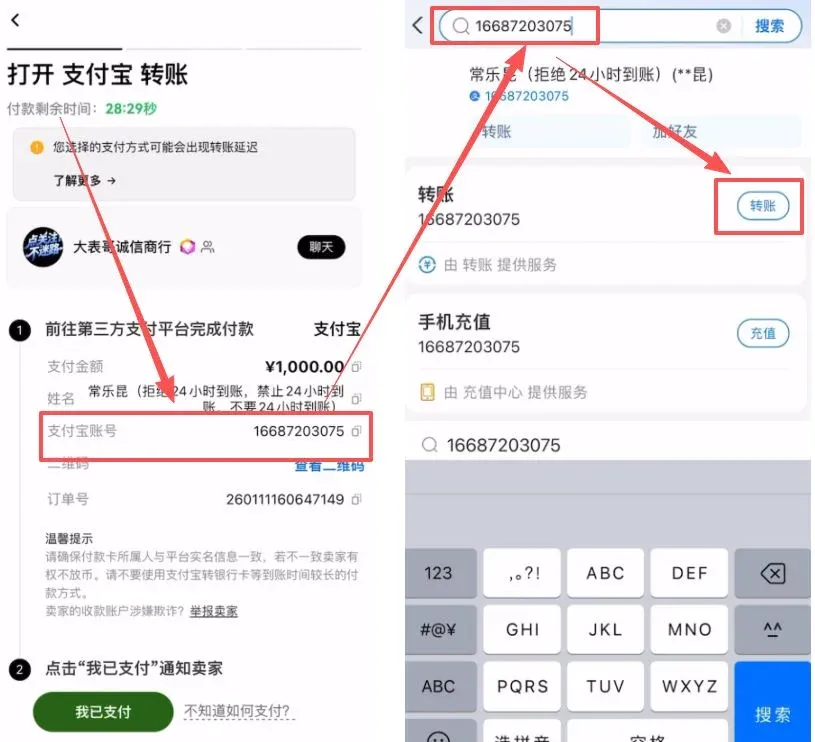
After selecting a seller, click Buy. The system will generate an order. Observe the following precautions:
- Real‑Name Transfer: The payment must be made from an account that is registered under your own real name.
- No Remarks: Do not include any keywords related to Bitcoin, crypto, or other sensitive terms in the transfer note.
- Immediate Settlement: Avoid choosing delayed‑payment options; opt for instant settlement.
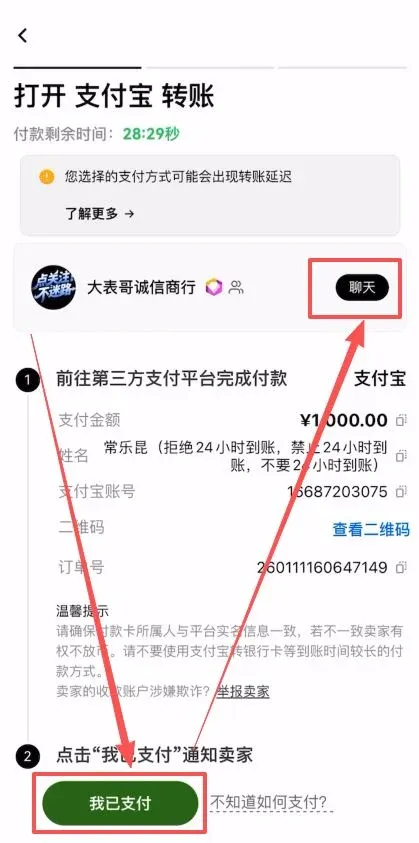
Once the payment is completed, click “I have paid”. After the seller confirms receipt, the USDT will be credited to your OKX account.
Step 3: Transfer Funds (From Funding Wallet to Trading Wallet)
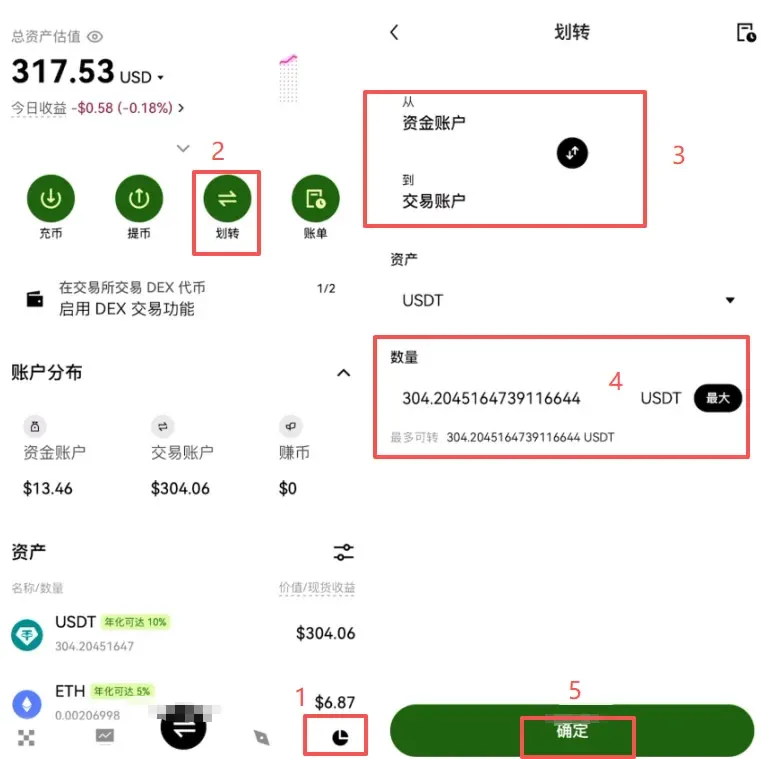
The USDT you just purchased is initially stored in the Funding Wallet. To engage in spot or margin trading, you need to move it to the Trading Wallet.
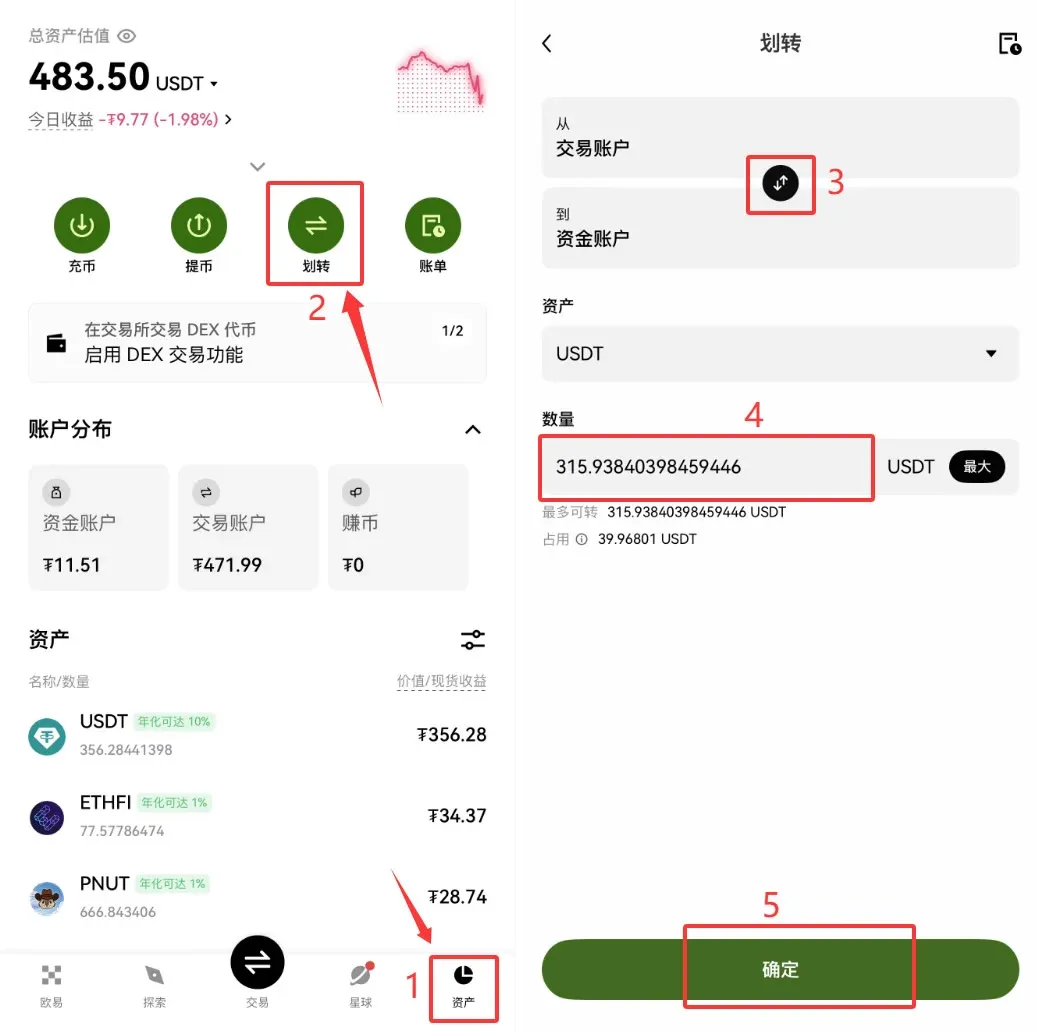
Navigate to the Assets page, click Transfer, select USDT, and move the amount from Funding Wallet → Trading Wallet. This internal transfer is free of charge and completes instantly.
Step 4: Spot‑Market Purchase of Bitcoin
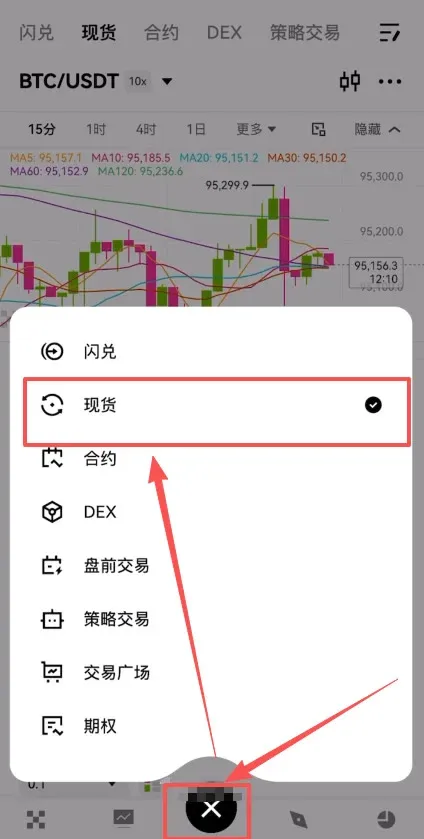
- Enter the Trading Interface: Tap the central “Trade” button at the bottom and select Spot.
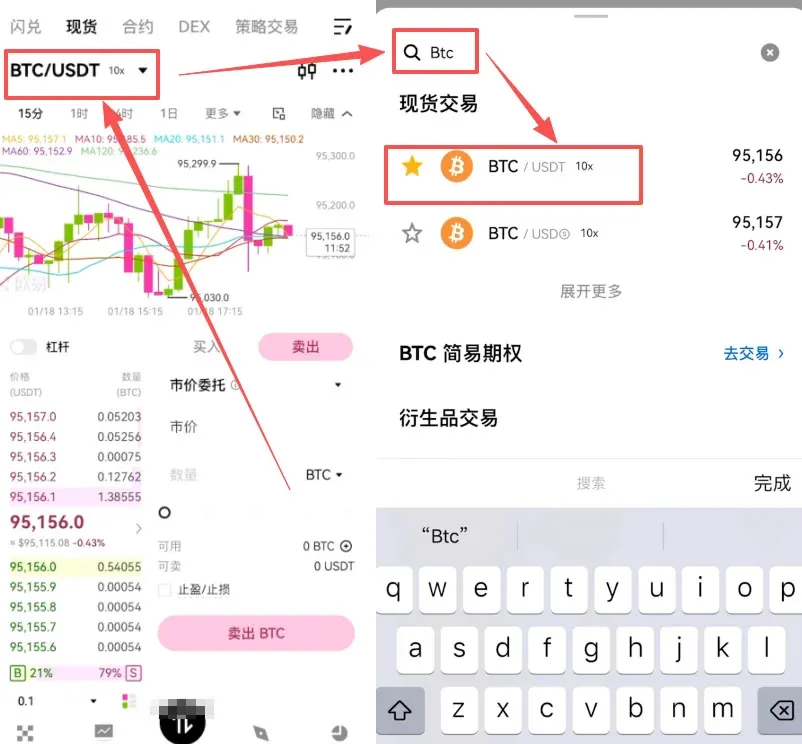
- Select the Trading Pair: Use the search box at the top‑left to find and select BTC/USDT.
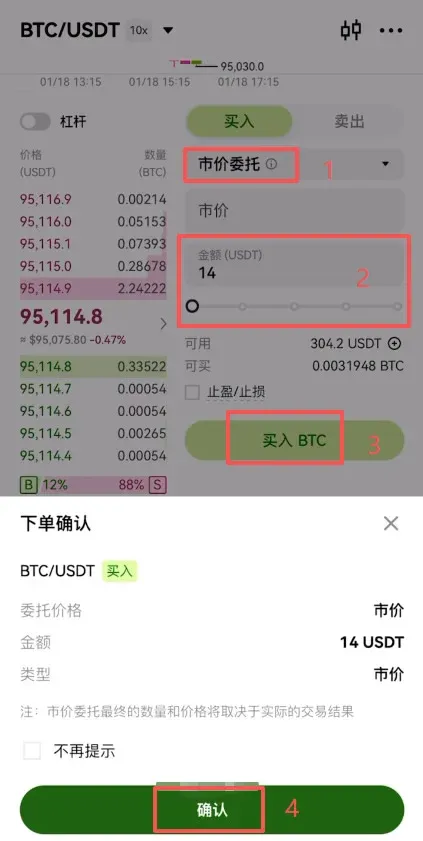
- Execute the Buy Order: For beginners, a market order is recommended. The system will fill the order at the best available price instantly. Enter the amount you wish to spend, then click Buy BTC.
- Sell Procedure: The selling workflow mirrors the buying process. Switch to the Sell tab, adjust the quantity, and confirm. The BTC will be converted back into USDT.
Step 5: Selling Bitcoin and Withdrawing Funds (Cash‑Out)
1. Sell Bitcoin
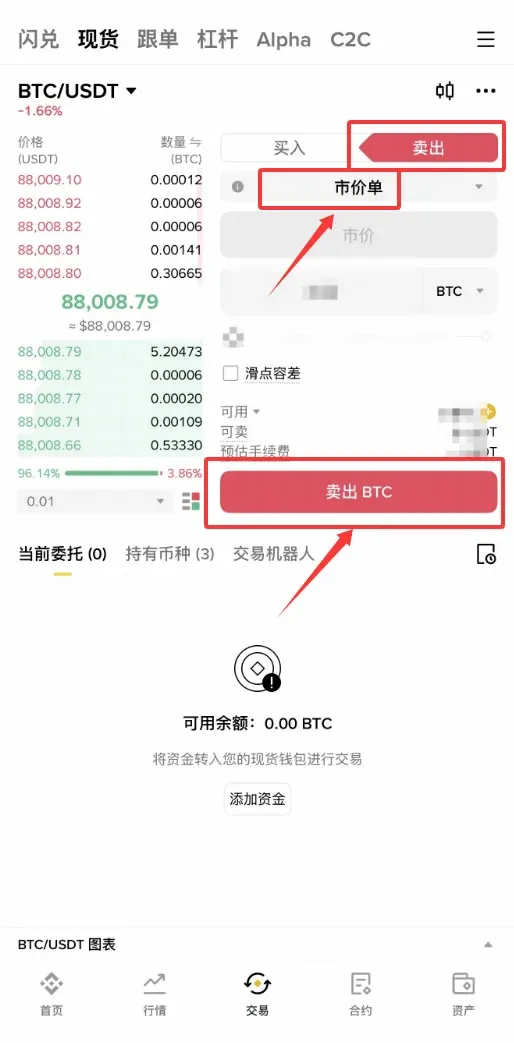
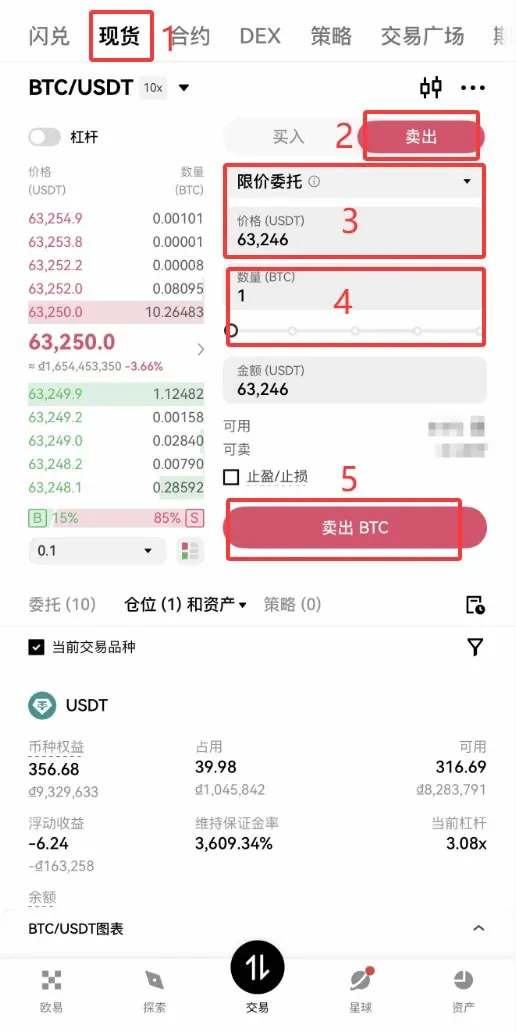
On the spot‑market screen, click Sell, set the quantity to the maximum (or your desired amount), and confirm the sale.
2. Transfer USDT Back to the Funding Wallet
Return to the Assets page and move all USDT from the Trading Wallet back to the Funding Wallet.
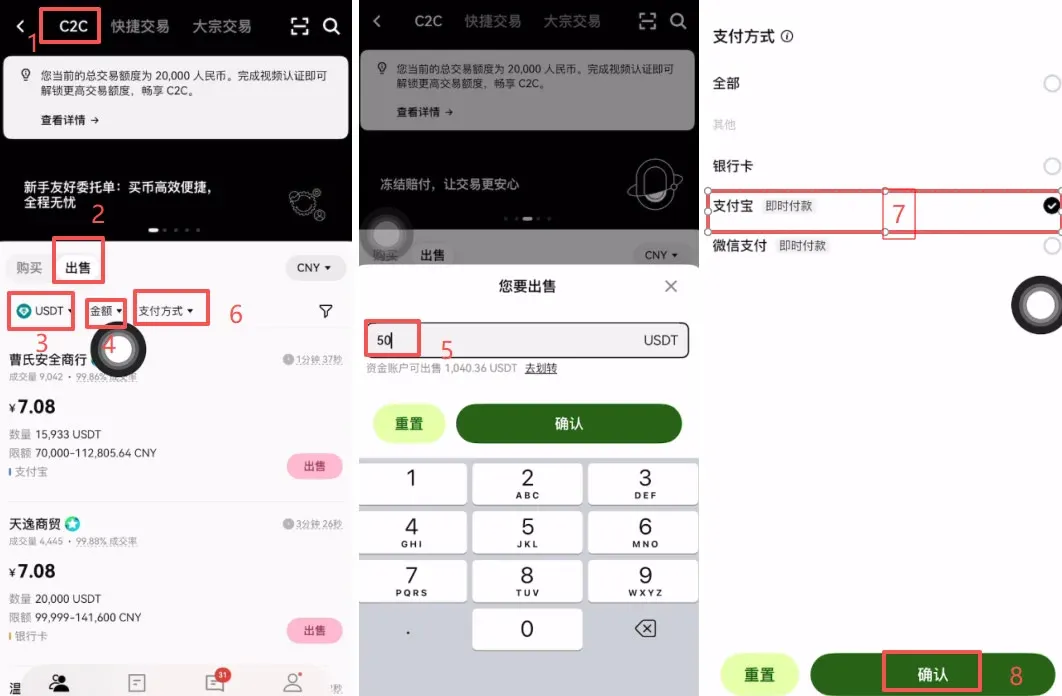
3. C2C Sale of USDT
Go back to the OKX home screen and tap C2C Buy to enter the sell‑side channel. Filter for merchants with high trading volume, high completion rates, and long registration histories (e.g., “XinJi HuaXia”, 100 % completion over the past 30 days, average payment time 1 min 44 sec).
Click the merchant’s Order → Sell, enter the amount you wish to off‑load (e.g., 50 USDT). The platform will display the estimated RMB amount you will receive. Confirm and submit a “0‑fee USDT sell” order.
Important Reminder:
- If the counter‑party has not completed KYC verification, or if the payment is being routed through a relative’s account, decline the transaction.
- After the platform notifies you that the payment was successful, first verify that your account balance has actually changed before clicking Confirm Release.
The Correct Way to Withdraw Funds Safely – Final Recommendations
Preferred Withdrawal Channels
The most reliable cash‑out route remains the C2C (peer‑to‑peer) platform of large exchanges such as OKX, Binance, Gate.io, Bybit, or Bitget. Choose merchants that carry a “100 % Compensation” badge, and prefer receiving payment through a secondary WeChat or Alipay account to reduce the likelihood of your primary accounts being restricted.
| Exchange Platform | Spot‑Trading Fee | Futures/Derivatives Fee | KYC Required | Fiat Deposit/Withdrawal Options |
|---|---|---|---|---|
| OKX (欧易) | 5.00 % | 0.08 % – 0.10 % | ✅ | Alipay, WeChat (CNY) |
| Binance (global) | 5.00 % | 0.10 % – 0.10 % | ✅ | Alipay, WeChat (CNY) |
| Binance.US (for U.S. users) | 5.00 % | 0.10 % – 0.10 % | ✅ | ACH, SEPA, SWIFT (USD) |
| Gate.io | 5.00 % | 0.10 % – 0.10 % | ✅ | Alipay, WeChat (CNY) |
| Bybit | 4.90 % | 0.10 % – 0.10 % | ✅ | P2P, Bank Card (multiple fiat) |
| Bitget | 4.90 % | 0.10 % – 0.10 % | ✅ | Bank Card, P2P (multiple fiat) |
Tax Note: Cryptocurrency gains may be subject to tax in your jurisdiction. Please consult a local tax professional to ensure compliance with applicable tax laws.
Related Reading
- Bitcoin Declared Dead 415 – $100 Million from $100 Bets
- How to Buy Bitcoin on OKX in 2026: Minimums, Fees & Security Tips
- Bitcoin Valuation Models: Cost, Scarcity, Network & Holding
💡 Register on Binance with referral code B2345 for the maximum trading fee discount. See Binance complete guide.



