
 Bitaigen Research
 Against the macro backdrop of significant fluctuations in global financial markets, a striking divergence in asset performance has captured widespread attention: on one side, the cryptocurrency market is undergoing a severe deleveraging process; on the other, Renminbi (RMB) assets are increasingly demonstrating safe-haven attributes. This "one falling, one steady" trend is not merely a divergence in price action, but a reflection of a profound shift in the logic of global capital allocation.

While the crypto market is deeply entrenched in a deleveraging storm, RMB-denominated assets have shown rare resilience. We observe that this divergence in performance signals a profound restructuring of global capital allocation logic. This article will provide an in-depth analysis of the macro drivers behind this phenomenon, explore the subtle shifts in the flow of risk-aversion sentiment, and help you see through the new trends of asset competition in this complex global environment.
RMB Assets: Shifting from Volatile Allocations to "Quasi-Safe Haven Assets"
During a turbulent period where Bitcoin’s single-day decline once exceeded 14%, triggering liquidations for hundreds of thousands of traders, RMB assets exhibited remarkable resilience. This stability is not accidental but is supported by robust fundamental data.
According to statistics, the scale of RMB bonds held by overseas investors has surpassed the $600 billion mark. In the first half of this year alone, net holdings of domestic stocks and funds by foreign capital reached $10.1 billion. The core momentum supporting this trend stems from the stability of China’s economic fundamentals—a 5.3% year-on-year GDP growth in the first half of the year injected much-needed confidence into the market. Furthermore, approximately 30% of the world’s central banks have explicitly stated their plans to increase the proportion of RMB assets in their reserves.
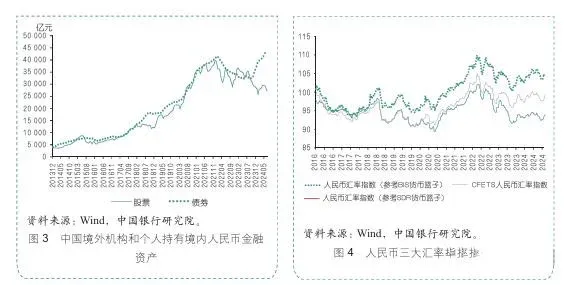
This performance signifies a fundamental change in the nature of RMB assets. They are gradually moving away from the category of high-volatility speculative instruments. With clear macro-policy expectations and a comprehensive industrial system, they are becoming an increasingly independent safe-haven choice in the eyes of global capital. For international investors, moving funds into these assets often involves standard global financial channels such as SWIFT or SEPA for fiat transfers, reflecting their growing integration into the global institutional framework.
The Bitcoin Crash: A "Death Spiral" Triggered by Multiple Bearish Factors
Simultaneously, the Bitcoin market is undergoing a grueling "stress test." Plummeting from its historical peak of approximately $126,000 in October 2025, Bitcoin at one point dropped toward the $60,000 level, representing a cumulative retracement of over 52% and wiping out roughly $1.2 trillion in market capitalization. As of February 12, although the price hovered around $66,981, downward pressure remains significant.
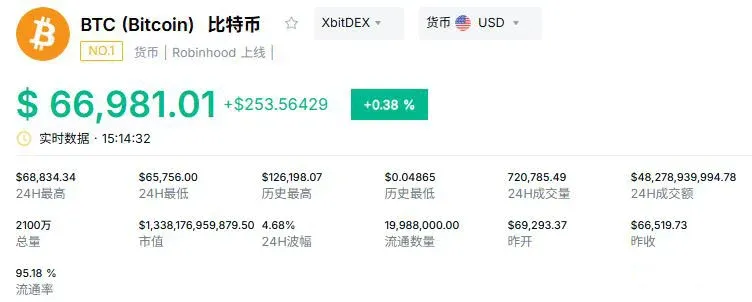
The factors leading to this severe decline are multi-dimensional:
- Macro Policy Shifts: With Kevin Warsh nominated as the Chair of the Federal Reserve, market concerns regarding long-term high interest rates have intensified. Additionally, the U.S. Treasury Secretary’s explicit statement "refusing to bail out the crypto sector" completely dismantled investors' dependence on policy support.
- Large-Scale Capital Outflows: Both institutional and retail investors are showing a synchronous withdrawal trend. Data shows that U.S. spot Bitcoin ETFs have seen a net outflow of nearly $4 billion over the past three months; retail participation has also shrunk from 17% in July 2025 to just 12%.
- Leverage Cascades: High-leverage operations have amplified volatility. In a mere 24-hour window between February 5 and 6, over 430,000 traders worldwide faced liquidations totaling $2.069 billion, with long positions accounting for over 90%. This "price drop triggers liquidation, liquidation forces selling" vicious cycle has become a heavy burden on the market.
It is important to note for users in the United States that regulatory environments differ; U.S.-based investors must use compliant platforms such as Binance.US rather than the global Binance platform to manage their digital assets. Furthermore, investors should be aware that capital gains from cryptocurrency trading are generally taxable under local jurisdictions, such as the IRS in the U.S., and should be reported accordingly.
Deep Logic: Differences in Asset Attributes and the "Ebb and Flow"
The negative correlation currently observed between Bitcoin and RMB assets is essentially a competition between two entirely different asset logics.
Fundamental Divergence in Core Attributes
Bitcoin is inherently a high-risk asset driven by global liquidity overflow; its valuation is extremely sensitive to interest rate fluctuations and risk sentiment. In contrast, the value anchor of RMB assets is the stability of the Chinese macroeconomy. When the attractiveness of USD-denominated assets declines due to policy uncertainty, capital realigns according to risk appetite: capital seeking high-risk elasticity is exiting, while capital pursuing long-term steady returns is gravitating toward RMB assets.
A Recurrence of Historical Patterns
This "ebb and flow" phenomenon is not rare in history. Looking back to May 25, 2025, when Bitcoin began a downward trend, the RMB exchange rate showed upward momentum, with the offshore RMB (CNH) appreciating from 6.8752 to 6.8498.
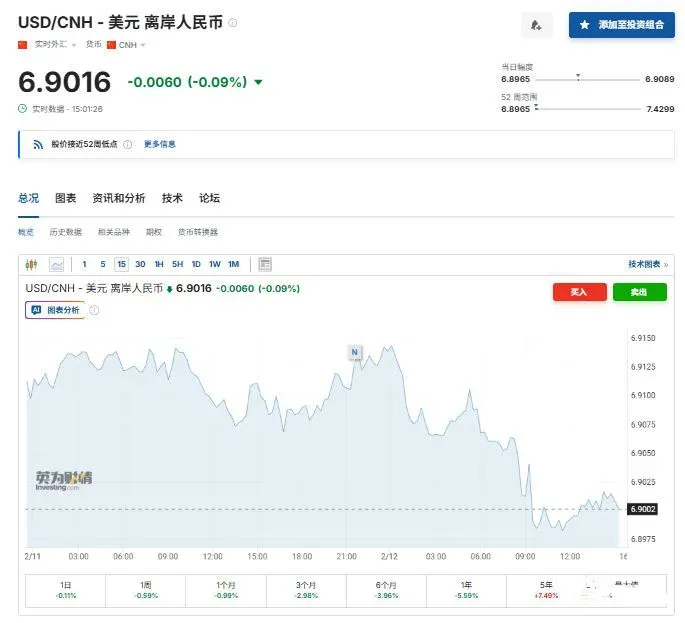
The current market conditions once again validate this trend. As the Bitcoin market shifts from being retail-driven to institutionally dominated, its volatility increasingly reflects the rebalancing behavior of global macro hedge funds. Meanwhile, as the internationalization of the RMB progresses, it is being formally incorporated into the strategic allocation models of more long-term institutional investors.
Market Signals and Future Outlook
The recent contrast in the trajectories of Bitcoin and RMB assets is, in fact, a repricing exercise conducted by global capital amidst a macro fog. As the Federal Reserve's monetary policy path undergoes adjustment, the valuation systems for risk assets and safe-haven assets are undergoing a significant reconstruction.
While Bitcoin faces liquidity challenges in the short term, on-chain data suggests that some capital is attempting to "buy the dip" at lower levels. At the same time, RMB assets maintain their appeal to long-term capital, backed by a rich toolkit of policy instruments and continuous internationalization.
Market Reminder: Investors should focus on two core signals moving forward: first, whether capital flows into U.S. Bitcoin ETFs can turn positive and stabilize; and second, whether the weighting of RMB assets in emerging market asset pools will increase further.
The above is an analysis of the market signals hidden behind the Bitcoin crash and the relative strength of the RMB. For more in-depth information regarding the correlation between crypto market volatility and the macroeconomy, please stay tuned for further reports from Bitaigen.
Related Reading
- Bitcoin Mining Difficulty Explained: How It Adjusts
- Gold vs. Bitcoin: The Logic of Safe-Haven Capital Repricing
- Crypto Pricing Power: Liquidity, Spot ETFs & Market Trends
💡 Register on Binance with referral code B2345 for the maximum trading fee discount. See Binance complete guide.



