
 Bitaigen Research
 On January 25, gold and silver continued their strong rally, with spot gold hovering around $5,127 per ounce and silver breaking the $100 barrier for the first time, both setting historic all‑time highs. By contrast, Bitcoin was trading near $90,000.
Gold and silver have reached historic highs, while Bitcoin lags mainly because of tighter liquidity, risk‑averse sentiment, a shift of institutional capital, and declining confidence in USD‑denominated assets.
This divergence underscores a structural shift in the global market: in an uncertain macro environment, traditional safe‑haven assets are performing robustly, whereas Bitcoin is being dragged down by liquidity constraints and risk‑avoidance sentiment.
In this article we deeply analyze the macro drivers behind gold and silver’s new highs and provide a comprehensive explanation of why Bitcoin has not risen in tandem. By cross‑examining data and market sentiment, we help readers grasp the structural differences between traditional safe‑haven assets and “digital gold,” and reveal possible future investment logic. If you want to understand why the two metals are leading and why digital currencies are constrained, keep reading.
Gold and Silver Continuing to Reach New Highs: Underlying Drivers
- Macro‑economic stimulus
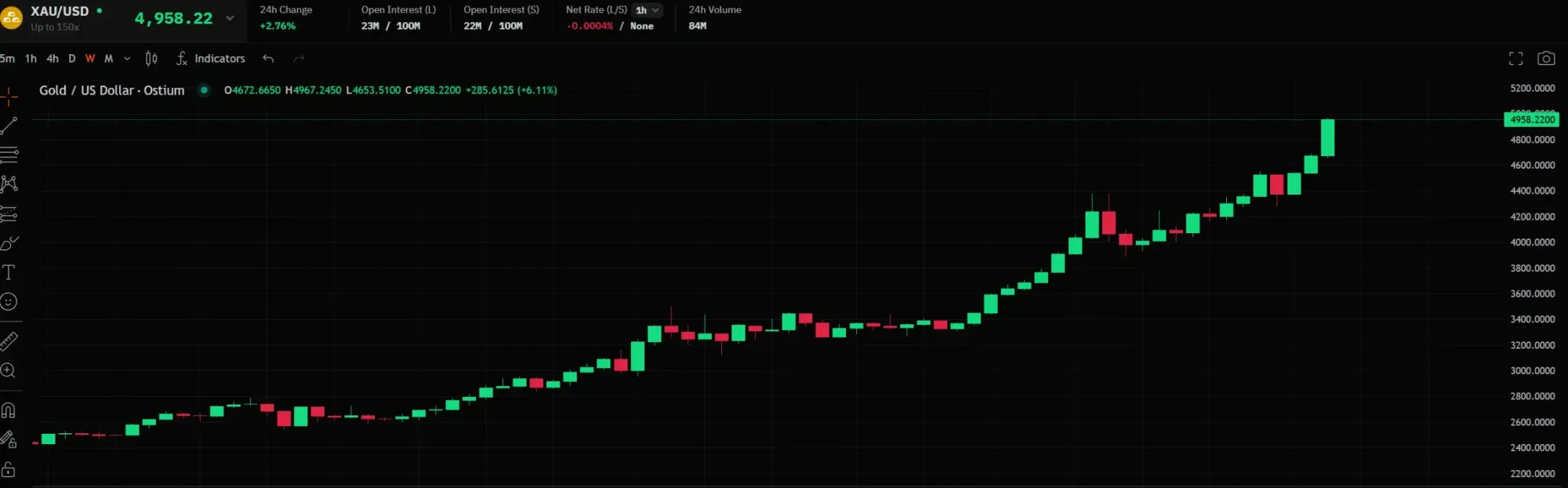
In January 2025, gold price broke $2,600, then climbed steadily, achieving a cumulative gain of close to 100 % by January 23 this year.
- Silver’s relative advantage
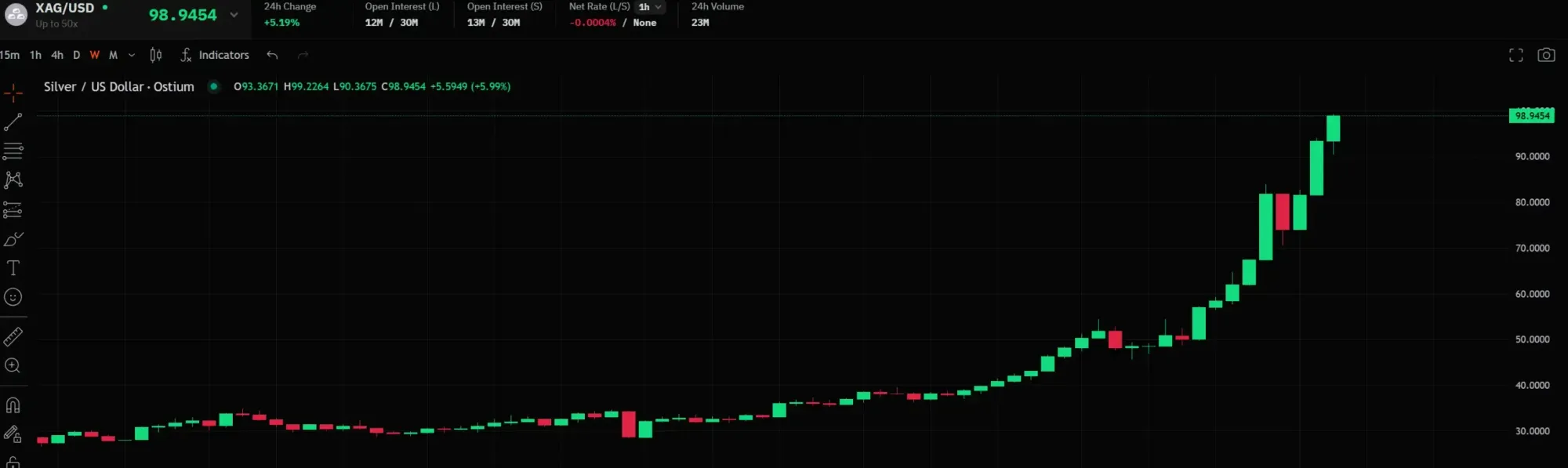
Silver is regarded as the “volatile companion of gold.” Starting from $30 in April 2025, it has oscillated upward and already posted a cumulative gain of over 300 %.
Key Driving Factors
- Central‑bank gold purchases
- The People’s Bank of China added 27 tons of gold to its reserves in 2025.
- The Reserve Bank of India increased its gold‑holding ratio from 10 % to 16 %.
This reflects a de‑dollarization trend, where, against a backdrop of U.S. debt exceeding $36 trillion, gold is becoming the preferred hedge against currency depreciation.
- Geopolitical tension
- U.S. tariff threats toward Greenland and intervention in Iran sparked a flow of safe‑haven capital, pushing gold past $4,800.
- The *Wall Street Journal* reported a 6 % drop in the U.S. Dollar Index that same year, further enhancing the appeal of precious metals priced in dollars.
- Fed independence under scrutiny
- A criminal investigation into Fed Chair Jerome Powell has heightened market concerns about the political independence of the U.S. central bank, eroding long‑term confidence in the dollar.
- Net growth in ETFs and sovereign holdings
- Even as gold nears the $5,000 milestone, global ETF positions and central‑bank gold reserves continue to rise, indicating that investors are more worried about fiat currencies being “too cheap” rather than the metals themselves being overpriced.
- Industrial demand for silver
- Since 2021, structural supply shortages have widened while mine output has remained flat.
- Demand from solar panels, electronics, and AI infrastructure has surged.
- China imposed silver export restrictions starting January 1 2026, with an expected annual shortfall of 200‑300 million ounces, and industrial consumption now accounts for 50 % of total supply.
- In the later stages of a precious‑metal bull market, silver often experiences a more intense “catch‑up” rally because its market size is smaller and its elasticity larger. The gold‑to‑silver ratio is currently reverting to levels below its historical average.
Economist Hong Hao notes that as long as expectations of improved global liquidity remain unchanged, silver’s upward cycle should continue. Although its volatility far exceeds gold’s, the “industrial essential” nature of silver provides a solid foundation.
What Is Behind Bitcoin’s Slump?
- Price action
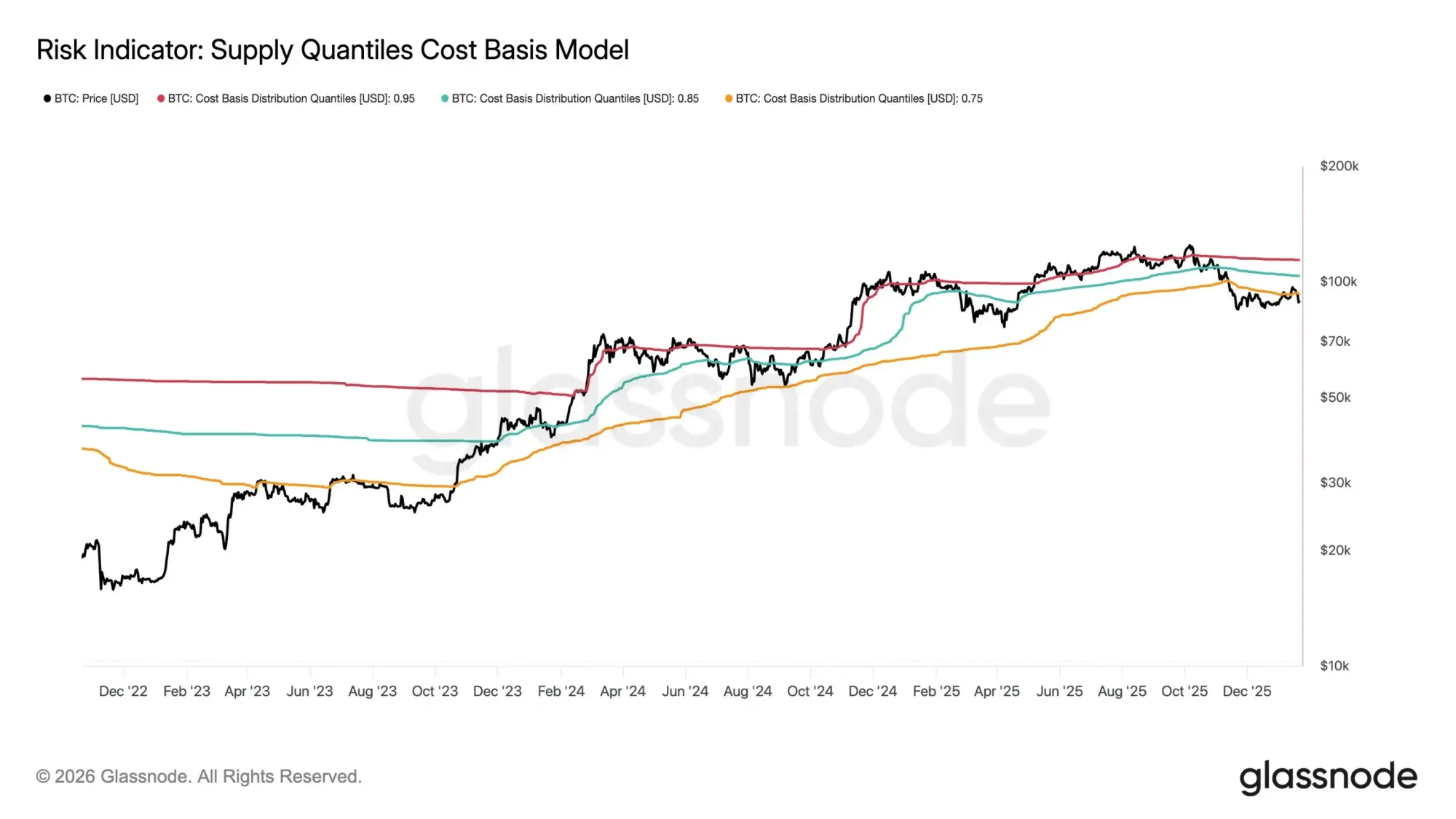
Bitcoin peaked at $126,000 in 2025 and has since been consolidating near $90,000. A Glassnode report states that Bitcoin has lost the 0.75 supply‑cost percentile, meaning the spot price is below the cost basis of 75 % of the supply, indicating rising distribution pressure. If the price does not recover this level, the market may tilt downward.
- Liquidity contraction
- Since 2022 the Federal Reserve has pursued quantitative tightening (QT), withdrawing roughly $1.5 trillion of reserves, curbing speculative inflows into high‑risk assets like Bitcoin.
- A $19 billion leveraged unwind in October intensified chain‑reaction liquidations, tightening market liquidity further.
- Shift in risk appetite
- Geopolitical risks have boosted gold but have also triggered risk‑avoidance in the crypto space.
- Compared with gold and silver, BTC has not outperformed traditional safe‑haven assets since last year.
- Potential upward momentum
- Wintermute reports that BTC has broken out of its previous 50‑day narrow trading range and is entering an upward channel. Since November, the first breakout based on genuine (non‑leveraged) capital flows has been observed.
- Renewed ETF inflows and an inflationary environment are favorable, suggesting that crypto assets could catch up with the broader risk‑asset rally. The recent sharp correction is viewed as a healthy price adjustment, with leveraged positions being cleared quickly and no vicious cycle forming.
Key Observation Points
| Key Factor | Potential Impact |
|---|---|
| **Price holds above $90,000** | If maintained, the breakout rally could continue |
| **ETF inflows** | Ongoing inflows support further upside |
| **Subsequent sell‑off below $90,000** | Would re‑establish the November range as resistance |
In summary, gold and silver have benefited from central‑bank purchases, geopolitical developments, and industrial demand, achieving historic highs amid heightened global uncertainty. Bitcoin, on the other hand, lags due to tighter liquidity, risk‑aversion, and a shift of institutional capital away from high‑risk assets.
*Note for U.S. readers: when transacting with fiat on cryptocurrency platforms, use Binance.US rather than the global Binance site. For other regions, SEPA or SWIFT transfers are commonly used for USD deposits and withdrawals.*
*Tax reminder: cryptocurrency gains may be taxable in your jurisdiction; consult a local tax professional for guidance.*
💡 Register on Binance with referral code B2345 for the maximum trading fee discount. See Binance complete guide.



