
 Bitaigen Research
 In the blockchain space, Binance Smart Chain (BSC) achieves a high degree of interoperability with Ethereum by being compatible with the Ethereum Virtual Machine (EVM), making it the platform of choice for many DeFi projects.
In this article we trace the relationship between Binance Smart Chain and Ethereum, dissect its underlying code, consensus mechanism, and cross‑chain design differences, and evaluate how these technical choices affect the developer ecosystem and transaction costs in practice. Read on to quickly determine whether BSC is suitable as the deployment platform for your next project.
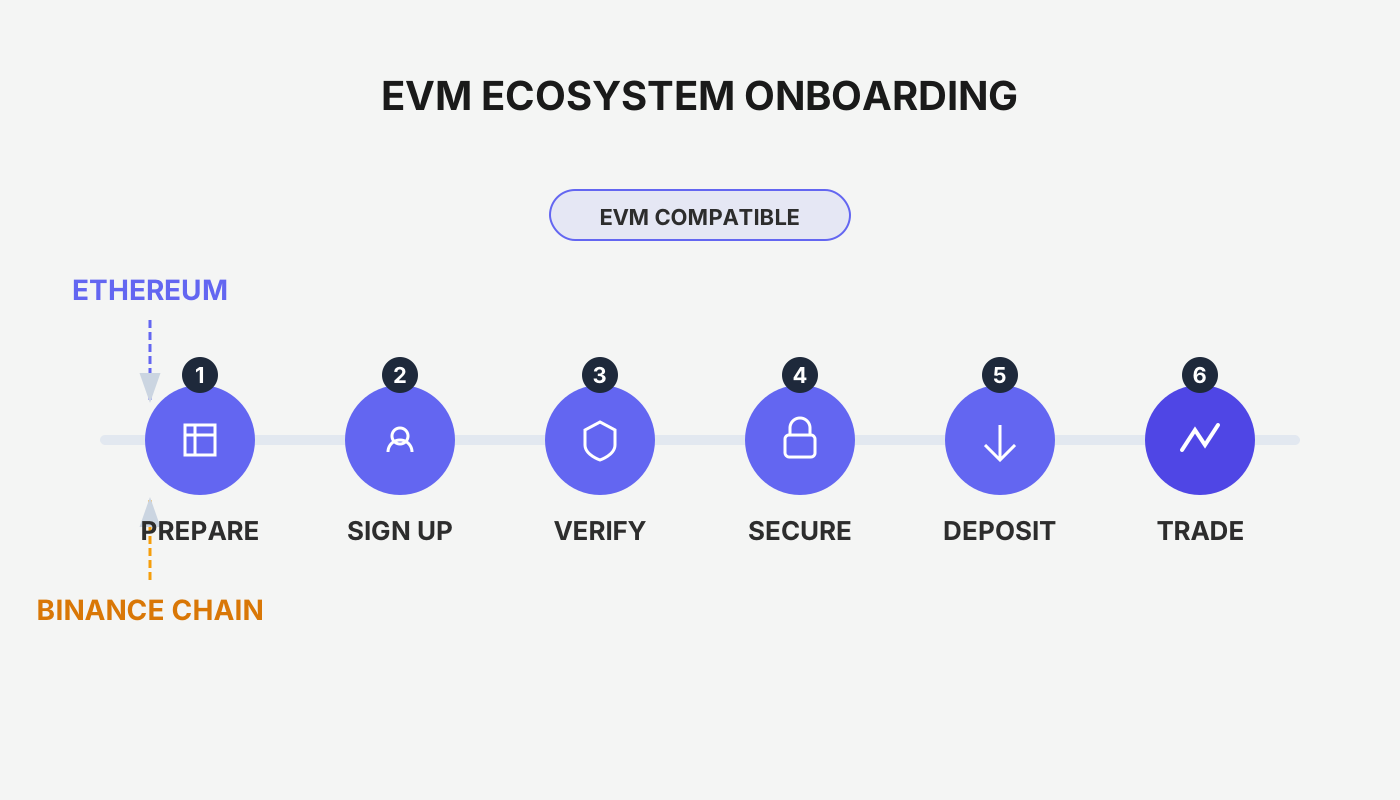
Is Binance Smart Chain (BSC) based on Ethereum?
Yes. Binance Smart Chain (BSC) is a hard fork of the Go implementation of Ethereum. While it retains EVM compatibility, it incorporates key upgrades such as a Proof‑of‑Stake (PoS) consensus.
BSC inherits Ethereum’s core code architecture but makes significant adjustments in the following areas:
- Consensus mechanism: Switched from Ethereum’s Proof‑of‑Work (PoW) to Proof‑of‑Stake (PoS), delivering lower transaction fees and faster block times.
- Validator set: Only the top 21 validators with the largest staked assets are permitted to produce new blocks, and each validator must lock at least USD 10 million worth of assets, resulting in a highly concentrated validation power.
- Cross‑chain functionality: A relay system enables communication between Binance Chain and BSC, forming a dual‑chain architecture that balances high‑speed transfers with EVM‑based development. *(US users should access the service via Binance.US rather than the global Binance platform.)*
Technical characteristics and ecosystem status of BSC
- EVM compatibility: Developers can deploy Solidity‑written smart contracts on BSC without any code migration.
- Smart‑contract support: Built on top of Binance Chain, BSC adds a full smart‑contract layer, positioning it as a public chain focused on DeFi.
- Ecosystem scale: As of early September, BSC has attracted close to a thousand projects spanning DeFi, gaming, NFTs, wallets, social platforms, and tooling.
Advantages of the dual‑chain architecture
- Binance Chain: Optimized for asset transfers and high‑throughput transactions, making it suitable for market makers and exchanges.
- BSC: Provides an EVM environment that supports DApp development and complex contract execution; the two chains work together to deliver a seamless user experience.
Degree of decentralization on BSC
While anyone can run a full node to receive and broadcast transactions, only validators that satisfy the high‑stake requirement can participate in consensus. Currently, the majority of validators are directly controlled by Binance, which gives BSC a markedly centralized character at the consensus layer.
Security and regulatory challenges
Because the chain is public, external projects are free to deploy contracts on BSC. However, there have been incidents where assets from fraudulent projects were transferred to Binance’s exchange, frozen for 48 hours, and never returned, resulting in losses for victims. Blue Whale Finance reported on this in its article “Binance Smart Chain Becomes a Breeding Ground for Exit‑Scam Projects, a 48‑Hour Cat‑and‑Mouse Chase, and the 21‑Node Open‑Finance Labyrinth.”
Conclusion
Binance Smart Chain (BSC) maintains strong compatibility with Ethereum while delivering faster and cheaper transactions through PoS consensus and a dual‑chain design. It has grown into a force that cannot be ignored in the public‑chain competition landscape, yet its highly concentrated validator set and occasional security incidents remain focal points of industry scrutiny.
*Note: Crypto gains may be taxable in your local jurisdiction; consult a tax professional for guidance.*
Related Reading
- Multi-Chain Era: Cross-Chain Bridges Unite Blockchain Assets
- Vitalik Buterin: Ethereum Co‑Founder & Billionaire
- How to Look Up a Blockchain Contract Address Quickly
💡 Register on Binance with referral code B2345 for the maximum trading fee discount. See Binance complete guide.



