
 Bitaigen Research
 We detail sidechain basics and applications, covering BTC Relay, Liquid, Lisk, and Asch, and outline their core functions.
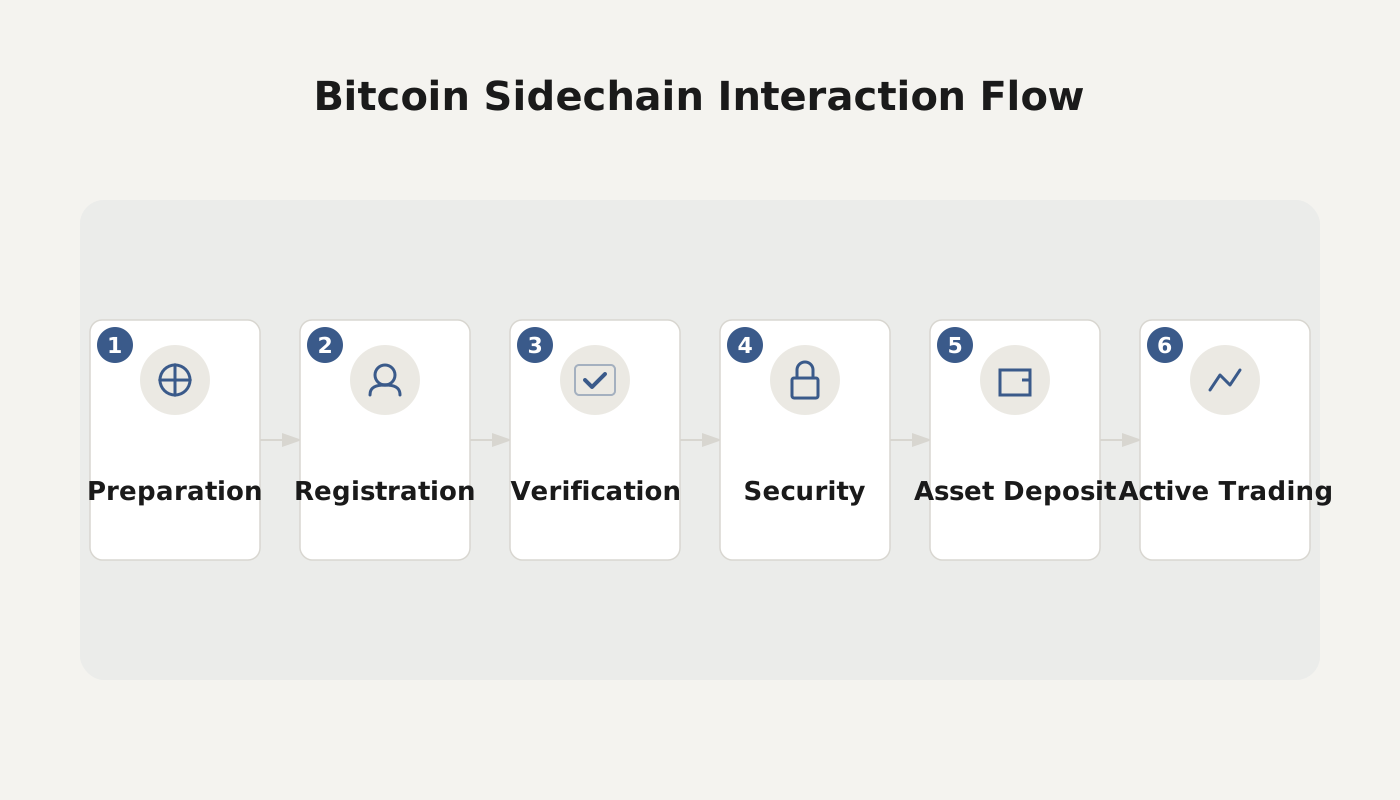
Currently, the more well-known sidechains include the Bitcoin network-based sidechain BTC Relay, Rootstock's Liquid, and non-Bitcoin sidechains such as Lisk and the domestic Asch.
BTC Relay is a sidechain solution based on the Ethereum blockchain smart contract launched by ConsenSys. BTC Relay connects the Ethereum network and the Bitcoin network in a secure and decentralized way. BTC Relay allows users to verify Bitcoin transactions on the Ethereum blockchain by using Ethereum's smart contract functionality. Ethereum DApp developers can make API calls to BTC Relay from smart contracts to verify Bitcoin network activity.
Liquid is Blockstream's open-source sidechain project, which uses Bitcoin's two-way peg technology. The purpose of Liquid is to enable Bitcoin to be transferred between the main chain and the sidechain, aiming to improve privacy, reduce costs, accelerate value transfer and settlement processes between exchanges and brokers.
Lisk is a blockchain platform dedicated to providing JavaScript developers with the tools to create distributed applications, founded by Max Kordek and Oliver Beddows of Germany in early 2016. It runs each distributed application on its own unique blockchain, i.e., a sidechain. This encapsulation makes the main Lisk network efficient, fast, and streamlined. Asch is a decentralized application platform based on sidechain technology launched domestically, founded by Single Qingfeng in early 2016. The Asch platform provides services including a main chain and a set of application software development kits. Asch's main chain is mainly responsible for building infrastructure, data sharing between applications, and asset routing. The application software development kit includes the sidechain protocol, mainly responsible for building specific applications. Through the sidechain protocol, asset interoperability with the main chain can be achieved.
Many investors still do not know what a blockchain sidechain even is. In fact, when we learn about blockchain sidechains, we still need to understand its related concept, namely the main chain. The main chain refers to the formally launched, independent blockchain network. Generally, the storage entity of a blockchain is the main chain, while the sidechain protocol essentially belongs to a cross-blockchain solution, whose main purpose is to enable data information to be transferred between two blockchains. In fact, the sidechain was originally proposed to achieve the transfer of digital assets across multiple blockchains. Many investors still do not know what the technical foundation of a sidechain is? Below, let me explain it for everyone.
What is the technical foundation of sidechains
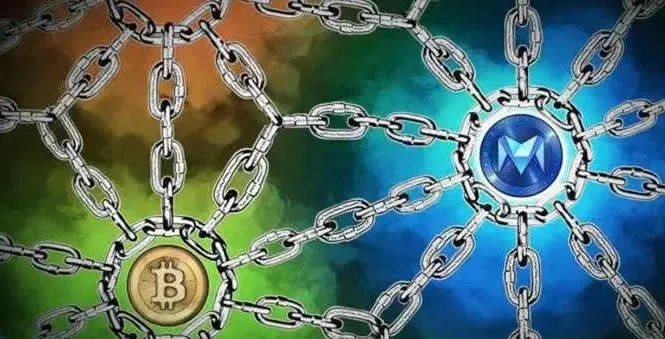
The technical foundation of sidechains is blockchain technology. The main function of sidechains is to connect. In more vivid language, it is like branching out a few small paths from a wide highway to establish connections. From a technical perspective, sidechains are completely independent of the blockchain system, but can act as a bridge with the blockchain system.
A sidechain is a blockchain parallel to the main chain, which can carry out specific function expansion and performance improvement for functions that the main chain currently cannot achieve. For example, when the 2017 bull market arrived, the transaction volume on these two blockchains increased dramatically, far exceeding Bitcoin's throughput of seven transactions per second and Ethereum's throughput of more than thirty transactions per second, leading to widespread network congestion and delay, and subsequently leading to the CryptoKitties game explosion causing the Ethereum network to become paralyzed.
Now we can transfer all small and scattered transactions on the main chain to the sidechain for processing, which can greatly reduce the transaction pressure on the main chain. Doing so also has another advantage, namely that it can guarantee a certain level of security. Because if your transaction address holds a large amount of Bitcoin or Ethereum, you certainly do not want others to know that you are the holder. At the same time, the sidechain can perform simple payment verification without needing to go through all transactions on the native Bitcoin blockchain system, so the sidechain project also has considerable advantages in terms of transaction processing speed.
How sidechains operate
1. Custodial method:
This is a relatively direct approach, i.e., handing over digital assets to a custodian, similar to the role of an intermediary in life. After handing over the digital assets to the custodian, once the custodian receives the relevant information of the digital assets, it can allocate the digital assets on the sidechain.
Through analysis, it can be seen that this custodial method also has centralization problems, that is, the so-called "risk problem".
2. Cooperative method:
To solve the aforementioned "risk problem", a cooperative approach can be adopted. This method of transferring digital assets adds a technology—multi-signature. Multi-signature means repeatedly signing and confirming the process of digital asset flow on the sidechain, which is actually a cooperative approach, thereby improving the security of digital assets.
3. SPV proof
SPV proof is a specific "proof-of-work mechanism", containing a block with proof-of-work and some kind of cryptographic proof. When performing digital asset conversion operations, SPV proof will execute a soft fork.
4. Driven chain
Driven chain is a sidechain solution, similar to SPV proof, which also performs a soft fork on digital assets, which is also a method to improve the security of digital assets.
Currently, cross-chain projects face a major challenge: how to ensure the stability of cross-chain projects. This is because no cross-chain project has been able to run successfully and stably so far, so sidechain technology cannot yet undergo a final qualitative evaluation; we can only wait for the technology to mature. Moreover, performing cross-chain operations under different consensus mechanisms is also a rather thorny problem. Overall, the stability of current cross-chain projects still cannot be accurately judged.
This is the detailed content of what is the technical foundation of blockchain sidechains and how sidechains operate. For more information about the application functions of blockchain sidechains, please follow other related articles from Bitaigen (Bitroot)!
💡 Register on Binance with referral code B2345 for the maximum trading fee discount. See Binance complete guide.



