
 Bitaigen Research
 In this article we outline the basic concepts, technical implementation, and development trajectory of browser‑based cryptocurrency mining, helping readers quickly grasp how it works and its potential risks. By analyzing key code snippets and typical examples, you will learn how to distinguish legitimate scripts from malicious ones. Subsequent sections will explore protective measures and industry trends, making it a worthwhile read.
Browser‑based cryptocurrency mining is a method that leverages web scripts to contribute hashing power directly from a visitor’s device. Compared with traditional mining that requires downloading dedicated software, this approach only needs to load the appropriate code in a web browser, allowing the user’s CPU to participate in the proof‑of‑work (PoW) calculations of a blockchain network.
---
Overview of How It Works
When a website embeds a specific JavaScript script into its pages, every visitor who opens that page will automatically run hash calculations in the background. The computing power comes from the visitor’s hardware, and the block rewards are either assigned to the script owner or distributed to users according to a predefined agreement. A typical cryptocurrency that supports browser mining is Monero (XMR), which uses the RandomX algorithm designed for ordinary CPUs. RandomX diminishes the advantage of ASICs and other specialized hardware, helping to preserve the network’s decentralization.
---
Historical Trajectory of Browser Mining
- Early Emergence (2011): *BitcoinPlus.com* was the first to commercialize browser‑based mining, exploiting the then‑low‑cost Bitcoin network so that websites could achieve pooled mining by embedding a script.
- Considered “Dead”: As Bitcoin’s difficulty rose and dedicated mining hardware became widespread, the model virtually disappeared in the following years.
- Unexpected Revival in 2017: Rapid expansion of the crypto market and the launch of new tokens made JavaScript‑based APIs capable of delivering meaningful hash power on ordinary home devices, leading to a resurgence of both legitimate and malicious browser‑mining services.
---
Technical Details and Implementation Methods
- Script Injection: Site owners insert mining code into the HTML page; when a visitor loads the page, the computation starts automatically.
- Hash Power Utilization: The browser repeatedly executes RandomX or other lightweight hash functions, which have modest hardware requirements.
- Revenue Distribution: Mined coins are usually sent directly to a wallet controlled by the operator; some platforms allocate a portion of the reward to users based on their contributed hash rate.
It is important to note that the convenience of this model has also given rise to “cryptojacking”—the covert execution of mining scripts without the user’s knowledge, which constitutes unauthorized consumption of resources.
---
How to Participate in Legitimate Browser Mining
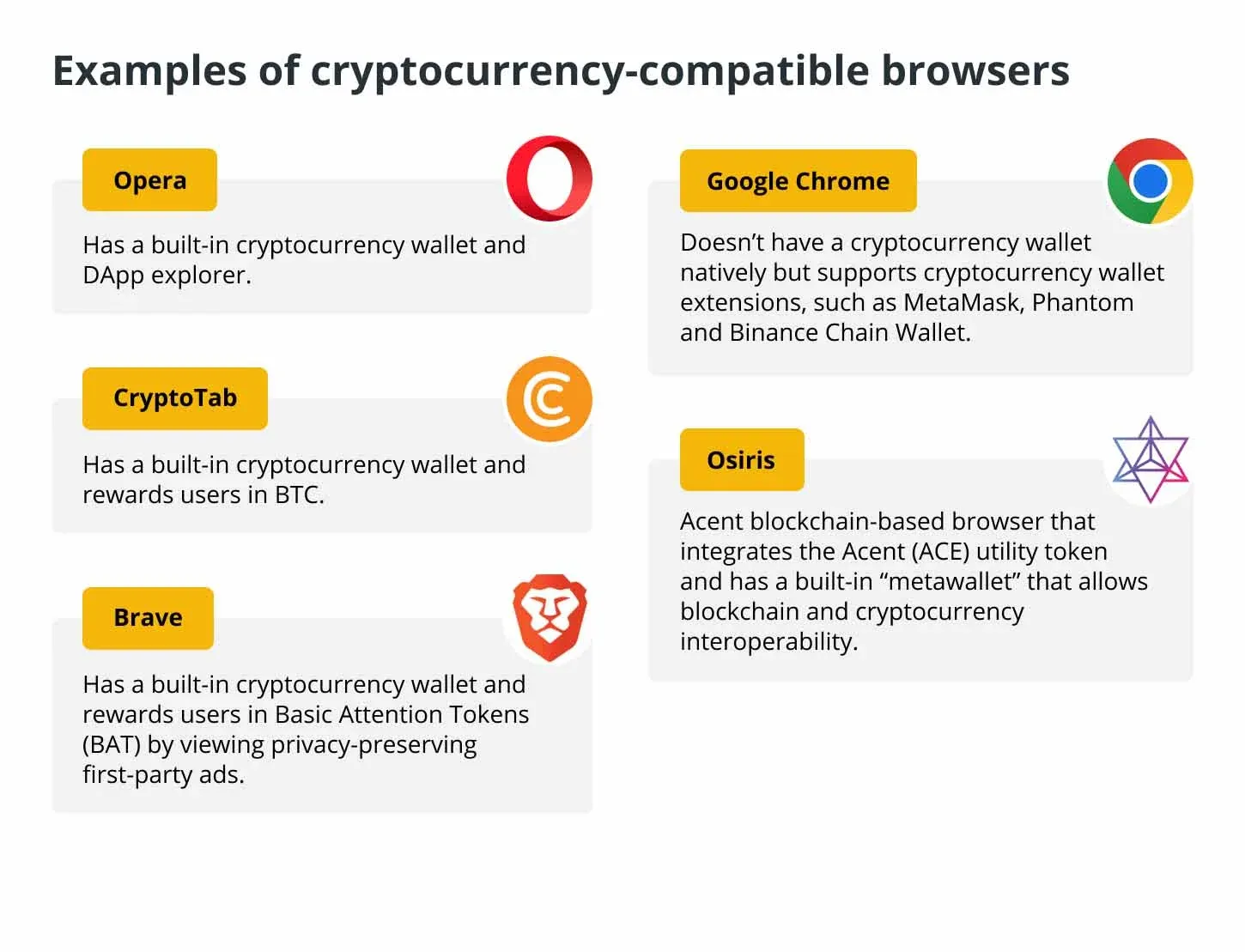
- Use a Dedicated Crypto Browser: For example, the CryptoTab browser. After registering, users simply browse the web as usual while the background process mines Bitcoin (BTC) and sends earnings to the linked wallet.
- Enable/Disable Mining Feature: Most such browsers provide a toggle and hash‑rate adjustment options, allowing users to control the intensity according to their preferences.
- DApp‑Compatible Browsers: Browsers with built‑in crypto wallets such as Brave, MetaMask (Ethereum) or Phantom (Solana) can directly access decentralized applications (DApps). Within these environments, users can also contribute computing power to supported projects.
---
Economic Returns and Real‑World Value
The income from browser mining depends on several variables, including the cryptocurrency being mined, the device’s hash rate, and market price fluctuations. Although the hash power is modest compared with professional ASIC rigs, the model removes the need for expensive hardware and high electricity bills, making it attractive for “low‑cost experimentation.” Rewards are typically paid out in crypto and can be converted to USD through exchanges such as Binance (or Binance.US for U.S. residents), using SEPA or SWIFT transfers for fiat withdrawals. Users should view the value of rewards as volatile and not treat them as a stable source of income.
*Tax note*: In many jurisdictions, gains from cryptocurrency mining are taxable events. Participants should consult local tax regulations to determine reporting obligations.
---
Main Advantages
- Low Energy Consumption: No dedicated high‑power hardware is required; existing computing resources are utilized.
- Low Entry Barrier: Any internet‑connected computer or laptop can take part without additional equipment purchases.
- User Autonomy: There is no need to join a mining pool; users decide whether to enable mining, adjust hash rates, and select which crypto assets to support.
---
Security Risks and Mitigation Measures
- Browser Crypto APIs Are Still Maturing: Some implementations lack thorough security audits.
- Server‑Side Dependence: The safety of many crypto browsers hinges on the hosting servers; a compromised server could inject malicious code, exposing users to asset risk.
- User Defenses: Keep browsers and extensions up to date, protect wallets with strong passwords, avoid clicking unknown links, and refrain from downloading files from untrusted sources. These basic practices significantly reduce exposure.
Choosing a well‑reviewed browser that holds industry security certifications can largely avoid common attacks, ensuring a safe and comfortable experience while browsing and mining.
---
This piece provides a systematic explanation of “browser‑based cryptocurrency mining—how does it work?” For more details, you can search for earlier articles from Bitaigen (比特根) or continue reading the recommended content below. Thank you for following and supporting Bitaigen!
Related Reading
- BIP-110: Enhancing Bitcoin Node Access & Block Space
- OKX Security & Contract Copy‑Trading: Step‑by‑Step Guide
- Best Reliable Altcoin Exchanges 2024 – Secure Platforms
💡 Register on Binance with referral code B2345 for the maximum trading fee discount. See Binance complete guide.



