
 Bitaigen Research
 As public blockchains such as Bitcoin, Ethereum, Solana and other networks rapidly iterate, each chain has formed its own independent ecosystem. Divergent consensus models, transaction structures, and smart‑contract languages make the free flow of assets between chains resemble “isolated islands” lacking a bridge. To solve this fragmentation, cross‑chain bridges have emerged, acting as “channels” between blockchains so that value and information can migrate across chains.
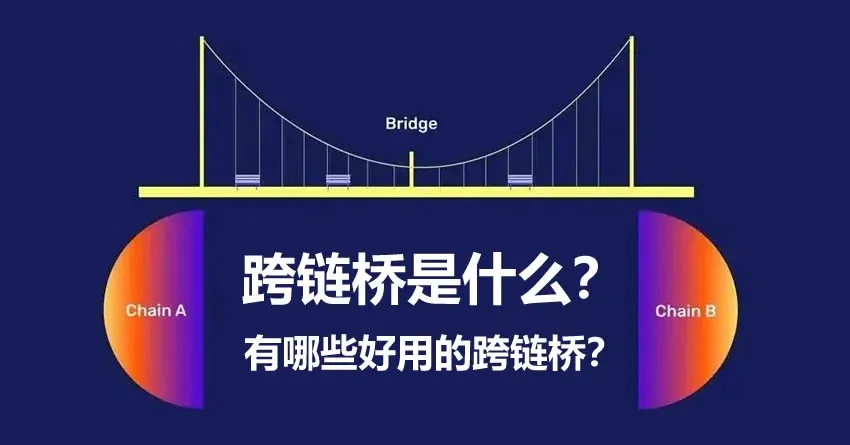
In this article we outline the core concepts and operating mechanisms of cross‑chain bridges, and evaluate several bridge solutions that stand out in the market. By comparing security, user experience and ecosystem compatibility, readers can quickly judge which bridges are worth trying in a multi‑chain strategy. If you want to learn how to safely move assets between different public blockchains, keep reading.
1. Definition and Core Functions of Cross‑Chain Bridges
A cross‑chain bridge is a set of protocols or services designed to enable asset transfers and data interaction between two (or more) blockchains that are otherwise disconnected. Users can lock native assets such as Bitcoin in a bridge and receive a wrapped representation (e.g., WBTC) on Ethereum or other chains, thereby overcoming the usage limitations of a single chain.
Why a Cross‑Chain Bridge Is Needed
- Each multi‑chain ecosystem has its own strengths: Bitcoin is renowned for security, while Ethereum offers rich smart‑contract capabilities; users want to leverage the advantages of each chain.
- Liquidity enhancement: Bridging eliminates the “island effect” between chains, allowing assets to flow freely across multiple networks and improving capital efficiency.
- Decentralized transfer: No reliance on centralized exchanges; users can move assets directly between chains, aligning with the decentralization ethos of blockchain.
High‑Level Working Principle
Cross‑chain bridges typically follow a lock‑mint‑release three‑step process:
- The user deposits assets on the source chain into a bridge contract, where the assets are locked or burned.
- The bridge creates a corresponding mapped asset on the destination chain (a wrapped or synthetic token).
- The user can freely use the mapped asset on the destination chain.
To move assets back to the source chain, the user simply burns the mapped token on the destination chain, and the bridge releases the original assets on the source chain.
2. Technical Approaches to Achieve Cross‑Chain Interoperability
The underlying implementations of cross‑chain bridges vary widely and can be broadly classified into the following categories:
- Notary Schemes: Rely on one or more trusted third parties to verify and forward cross‑chain transactions. The IEEE 3221.01 international standard already defines consistency requirements for such schemes.
- Hash Time‑Lock Contracts (HTLC): Use smart contracts combined with time locks to achieve atomic swaps, guaranteeing that a transaction either completes fully or rolls back entirely without a trusted intermediary.
- Relay Chains: Employ an independent, higher‑security chain (e.g., Polkadot, Cosmos) to transmit and verify the state of different chains, enabling cross‑chain interoperability.
3. Popular and Practical Cross‑Chain Bridge Recommendations
Below is a list of currently active and well‑regarded bridge solutions, each suited to different usage scenarios.
1. Circle Gateway (USDC‑Specific)
- Features: Launched by Circle, the issuer of USDC, focusing on ultra‑fast USDC cross‑chain services.
- Supported Networks: Ethereum, Arbitrum, Polygon PoS, Avalanche, Base, OP Mainnet, Unichain and other seven chains, with plans to expand further.
- Advantages:
- Ultra‑low latency: Transfers typically complete within 500 ms.
- Unified balance view: After bridging, the total USDC amount can be seen on a single interface.
- Security & reliability: Assets never pass through a third‑party bridge; everything is operated directly by Circle.
- Self‑custody: Users retain control of their private keys at all times.
- Who It’s For: Institutions or individuals who frequently move USDC across multiple chains and demand high security and speed.
2. Across Protocol (EVM ↔ SVM)
- Features: Utilizes an “Intents”‑driven bridge model and has recently added Solana compatibility.
- Supported Networks: Ethereum and its L2s (Arbitrum, Optimism, Base), BNB Smart Chain, and Solana.
- Advantages:
- Intent‑driven: Users broadcast their transfer intent, and competing bridge relayers race to fulfill it, reducing costs.
- Fast & cheap: Optimized routing delivers rapid confirmations with low fees.
- Strong security record: Over $27 billion in cumulative transaction volume with no major security incidents reported.
- EVM ↔ SVM interoperability: Effectively connects the Solana ecosystem with Ethereum‑based environments.
- Who It’s For: DeFi users moving assets between Ethereum/L2 and Solana who care about fees and speed.
3. Polkadot Relay Chain (Representative of Relay‑Chain Solutions)
- Features: The core architecture of Polkadot, connecting multiple parachains through a shared relay chain.
- Supported Networks: All parachains within the Polkadot ecosystem (e.g., Acala, Moonbeam).
- Advantages:
- Shared security: All parachains inherit the security of the central relay chain, reducing the risk of individual chain attacks.
- Native interoperability: Parachains can exchange messages and assets directly without external wrappers.
- Scalability: Transaction load is distributed across parachains, boosting overall throughput.
- Who It’s For: Developers and users deeply involved in the Polkadot ecosystem.
4. Avalanche Bridge (AVAB)
- Features: An official bridge launched by Avalanche, linking Avalanche with Ethereum.
- Supported Networks: Ethereum and Avalanche.
- Advantages:
- Built by the official team, offering high reliability.
- Historical performance: Has held significant locked‑value and enjoys a leading market share among Avalanche bridges.
- Who It’s For: Users who regularly shift assets between Avalanche and Ethereum.
5. LayerZero
- Features: A universal interoperability protocol that enables both asset and message transfer across chains, offering high flexibility and extensibility.
- Typical Use Cases: Users needing secure, low‑latency asset movement across many chains.
6. Stargate Finance
- Features: The first DApp built on LayerZero, focusing on efficient and secure cross‑chain asset transfers.
- Typical Use Cases: Quickly swapping between DEXes on different chains or participating in cross‑chain DeFi projects.
7. Orbiter Finance
- Features: Concentrates on bridging between Layer 1 and Layer 2 networks, delivering high‑speed, low‑cost cross‑chain services.
- Typical Use Cases: Users who move assets among multiple Layer 2 solutions.
8. Synapse Protocol
- Features: A multi‑chain protocol supporting the transfer of tokens, NFTs and other asset types across chains.
- Typical Use Cases: Users who trade NFTs or perform cross‑chain DeFi operations on several networks.
9. Hop Protocol
- Features: Specializes in Layer 2 bridging, offering fast, low‑fee asset migration.
- Typical Use Cases: Traders seeking rapid transfers between different Layer 2 networks.
4. Risk Notice When Using Cross‑Chain Bridges
Although bridging technology has matured considerably, several potential risks remain. Users should evaluate these carefully before proceeding:
- Smart‑contract vulnerabilities: Bridge assets are managed by contracts; any flaw could lead to theft. Prioritize bridges that have undergone audits by well‑known security firms.
- Degree of centralization: Some bridges rely on centralized validator sets or custodial models; assess how decentralized the bridge truly is.
- Network congestion: If either the source or destination chain experiences heavy traffic, cross‑chain transactions may be delayed or incur higher fees.
- Liquidity shortfalls: Insufficient liquidity for the wrapped asset on the destination chain can increase slippage and transaction costs.
Tax reminder: Crypto gains may be taxable in your jurisdiction. Always consult a local tax professional to understand your obligations.
5. Factors to Consider When Selecting a Suitable Bridge
Given the abundance of options, you can filter bridges using the following criteria:
- Supported chains & assets – Verify that the bridge covers the source and destination chains you need, as well as the specific tokens you intend to move.
- Security track record – Favor bridges with a long operating history, multiple audit rounds, and decentralized validation mechanisms.
- Speed & fees – Compare confirmation times and total cost (including gas fees and any bridge service fees).
- User experience – Look for intuitive interfaces, simple workflows, and features such as a unified balance view.
- Community reputation & TVL – While total value locked (TVL) and community sentiment provide useful signals, high TVL does not guarantee absolute safety.
6. Conclusion
Cross‑chain bridges are the essential infrastructure that knits together a multi‑chain world, dramatically improving asset liquidity and collaborative possibilities across disparate blockchain ecosystems. From Circle Gateway’s ultra‑fast stablecoin transfers, to Across Protocol’s EVM‑to‑Solana connectivity, and the Polkadot relay‑chain’s shared‑security model, a variety of bridge solutions are continuously refining interoperability.
Nevertheless, the technology is still evolving, and risks persist. Always start with a small test transfer and prefer bridges that have been audited and earned strong community trust. As standards such as IEEE 3221.01 mature and underlying technologies advance, the future of cross‑chain experiences is expected to become safer, more efficient, and truly seamless.
For deeper insights into cross‑chain bridges, stay tuned to Bitaigen’s upcoming specialty articles.
*Note for U.S. readers*: When dealing with fiat on‑ramps or off‑ramps, use USD via SEPA/SWIFT where applicable, and access cryptocurrency services through Binance.US rather than the global Binance platform.
Related Reading
- Bitcoin Mining: Validate Transactions and Secure Blockchain
- Ethereum Staking Guide: How PoS Works, Earnings & Risks
- Ethereum EIP‑1559 Upgrade: How It Solves Network Congestion
💡 Register on Binance with referral code B2345 for the maximum trading fee discount. See Binance complete guide.



