
 Bitaigen Research
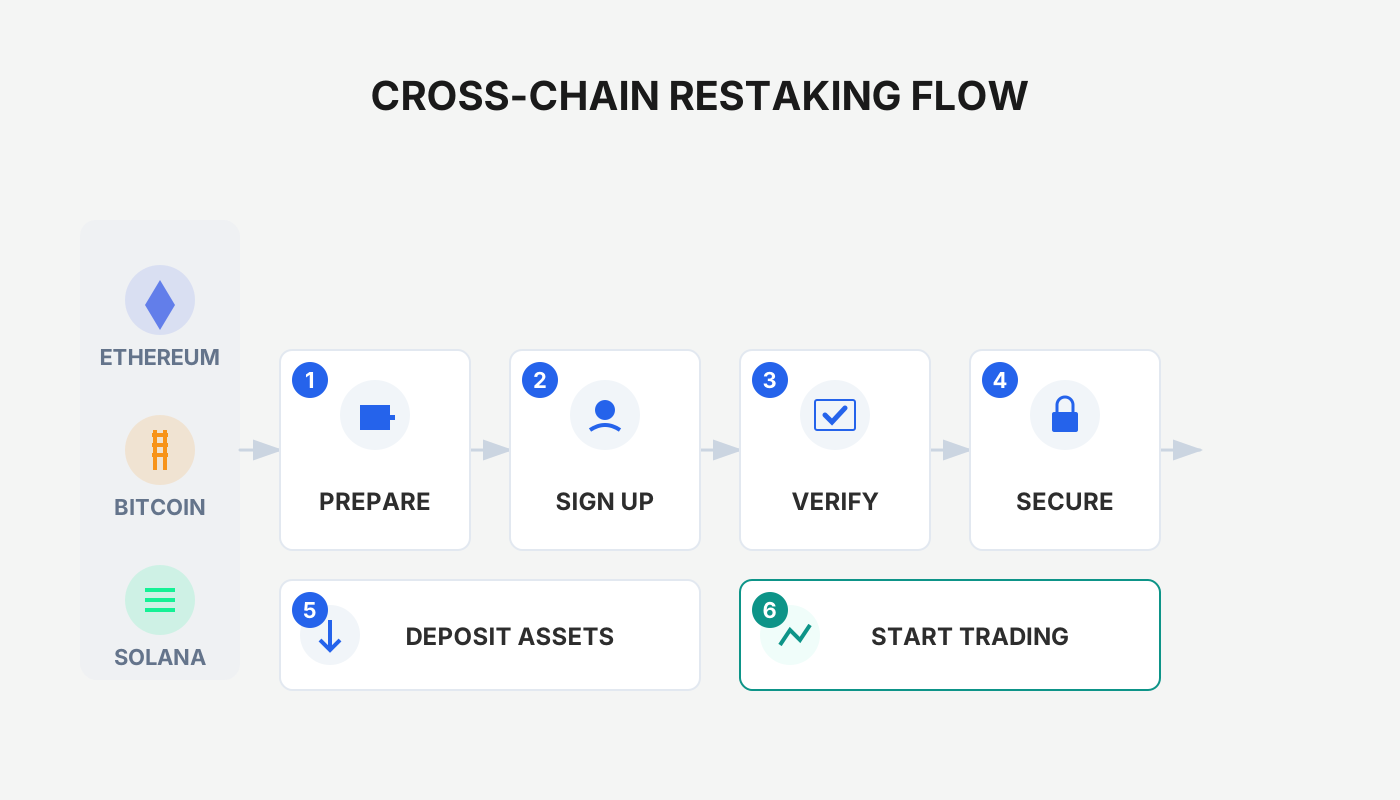
 We have observed that restaking is rapidly spreading from Ethereum to multi‑chain ecosystems such as Bitcoin and Solana, bringing forth a wave of well‑funded and technically innovative protocol projects. This article outlines the core principles and key features of these cross‑chain restaking solutions, helping you grasp emerging industry opportunities—worth a thorough read.
The Cross‑Chain Restaking Surge: From Bitcoin to Solana and Back to Ethereum
In recent months, the concept of restaking has expanded from Ethereum’s core lane into the ecosystems of Bitcoin, Solana, and others. Numerous projects have closed tens‑of‑millions‑dollar financing rounds, and community discussions have shifted from “points wars” to “multi‑chain deployment.” To date, roughly 16.3 % of staked ETH is locked again in restaking protocols such as EigenLayer and Karak Network, underscoring the capital appeal of this niche.
---
Restaking Protocols on the Bitcoin Chain
Babylon
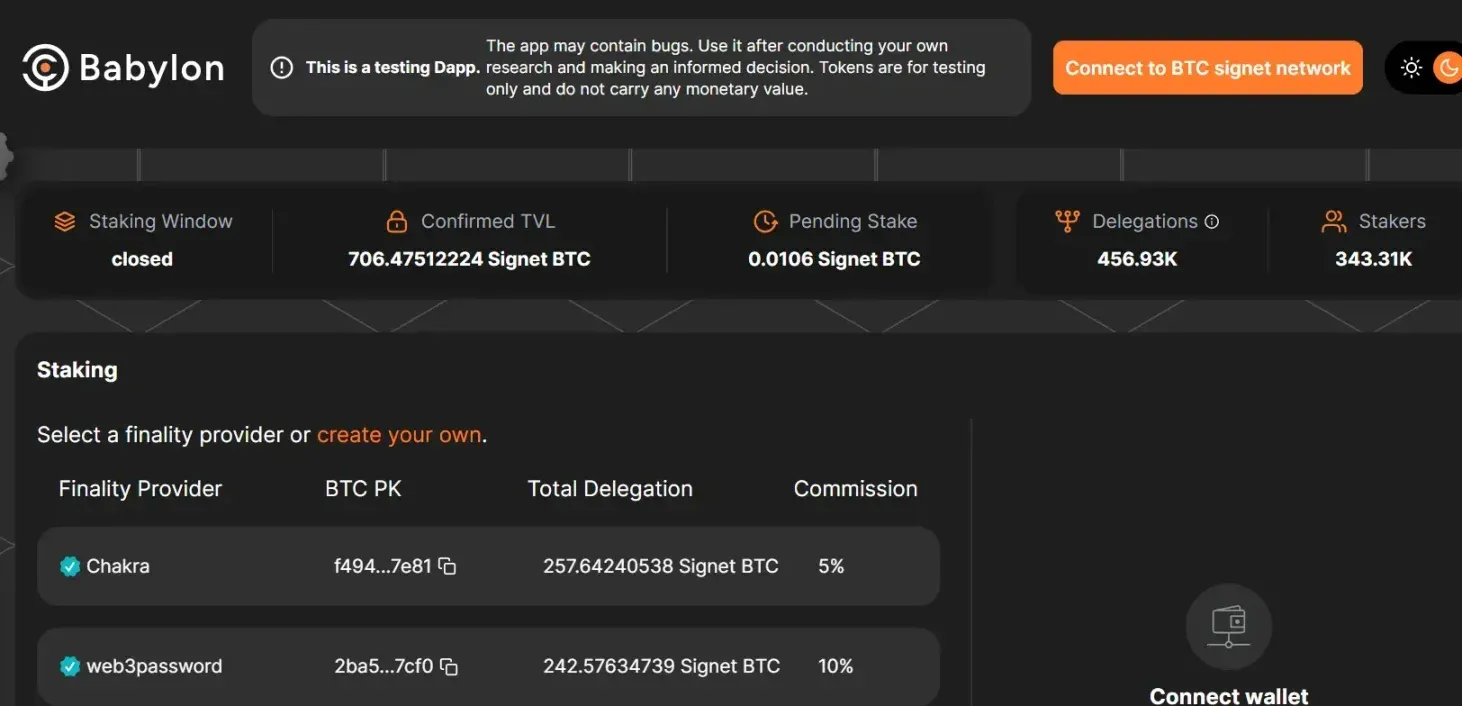
Babylon offers Bitcoin holders a PoS‑like staking entry point, allowing BTC to provide security to other protocols and earn yield without needing to place trust in a custodial intermediary. Its mechanics resemble Ethereum’s EigenLayer, except that BTC must first be converted into a stake‑compatible form.
- On May 30, Babylon closed a $70 million financing led by Paradigm.
- By July 12, total disclosed funding had reached $96 million, with investors including Paradigm, Polychain Capital, Framework Ventures, Polygon Ventures, Binance Labs (US users should use Binance.US, not the global Binance platform), and others.
- Users can experience the BTC‑staking flow on Babylon Testnet 4.
Liquidity Restaking Built on Babylon
- Lombard
- On July 2, completed a $16 million seed round led by Polychain Capital.
- Staked BTC is automatically transferred to Babylon; users receive an equivalent restaking receipt called LBTC, which can be employed in DeFi for lending, trading, and more.
- Lorenzo
- Launched a pre‑staking campaign on May 28; participants who stake BTC receive stBTC and immediately join revenue sharing once Babylon goes live on mainnet.
BounceBit
BounceBit is a restaking chain designed specifically for Bitcoin, featuring core products such as BounceBit Portal, BounceBit Chain, and BounceClub. After locking BTC, users mint BBTC, a token that can be used for hybrid on‑chain staking (BBTC + BB) or in various DeFi scenarios.
- In April, completed a strategic round led by Binance Labs (US users should access via Binance.US). Earlier, a $6 million seed round closed in February, with backers including Blockchain Capital, Bankless Ventures, NGC Ventures, DeFiance Capital, OKX Ventures, and others.
- As of July 12, the market price of BB was $0.40, giving the token a full‑dilution valuation (FDV) of roughly $800 million.
---
Restaking Deployments Within the Solana Ecosystem
Solayer
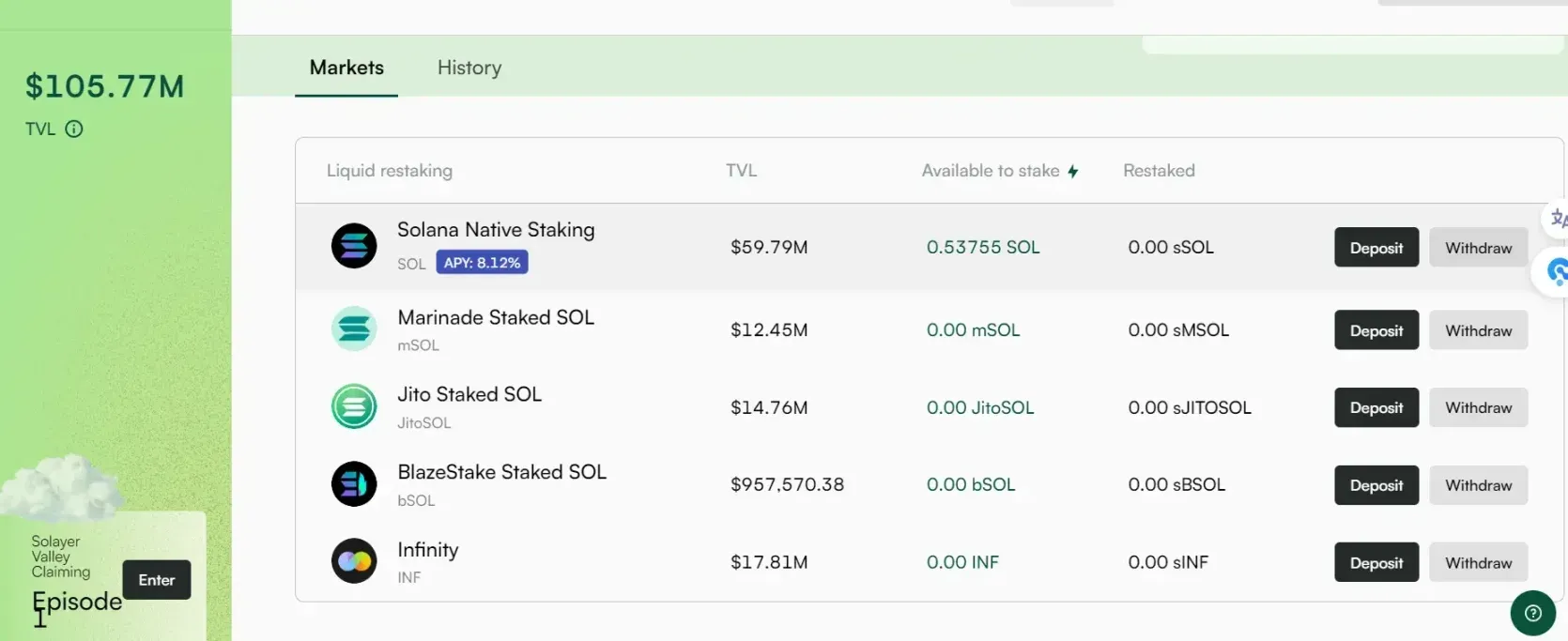
Solayer ports EigenLayer’s concept to Solana, enabling SOL holders to delegate their assets to DApps or middleware that require security guarantees, thereby earning additional PoS rewards.
- Completed a builder round on July 2, with investors including Solana Labs co‑founder Anatoly Yakovenko, Solend founder Rooter, Tensor co‑founder Richard Wu, Polygon co‑founder Sandeep Nailwal, among others.
- The round is nearing a $10 million size, with Yakovenko also participating.
- On July 15, the platform’s total value locked (TVL) exceeded $105 million, of which the SOL principal accounted for about 60 %.
Cambrian
Cambrian also positions itself as a Solana restaking protocol, supporting SOL and various liquid staking tokens (LSTs) such as mSOL and JitoSOL to provide security services for middleware and DApps.
- Founder Gennady Evstratov indicated that a $2.5 million financing round (valued at roughly $25 million) is being finalized.
- The network is slated to launch in late Q2 or early Q3 2024, at which point a points program will commence.
- As of July 15, the staking product has not yet been officially released.
Picasso
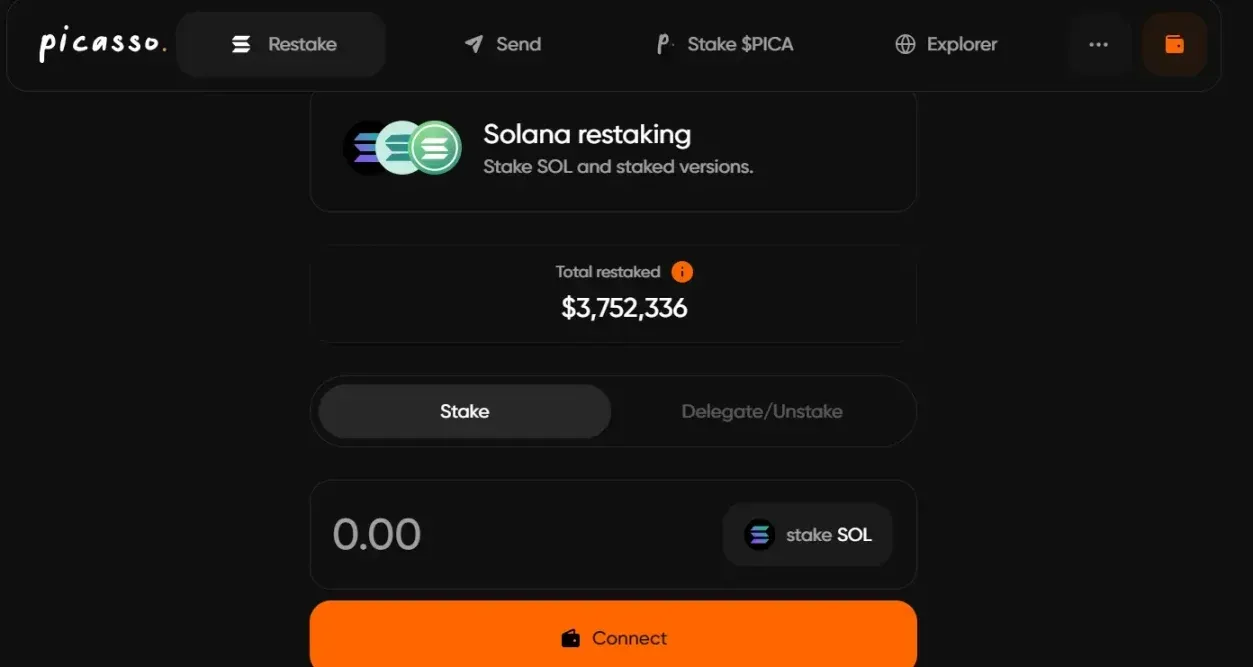
Originally serving the Polkadot ecosystem, the cross‑chain protocol Picasso announced on January 28 that it would offer SOL restaking on Solana, supporting SOL and its LSTs (e.g., JitoSOL, mSOL, bSOL) to secure middleware, DApps, and L2 rollups.
- The total value of assets currently locked for restaking is about $3.75 million.
---
Ethereum’s Three Major Restaking Protocols
EigenLayer
As the pioneer of the restaking concept, EigenLayer has long held the lead position in the space. On April 30, the project unveiled the EIGEN token model, introducing a “non‑transferable token” restriction that sparked intense community debate.
- The whitepaper explicitly states that EIGEN will not support transfers or secondary‑market trading in its early phase, with the team citing insufficient liquidity as the rationale.
- Additionally, IP restrictions imposed on airdrop participants were perceived by some users as unfriendly.
- Despite the controversy, TVL continued to climb: a $140 billion peak on May 9 rose to $190 billion on June 16, before settling at $149 billion.
- Asset composition consists of 68 % native ETH and 32 % LSTs; among roughly 161,000 restakers, 67.6 % (about $103 billion) delegated assets to only 1,500 operators.
- On July 3, EigenLayer announced on X (Twitter) that a major project rollout is planned for Q3, leading the market to speculate about the possible token tradability.
As of July 12, EIGEN remains non‑transferable; the over‑the‑counter secondary‑points marketplace Whalesmarket lists it at $5.39.
Symbiotic
Amid the growing EigenLayer airdrop controversy, on May 15 it was reported that Lido co‑founder and Paradigm were quietly financing a new venture named Symbiotic, intended to fill the gap in the restaking arena.
- The protocol officially launched on June 11 and closed a $5.8 million seed round led by Paradigm and Cyber Fund.
- Cyber Fund was co‑founded by Lido co‑founder Konstantin Lomashuk and Vasiliy Shapovalov, and openly supports restaking of Lido assets such as stETH, cbETH, and others that are incompatible with EigenLayer.
- Unlike EigenLayer, which only accepts ETH and its derivative LSDs, Symbiotic welcomes any ERC‑20 token, including Lido’s wstETH, stablecoins ENA, USDe, and more.
- Developers can configure their own staking asset lists, node operators, reward structures, and slashing mechanisms, delivering a higher degree of customization.
- In its first month, the platform’s locked assets surpassed $1 billion; by July 12, TVL stood at $1.09 billion, with wstETH accounting for $760 million (≈ 70 %).
- Multiple LRT (Liquidity Restaking Token) projects—Ether.fi, Renzo, YieldNest, Swell, Pendle Finance—have integrated with Symbiotic, enabling users to deposit assets on LRT platforms and earn Symbiotic points.
The LRT Protocol Mellow Built on Symbiotic
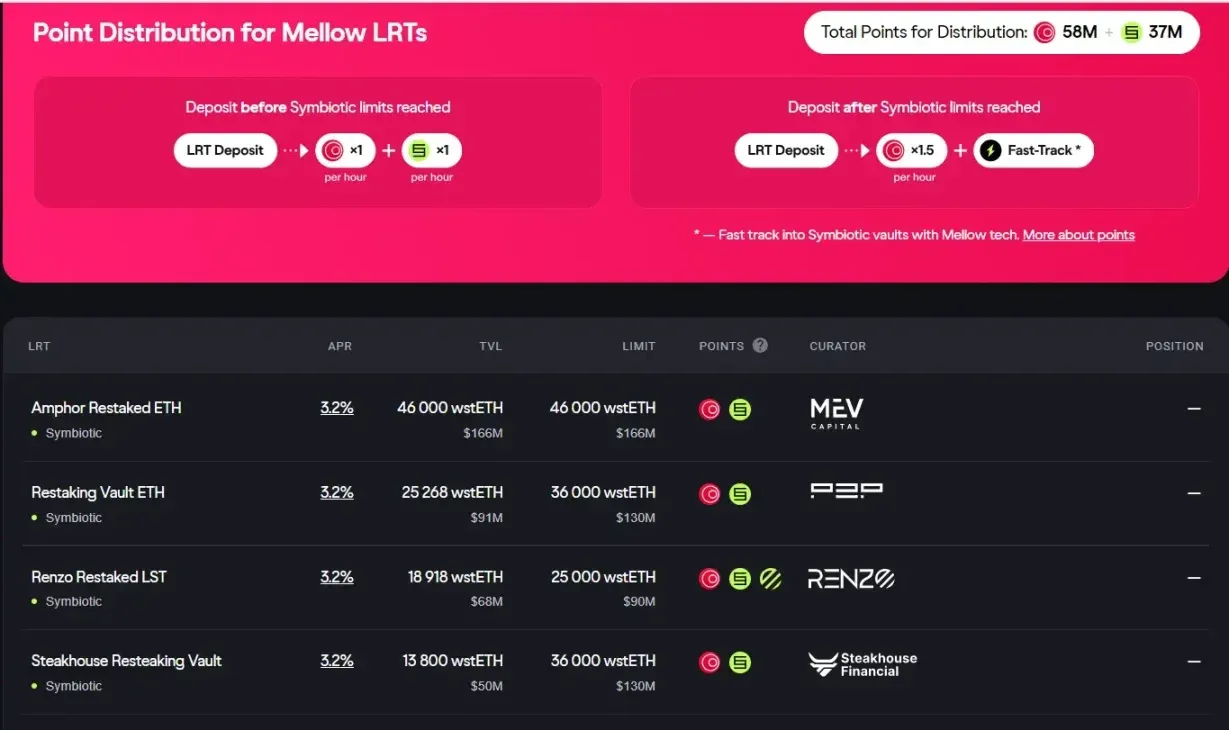
Mellow, originally a liquidity solution for the Lido alliance, announced on June 4 a partnership with Symbiotic to launch a modular LRT restaking product.
- Users deposit ETH into Mellow; the platform automatically routes the funds to Lido to obtain stETH, which is then deposited into Symbiotic, generating double‑layer points (Mellow + Symbiotic).
- This model functions similarly to a customizable hedge fund or staking provider, supporting varied risk/return configurations.
On July 15, Mellow’s TVL reached $488 million, having generated 37 million Symbiotic points to date.
Karak Network
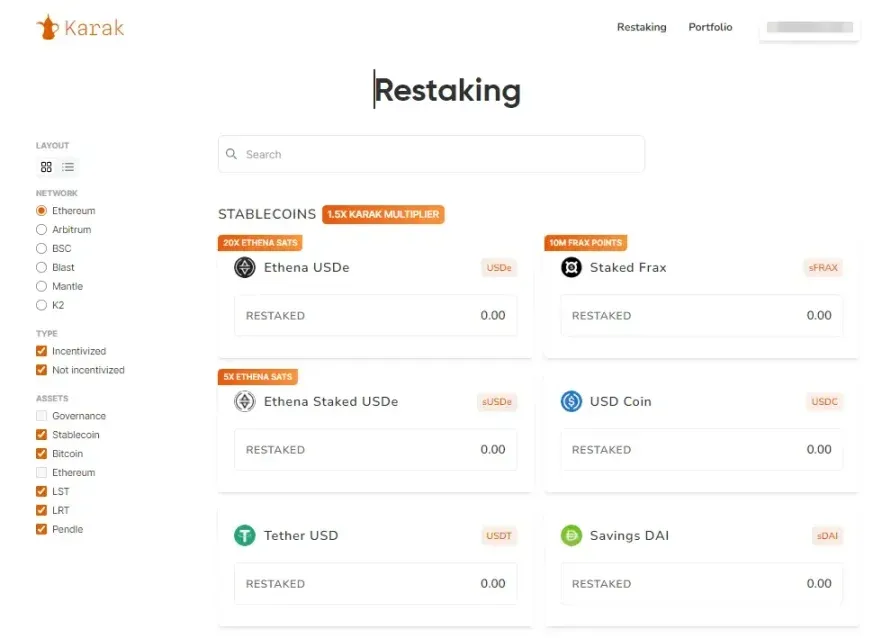
Karak Network operates similarly to EigenLayer, referring to its AVS as a Decentralized Security Service (DSS), and has launched its own Layer 2 network called K2.
- Unlike EigenLayer, which focuses solely on ETH, Karak supports a broad spectrum of assets for restaking, including ETH, various LSTs, LRT tokens, and stablecoins such as USDT, USDC, DAI, USDe.
- The protocol is multi‑chain, having deployed across Ethereum, Arbitrum, BSC, Blast, Mantle, and other networks, allowing users to choose the chain that matches their asset location.
To date, Karak’s TVL has surpassed $1 billion, though it is currently not accepting new inflows.
---
Recent Major Funding Highlights
- Renzo (June 18) closed a $17 million round led by Galaxy Ventures and others.
- Symbiotic (June 11) secured $5.8 million in a seed round with Paradigm and Cyber Fund as lead investors.
- Babylon (May 30) obtained $70 million, led by Paradigm.
- Lombard (July 2) wrapped up a $16 million seed round, led by Polychain Capital.
- Solayer (July 2) completed a builder round with participants including Anatoly Yakovenko, Rooter, Richard Wu, Sandeep Nailwal, among others.
---
Summary
Restaking protocols are rapidly extending from Ethereum’s core lane into multi‑chain ecosystems such as Bitcoin and Solana. By introducing multi‑asset support, modular designs, and cross‑chain deployments, projects have attracted substantial capital and community attention. Although certain initiatives still face debates over token governance and airdrop rules, the continued growth in TVL and funding volume indicates that restaking remains a pivotal innovation within the broader crypto landscape.

Related Reading
- Cross‑Chain Bridges: Solving Blockchain Fragmentation
- Bitcoin Mining: Validate Transactions and Secure Blockchain
- Ethereum Staking Guide: How PoS Works, Earnings & Risks
💡 Register on Binance with referral code B2345 for the maximum trading fee discount. See Binance complete guide.



