
 Bitaigen Research
 In this article we systematically outline the core features and usage tips of DefiLlama, helping readers quickly get started with on‑chain data queries, discover potential opportunities, and providing practical metric interpretations along with recommendations for derivative tools. By reading in depth, you will master the complete workflow from basic to advanced operations.
Re‑examining DefiLlama — A Powerful Data‑Tool Website
DefiLlama is a free data platform that allows you to query DeFi TVL, protocol rankings, yield pools, cross‑chain assets, and more, providing multidimensional assistance for users to uncover on‑chain opportunities.
By reading this article, you will:
- Gain a detailed understanding of all DefiLlama functions
- Master key DeFi metrics: LTV, Delta‑Neutral strategies, New Listed Projects
- Learn methods and metrics for finding DeFi Alpha
- Become familiar with the use‑cases of derivative metrics
- Explore innovative data offered by DefiLlama
- Receive recommendations for other useful data‑tool websites
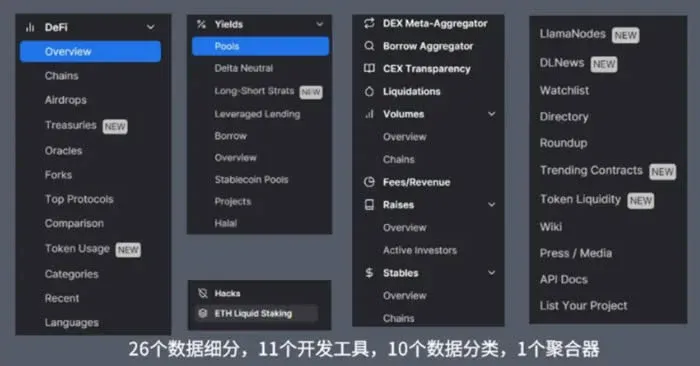
1. DeFi Overview
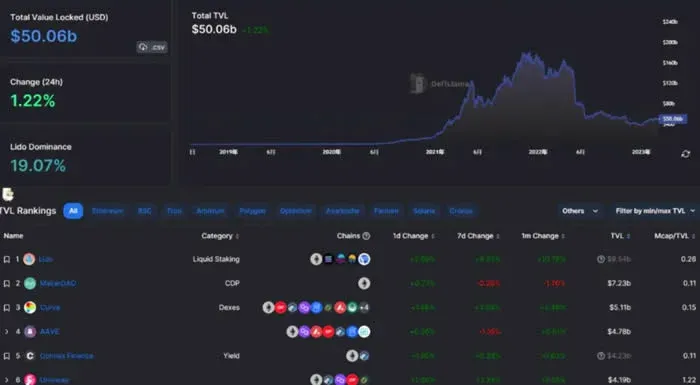
- DeFi‑Overview: Shows total TVL across all chains, protocols ranked by TVL, and a leaderboard that can be filtered by individual blockchains.
- Lido became the top protocol after the ETH merge, with 99.2 % of its TVL coming from Ethereum.
1.1 DeFi‑Chains
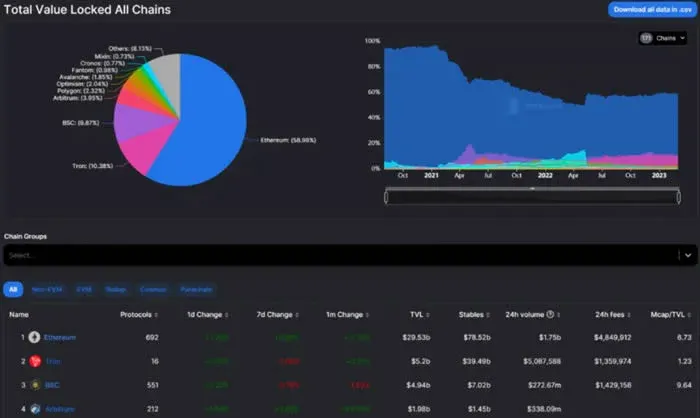
- Ranks each blockchain by TVL, number of protocols, TVL change, and amount of stablecoins.
- Supports classifications such as EVM, Non‑EVM, Rollup, Cosmos, Parachain, etc.
- The 7‑day and 1‑month TVL variations are key signals for spotting newly launched projects, while stablecoins remain the backbone of DeFi infrastructure.
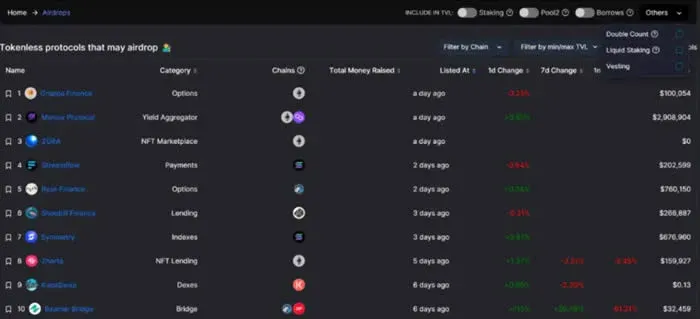
1.2 DeFi‑Airdrops (refers to airdrops of yet‑unissued tokens)
- Lists DeFi protocols sorted by fundraising date.
- Data updates are slightly delayed; combine the listed launch times with other signals to evaluate Alpha potential.
1.3 DeFi‑Treasuries
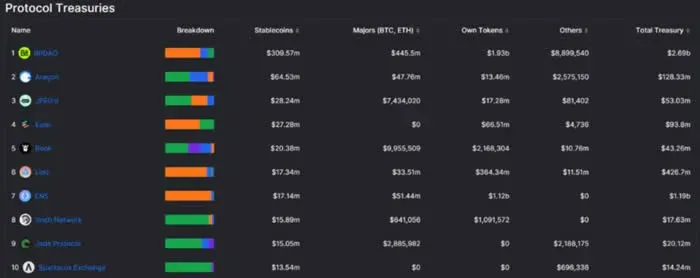
- Sorted by total treasury size and token composition.
- A large treasury does not necessarily indicate rapid growth; if a protocol holds a large amount of its own token, it may face liquidity scarcity or DAO‑sell‑off risk.
- Cases such as FTX and BIT DAO remind us to watch for risks associated with treasuries that are not composed of stablecoins.
1.4 DeFi‑Oracles
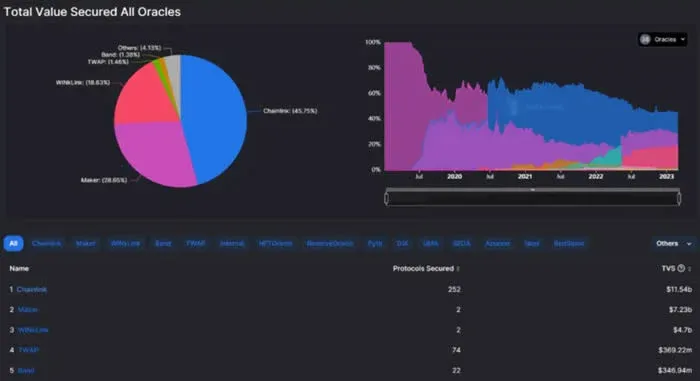
- Ranks oracle services based on TVS (Total Value Secured).
- Chainlink remains the leader in this space, but the metric does not equate to the number of service calls and therefore carries some ambiguity.
1.5 DeFi‑Forks
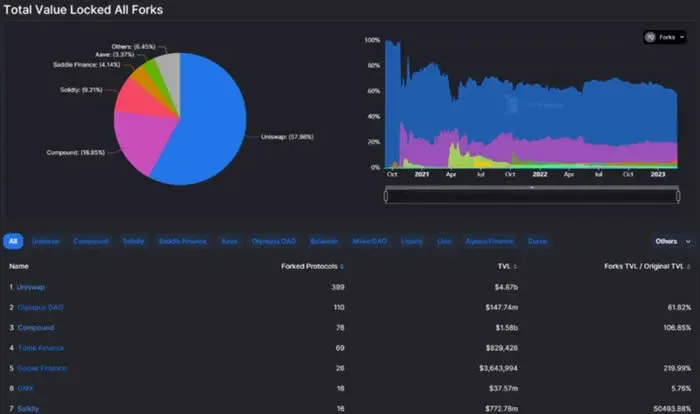
- Shows the protocols that have been copied (forked) the most times.
- Most forked projects are industry leaders, making them suitable for deep research; developers can also spot new opportunities from these forks.
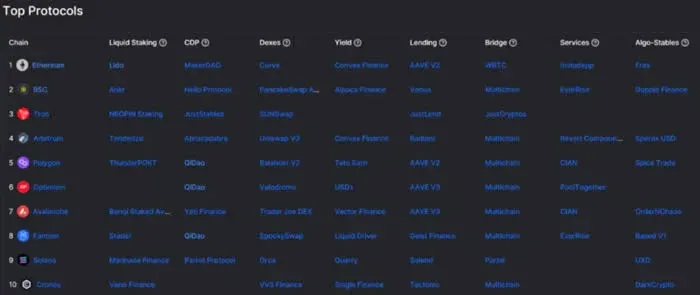
1.6 DeFi‑Top Protocols
- Lists leading protocols by blockchain and sub‑category, covering Liquid Staking, CDP, DEX, Lending, Yield, Bridge, Services, Algo‑Stables, etc.
- Major chain ecosystems are moving toward multi‑chain expansion, while leaders on smaller chains or emerging ecosystems are seeking cross‑chain markets.
- For example, the CDP leader on Canto is not yet clear, which could represent a potential opportunity.
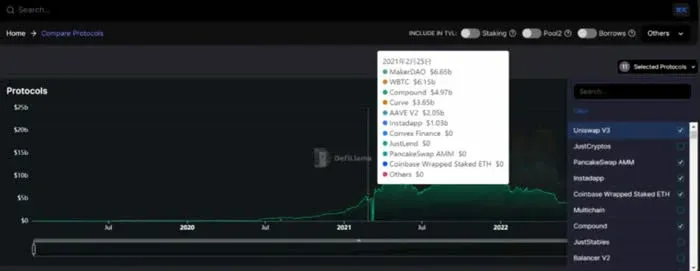
1.7 DeFi‑Comparison
- Allows side‑by‑side comparison of multiple protocols on the same timeline for TVL.
- The view can be extended to revenue, user count, FDV, and other dimensions, enabling horizontal analysis of protocols within the same sector (e.g., LSD).
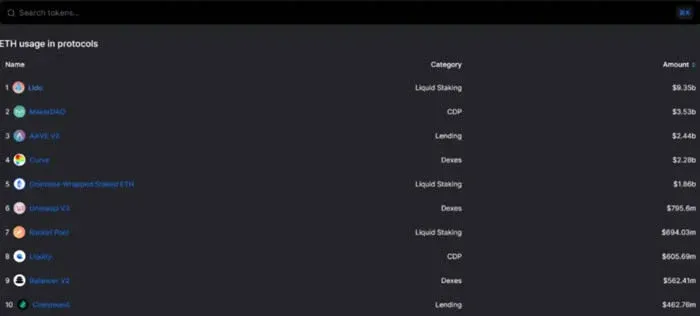
1.8 DeFi‑Token Usage
- Queries how a token is used across DeFi (limited to projects indexed by DefiLlama).
- Example: $3.49 billion USDT allocated within JUSTLEND and its specific purposes.
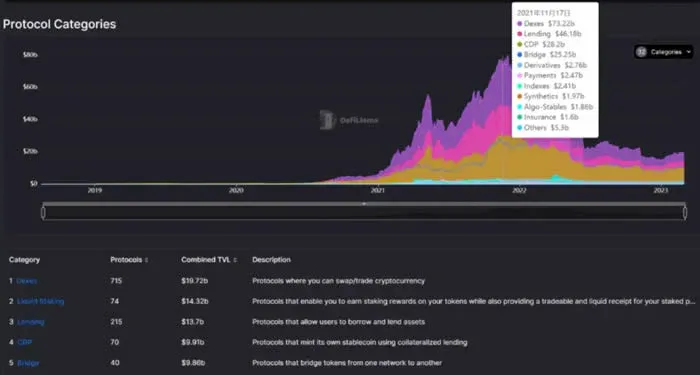
1.9 DeFi‑Categories
- Tallies the number of projects and total TVL across 31 major categories.
- Categories with fewer than 10 protocols include Privacy, Oracle, Leveraged Farming, Uncollateralized Lending, Exotic Options, and RWA Lending; the last four may contain hidden Alpha.
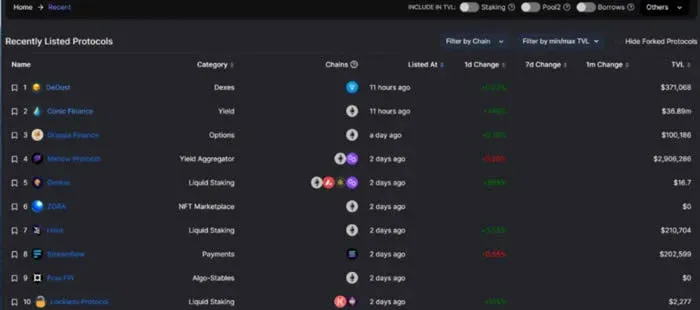
1.10 DeFi‑Recent
- List of projects that have been recently added to the database.
- “Recent” refers to the time of inclusion in the dataset and may lag behind the actual mainnet launch date.
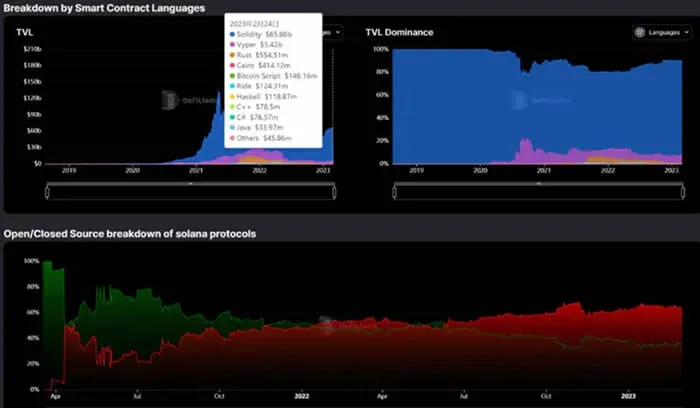
1.11 DeFi‑Language
- Shows the proportion of programming languages used across DeFi projects.
- Languages are compared by TVL, illustrating the open‑source vs. closed‑source split within the Solana ecosystem.
- For more detailed breakdowns, refer to the data platform maintained by @ElectricCapital.
2. Yields Module
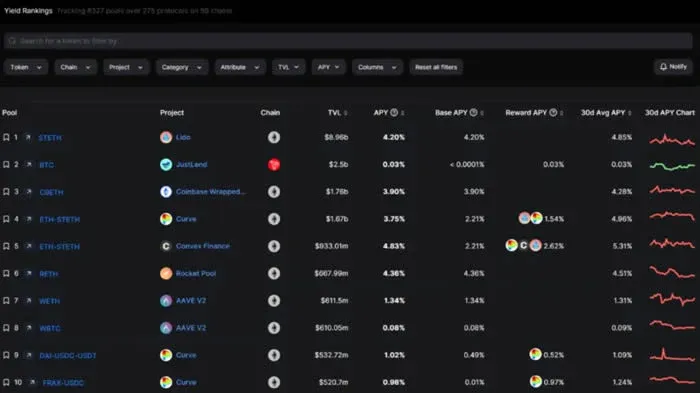
2.1 Pools
- Liquidity pools ranked by TVL, covering a total of 59 chains, 275 protocols, and 5,327 pools.
- Apart from BTC, ETH and stablecoins, the 11th‑ranked GLP and the 13th‑ranked GMX both originate from the GMX protocol.
2.2 Delta Neutral
- After entering a collateral token, the platform automatically suggests Delta‑Neutral strategies; the displayed yield is the sum of all components.
- Currently only a limited number of pools are tracked, so treat the results as a reference point.
2.3 Long‑Short Strategies
*(The original text ends here; continue translation if additional content follows in the source.)*
Related Reading
- DexScreener Guide: Token Tracking & Liquidity Insights
- Blockchain Oracles: Concepts, Operations & Real‑World Uses
- Polymarket Wallet Study Reveals 87% Users Lose Money
💡 Register on Binance with referral code B2345 for the maximum trading fee discount. See Binance complete guide.



