
 Bitaigen Research
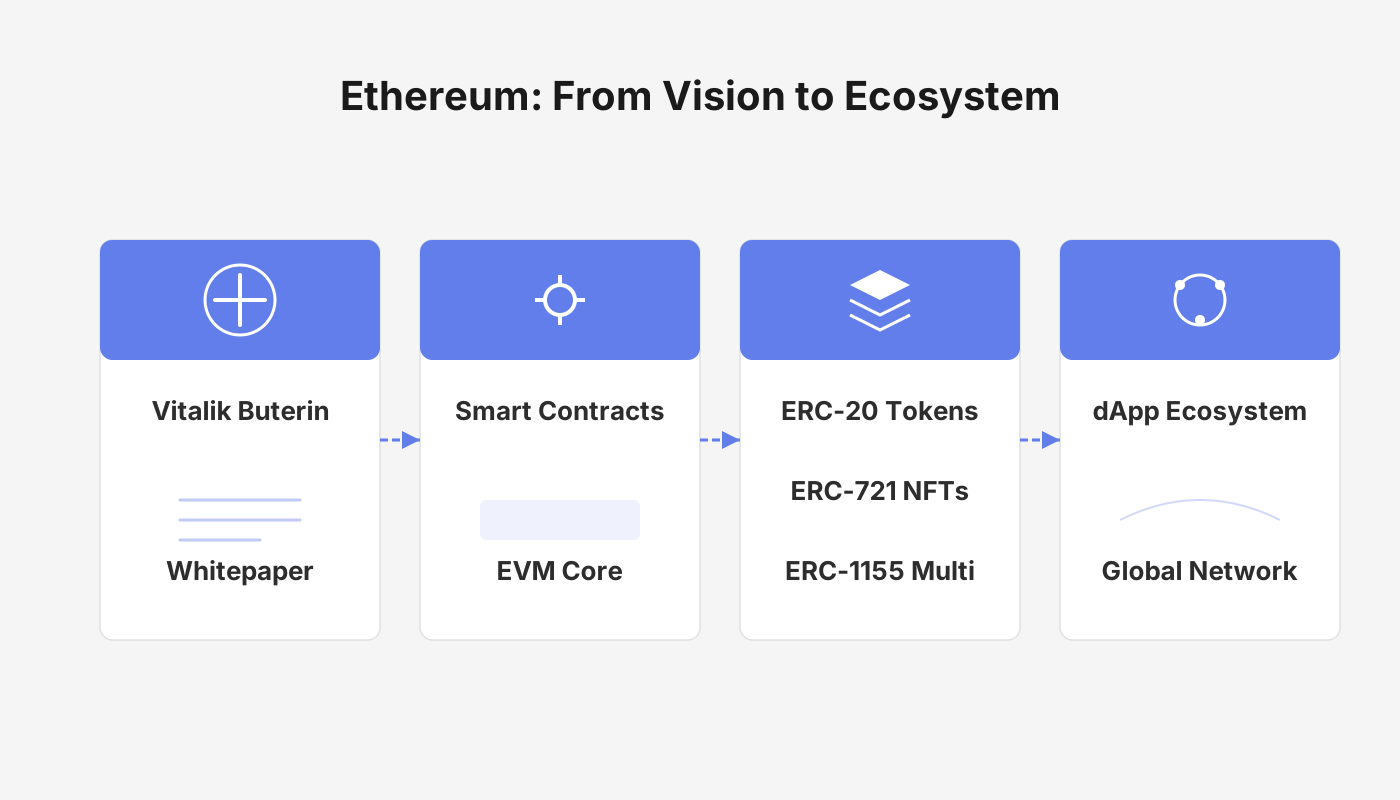
In order to improve the flexibility and applicability of blockchain networks, Vitalik Buterin introduced Ethereum in 2014, bringing smart contracts that enable developers worldwide to build decentralized applications (DApps) on the platform.
ERC standards are token technical specifications defined by the Ethereum community. ERC‑20, ERC‑721, and ERC‑1155 correspond respectively to fungible tokens, non‑fungible tokens, and multi‑function tokens that can mix multiple asset types.
In this article we systematically review the design philosophies and implementation differences of Ethereum’s three core token standards, helping readers quickly distinguish the appropriate use‑cases for fungible, non‑fungible, and mixed‑asset tokens, and offering practical references to support more rational decisions when developing DApps or allocating digital assets.
What are ERC standards?
ERC stands for *Ethereum Request for Comments*. It is a set of technical specifications proposed by the community and reviewed through Ethereum Improvement Proposals (EIPs). The main goal is to standardise how smart contracts—especially token contracts—are written, ensuring interoperability and consistency across different projects.
Among the many ERC specifications, ERC‑20, ERC‑721, and ERC‑1155 are currently the most common and widely used three categories.
What are ERC‑20, ERC‑721 and ERC‑1155?
1. ERC‑20
- Definition: The most widely used fungible token (FT) standard on Ethereum.
- Characteristics: Every token unit is identical, divisible, and interchangeable.
- Core interface: Functions such as `totalSupply`, `balanceOf`, `transfer`, `approve`, `transferFrom`, etc., guarantee free movement of the token across different DApps.
2. ERC‑721
- Definition: The standard dedicated to non‑fungible tokens (NFTs).
- Characteristics: Each token carries a unique `tokenId`, is indivisible and non‑interchangeable.
- Use cases: Digital art, collectibles, unique identity credentials, and similar scenarios.
Example: Two paper bills of the same denomination can be swapped, but once a name is handwritten on one or a printing error occurs, that bill becomes a unique collectible—mirroring the concept of ERC‑721.
3. ERC‑1155
- Definition: A multi‑asset standard that allows a single contract to manage both fungible and non‑fungible tokens simultaneously.
- Characteristics: A single transaction can batch‑transfer multiple token types, dramatically reducing gas costs.
- Typical applications: In blockchain games, a player’s weapons and armor (NFTs) can coexist with potions and gold coins (FTs) under the same contract.
Quick comparison of ERC‑20, ERC‑721 and ERC‑1155
| Standard | Token type | Divisibility | Interchangeability | Typical scenarios |
|---|---|---|---|---|
| **ERC‑20** | Fungible token (FT) | ✔️ | ✔️ | Stablecoins, governance tokens, token‑economy projects |
| **ERC‑721** | Non‑fungible token (NFT) | ❌ | ❌ | Art, collectibles, digital identity |
| **ERC‑1155** | Mixed fungible + non‑fungible | ✔️/❌ (mixable) | ✔️/❌ (mixable) | Game assets, loot boxes, composite products |
Summary
Ethereum’s ERC standards provide a unified technical framework for the broader blockchain ecosystem. ERC‑20 laid the foundation for fungible tokens, ERC‑721 ushered in the NFT era, and ERC‑1155 builds on both to enable efficient multi‑asset combinations. As technology iterates and markets mature, these standards will continue to drive digital‑asset innovation and serve as reference points for future ERC specifications that may emerge.
Additional notes for a global audience
- When converting crypto proceeds to fiat, most users will encounter USD transactions via SEPA or SWIFT transfers, depending on their banking region.
- U.S. residents should use Binance.US rather than the global Binance platform to remain compliant with local regulations.
- Cryptocurrency gains may be subject to taxation in the holder’s jurisdiction; users should consult local tax authorities or professional advisors to understand their obligations.
Related Reading
- Ethereum ERC‑20 Tokens: Guide to Standards, Uses & Examples
- March 2025 Crypto Airdrops: BROC, FireChicken, CUBS, BYB, ABG
- 2026 Crypto Bull Market: Bitcoin, Ethereum, AI & RWA Surge
💡 Register on Binance with referral code B2345 for the maximum trading fee discount. See Binance complete guide.



