
 Bitaigen Research
 Proof of Space‑Time (PoSt)
Proof of Space‑Time (PoSt) is a consensus mechanism that combines storage space and time, offering low energy consumption, decentralization, and high security. Representative projects include Chia, Filecoin, SpaceMint, and Signum.
Proof‑of‑Space‑Time (PoST) improves the security and decentralization of blockchain networks by requiring participants to retain allocated storage for a defined period. It dramatically reduces energy usage and enhances scalability. Unlike Proof‑of‑Work (PoW), which is energy‑intensive, PoST avoids hash‑rate competition; compared with Proof‑of‑Stake (PoS), it is more equitable and mitigates excessive power concentration.
Below, the editors at Bitaigen provide a detailed introduction to the concept, advantages, and notable projects built on PoSt.

In this article we outline the core principles and technical benefits of Proof of Space‑Time (PoSt) and examine representative projects in the industry. By dissecting the dual guarantees of space and time, readers can quickly grasp its value for reducing energy consumption and enhancing decentralized security. The subsequent sections explore each project's unique innovations and development outlook, making this a worthwhile read.
Introduction
Since Bitcoin introduced the first consensus mechanism in 2009, energy consumption has remained a focal concern for the industry. To address PoW’s shortcomings, developers introduced alternatives such as Proof‑of‑Stake (PoS) and Delegated Proof‑of‑Stake (DPoS). The latest evolution, Proof of Space‑Time (PoST), merges the strengths of Proof‑of‑Space (PoSpace) and Proof‑of‑Time (PoT).
Note for global participants: When converting fiat to cryptocurrency, USD transactions are commonly processed via SEPA or SWIFT. U.S. residents should use Binance.US rather than the global Binance platform. Additionally, crypto gains may be subject to taxation in your jurisdiction; consult a tax professional for guidance.
What is Proof of Space (PoSpace)?
Proof of Space (PoSpace) requires participants to demonstrate that they have reserved a specified amount of storage and filled it with data designated by the network. The process works as follows:
- Generate a commitment: A hash function maps the data to a short output (the Commitment).
- Submit the commitment: The short output is sent to the network, proving that storage has been allocated.
- Challenge‑response: The network randomly selects a subset of the stored data and asks the node to provide the corresponding pieces within a deadline, verifying honesty.
What is Proof of Time (PoT)?
Proof of Time (PoT) selects validators based on a fixed stake amount and a ranking score:
- Fixed stake: All validators must lock the same quantity of the native token.
- Ranking score: Calculated from historical validation accuracy and interaction feedback.
- Verifiable Delay Function (VDF): Randomly picks block proposers (time electors) and confirmers (time nodes), giving priority to higher‑ranked participants.
What is Proof of Space‑Time (PoSt)?
Proof of Space‑Time (PoSt) blends PoSpace and PoT into a consensus algorithm that consumes virtually no compute or electricity. Its core principles are:
- Storage as a resource: Participants earn block‑creation rights by reserving disk space instead of staking tokens.
- Time constraint: The allocated storage must be continuously retained and proven over multiple epochs.
- Difficulty adjustment: Security is enhanced by extending storage duration rather than increasing computational difficulty.
How Does PoSt Operate?
- Create a Plot: Nodes generate a large dataset (a Plot) on their disks, embedding cryptographic proofs based on a public challenge.
- Submit proofs: Each epoch, the network issues a new challenge; nodes select matching proofs from their Plot and submit them.
- Validate consistency: The network checks that the proof matches the current challenge and is consistent with the node’s previously submitted proofs.
- Block production: The node that provides the fastest, most accurate valid proof earns the right to produce the next block and receives the reward.
Advantages of PoSt
Cost‑effectiveness
Storage costs are primarily driven by capacity and duration. By demanding long‑term, untampered storage, PoSt reduces overall operating expenses.
Energy efficiency
Unlike the power‑hungry mining rigs required for PoW, PoSt only needs disk storage and lightweight proofs, resulting in minimal energy consumption.
Decentralization
PoSt allocates influence based on storage space rather than token stakes, preventing the monopoly risk associated with large token holders in PoS systems.
Security
The dual constraints (space + time) raise the entry barrier for malicious actors, significantly lowering the likelihood of network attacks.
Why Proof of Stake, Though Green, May Not Be More Equitable
Chains that adopt Proof of Stake (PoS)—such as Ethereum—consume far less energy, yet they require substantial token stakes to become validators. For example, in January 2022 the staking threshold for a full Ethereum node was 64 ETH, roughly $240,000 USD at that time, which is out of reach for most individuals. Large staking pools holding millions of dollars in ETH concentrate governance power in the hands of a few “digital whales.” By contrast, PoSt lets ordinary users participate by offering storage space, thereby improving decentralization.
Blockchain Projects Using PoSt
Chia Network

Chia employs PoST; its participants—called “farmers”—create Plots on hard drives and provide the corresponding data when the network issues challenges, earning rewards. Chia also offers atomic swaps, recoverable wallets, and authorized payments.
Filecoin
Filecoin uses PoST to verify that storage providers continuously serve data throughout contract periods of 180–540 days. Every 24 hours, each 32 GB or 64 GB sector must generate a proof, ensuring data availability and immutability.
SpaceMint
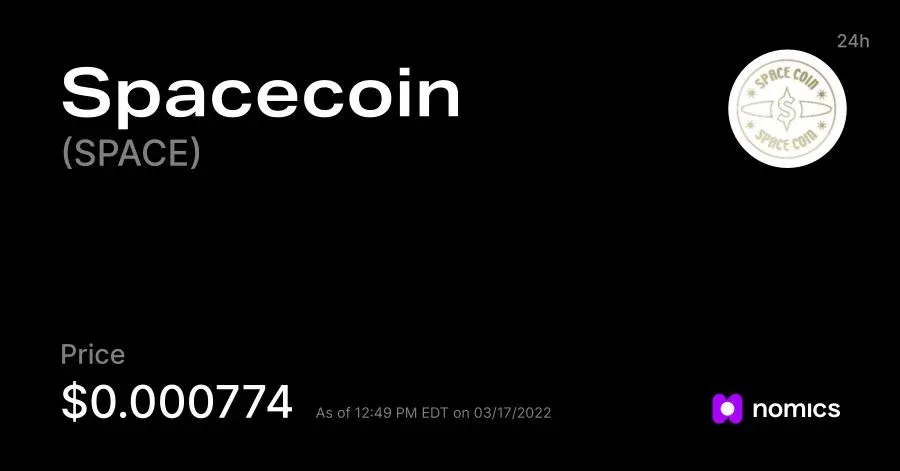
SpaceMint’s PoST mechanism incentivizes participants with the SPACE token, favoring smaller miners to boost network decentralization. In January 2022 its market cap was below $100,000 USD.
Signum (formerly BurstCoin)

Signum implements PoST by storing random solutions—called “plots”—on hard drives. As of January 2022, SIGNA’s market cap was approximately $13 million USD, and the platform supports dApp, DeFi, and gaming applications.
PoSt Compared with Other Consensus Mechanisms
| Comparison Dimension | Proof of Work (PoW) | Proof of Stake (PoS) | Proof of Capacity (PoC) | Proof of Space‑Time (PoSt) |
|---|---|---|---|---|
| Energy consumption | High | Low | Low | Very low |
| Resource barrier | Hardware hash power | Token stake | Free disk space | Disk storage + time |
| Decentralization | Affected by hash‑rate centralization | Affected by token concentration | Affected by storage concentration | Equality through storage |
| Security mechanism | Computational difficulty | Stake size | Space occupation | Dual space + time constraints |
| Scalability | Limited | Medium | Medium | Supports parallel block production |
Conclusion
Proof of Space‑Time (PoSt) offers a low‑energy, highly secure, and potentially more decentralized consensus solution for blockchain networks. By leveraging the twin guarantees of storage space and time, it makes efficient use of a scarce resource and has already been deployed in projects such as Chia, Filecoin, SpaceMint, and Signum. As the ecosystem matures, PoSt is poised to play a pivotal role in a broader array of use cases.
The above is the Bitaigen editorial team’s compilation of the PoSt (Proof of Space‑Time) concept, its advantages, and noteworthy projects. Feel free to read, share, and discuss.
💡 Register on Binance with referral code B2345 for the maximum trading fee discount. See Binance complete guide.



