
 Bitaigen Research
 Proof‑of‑Stake (PoS) Consensus Mechanism
Proof‑of‑Stake (PoS) is a consensus mechanism that grants block‑validation rights in exchange for staking tokens. Its advantages include low energy consumption, high efficiency, and strong security, while its drawbacks involve centralisation risk, possible inflation, and limited liquidity of staked assets.

In this article we systematically outline the core principles, benefits, and potential risks of PoS, and walk you through the staking process step‑by‑step. Using easy‑to‑understand examples, readers can quickly assess whether participating in PoS mining suits them. Later sections also provide practical tips for advanced users, making the piece worth a thorough read.
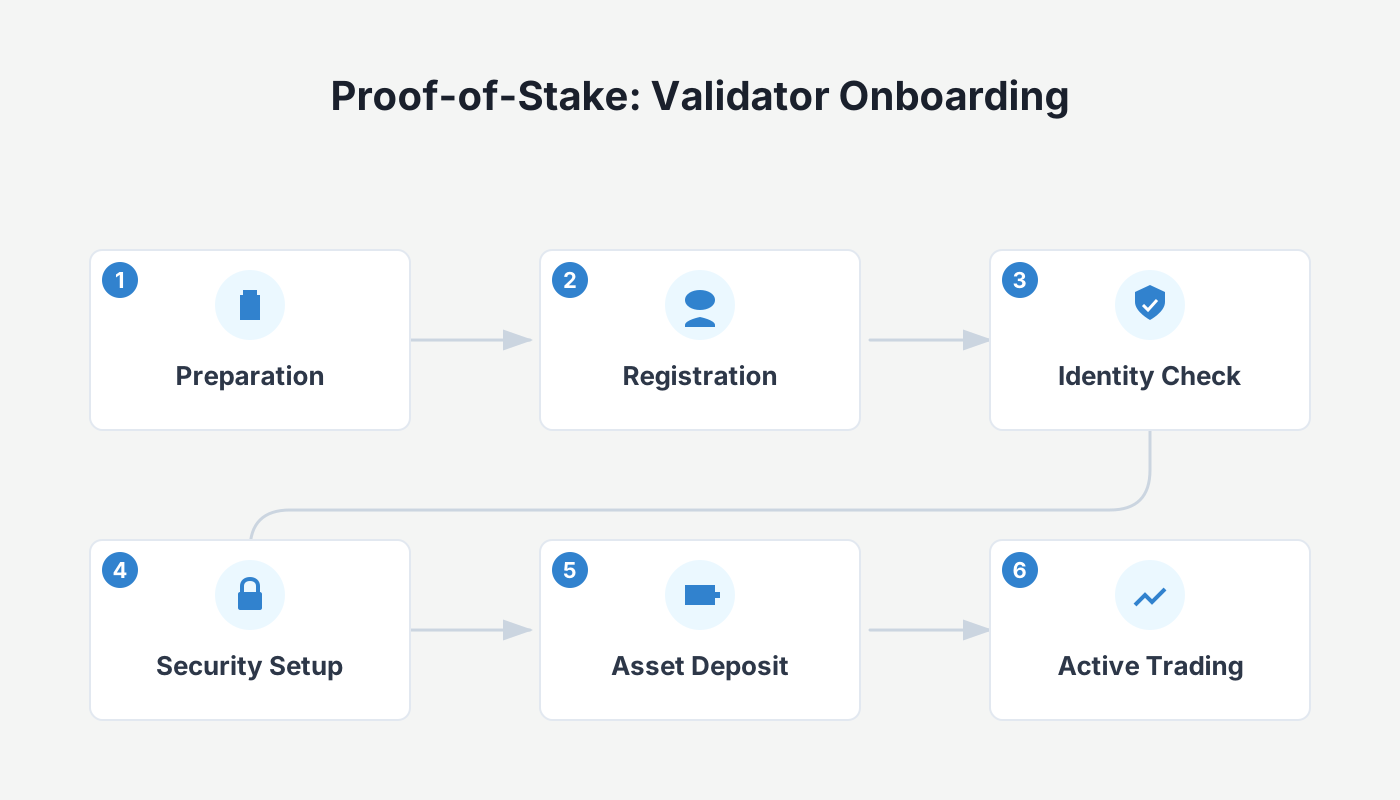
What Is the PoS Consensus Mechanism?
Proof‑of‑Stake (PoS) grants the opportunity to validate blockchain transactions by staking a specific cryptocurrency. When a validator successfully verifies a block, they receive a reward. Transactions on a PoS chain are no longer overseen by a centralized entity; instead, they are validated by decentralized nodes that meet the network’s eligibility criteria.
- Unlike Proof‑of‑Work (PoW), which relies on “hash‑power competition,” PoS does not simply select the node with the largest stake. The probability of being chosen depends on a combination of stake size, staking duration, and random factors.
- Anyone who holds and stakes the relevant token can help secure the network, eliminating the need for expensive electricity and specialized hardware.
How PoS Works
The following steps describe the generic workflow used by most PoS blockchains:
- Stake: Users lock their tokens in a network contract.
- Validator Election: The system randomly selects validators based on stake amount, staking time, and other protocol‑defined rules.
- Transaction Validation: Validators inspect and confirm the legality of pending transactions.
- Block Creation: Once validated, a new block is produced and appended to the chain.
- Reward Distribution: Validators receive block rewards plus any transaction fees.
If a validator engages in malicious behaviour such as double‑spending, their staked assets are slashed, creating an economic penalty that discourages attacks.
Advantages of PoS
Environmental Sustainability
Compared with the energy‑intensive mining of traditional PoW, PoS operates with virtually no additional electricity consumption, making it suitable for long‑term sustainable development.
High Scalability and Fast Confirmation
Validator selection occurs quickly, leading to rapid block production and significantly faster transaction confirmations, which improves the overall user experience.
Enhanced Security
The slashing mechanism, which confiscates staked tokens from bad actors, reduces the profitability of attacks and helps maintain network integrity. However, if the underlying smart contracts contain vulnerabilities, assets could still be at risk, so participants should independently evaluate the security of each project.
Drawbacks and Risks of PoS
Centralisation Tendencies
Large token‑holding addresses are more likely to obtain validator rights, potentially allowing a small group of capital owners to control a majority of validation power and eroding decentralisation.
Inflationary Pressure
Some PoS chains continuously mint new tokens to reward validators. If the issuance rate outpaces demand, inflation may occur, diminishing the token’s purchasing power.
Liquidity Constraints on Staked Assets
Staked tokens are often subject to an unbonding period before they can be withdrawn. For example, Ethereum’s withdrawal process historically required more than 10 days, during which an urgent need for cash could cause users to miss optimal selling opportunities.
Smart‑Contract Attack Risk
If the staking contract is compromised while funds are locked, users may suffer losses or experience abnormal token minting, which could affect the overall value of the network.
PoS vs. PoW: A Comparative Table
| Feature | PoW (Proof‑of‑Work) | PoS (Proof‑of‑Stake) |
|---|---|---|
| Consensus Method | Compute who finds the solution fastest | Stake amount determines chance |
| Hardware Requirements | High (ASIC miners) | Low (ordinary computers or smartphones) |
| Energy Consumption | Large | Near‑zero |
| Penalty Mechanism | Loss of hash power value | Slashing of staked tokens |
| Decentralisation Level | Relatively high | Influenced by token distribution |
| Entry Barrier | Requires substantial hash‑rate investment | Low to virtually zero |
| Representative Coins | BTC | ETH, ADA, etc. |
| Strengths | Strong security, mature ecosystem | Energy‑efficient, fast, low entry |
| Weaknesses | High energy use, slower throughput | Centralisation risk, liquidity limits |
Both mechanisms have their own merits; the choice depends on a project’s technical design, intended use‑cases, and community governance preferences.
How to Participate in PoS Staking and Earn Rewards
The simplest method is to stake through a major exchange (e.g., Binance). This eliminates the need to run your own node or manage private keys. The steps below illustrate the process on Binance’s platform:
- Create and Log In to Binance
- Official registration link: Binance Registration (copy the URL into your browser).
- Android app download: Binance Android App
Note for U.S. residents: Use Binance.US instead of the global Binance platform.
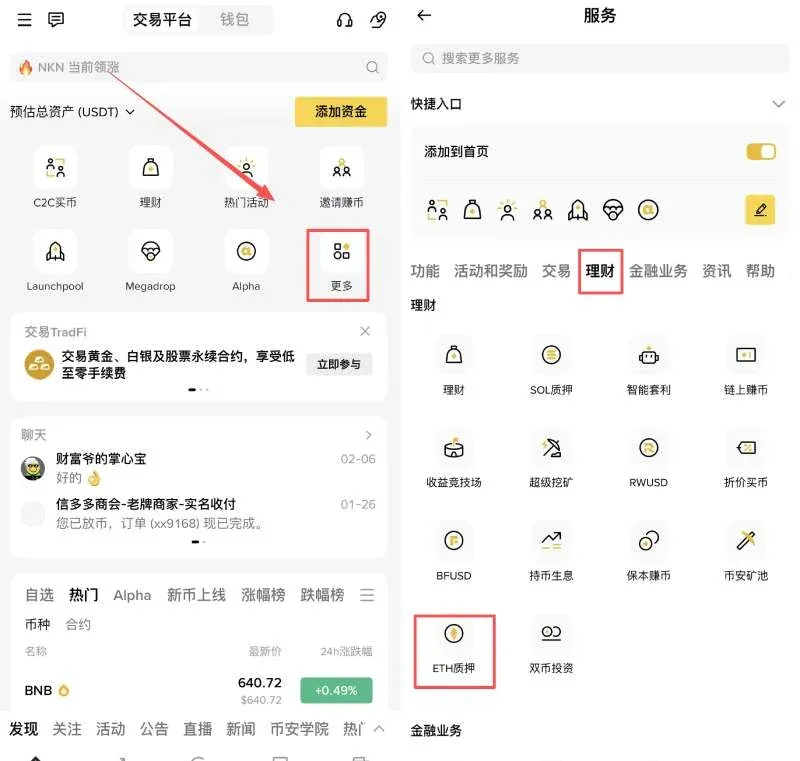
- Navigate to “Binance Earn” → “ETH Staking”
- In the Binance mobile app, locate the appropriate entry point in the upper‑left menu to access the PoS staking page.
- Submit Your Stake
- Tap “Subscribe,” enter the amount of ETH you wish to stake, and the platform will display the expected start date of rewards before locking the assets.
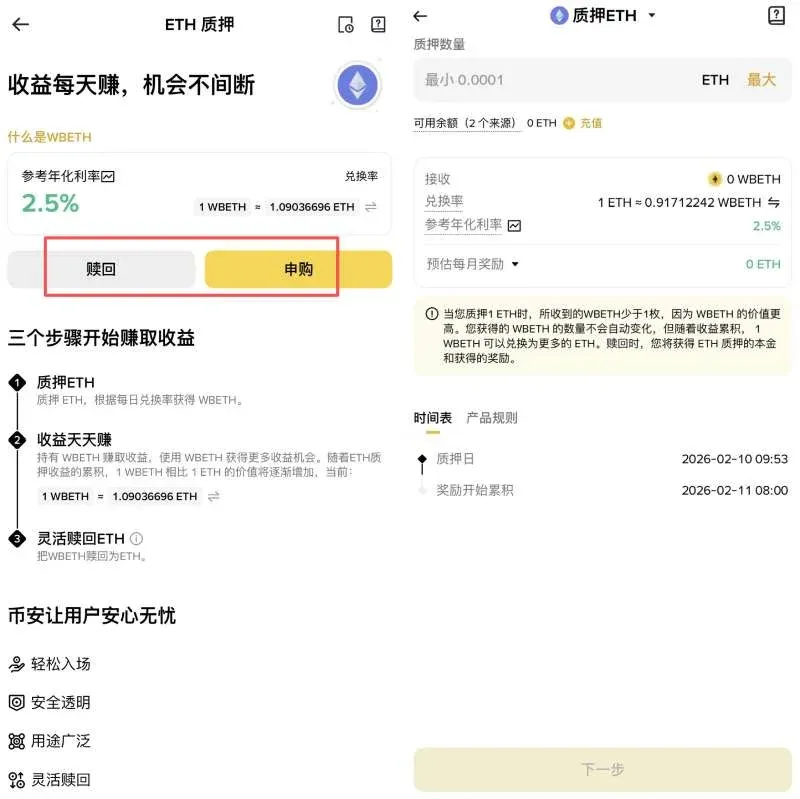
Benefits of exchange‑based staking include:
- Low entry threshold – a single stake can be as small as 0.0001 ETH.
- Flexibility – staked ETH is represented by a derivative token (e.g., WBETH) that can be used in other DeFi activities.
- No maintenance – you do not need to run a validator node or handle contract intricacies yourself.
If you prefer to stake independently, Ethereum requires a minimum of 32 ETH to become a validator, which represents a considerably higher barrier for most retail investors.
Frequently Asked Questions
How does PoS mining work?
By staking the relevant token and meeting on‑chain requirements you obtain the right to validate blocks. If you lack sufficient resources, you can join a staking pool to participate indirectly.
Do I need to buy mining hardware for PoS?
No. PoS relies on token staking rather than hash‑power competition, so only the required amount of the designated cryptocurrency needs to be held and locked.
Is PoS mining guaranteed to be profitable?
Returns depend on token price, network reward rates, and staking duration. A decline in the token’s market price can still result in a loss.
Which cryptocurrencies use PoS?
Major PoS projects today include ETH, ADA, ALGO, SOL, TON, among others. Protocols evolve over time, so keep an eye on official announcements for updates.
Summary
- PoS grants validation rights and rewards through token staking and staking duration, dramatically reducing energy consumption while speeding up transaction processing.
- Its strengths are environmental friendliness, efficiency, and security; its weaknesses include potential centralisation, inflation risk, and limited liquidity of staked assets.
- Utilizing exchange‑provided staking services lowers the participation barrier and removes the complexity of running your own validator node.
This completes the full translation of “What Is PoS Proof‑of‑Stake? What Are Its Pros and Cons? A Detailed Guide to Staking and Participating in PoS Mining.” For more information, you can search for previous Bitaigen (比特根) articles or continue reading the recommended pieces below. Good luck exploring the blockchain ecosystem!
*Disclaimer: Crypto earnings may be subject to taxation in your jurisdiction. Please consult a qualified tax professional to understand your obligations.*
Related Reading
- Avoid Hidden Gas Fee Risks & Malicious Contracts On-Chain
- Bitcoin Mining: Validate Transactions and Secure Blockchain
- Ethereum Staking Guide: How PoS Works, Earnings & Risks
💡 Register on Binance with referral code B2345 for the maximum trading fee discount. See Binance complete guide.



