
 Bitaigen Research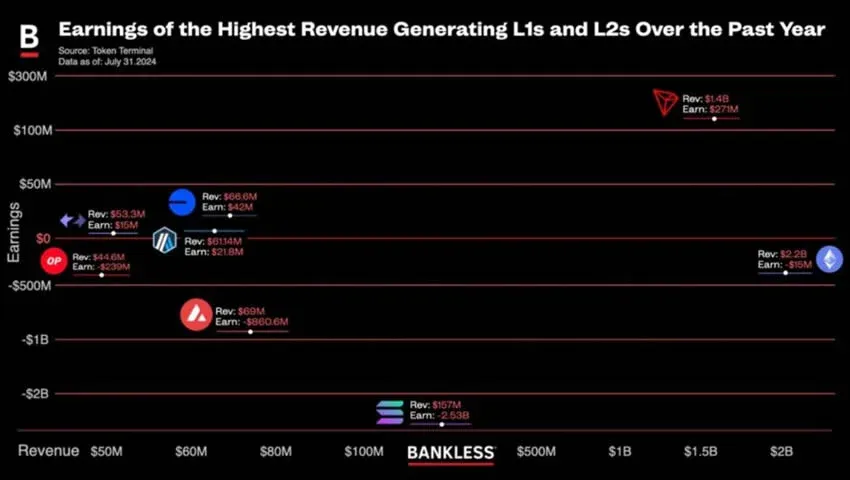
The highest‑earning L1 networks today are Ethereum, Tron, Solana and Avalanche, while the leading L2s are Base, Arbitrum, zkSync Era and Optimism, each generating revenue in the hundreds of millions of USD range. The following sections analyse the actual retained earnings of these blockchain networks in order of their revenue ranking.
In this article, revenue is defined as: total income minus token issuance costs.
From a revenue perspective we systematically examine the real profit situation of both L1 and L2 mainnets, deep‑dive into the earnings structures of core networks such as Ethereum and Tron, and reveal how new token issuances affect profitability. After reading, you will quickly grasp the current profit landscape of blockchain projects, providing useful context for future technical and investment decisions.
All monetary values are expressed in United States dollars (USD). For fiat transfers, SEPA or SWIFT channels are typically used in the global market. U.S. residents who wish to purchase on‑chain assets should use Binance.US rather than the global Binance platform. *Please note that cryptocurrency gains may be subject to tax in your local jurisdiction.*
1. Which L1 blockchains are profitable?
1) Ethereum
Ethereum leads the revenue race by a wide margin, posting a full‑year 2023 income of $2.22 billion.
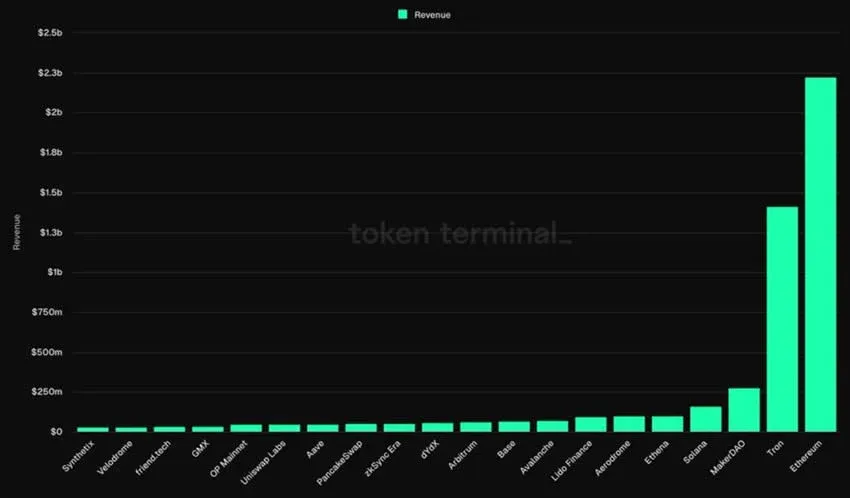
Despite the sizable top line, Ethereum recorded a net loss of $15 million. The primary driver of the loss was the speed of new token issuance outpacing revenue growth, which caused a sharp decline in net income in early 2024 after a strong second half of 2023. This dynamic is closely linked to transaction activity shifting to Layer 2 solutions and a reduction in fees paid directly to the Ethereum base layer.
2) Tron
Tron (TRX) ranks second with total revenue of $1.4 billion.
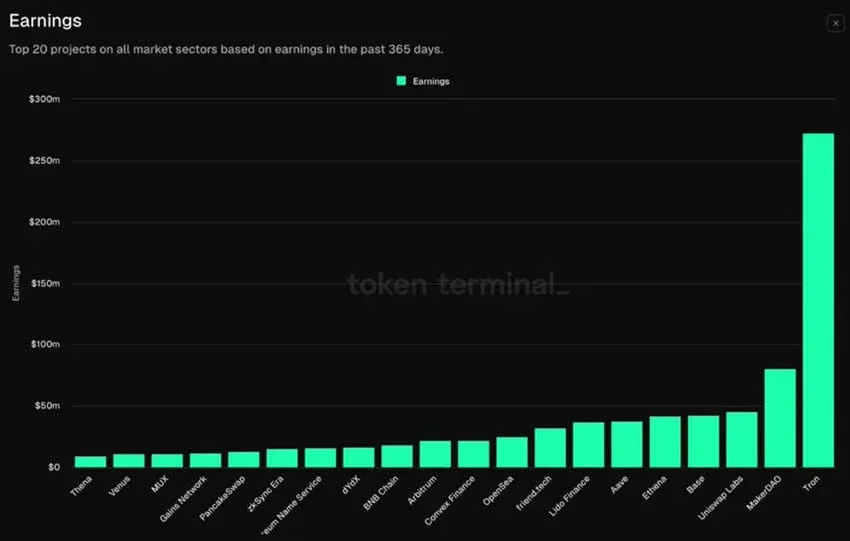
Tron’s income is largely derived from stablecoin transactions that are active on its network, second only to Ethereum in terms of volume. The chain enjoys widespread adoption in emerging economies such as Argentina, Turkey and several high‑inflation African nations. Over the past year, a single‑stablecoin business model generated $271 million in profit, making Tron one of the most lucrative blockchains in the sector.
3) Solana
Solana reported annual revenue of $157 million.
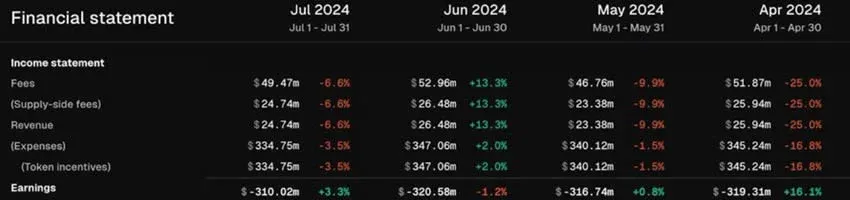
The network benefits from meme‑coin circulation, airdrop‑driven capital inflows, upgraded spam‑mitigation mechanisms, and support for cutting‑edge trends such as artificial intelligence. However, after accounting for tokens issued to stakers and operating expenses, Solana accumulated a $2.53 billion net loss over the last four full quarters, fully offsetting its revenue.
4) Avalanche
Avalanche (AVAX) sits fourth with $69 million in revenue.
The platform distinguishes itself with subnet expansion strategies and a vibrant gaming ecosystem. An upcoming ACP‑77 upgrade is expected to improve the economics of subnet deployment and management, potentially boosting future earnings. Nevertheless, the past year still saw a $860.6 million net loss, primarily driven by token issuance costs and ongoing operational expenditures.
2. Which L2 blockchains are profitable?
1) Base
Since its launch in 2023, Base has generated $66.6 million in revenue.
Base managed to retain 63 % of that amount, netting $42 million in profit. Key contributors include:
- The introduction of EIP‑4844 blobs, which reduced costs from $9.34 million in Q1 2024 to $699,000 in Q2 2024.
- The absence of a native token, eliminating distribution fees and enhancing competitive positioning.
2) Arbitrum
Arbitrum leads the L2 space with a total value locked (TVL) of $172 billion and posted annual revenue of $61.14 million.
DeFi projects such as GMX and Pendle have been deployed on Arbitrum, while its SDK underpins L3 initiatives like SankoGameCorp, Degentokenbase and XAI GAMES. Although its revenue is slightly lower than Base’s, Arbitrum delivered a $21.8 million net gain over the past year, with Q2 expenses falling to only $613,000, a particularly strong performance.
3) zkSync Era
zkSync Era earned $53.3 million over the last twelve months.
Following a token airdrop in June 2023, locked value on the chain rose sharply, and ZK‑rollup technology added roughly $850 million of on‑chain value (later corrected downward after a portion of the airdropped tokens were sold). The chain posted a $15.3 million net profit for the year, and accumulated $17.5 million in net profit across four full quarters. Although it ranks eighth in overall revenue, it is the third most profitable L2 project.
4) Optimism (OP Mainnet)
Optimism generated $44.6 million in revenue through mainnet sequencer fees and ecosystem projects such as Zora and Base.
In Q2 2024, daily active addresses reached 121.6 k, up 37 % month‑over‑month, while daily transaction volume hit 601 k, up 28 % month‑over‑month. The adoption of EIP‑4844 lowered fees and spurred higher network activity, driving Optimism’s net profit to increase by more than 150 %. However, due to retroactive airdrops, incentive programmes and operating costs, the network still posted a $239 million net loss for the full year.
3. Narrative versus fundamentals
When evaluating the data above, it is important to recognise that profitability is only one dimension of a project’s health. In traditional finance (TradFi), a company’s valuation is often driven by its narrative and growth potential rather than by raw financial statements alone. Crypto investors similarly allocate capital based on compelling storylines, hoping to capture outsized returns in a high‑risk environment. Nevertheless, a subset of networks are constructing tangible business models on top of their current activity levels, demonstrating sustainable revenue streams.
A deep dive into the earnings and retained profits of top‑tier L1 and L2 chains helps stakeholders assess the underlying health of these ecosystems and understand their relative positioning within an increasingly competitive market.
This completes the comprehensive analysis of the highest‑revenue L1 and L2 blockchain projects. For further data and updates, please follow subsequent articles from Bitaigen.
Related Reading
- Restaking Explained: Top 3 Ethereum Projects & Their Impact
- Top Solana Blockchain Explorers: Solscan, Solana Beach, Step & More
- Ethereum PoW vs PoS: Centralization, Energy & Decentralization
💡 Register on Binance with referral code B2345 for the maximum trading fee discount. See Binance complete guide.



