
 Bitaigen Research
 The latest data shows that as of January 29, the trading price of BNB had fallen below USD 900, closing at USD 898.9. At the same time, the BNB Foundation burned approximately 1.37 million tokens in the 34th quarter, turning the coin from a single‑purpose exchange‑fee discount tool into a multi‑faceted asset that combines trading ecosystem functions, public‑chain capabilities, and digital‑asset reserve characteristics.
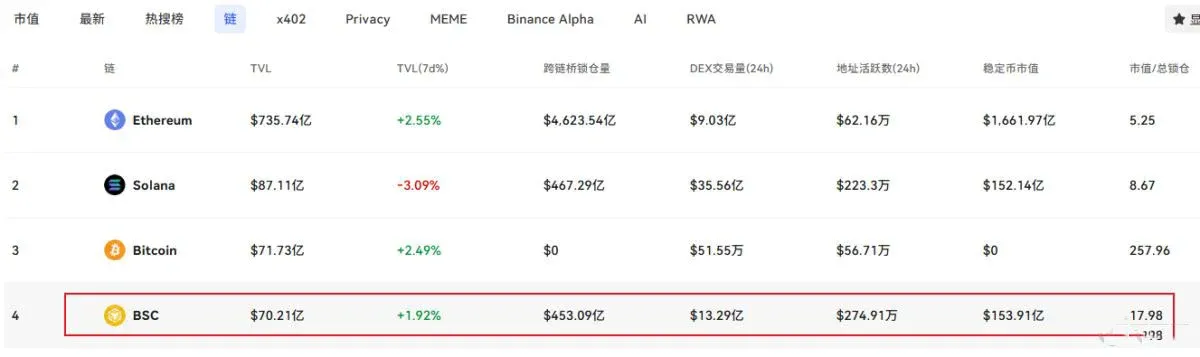
From the three major dimensions of ecosystem, technology, and institutional demand, we deeply dissect BNB’s value logic and potential trends in 2026. The article will reveal the key factors behind its transformation from a fee‑reduction tool to a composite asset, and evaluate how on‑chain activity, technical roadmap, and institutional holdings influence long‑term holding decisions, helping you make a rational judgment on whether to allocate resources to it.
The Logic of Holding BNB in 2026
Overall, BNB is no longer just a “fee coupon.” It has become the core hub of the Binance ecosystem, spanning trading, on‑chain services, payments, wealth management, and several other business scenarios. In 2025, BNB Chain set a new record with a daily average of 31 million transactions, while the market cap of stablecoins on the chain surpassed USD 14 billion, clearly demonstrating its powerful network effects. The 2026 technical roadmap explicitly proposes raising network throughput to more than 20 k transactions per second and laying the groundwork for frontier applications such as AI‑powered payments. These initiatives ensure that BNB’s value is not confined to the exchange itself but is deeply tied to the broader on‑chain economic activity.
Key Driving Factors
1. Institutional Capital and Digital‑Asset Treasury Allocation
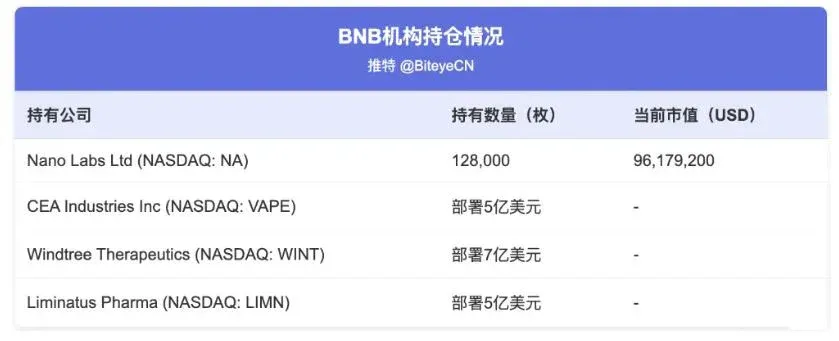
After regulatory environments become clearer, an increasing number of listed companies and funds are adding BNB to their digital‑asset reserves. For example, Nasdaq‑listed CEA Industries is actively building the largest BNB reserve, with holdings valued at several hundred million USD; China’s Jiuzhi Holdings includes Bitcoin, Ethereum, and BNB in its asset portfolio; and Kazakhstan’s Alem Crypto Fund has also designated BNB as one of its inaugural investment targets. Such institutional‑level endorsement supplies a stable source of capital to BNB and elevates its status as a macro‑strategic asset.
2. “Shadow Dividends” from the Exchange Ecosystem and Deflationary Mechanics
Holding BNB not only grants indirect benefits from the Binance ecosystem but also provides tangible returns through Launchpool projects and airdrops. In 2025, a user holding 100 BNB received tokens worth roughly USD 7,160 from Launchpool and airdrops, equivalent to an annualized yield of about 8.4 %—effectively a hidden dividend. At the same time, BNB’s automatic burn mechanism destroyed approximately 6.19 million tokens in 2025, representing a value of roughly USD 5 billion and reducing the circulating supply by about 4.2 %. This ongoing deflationary pressure offers long‑term price support.
3. BNB Chain Public‑Chain Ecosystem Demand and Technical Upgrades
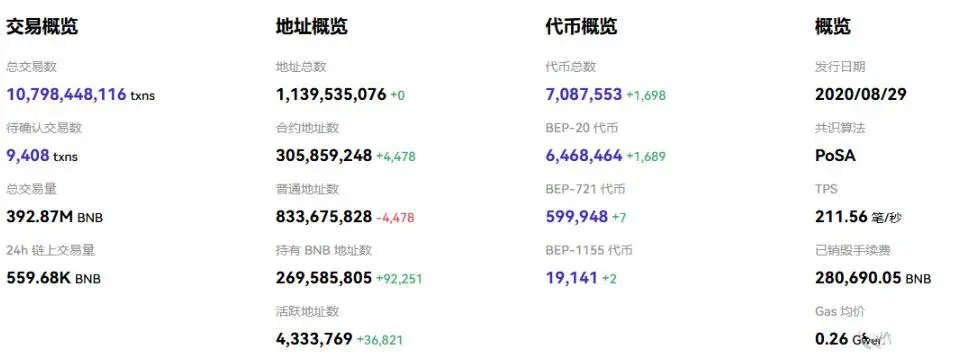
Daily active users on BNB Chain have surpassed 2 million, and daily processed transactions range between 12 million and 17 million, keeping on‑chain gas‑fee demand relatively inelastic. The Layer‑2 solution opBNB and the platform’s gas‑fee rebate policy further lower transaction costs, attracting more developers and users. In 2025, BlackRock’s tokenized money market fund BUIDL launched on BNB Chain, bringing traditional financial assets onto the blockchain and opening new real‑world‑asset (RWA) use cases for BNB.
2026 Price‑Range Forecast
What is the price outlook for BNB in 2026?
Market expectations for BNB’s price are generally cautiously optimistic, with a projected volatility band between USD 633 and USD 2,235. Most of the time, the price is expected to stay above USD 1,000. For long‑term investors, employing a dollar‑cost‑averaging approach to smooth short‑term fluctuations can be a prudent strategy, while closely monitoring BNB Chain’s technical progress and regulatory developments, as these will be decisive factors for price movement. It should be noted that centralization controversies, regulatory pressure, and competition from other public chains such as Solana remain short‑term risk elements that could affect market dynamics.
Conclusion
In summary, BNB in 2026 enjoys multi‑layered value support: the exchange ecosystem generates hidden returns through Launchpool and airdrops, while the automatic burn mechanism continuously creates deflationary pressure; BNB Chain’s high‑frequency on‑chain activity and the introduction of real‑world assets solidify demand fundamentals; and institutional capital is flowing in at scale once regulatory clarity is achieved, further driving value discovery. For investors who already hold BNB or are considering allocating to it, it is advisable to keep a close eye on on‑chain technical upgrades and regulatory trends in order to capture long‑term compounding opportunities.
Note for U.S. users: The global Binance platform is not available to residents of the United States. To trade or hold BNB, U.S. residents should use Binance.US or another compliant service.
Tax reminder: Crypto gains may be taxable in your local jurisdiction. Consult a tax professional to understand your obligations, especially when converting between fiat (via USD, SEPA, or SWIFT) and cryptocurrencies.
The above content is excerpted from “Is BNB Worth Holding Long‑Term in 2026? Binance Coin (BNB) Future Trend Analysis.” For deeper insights into the 2026 Binance Coin outlook, please follow other articles on Bitaigen (比特根).
Related Reading
- BNB March 2026 Breakout: Can Binance Chain Hold Above $670?
- PACT Token on Aptos: Mechanisms, Ecosystem, Risks & Outlook
- Solana (SOL) Technical Review & Price Forecast 2026‑2030
💡 Register on Binance with referral code B2345 for the maximum trading fee discount. See Binance complete guide.



