
 Bitaigen Research
CELO is the native cryptocurrency of the Celo platform. It is used for on‑chain transactions, governance voting and staking rewards, and serves as the core token that enables mobile‑first DeFi services.
Celo is an innovative decentralized finance (DeFi) platform that aims to provide stable and inclusive financial services to users worldwide. As a mobile‑first DeFi ecosystem, Celo optimizes the user experience on smartphones and leverages its native token CELO to facilitate transactions and governance on the network. The platform also supports a U.S.‑dollar‑pegged stablecoin cUSD, employs a Proof‑of‑Stake (PoS) consensus mechanism to secure the network, and has attracted backing from several well‑known venture capital firms. Celo’s mission is to simplify DeFi usage, promote community‑driven governance, achieve carbon‑neutral operations, and eventually migrate to an Ethereum Layer 2 solution to improve performance and security.
In this article we systematically outline everything you need to know about CELO—from the background of its founding team and the platform’s core mechanisms to how you can safely acquire the token and participate in staking. By delving into the mobile‑first DeFi design, governance model, and ecosystem partnerships, readers will gain a comprehensive understanding of this increasingly important token in the cross‑chain landscape. Subsequent sections will provide step‑by‑step practical guidance, so keep reading.
What Is Celo?
Celo is a decentralized platform that leverages blockchain technology and smart contracts to build a stable and inclusive financial system for users around the globe. The platform is built around a mobile‑first design philosophy, allowing users to access financial services effortlessly from their phones at any time and place.
- Native token CELO: The primary medium of value exchange on the platform, serving transaction, governance and staking functions.
- cUSD stablecoin: Pegged 1:1 to the U.S. dollar, offering users a relatively stable payment and store‑of‑value tool.
- PoS consensus: Token holders can stake CELO to help validate transactions and earn rewards.
It is worth noting that when the project was first launched, the CELO token was called Celo Gold (cGLD), so older documentation may refer to cGLD.
The Team Behind Celo
Celo was founded in 2018 by a group of engineers and designers with backgrounds at Google, Coinbase, ConsenSys and other leading tech firms. The core leadership includes:
| Member | Role | Notable Experience |
|---|---|---|
| **Rene Reinsberg** | Chief Executive Officer | Former lead of ConsenSys’s Apollo project |
| **Marek Olszewski** | Chief Technology Officer | Also previously responsible for the Apollo project at ConsenSys |
The team’s vision is to make blockchain technology easily usable for anyone who owns a smartphone. Celo has secured investment and support from Andreessen Horowitz, Polychain Capital and the nonprofit GiveDirectly, and its community activity continues to grow.
How Does Celo Operate?
Celo is built on top of Ethereum and its core functionalities revolve around mobile‑first DeFi and a PoS consensus model.
- Accessibility and Usability
- A clean, mobile‑optimized interface lowers the barrier to entry.
- Users can map their phone numbers to public keys, enabling “one‑tap” transfers.
- Staking and Governance
- Nodes that hold and stake CELO participate in transaction validation and receive rewards.
- Stakers possess voting rights and can cast ballots on platform upgrades, parameter changes and other governance matters.
- Ecosystem
- Compatibility with the Ethereum Virtual Machine (EVM) allows existing Ethereum dApps to be ported to Celo.
- A suite of DeFi products driven by the native token offers users opportunities for passive income.
Celo USD (cUSD)
cUSD is the U.S.‑dollar‑backed stablecoin issued on the Celo platform, with primary uses that include:
- Supplying the network with a value‑stable medium of exchange, mitigating the extreme price volatility typical of many crypto assets.
- Acting as a hedging instrument, helping users preserve asset value amidst turbulent crypto market movements.
Key Characteristics of Celo
Fast, Convenient Transactions
- The native wallet can securely and rapidly sync to the mainnet, and it is specifically optimized for smartphones.
- Transaction confirmation times are roughly 5 seconds, which is markedly faster than many traditional blockchain networks.
Simplified Identity Linking
- Phone numbers are mapped to public keys, eliminating the need for users to manage complex address strings.
- Cross‑border transfers are supported; even recipients who do not yet have a crypto wallet can receive funds simply by providing a phone number.
Native DeFi Ecosystem
- Full EVM compatibility enables developers to deploy dApps on Celo with familiar tooling.
- A variety of financial products—including cUSD, lending platforms, and yield farms—can be accessed directly from a mobile device.
Community Governance
- Through the PoS mechanism, staking CELO yields passive income while also granting participants voting power over protocol decisions.
- The stablecoin Celo Dollar is backed by CELO reserves, helping to maintain its peg to the U.S. dollar.
Carbon‑Neutral Goal
Celo is committed to becoming a carbon‑neutral blockchain by using renewable energy sources and investing in carbon‑offset projects, thereby reducing its ecological footprint while promoting sustainable, inclusive financial services.
Celo’s Migration to Ethereum
Celo is in the process of moving from its independent Layer 1 chain to an Ethereum Layer 2 solution (Optimism OP Stack). The following outlines the most important details:
Migration Rationale
- Proposal passed: Community voting yielded 128 votes in favor out of 131 total, formally approving the migration.
- Technical selection: After a year of testing Polygon, Arbitrum, ZK‑Rollups and Optimism, the team selected Optimism as the preferred Layer 2.
Benefits of the Move
| Aspect | Before Migration | After Migration |
|---|---|---|
| Block time | ~5 seconds | ~2 seconds |
| Throughput increase | — | +50 % |
| Security model | Stand‑alone chain | Shared Ethereum security |
| Developer experience | Limited | Fully EVM‑compatible, unified tooling |
Future Roadmap
- Testnet: Planned for launch in the summer of 2024, followed by another community vote.
- Ecosystem integration: Deep integration with the Optimism Superchain is expected, fostering collaboration with projects such as Base, Worldcoin and others.
Bloom
The Bloom initiative, launched by the Celo Foundation, offers advisory services for token‑generation events (TGEs) within the ecosystem. Bloom assists new projects in designing sound token economics, community‑building strategies and compliance frameworks, with the aim of increasing project success rates and promoting sustainable growth across the Celo ecosystem.
Diversifying Gas‑Fee Tokens
Through a governance proposal, Celo added USDT as an accepted token for paying network transaction fees. Users no longer need to hold CELO to cover gas costs, thereby improving transaction convenience and accessibility.
What Is the CELO Token?
CELO is the native cryptocurrency of the Celo platform and fulfills three core functions:
- Value exchange: Used for payments, transfers and asset purchases within the platform.
- PoS staking: Holders can stake their tokens to earn block‑validation rewards.
- Governance voting: Holders have voting rights on matters such as protocol upgrades and parameter adjustments.
CELO acts as a critical bridge that connects transaction processing, consensus participation and governance within the Celo ecosystem.
Celo vs. Ethereum
| Dimension | Celo | Ethereum |
|---|---|---|
| Design focus | Mobile‑first, financial inclusion | General‑purpose smart‑contract platform |
| Consensus mechanism | PoS + Byzantine Fault Tolerance | PoS (Beacon Chain) |
| Block time | ~5 seconds | >12 seconds |
| User experience | Phone number = public key, plug‑and‑play | Requires managing complex wallet addresses |
| Ecosystem emphasis | Financial services, stablecoins | Broad spectrum of dApps (DeFi, gaming, social) |
Celo reduces the entry barrier for newcomers through faster block production and streamlined user interaction, while Ethereum offers a wider array of developer tools and a more extensive ecosystem.
How to Buy CELO?
Below is a step‑by‑step guide using Binance as an example. (Note for U.S. residents: you must use Binance.US instead of the global Binance platform.)
1. Create an account
- Registration link for new users: Sign up here
- Download the Binance app: Download here
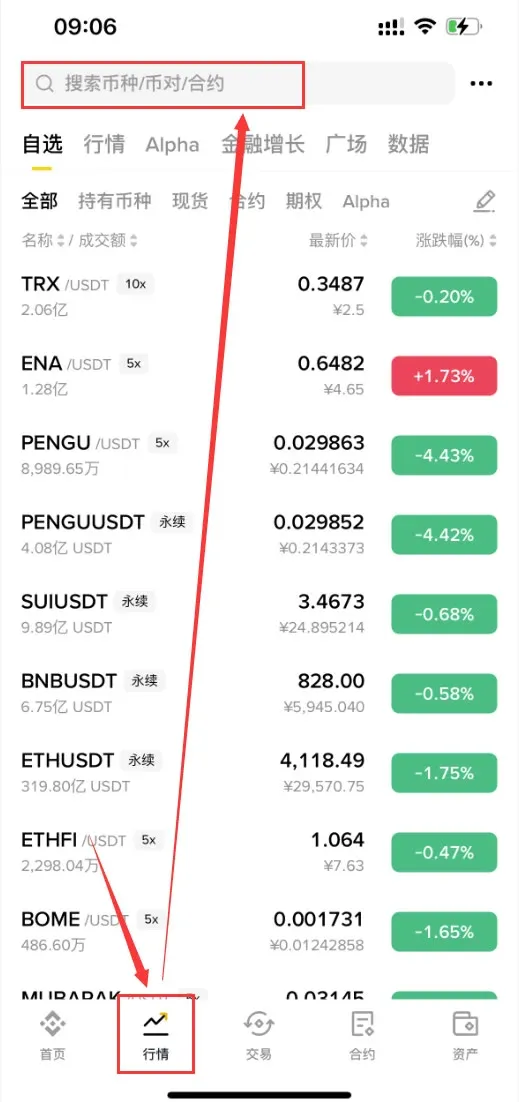
2. Open the Binance app and enter CELO in the search bar on the Markets page.
3. Choose a trading pair
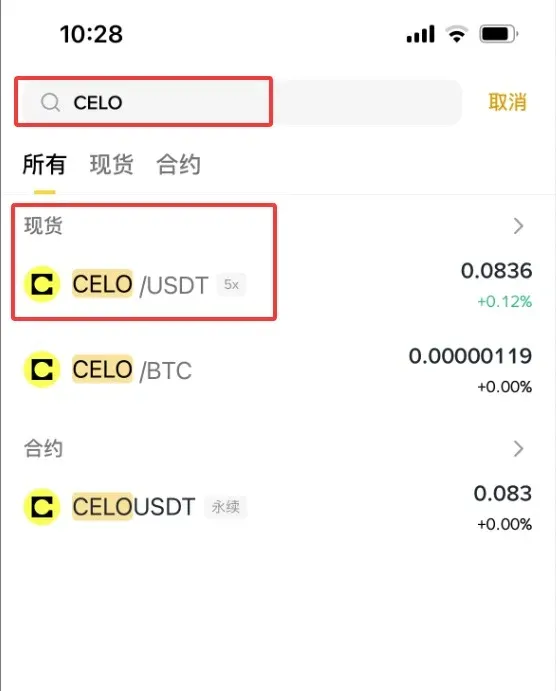
- From the dropdown, select Spot → CELO/USDT (spot trading is recommended for beginners).
4. Place your order
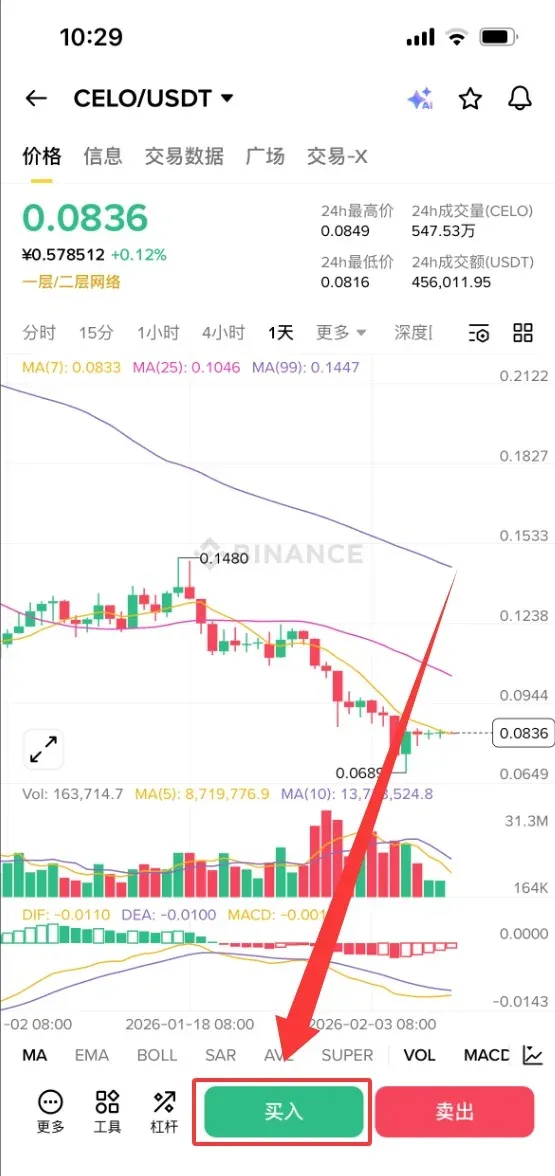
- When you are satisfied with the price, click Buy.
5. Fill in the order details
- Select Limit order → enter your desired price → enter the amount of CELO you wish to purchase → review the total cost → click Buy CELO.
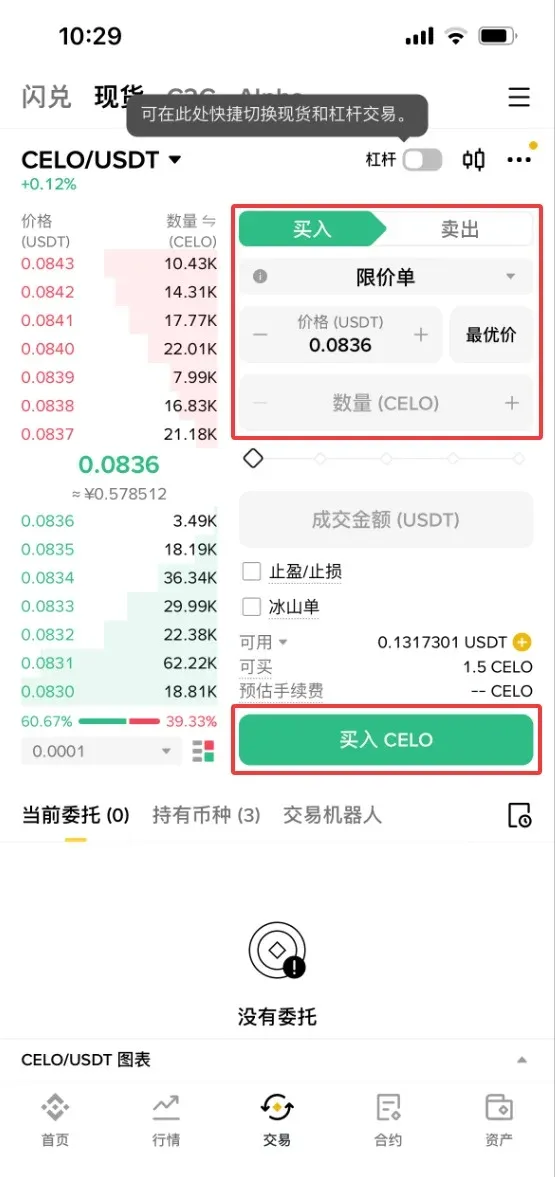
After completing these steps, you will have successfully purchased CELO tokens.
Tax reminder: Crypto transactions, including the purchase and sale of CELO, may be subject to taxation in your jurisdiction. It is advisable to keep accurate records and consult a tax professional familiar with cryptocurrency regulations in your country.
---
This article has explored the question “What is the CELO token?” by providing a systematic overview of the Celo project’s background, operating mechanisms and a practical purchase guide. For further information on CELO, you can search the Bitaigen (比特根) archive for historical articles or continue browsing related posts below. Thank you for your interest and support!
Related Reading
- Understanding TVL (Total Value Locked) in DeFi Crypto Markets
- TVL in Crypto: Benefits, Risks & Investment Guide
- Intent‑Based Trading: Simplifying DeFi for Users
💡 Register on Binance with referral code B2345 for the maximum trading fee discount. See Binance complete guide.



