
 Bitaigen Research
 We analyze ENJ from both technical and ecosystem perspectives, dissecting the token’s core mechanisms, the mint‑and‑burn logic of in‑game assets, and the real‑world deployment of the Enjin project. This helps readers assess its potential value. If you want to see how ENJ enables asset interoperability across multi‑chain gaming scenarios, keep reading.
2. Functions and Applications of the ENJ Token
ENJ is an ERC‑20 token on Ethereum with a total supply of 1 billion tokens. Eight hundred million were allocated to the public through the initial token offering, and the remaining two hundred million are held by the Enjin team.
The pre‑sale (Pre‑ICO) launched in August 2017 at a price of $0.03 USD per ENJ, raising roughly $12 million USD in total. The subsequent main ICO in October collected 75,041 ETH, equivalent to about $18.9 million USD at the time.
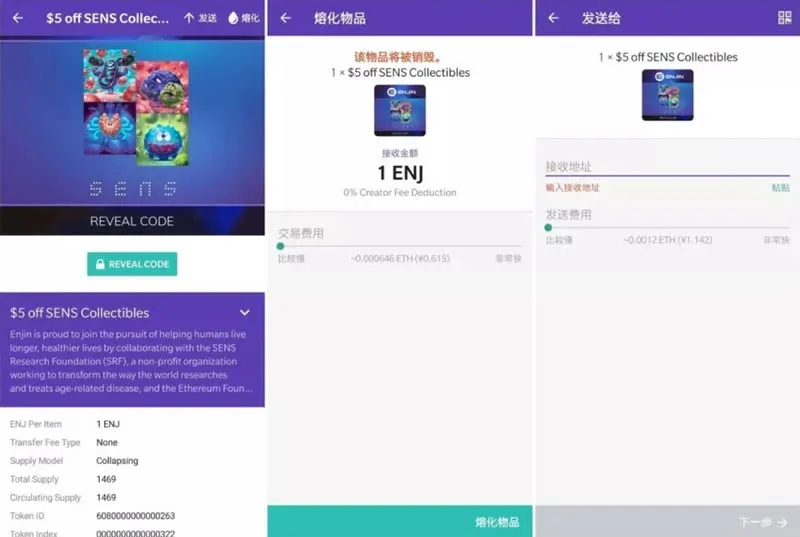
ENJ’s core value lies in the minting and burning of game assets. When developers create an item, they must spend a certain amount of ENJ; players, on the other hand, can “melt” any owned item at any time to receive the equivalent amount of ENJ back.
Example: If you spend 1,000 ENJ to mint a sword that follows the ERC‑1155 standard, those 1,000 ENJ represent the production cost of that sword. Should the holder decide to melt the sword, they will retrieve 1,000 ENJ. Even if the game shuts down, the player can still recover the tokens by melting the item, thereby preserving ownership of the underlying asset.
In secondary markets, the trading price of the sword will be influenced by its in‑game utility and player demand and may exceed its minting cost—much like the relationship between a product’s cost and its retail price in the physical world.
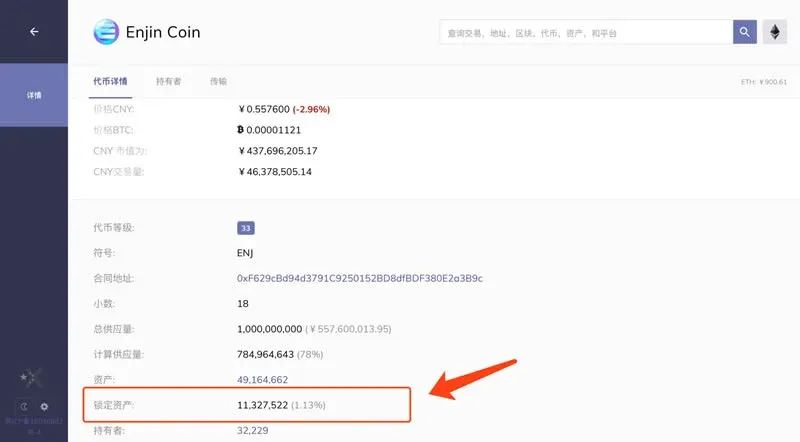
Enjin also introduced the “multiverse” concept, allowing the same virtual item to be used in different games. While the visual appearance may vary, the underlying asset remains unchanged. To date, minted ERC‑1155 game items have locked roughly 11.23 million ENJ, representing 1.13 % of the total supply (source: enjinx.cn).
4. Historical Trajectory of Enjin
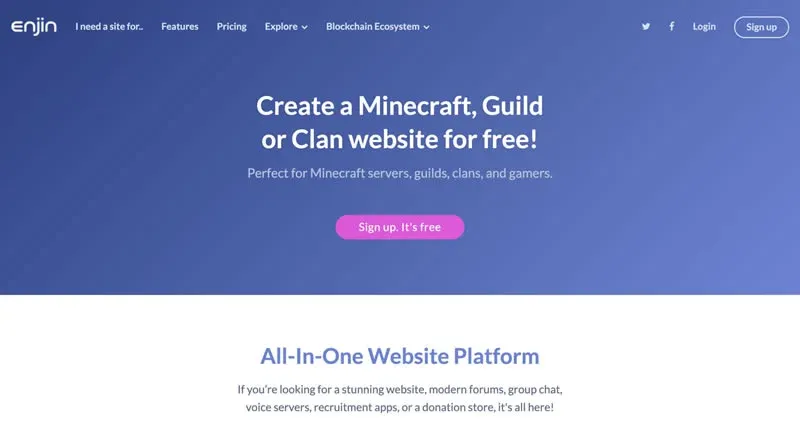
Enjin was founded in 2009 and is headquartered in Singapore. It originally positioned itself as a community platform for online gamers, enabling rapid creation of guilds, clans, and servers. After years of operation, the platform now hosts about 250,000 gaming communities, e‑sports teams, and Minecraft servers, with registered players surpassing 18.7 million and a global monthly visitation of roughly 60 million.
In its early days, Enjin provided guild‑creation support for major titles such as *World of Warcraft*, *Guild Wars 2*, *Star Wars* games, *Final Fantasy*, and *League of Legends*. The team later shifted focus to building Minecraft servers, a user‑generated‑content (UGC) environment that offers greater creative freedom and further cemented Enjin’s influence in the gaming‑community space.
On July 24, 2017, Enjin released its whitepaper and officially launched Enjin Coin (ENJ), marking its entry into the blockchain arena. Notably, Enjin did not attempt to create a universal gaming layer‑1 blockchain; instead, it concentrated on tokenizing game items and facilitating asset trading to grant players genuine ownership of digital goods.
3. Advantages of the ERC‑1155 Standard
The Enjin ecosystem comprises the Enjin Wallet, EnjinX blockchain explorer, Enjin SDK, a decentralized exchange, and the “multiverse” concept. All of these rely heavily on the ERC‑1155 token standard.
ERC‑1155 was proposed by Enjin on June 17, 2018 and adopted as an official Ethereum standard on June 18, 2019. Unlike ERC‑20 (fungible tokens) and ERC‑721 (non‑fungible tokens), ERC‑1155 supports both token types within a single contract and dramatically reduces transaction costs and network congestion through batch operations. Its main improvements include:
- Batch‑bundle transactions – akin to checking out an entire shopping cart at once, allowing multiple token types to be transferred in a single operation, thereby increasing efficiency.
- Multi‑recipient batch transfers – for example, distributing the same sword to 20 players can be accomplished with a single transaction, saving gas fees and easing the load on the mainnet.
These capabilities let developers manage hundreds of in‑game items, materials, and currencies under one contract, avoiding the wasteful overhead of deploying separate contracts for each asset type.
1. Core Business of the Enjin Ecosystem
Enjin’s primary focus remains providing gamers with easy‑to‑use tools for creating and managing communities. The platform lets players build guilds, clans, and servers, enhancing social stickiness within games while giving content creators and publishers a channel to monetize their offerings. Individual community shops can generate monthly revenues in the millions of USD, forming a sizable economic ecosystem.
With blockchain integration, Enjin links traditional virtual goods to ENJ, enabling on‑chain circulation and verifiable ownership, thereby adding a new layer of value to the gaming ecosystem.
Summary
Since its inception in 2009, Enjin has concentrated on gaming‑community services, amassing over 18 million registered users and substantial web traffic. After entering the blockchain space in 2017, the team deliberately avoided building a base layer blockchain; instead, it built a suite around tokenizing game items and facilitating asset trades, while actively promoting the adoption of the ERC‑1155 standard. ENJ, as the native token of this ecosystem, possesses clear use‑cases and is backed by locked assets.
For readers who wish to dive deeper into ENJ (Enjin Coin) and its technical details, stay tuned to future reports from Bitaigen.
*Note:* When acquiring ENJ or any other cryptocurrency, fiat transactions on the global market are typically processed via USD transfers using SEPA (for Euro‑zone users) or SWIFT for other regions. U.S. residents must use Binance.US rather than the global Binance platform. Additionally, cryptocurrency gains may be subject to tax in your local jurisdiction, so consult a tax professional for guidance.
Related Reading
- USDT on Tron vs Ethereum: ERC‑20 vs TRC‑20 Fee Comparison
- TRC-20 vs ERC-20: Fast Transfers, Low Fees vs Ethereum Costs
- Opinion Protocol Review: Decentralized Prediction Market
💡 Register on Binance with referral code B2345 for the maximum trading fee discount. See Binance complete guide.



