
 Bitaigen Research
 In this article we outline the core connections and four key differences between the crypto ecosystem and the scam‑investment ecosystem, helping readers clarify the true meaning of decentralization, spot common Ponzi‑style disguises, and provide practical ways to differentiate them. After a deeper understanding, you will be better equipped to make rational judgments in the complex crypto landscape. Please continue reading.
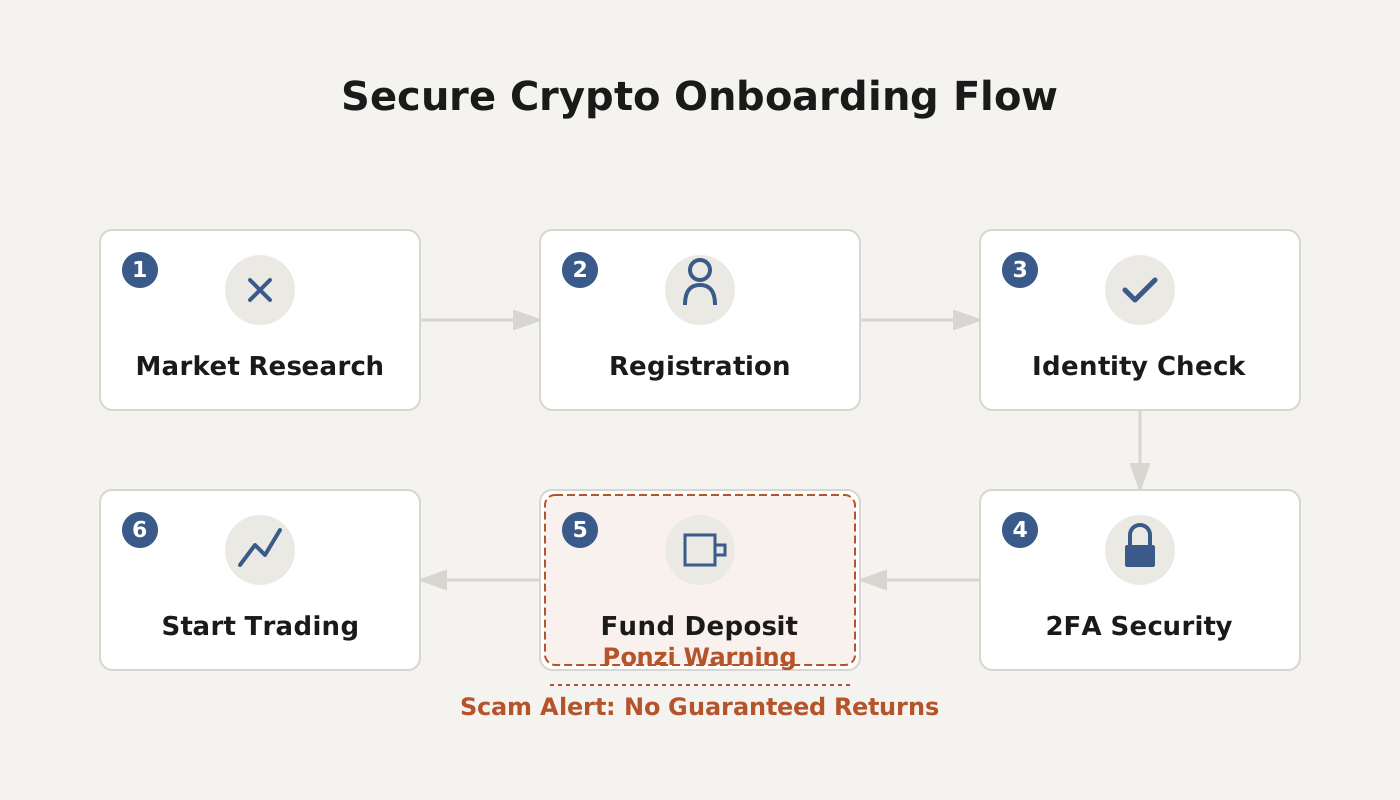
Analyzing the Essence and Distinctions Between the Crypto Circle and the Scam Circle from Four Angles
Both the crypto circle and the scam circle share the concept of decentralization at a superficial level, yet they diverge markedly in risk profile, legal characterization, profit model, and social‑network impact.
Decentralized wallets, decentralized exchanges, and decentralized smart contracts are often marketed as “decentralized” projects, but they frequently serve as a front for Ponzi‑style schemes. When a project is launched, the operators brand it with the “decentralized” label primarily to exploit external investors’ limited understanding of the term, claiming that assets are on‑chain and funds cannot be stolen, thereby luring inexperienced participants.
A recent collapse, the “Nine‑Ring Smart Contract,” touted itself as a decentralized DApp platform, proclaiming 100 % open‑source code, GitHub‑verified audits, usage of Tron‑chain big‑data records, automated USDT‑wallet commands, and immutable, absolutely safe data. In reality, a large proportion of DApps on the Tron network are low‑cost Ponzi projects, many of which are the so‑called “dog‑food projects.” If you doubt a project's authenticity, you can consult a technical firm based in Shenzhen.
Typical Operational Model
- Invest 100 USDT, receive 101 % after 1 day
- Receive 110 % after 7 days
- Receive 130 % after 15 days
Such high returns can only be sustained by continuously onboarding new participants. Once the inflow of fresh capital dries up, the scheme collapses.
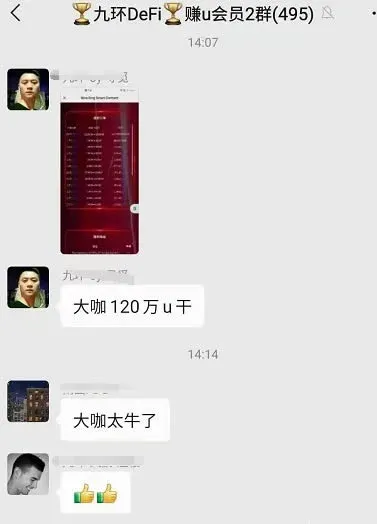
The image above shows that, in a certain chat group, an investor deposited 1.2 million USDT on the 28th and lost everything within two days, sparking a range of reactions inside the group.
Using this as a springboard, we now delineate the essential connections and differences between the crypto circle and the scam circle.
1. Scams Must Collapse, Cryptocurrencies May Appreciate
Definition: A “scam” (or Ponzi fund) refers to a project that attracts investment through exaggerated returns and relies on recruiting newcomers to stay afloat; a “cryptocurrency” is a digital asset that circulates on a blockchain network.
- The profit model of a Ponzi fund is inherently unsustainable, leading inevitably to a collapse.
- Even altcoins or “aircoins” can experience price rises during bullish market conditions; paper losses are often only unrealized, while the quantity of held tokens remains unchanged.
2. Different Legal Characterizations: Gambling vs. Criminal Conduct
- Cryptocurrency trading: In most jurisdictions it is considered an unregulated financial activity. If deemed illegal, it is usually classified as gambling.
- Running a scam fund: Involves illegal fundraising, organizing or leading pyramid schemes, and is treated as a criminal offense.
- The legal consequences differ sharply: gambling typically results in fines or administrative penalties, whereas criminal conduct can lead to detention and prosecution.
Note for U.S. users: When dealing with fiat‑to‑crypto on‑ramps, U.S. residents must use Binance.US or other platforms that comply with U.S. regulations; the global Binance platform is not available to them.
3. Impact of Losses on Social Networks
| Dimension | Crypto Circle | Scam Circle |
|---|---|---|
| Participant scale | Niche community, roughly 3 million people (estimate for China) | Massive head‑count recruitment |
| Social‑network impact | Losses may occur but participants often retain their circles, sometimes forming bonds over shared experiences | Losses frequently accompany broken relationships; “team leaders” become the focus of blame |
| Team role | Mostly technologists or investment enthusiasts | Leaders act as “team heads,” recruiting and harvesting, and often continue to claim victimhood after collapse |
In the crypto circle, a loss is usually an individual outcome, and friendships can survive. In the scam circle, team leaders repeatedly pressure members to reinvest, and when the scheme collapses the damage to personal networks is far more severe.
4. Learning Curve Comparison
- Cryptocurrency trading: Progresses from blind following to systematic study of technical indicators, economic models, blockchain fundamentals, and often includes improving English proficiency and networking skills.
- Scam participation: Primarily deepens familiarity with multi‑level marketing tactics, focusing on how to maximize recruitment revenue, while offering little insight into technology or the underlying industry.
Over the long term, participants in the crypto circle have the opportunity to enhance professional competence, whereas those trapped in scam circles tend to cycle through repeated deception and may never escape the schemers’ trap.
---
Conclusion: Both the crypto circle and the scam circle carry high risk and are rife with fraudsters. However, when evaluated across legal status, sustainability of returns, social‑network impact, and educational value, the scam circle poses a far greater danger. Investors should improve their risk awareness, limit the size of their exposure, maintain a core reserve, and avoid chasing unsustainable price spikes that could erode their capital base.
Small‑scale speculation can be entertaining; large‑scale gambling endangers health. Protect your life and stay away from high‑risk CX projects.
The above presents a four‑point analysis of the essential relationship and differences between the crypto circle and the scam circle. For more related content, follow Bitaigen’s upcoming articles.



*Disclaimer: Cryptocurrency gains may be subject to taxation in your local jurisdiction. Please consult a tax professional for advice.*
Related Reading
- Public Blockchain Explained: Definition, Benefits & Crypto Role
- Layer 1 & Layer 2 Blockchain: Security vs Scalability
- Blockchain Explained: Village Ledger Analogy for Beginners
💡 Register on Binance with referral code B2345 for the maximum trading fee discount. See Binance complete guide.



