
 Bitaigen Research
 In the blockchain ecosystem, Layer 1 provides the foundational security and decentralization, while Layer 2 enhances transaction throughput and cost efficiency. Each has its own strengths and they typically complement each other rather than compete for superiority.
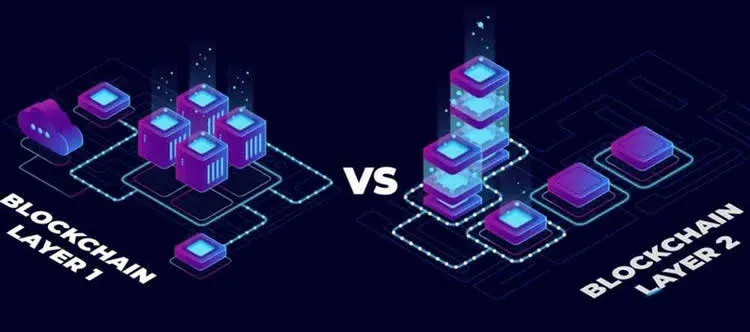
Our Bitaigen editorial team has carefully mapped out the core functions and ecosystem positioning of Layer 1 and Layer 2 to help readers clarify the trade‑off logic between base‑layer security and scaling efficiency. By deeply comparing consensus mechanisms, degrees of decentralization, and cost‑optimization techniques, this article will show how the two layers evolve together, the scenarios each best serves, and the future development trends. Continue reading for a panoramic perspective.
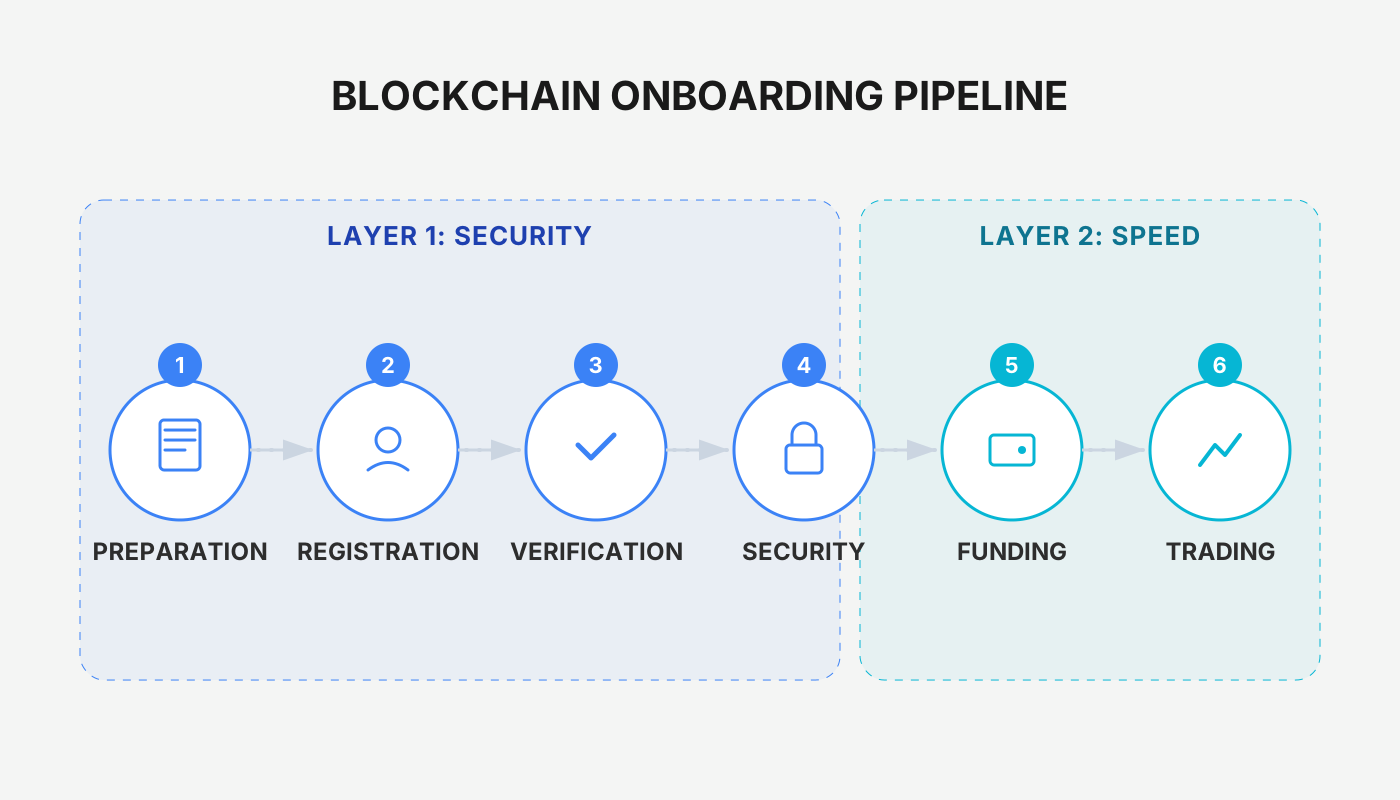
Which Is Stronger: Layer 1 or Layer 2?
Layer 1 refers to the base‑layer networks of a blockchain, such as Bitcoin or Ethereum, which handle the most fundamental transaction processing, consensus, and data storage.
- Decentralization: No single controlling point; security is achieved through consensus algorithms like PoW or PoS.
- Security: All transactions and smart contracts are recorded on‑chain, offering strong verifiability.
- Scalability challenges: Because security and decentralization are prioritized, Layer 1 often faces bottlenecks in transaction speed and throughput.
Layer 2 comprises scaling solutions built on top of Layer 1, with the goal of increasing transaction speed, lowering fees, and enhancing overall scalability.
- Off‑chain processing: By moving a portion of transactions off‑chain, processing speed is dramatically increased.
- Cost reduction: Gas fees are compressed, making micro‑transactions and high‑frequency payments more economical.
- Reliance on base‑layer security: Layer 2 still leverages the security and decentralization properties of Layer 1, preserving asset safety.
In summary, Layer 1 holds an advantage in decentralization and security, whereas Layer 2 excels in performance and scalability. Both shine in different application contexts.
Main Differences Between Layer 1 and Layer 2
| Dimension | **Layer 1** | **Layer 2** |
|---|---|---|
| **Scalability** | Limited by underlying consensus and network capacity; congestion can arise when processing large volumes of transactions. | Increases throughput via off‑chain or aggregation techniques, relieving pressure on the main chain. |
| **Transaction speed & cost** | Confirmation times are relatively long; fees fluctuate with network congestion. | Can achieve speeds hundreds of times faster than the base network, with significantly lower fees. |
| **User experience** | Funds arrive slowly; users must wait for multiple confirmations. | Rapid confirmations and low fees improve usability and convenience. |
| **Core objective** | Ensure network security, decentralization, and state consensus; essentially the “cryptographic court” of a public chain. | Provide high‑performance computation and transfer capabilities, offloading work from the main chain. |
| **Innovation space** | Constrained by protocol‑level rules; upgrades require network‑wide consensus and tend to be slower. | Supports roll‑ups, state channels, and other experimental approaches, giving developers flexible room for innovation. |
1. Scalability
Layer 1 is constrained by its consensus mechanism and block size, which can lead to congestion under heavy transaction loads. Layer 2 processes orders outside the main chain, markedly boosting the overall system’s throughput.
2. Transaction speed and cost
Certain Layer 2 projects can, under optimal conditions, process transactions at several hundred times the rate of the Ethereum mainnet while keeping fees much lower—a performance gap that Layer 1 struggles to close.
3. User experience
Because Layer 1 confirmations take longer, users endure a waiting period before funds are usable. Layer 2 offers near‑instant settlement and minimal costs, making it more approachable for everyday users.
4. Design purpose
The primary mission of Layer 1 is to guarantee network safety and decentralization, acting as a public ledger’s “cryptographic court.”
Layer 2, by contrast, concentrates on performance, migrating most computation and transfer work off‑chain to reduce the main chain’s burden and increase operational efficiency.
5. Innovativeness
Layer 2 opens a broader experimental playground for developers. Technologies such as roll‑ups and state channels can be combined and optimized without compromising the underlying security of the base layer, accelerating the rapid iteration of blockchain applications.
Conclusion
Both Layer 1 and Layer 2 possess distinct advantages and limitations; their suitability depends on specific business requirements.
- Scenarios demanding extremely high security and decentralization (e.g., value storage, core asset transfers) are better served by using Layer 1 directly.
- Applications that require high throughput, low fees, or real‑time interaction (e.g., payments, gaming, micro‑transactions) can leverage Layer 2 to achieve a superior experience.
Consequently, there is no absolute “winner.” The two layers complement each other, jointly advancing blockchain technology toward greater security, scalability, and user‑friendliness.
Related Reading
- Blockchain Explained: Village Ledger Analogy for Beginners
- Blockchain Layers Explained: Guide to L0, L1, L2 & L3
- Rollup Explained: Ethereum Layer 2 Scaling Solution
💡 Register on Binance with referral code B2345 for the maximum trading fee discount. See Binance complete guide.



