
 Bitaigen Research
In this article we systematically outline the core mechanisms of Real‑World Assets (RWA), the key off‑chain asset verification processes, and the on‑chain data‑bridging methods. We also select projects that are currently standing out in the market, conduct an in‑depth risk analysis, and help readers quickly grasp the full landscape of asset tokenization.
How RWA Works
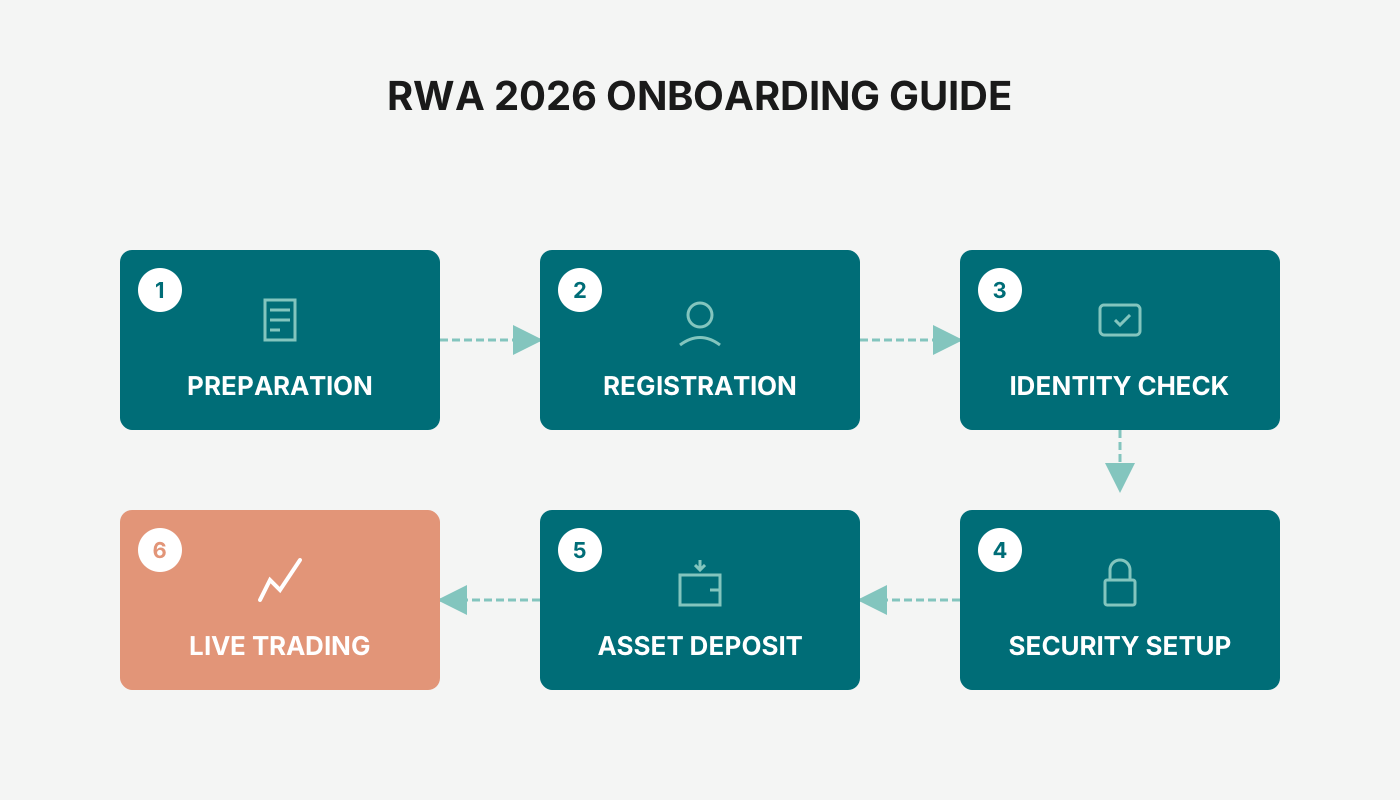
The RWA operating model blends legal compliance with blockchain technology and can be divided into three main stages:
- Off‑chain Asset Confirmation: Before an asset is minted on‑chain, a third‑party audit and valuation must be completed, and the asset must be held by a compliant custodial institution to guarantee ownership and legal enforceability. For example, when tokenizing a building, a valid title deed and a custodial arrangement must be obtained first.
- On‑chain Data Bridging: Oracles such as Chainlink securely write real‑time price, status and other off‑chain data onto the blockchain, ensuring that the on‑chain token accurately reflects the underlying asset’s value.
- Token Issuance: Smart contracts generate corresponding tokens, each representing a share of ownership or a claim on the cash flow of the real‑world asset. Holders therefore own a fractional stake in the underlying asset.
What Does RWA Mean?
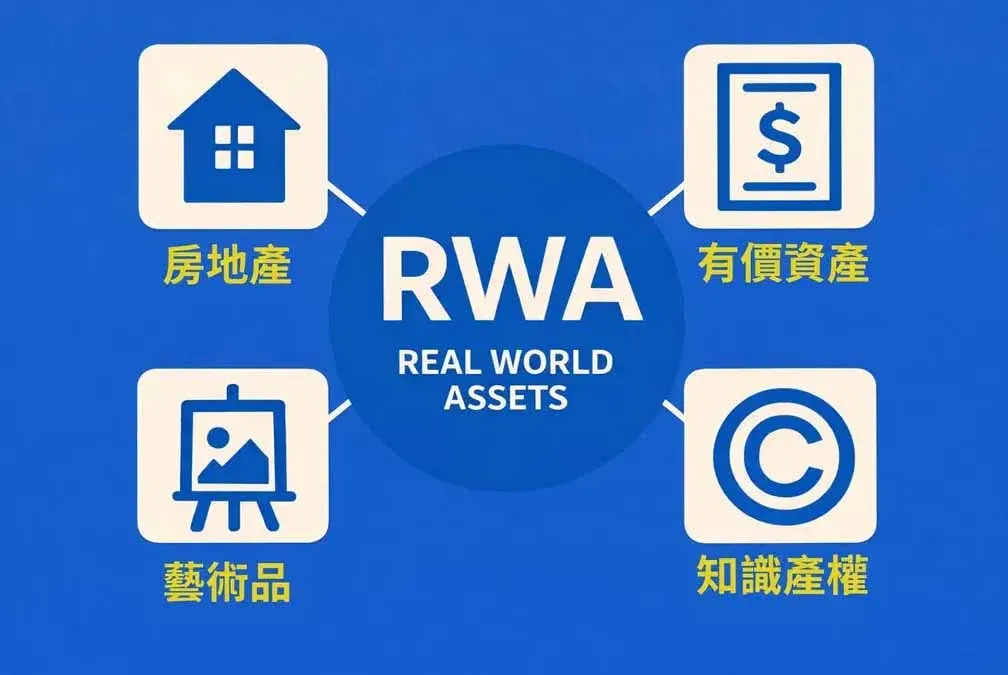
RWA (Real World Assets, commonly translated in Chinese as “现实世界资产”) refers to the digitization of traditional financial or physical assets—such as sovereign bonds, real estate, equities, receivables, commodities, etc.—into token forms that can circulate on a blockchain.
In the conventional financial system, buying U.S. Treasury bonds, a New York office tower, or a masterpiece often involves high entry barriers, cumbersome paperwork, and limited liquidity. After “bringing these assets on‑chain,” investors only need to open a wallet to trade globally at any time, and they can even purchase as little as 0.01 % of a real‑estate claim.
The most successful RWA examples to date are USDT and USDC. Fundamentally, they token‑represent U.S. dollar assets, allowing users to transfer and trade on‑chain instantly and enjoy a “digital dollar” experience.
Advantages of RWA
- Lower Entry Barriers: A commercial building that traditionally requires hundreds of millions of USD to access can be split into millions of tokens, enabling ordinary investors to buy in easily.
- Enhanced Liquidity: Conventional real estate or private‑equity holdings may take months or years to liquidate, whereas tokenized assets can be bought and sold 24/7 on decentralized exchanges (DEXes).
- Greater Transparency: Ownership transfers are fully recorded on the blockchain, publicly auditable, reducing information asymmetry.
- DeFi Composability: For instance, tokenized U.S. Treasury bonds can be directly used as collateral on lending platforms, improving capital efficiency.
Risks and Controversies
Although the concept is appealing, real‑world implementation faces several challenges:
- Regulatory Uncertainty: If the issuer is deemed non‑compliant or the custodial assets are frozen by a government, the on‑chain tokens may lose redemption capability and could become worthless instantly.
- Centralized Dependence: RWA relies on off‑chain custodians (banks, vaults, etc.) for asset protection; the failure or misconduct of these entities directly impacts token value.
- Oracle Attacks: On‑chain pricing depends on oracle data; tampered data can cause mispricing of tokens and result in losses.
TL;DR
- RWA (Real World Assets) maps tangible assets onto a blockchain via tokenization, enabling on‑chain holding, trading, fractionalization and composability.
- With the involvement of traditional finance giants such as BlackRock, Franklin Templeton, and J.P. Morgan, RWA has become one of the most watched crypto tracks in 2024‑2025.
- In Taiwan, the Financial Supervisory Commission (FSC) takes a prudent, watchful stance toward RWA, emphasizing risk controls and regulatory compliance; investors should stay alert to regulatory changes and potential scams.
The Evolution from STO: Lessons Learned
Before RWA surged in popularity, the blockchain space was enthusiastic about STOs (Security Token Offerings). However, multiple factors prevented sustained growth:
- Excessive Compliance Burdens: STOs must satisfy strict regulator requirements, limit investor eligibility, and trade only on licensed exchanges, contradicting the blockchain ethos of open access and global circulation.
- Lack of Real‑World Use Cases: Holding an STO token typically only grants dividend rights; it cannot be used as collateral in DeFi protocols or freely traded on platforms like Uniswap.
- Insufficient Liquidity: Tight investment restrictions dampen market‑maker and retail interest, leading to very low trading activity.
- Scarcity of High‑Quality Assets: Because of poor liquidity, asset managers such as BlackRock and Franklin Templeton are reluctant to issue assets via STOs.
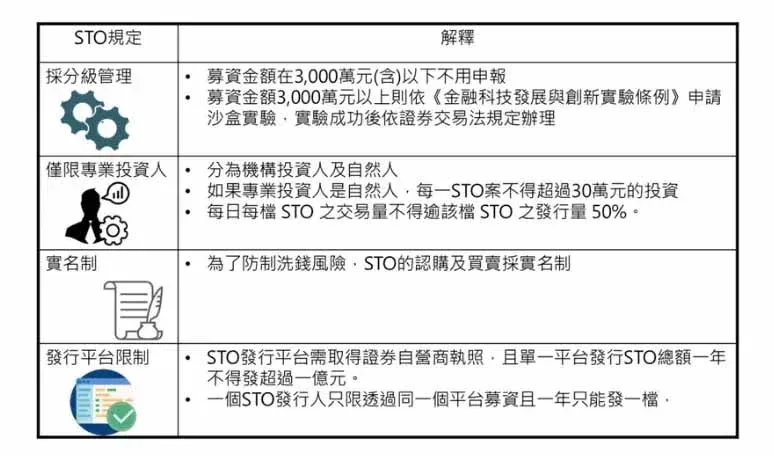
STO Example in Taiwan: The FSC released an STO regulatory framework in 2019, but the fundraising cap of only NT$30 million, restriction to professional investors, and limited trading volume resulted in very few actual applications.
Common RWA Categories
| Category | Representative Asset | Notable Projects / Tokens | Description |
|---|---|---|---|
| Fixed Income | U.S. Treasury Bills (T‑Bills) | BUIDL, USDY, thBILL, USYC | Benefiting from relatively high yields and low risk of U.S. Treasuries, this is the current mainstream RWA segment. |
| Real Estate | Commercial properties, rental apartments | — | Usually split and sold as debt‑style tokens; returns come from rental income. |
| Private Credit | Corporate loans, auto loans | Figure, HumaDeFi | Provide financing to real‑world businesses; annual yields are generally high. |
| Commodities | Gold, silver, carbon credits | XAUt, PAXG, TAXG | Example: Paxos Gold (PAXG) where each token represents one ounce of physical gold. |
| Emerging Assets | Artworks, watches, fine wine | — | Smaller market size and comparatively limited liquidity. |
Which Large Enterprises Have Entered the RWA Space?
- BlackRock: Launched the tokenized fund BUIDL, bringing U.S. Treasury yields onto the blockchain.
- Franklin Templeton: Early adopter that issued a money‑market fund on a blockchain.
- SWIFT: Partnered with Chainlink to experiment with cross‑chain asset transfers using CCIP technology.
- J.P. Morgan: Developed the Onyx private blockchain platform, focusing on tokenized asset settlement.
Sources of Yield for RWA Tokens
Holding an RWA token can generate two types of returns:
- Cash Flow from the Underlying Asset: For example, a Treasury‑bond token yields interest paid by the U.S. government; a real‑estate token distributes rental income.
- Capital Appreciation: When the underlying asset’s market value rises, the on‑chain token’s market price rises in tandem.
In addition, RWA tokens can be supplied to DeFi protocols for liquidity mining or used as collateral for borrowing, earning extra annual percentage yields (APY) that are typically higher than traditional bank deposit rates. *(Note: Crypto‑related gains may be taxable in your jurisdiction; consult a tax professional for guidance.)*
Leading Blockchain Projects in the RWA Space
According to CoinMarketCap data as of 23 December 2025, excluding Layer‑1 base chains, the following projects lead the RWA ecosystem:
| Project | Category | Brief Overview |
|---|---|---|
| **Chainlink (LINK)** | Infrastructure | Provides price feeds for the RWA ecosystem, ensuring accurate on‑chain pricing, and enables cross‑chain asset movement via CCIP. |
| **Ondo Finance (ONDO)** | Application Protocol | Focuses on compliance and high liquidity; already offers tokenized U.S. Treasuries, stablecoins, and equity tokens. |
| **Sky (SKY)** | Application Protocol | Issues the USDS stablecoin, backed by U.S. Treasury bonds and other RWAs, delivering on‑chain stable returns. |
| **Centrifuge (CFG)** | Application Protocol | Specializes in private credit and SME financing, tokenizing invoices, receivables, and directly connecting to DeFi capital. |
| **MANTRA (OM)** | Application Protocol | Packages assets such as art, real estate, and private‑equity funds onto the chain; recent price volatility has impacted its reputation. |
| **PLUME (PLUME)** | Application Protocol | Offers RWA issuance tooling and operates a Layer‑1 public chain purpose‑built for RWA projects. |
Where to Trade RWA Tokens
- Centralized Exchanges (CEX): Platforms such as Binance, OKX, and Bybit list RWA tokens like ONDO, LINK, and SKY, and provide spot and futures trading for tokenized equities. *U.S. residents should use Binance.US or other regulated U.S. exchanges.*
- Decentralized Exchanges (DEX): Uniswap, Curve, Hyperliquid, and Aster all support buying, selling, and swapping RWA tokens as well as derivative contracts.
FAQ
What is the relationship between RWA and stablecoins?
Stablecoins can be viewed as an early form of RWA (often called RWA 1.0). They map fiat currency to on‑chain tokens, establishing a reference point that later enables the tokenization of more complex assets such as bonds, equities, and real estate.
How do RWA and traditional finance intersect?
RWA sits at the convergence of TradFi and DeFi. Traditional finance supplies high‑quality assets and reliable cash flows, while DeFi provides efficient settlement, composability, and global liquidity. The two ecosystems empower each other.
How are real‑estate RWAs structured?
Real‑estate RWAs aim to solve the illiquidity of property assets. By fractionalizing real property into small tokens, the massive capital required for direct investment is dramatically reduced. Nonetheless, local property‑title registries and regulatory frameworks remain key constraints on rapid adoption.
What impact could RWA have on the banking sector?
Banks are shifting from “skeptical” to “pilot” modes. Institutions such as J.P. Morgan and Standard Chartered are exploring deposit tokenization and cross‑chain settlement via blockchain. Chainlink is also assisting entities like SWIFT and ANZ in securely moving assets between private and public ledgers.
What is the FSC’s stance on RWA in Taiwan?
In Taiwan, RWA activities are primarily regulated under the existing STO framework. The FSC adopts a cautious supervisory approach, requiring platforms to obtain appropriate licenses and adhere to strict compliance standards. Investors participating in offshore RWA projects are not protected by local law and must bear the associated risks themselves.
If you encounter a project that promises unusually high returns under the banner of RWA, exercise heightened vigilance.
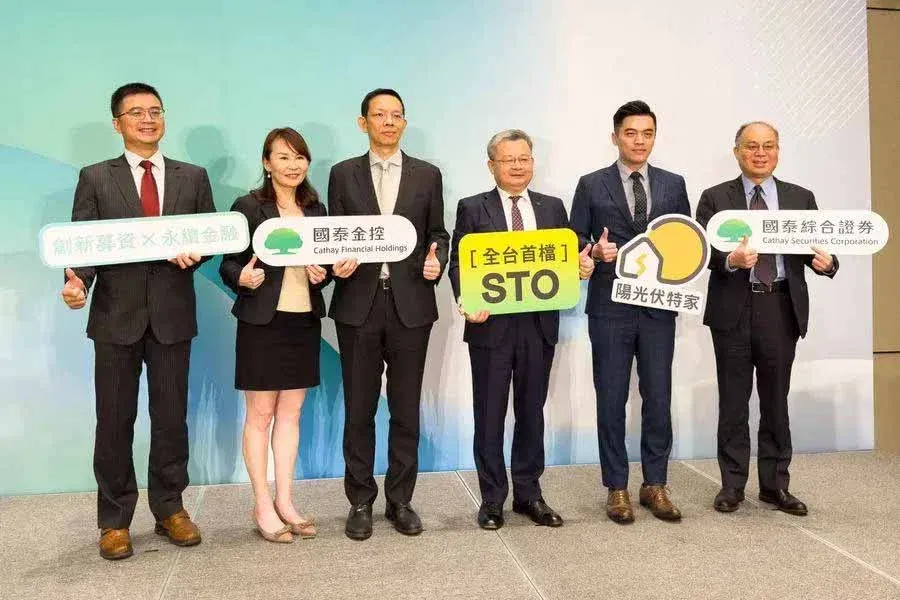
Cathay Financial Holdings (Taiwan) and Its RWA Exploration
*(Insert relevant case study graphics or data here; placeholder kept unchanged)*
Are RWAs a Scam?
RWA is a genuine financial‑technology innovation, not a scam per se. However, fraudulent schemes that misuse the RWA label do exist:
- Typical Tactics: Projects claim to own overseas gold mines, resorts, or other physical assets, issue tokens to raise capital, but the underlying assets are fictitious.
- Due‑Diligence Checklist: Verify whether the project partners with reputable custodians, provides third‑party audit reports, and is integrated into mainstream DeFi protocols.
How Might RWA Reshape the Crypto Market?
If more than 1 % of traditional financial assets were tokenized, it could inject several tens of trillions of USD into the crypto ecosystem, shifting the landscape from “air‑coins” to a finance system underpinned by real assets.
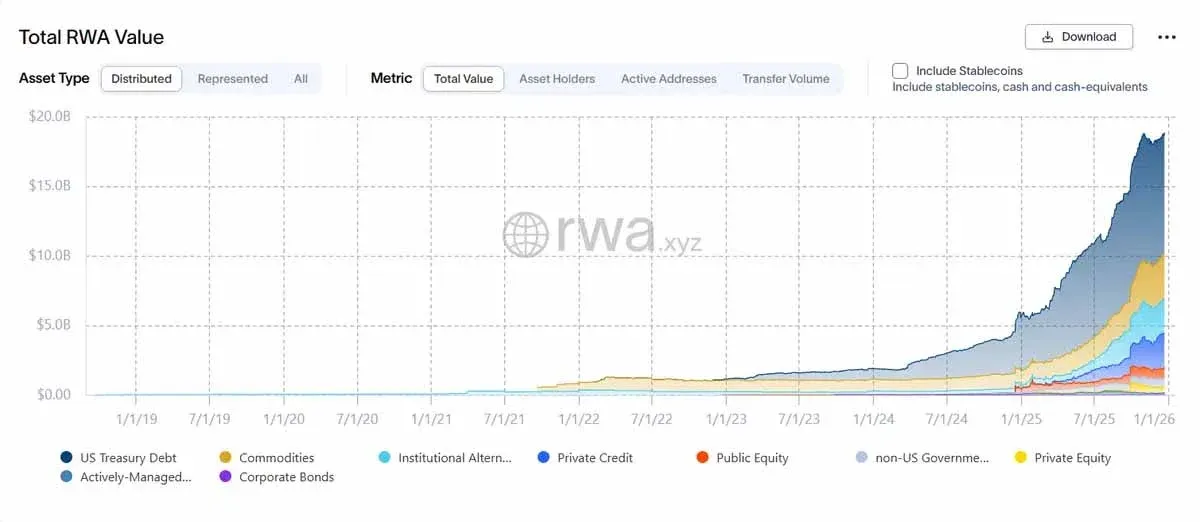
RWA Market‑Cap Growth Review (Since 2019)
*(Chart or data illustration placeholder retained)*
Outlook for the Future
- Regulatory Clarity: Countries will gradually introduce dedicated legal frameworks for tokenized assets; compliance will become the decisive factor for a project’s longevity.
- Asset Diversification: U.S. Treasuries and equities are just the beginning; future tokenizations may include minerals, intellectual‑property royalties, carbon credits, and even personal future earnings.
- Institution‑Led Supply: Early DeFi innovators built the technical foundation for RWA; later, traditional finance giants such as BlackRock and Goldman Sachs are expected to dominate the asset‑supply side.
- Infrastructure Standardization: Cross‑chain interoperability protocols like Chainlink’s CCIP will become industry standards, enabling seamless RWA movement across Ethereum, Solana, and private banking ledgers.
Conclusion
RWA is not a fleeting hype cycle; it represents an inevitable convergence of blockchain technology with the real economy.
- For investors: RWA provides a way to hold low‑volatility assets such as Treasury bonds or gold on‑chain, offering a modest hedge against market swings.
- For developers: The primary challenges lie in navigating regulatory approvals, ensuring oracle data reliability (e.g., via Chainlink solutions), and building cross‑chain liquidity mechanisms.
With the participation of heavyweight financial institutions, RWA is transforming blockchain from a “gambling platform” into a “global financial infrastructure.”
This article does not constitute investment advice. Cryptocurrency prices are highly volatile, and the market still contains numerous fraudulent schemes. Please read all relevant material and carefully assess risks before making any investment decisions.
That concludes the comprehensive overview of “What is RWA? Operating Mechanism, Leading Projects and Risk Analysis (2026 Update)”. For more in‑depth RWA content, you can search for previous articles by Bitaigen (比特根) or continue reading the related links below. Thank you for your attention and support!
Related Reading
- Ethereum Smart Contracts: Benefits, Risks, and Challenges
- What Is a Smart Contract? Definition, How It Works & Benefits
- Asset Tokenization: Tokenized Stocks & Real‑World Assets
💡 Register on Binance with referral code B2345 for the maximum trading fee discount. See Binance complete guide.



