
 Bitaigen Research
 The Bitcoin Lightning Network is a second‑layer payment protocol built on top of the Bitcoin main chain, enabling near‑instant, low‑fee Bitcoin transfers through bidirectional payment channels.
Bitcoin and other cryptocurrencies have the potential to fulfill true peer‑to‑peer functionality and to compete with traditional fiat currencies. However, the current state of blockchain technology is constrained by a major issue—scalability. Bitcoin transactions can be slow and expensive. Yet, the Bitcoin Lightning Network promises instantaneous, almost free Bitcoin transactions. This guide will explain what the Lightning Network is, how it works, and why it is crucial for Bitcoin’s future.
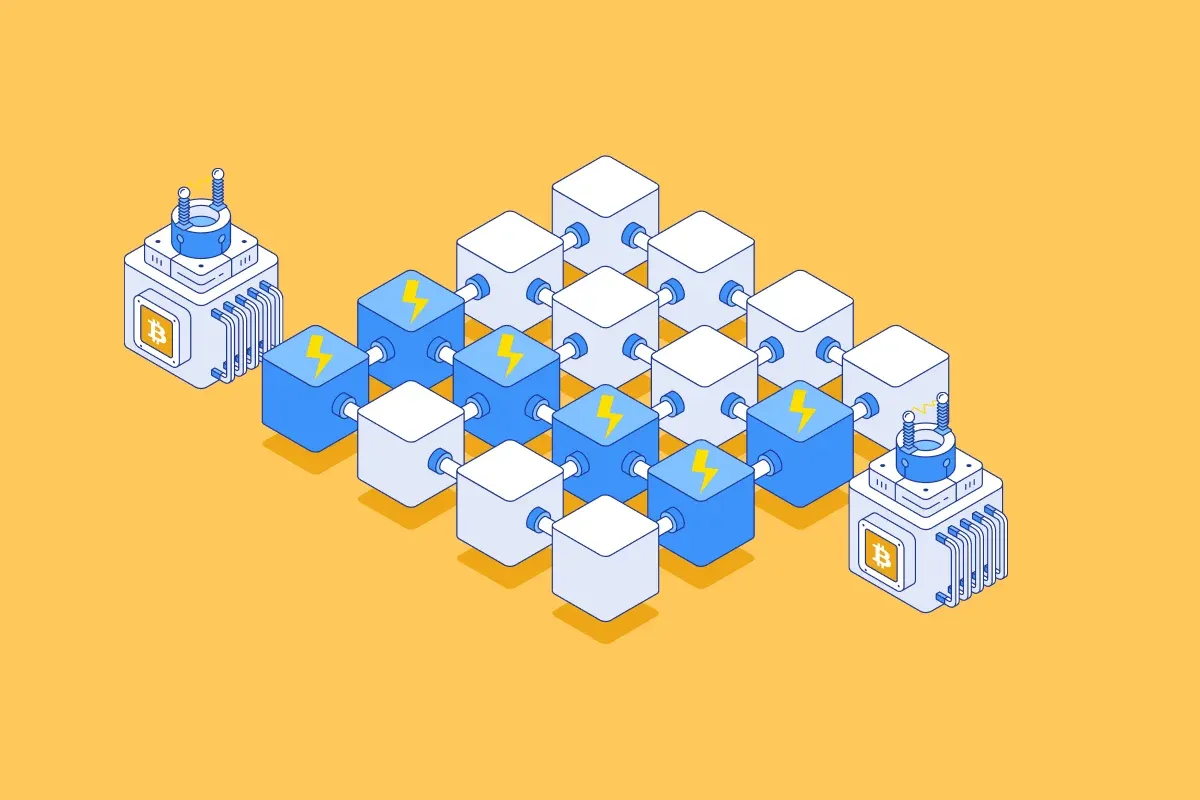
In this article we walk you through the core concepts and operating principles of the Bitcoin Lightning Network, dissecting how it overcomes on‑chain congestion to achieve near‑instant, low‑cost transfers. By detailing the channel mechanism, readers will grasp the technology’s pivotal role in Bitcoin’s future scalability. Subsequent sections will explore real‑world use cases and practical considerations.
What Is the Lightning Network?
The Bitcoin Lightning Network is a scaling solution designed to let Bitcoin users conduct near‑instant transactions while dramatically lowering the cost of sending transactions on the Bitcoin blockchain. Its core idea is to move transactions “off‑chain,” thereby easing congestion on the Bitcoin network.
- Proposed: 2015
- Goal: Bring Bitcoin’s transactions‑per‑second (TPS) capacity close to mainstream payment systems such as Visa
- Implementation: A second‑layer network built atop the Bitcoin main chain, consisting of payment channels
Only when a channel is closed are the aggregated transaction results written to the main chain. With payment channels, parties can transfer funds instantly without waiting for block confirmations.
Key Points
- By shifting transfers to bidirectional payment channels, Bitcoin payments become almost instantaneous;
- Fees are extremely low, limited to the minimal miner fee required for the on‑chain settlement.
What Problem Does the Lightning Network Solve?
As the number of Bitcoin users grows, the volume of transactions the network must process and record rises in tandem. Bitcoin’s distributed ledger is maintained by thousands of nodes; its decentralised nature guarantees security and censorship‑resistance, but it also creates a scalability bottleneck.
Bitcoin’s Scalability Issue
Each Bitcoin transaction is first validated by network nodes and then packed into a block—a process known as mining. Roughly every ten minutes a new block is produced, and each block can hold about 1,800‑2,000 transactions.
- Maximum throughput at peak efficiency: 6‑7 TPS
- Compared with Visa (1,700‑24,000 TPS), the speed gap is huge
During periods of network congestion, miners prioritize transactions that pay higher fees, causing fees for ordinary users to soar.
Did You Know?
- The Bitcoin blockchain can only handle about 6‑7 TPS;
- Public blockchains such as Solana claim to reach up to 65,000 TPS.
How Does the Lightning Network Work?
The concept behind the Lightning Network is straightforward; the crucial element is the creation and settlement of payment channels.
Example
- Channel creation: User Jen and colleague Tom open a bidirectional payment channel on the Lightning Network.
- Instant transfer: Jen can immediately send Bitcoin to Tom without waiting for an on‑chain confirmation.
- Network expansion: If Tom later opens a channel with a coffee shop, Jen can also pay the coffee shop through the existing path, creating a multi‑party interconnected payment network.
Technical details:
- A smart contract and a multisignature wallet lock the initial funds of the channel;
- After exchanging public and private keys, the parties can perform instantaneous transfers;
- When the channel is closed, the opening and closing balances are written to the main chain, completing the final settlement.
Through routing algorithms, the Lightning Network can automatically discover the optimal path, passing the payment from one end to the other without needing to open a new channel for each transaction.
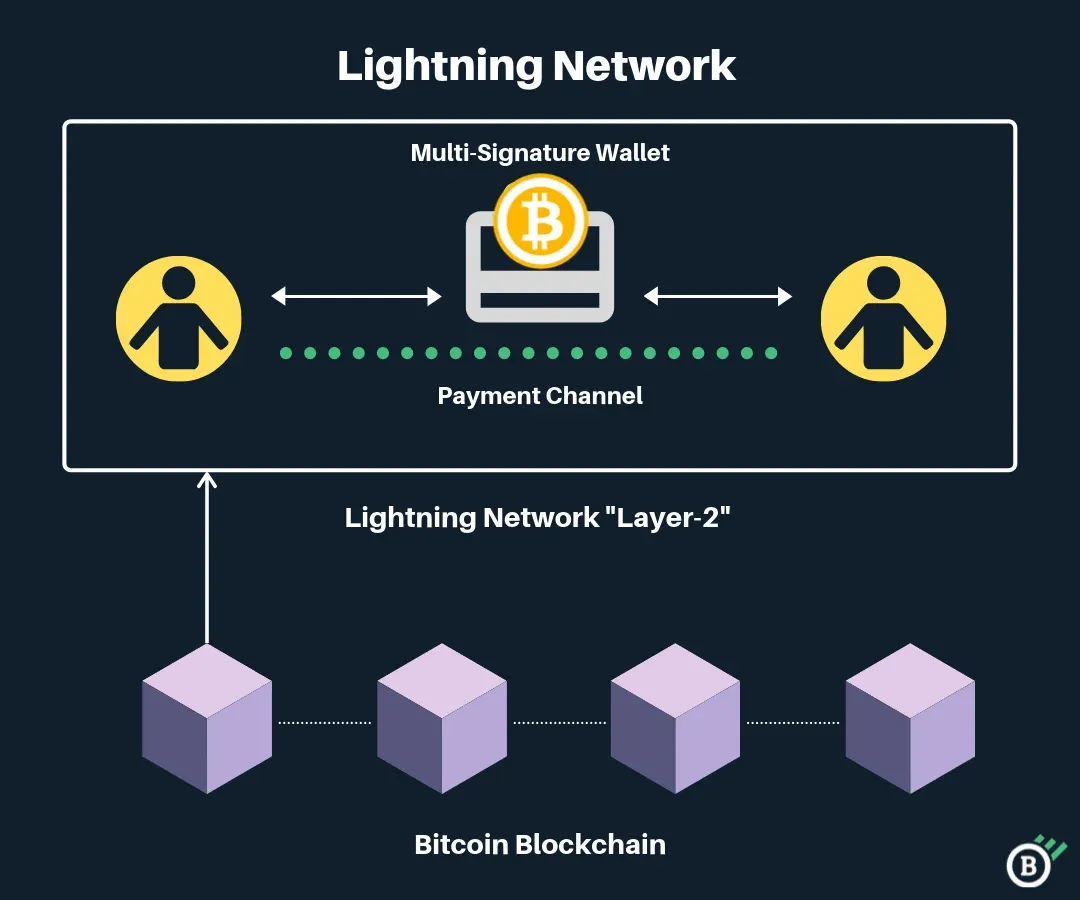
*Figure 1 – Explanation of the Bitcoin Lightning Network*
Drawbacks of Lightning Operations
- Security variance: Because the Lightning Network runs on top of the Bitcoin main chain, its security guarantees are not as strong as on‑chain transactions;
- Use‑case suitability: It is better suited for everyday small‑value payments, while large‑value transfers are still recommended on the main chain.
Since its launch in 2017, the number of Lightning Network nodes has grown by more than 200 % from mid‑2020 to the end of 2021, and the total number of payment channels has doubled in the same period, indicating a maturing ecosystem.
How Is the Lightning Network Implemented?
To date, the Lightning Network has locked close to USD 100 million worth of Bitcoin assets, yet it still lacks user‑friendly front‑end applications for the average person. Most operations still require technical knowledge or reliance on third‑party platforms.
Cryptocurrency Exchanges Supporting the Network
Some exchanges have integrated Lightning Network functionality, allowing users to:
- Withdraw Bitcoin with low fees and fast settlement;
- Maintain smooth transaction flow even when the main chain is congested.
Why Is the Lightning Network Important for Bitcoin Users?
The Lightning Network could transform how users interact with the Bitcoin blockchain:
- Eliminate waiting: Payments are settled instantly, removing the need to wait for block confirmations;
- Reduce fees: Transaction costs drop dramatically, making Bitcoin competitive for everyday consumer use;
- Cross‑chain potential: Supports atomic swaps, enabling instant exchange between BTC and assets on other chains such as ETH without intermediaries.
If the Lightning Network achieves widespread adoption, Bitcoin will become far more suitable as a daily‑use cryptocurrency.
Summary
The Bitcoin Lightning Network is a second‑layer scaling solution that leverages bidirectional payment channels to enable fast, low‑fee Bitcoin transfers between users. By interconnecting countless channels into a massive payment graph, the network aims to provide instant transactions at the lowest possible cost. Once mature, it could turn Bitcoin into a mainstream crypto for everyday spending.
Related Reading
💡 Register on Binance with referral code B2345 for the maximum trading fee discount. See Binance complete guide.



