
 Bitaigen Research
 Bitcoin Multi‑Institution Custody is an innovative approach that has emerged in recent years to boost asset security.
Bitcoin multi‑institution custody refers to multiple independent entities jointly managing Bitcoin private keys, where a transfer can only occur once a predefined multisignature threshold is met, and the assets are protected by a robust multisig protocol that prevents single‑point theft.
Over the past 15 years, the Bitcoin trading and custody space has repeatedly suffered large‑scale hacking incidents. To mitigate the risk of relying on a single centralized custodian, enterprises have begun adopting multi‑institution custody as a new safeguarding model.
What is Multi‑Institution Custody?
Bitcoin multi‑institution custody (Multi‑Institutional Custody of Bitcoin) means that, within the same Bitcoin network, several key agents collectively safeguard a client’s private key. Only when these agents cooperate to produce a signature can Bitcoin be moved.
Compared with a single custodian, the advantages of multi‑institution custody are:
- Higher attack cost – An attacker would have to compromise multiple institutions and obtain each of their keys, dramatically raising the difficulty.
- Strong fault tolerance – If one agent loses its key or the company goes out of business, the overall assets remain accessible because the remaining agents can still complete a transfer or recover the funds.
This article systematically explains the benefits of multi‑institution custody, the criteria for selecting key agents, and the various custody models that are currently available.
In this piece we outline the core mechanisms and security advantages of Bitcoin multi‑institution custody, helping enterprises and high‑net‑worth investors understand how collaborative multisignature can reduce single‑point risk, and we provide practical guidelines for choosing trustworthy key agents. To grasp the real value of the latest custody models, keep reading.
1. Benefits of Multi‑Institution Custody
In Bitcoin management, personal control of private keys eliminates counter‑party risk. However, for corporations and ultra‑wealthy clients, legal or regulatory constraints often make full self‑custody impractical.
Since Unchained introduced multi‑institution collaborative custody in 2018, both businesses and individuals can enlist several institutional key agents to protect a key together, creating a more secure Bitcoin vault.
Key benefits include:
- Reduced single‑point loss risk – No single agent can move or destroy the Bitcoin on its own.
- Regulatory‑compliant custody – Some institutions offer qualified custody services that meet local regulator requirements, allowing firms to stay compliant while keeping assets safe.
- Flexible key allocation – Clients can customize the proportion of keys each agent holds, achieving a trust‑minimized architecture that aligns with business needs.
When dealing with fiat conversions, most platforms accept USD via SEPA/SWIFT transfers; U.S. users should route fiat through Binance.US rather than the global Binance platform. Keep in mind that crypto gains may be taxable in your jurisdiction, so consult a tax professional.
2. Advantages and Models of Multi‑Institution Custody
Multi‑institution custody comes in several models, each catering to different security and operational preferences. Below are three common patterns and the scenarios where they shine.
1. Delegating Key Control to Multiple Key Agents
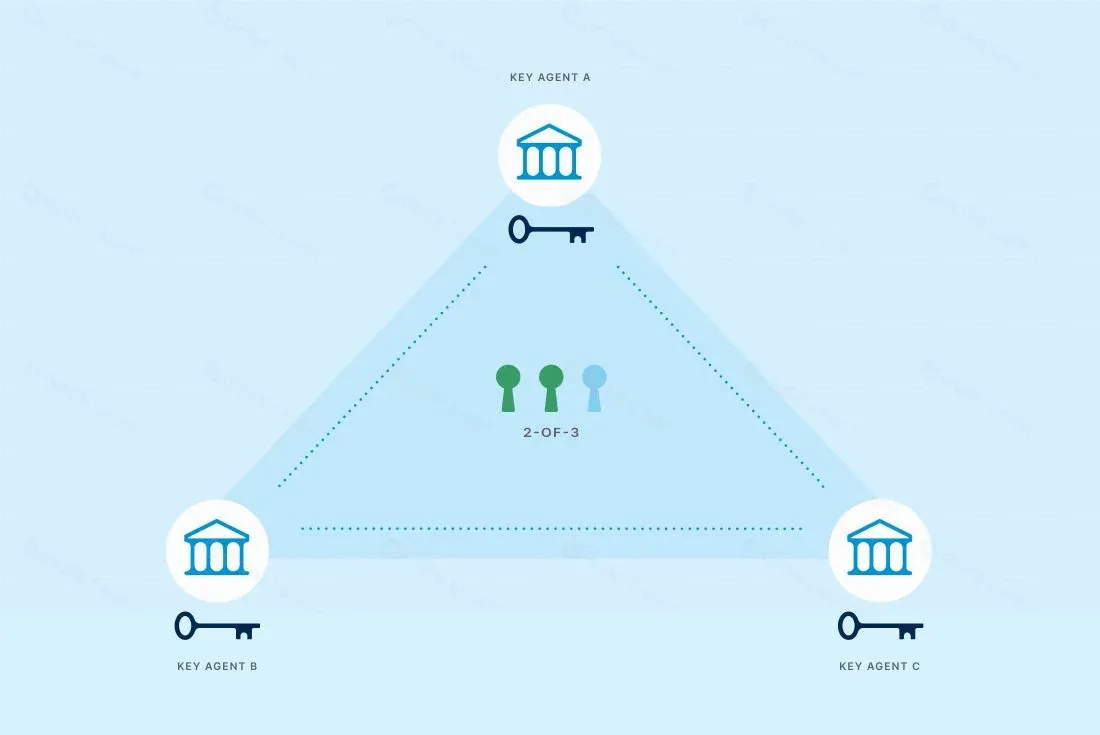
Consider a 2‑of‑3 multisignature arrangement: the client distributes the private key among three agents, and any two signatures are sufficient to execute a transfer. Important considerations for this model:
- Trust vetting – Verify each agent’s key‑storage method (cold storage or API‑accessible) and whether third‑party audits are permitted.
- Verifiability – Does the agent provide multisig documentation that can be checked on a full node for balance verification, and can a non‑proprietary tool recover the funds if a key agent fails?
- Identity confirmation – Is the transaction‑signing identity check fully automated, or does it require additional security steps?
This setup is ideal for enterprises or individuals who cannot manage private keys themselves, ensuring that a failure of any single agent does not result in asset loss.
2. Collaborative Protection of a Single Key
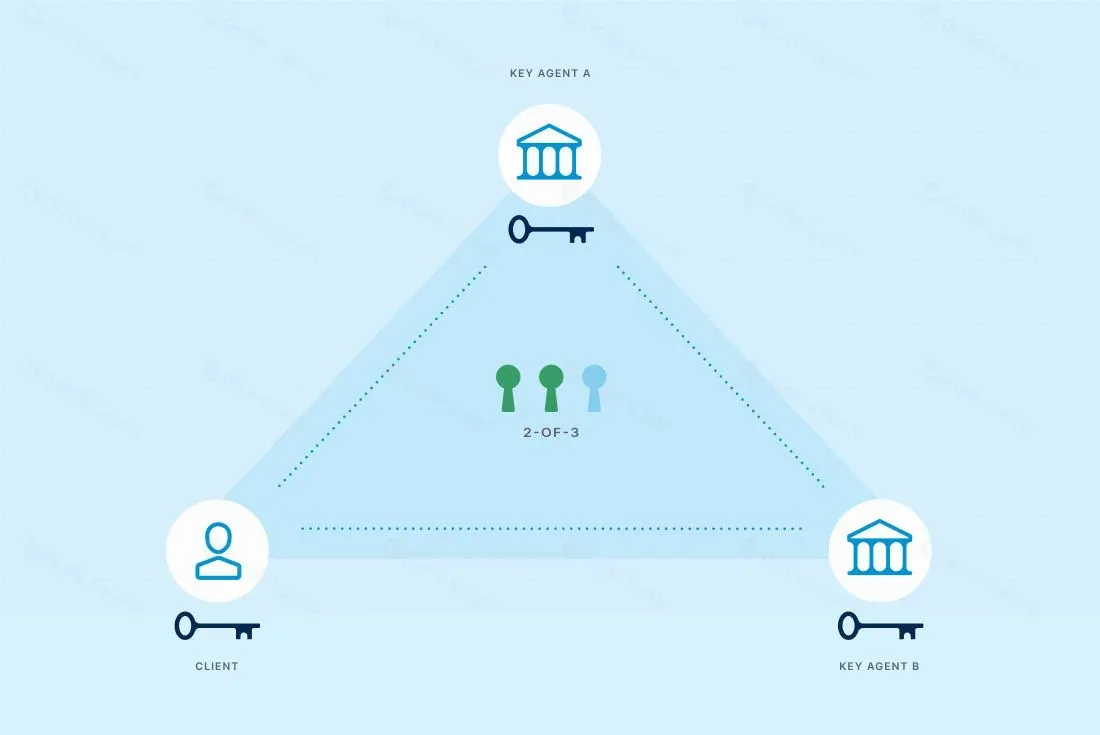
In this model, several institutions jointly safeguard the same private key. The advantages include:
- Address ownership verification – Open‑source tools can confirm that Bitcoin has been deposited into the designated wallet, removing reliance on pure trust.
- Regulatory risk dispersion – Clients can choose the jurisdiction where the key is held, reducing dependence on a single regulatory environment.
- Access to financial products – While retaining qualified custody status, users can still leverage Bitcoin‑backed lending and other services.
The approach balances security with compliance, making it suitable for clients that demand rigorous proof of asset ownership.
3. Holding a Majority of Keys Personally While Delegating a Minority
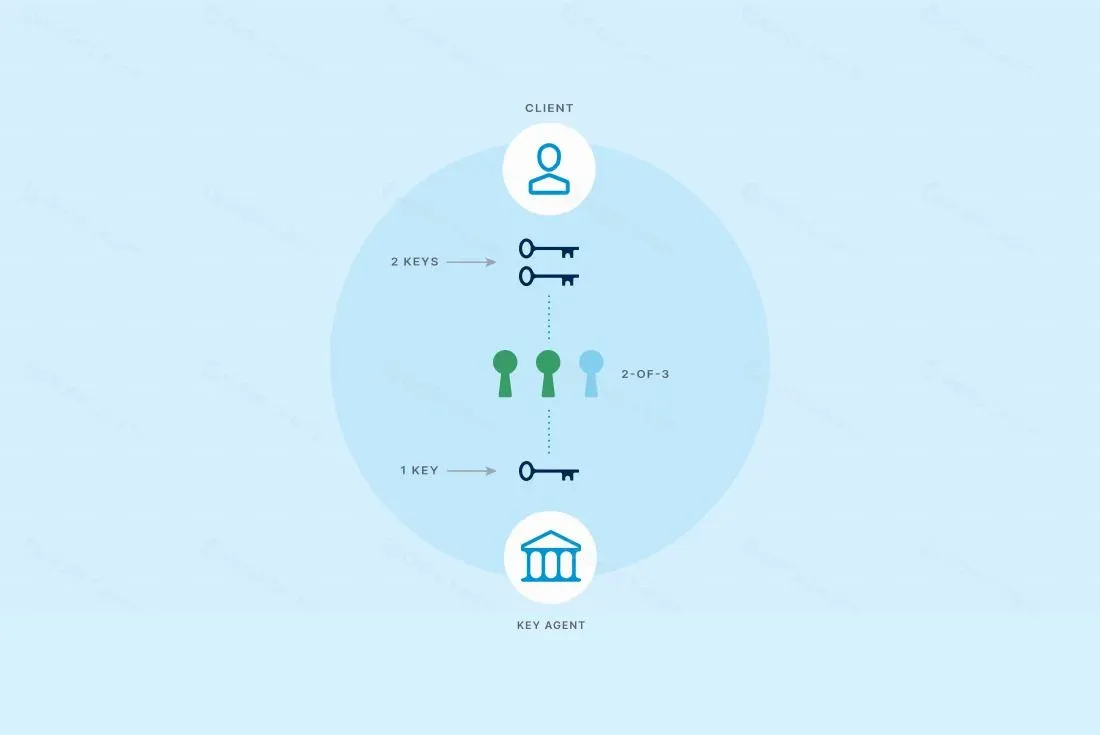
Here the client retains most of the keys, and only a small number are entrusted to one or more institutional agents. Main benefits:
- Full control – Even if an agent encounters problems, the client can still recover and move the Bitcoin independently.
- Rapid response – In emergencies, transfers can be completed in roughly 10 minutes without waiting for an external signature.
- Minimized counter‑party risk – Agent failures do not affect asset availability.
Platforms such as Unchained offer all three configurations within a single system, allowing customers to switch flexibly as business requirements evolve.
3. Key Questions for Evaluating Multi‑Institution Key Agents
When selecting a key agent, it is essential to dig into their key‑generation, management, and operational procedures. The following checklist can guide the assessment:
Security
- How are the keys generated? Does the client retain end‑to‑end control over the generation process?
- Are dedicated hardware security modules used for key creation and transaction signing?
- What safeguards are in place after an employee leaves the organization to ensure key integrity?
Operational Processes
- What does the day‑to‑day key handling workflow look like?
- Is the platform Bitcoin‑only, or does it support multiple blockchains?
- Which personnel have access to the keys, and how long does the signing process typically take?
- How is the requesting user’s identity verified before a signature is produced?
Answering these questions helps gauge the agent’s technical maturity, operational rigor, and overall commitment to protecting private keys. Some agents may act merely as intermediaries, with the actual security responsibility residing with a partner; understanding these nuances enables a more informed decision.
---
At this point the overview of “What is Bitcoin Multi‑Institution Custody? Understanding Its Operation and Advantages” is complete. For deeper insights into multi‑institution custody, you can search for historical articles from Bitaigen or follow the related links below. We appreciate your continued interest and support for Bitaigen!
Related Reading
- OKX New Device Login Troubleshooting Guide
- Best Mainstream Bitcoin Exchange to Choose in 2026
- On-Chain Earn vs Simple Earn: Security Comparison & Key Differences
💡 Register on Binance with referral code B2345 for the maximum trading fee discount. See Binance complete guide.



