
 Bitaigen Research
 Gold prices have surged rapidly while Bitcoin has weakened, sparking market interest in the relative performance of the two assets.
The weakening of Bitcoin‑against‑Gold dynamics does not equate to a total collapse of Bitcoin, nor does it constitute a so‑called “century‑long scam.” Instead, it reflects a divergence in the safe‑haven characteristics of assets and a shift in market sentiment.

In this article we outline Bitcoin’s latest performance relative to gold, dissect the underlying split in safe‑haven attributes and the changing market mood. By comparing the driving forces behind the two major assets, we help readers clarify whether we are truly on the edge of a collapse or a scam, and we provide a framework for assessment. For detailed insight, please continue reading.
Bitcoin vs Traditional Safe‑Haven Assets
Looking ahead to the economic landscape of 2026, financial markets are showing a clear split among value‑storage assets. Since the beginning of 2024, gold has risen roughly 153 % in cumulative price, whereas Bitcoin has experienced a ≈30 % decline over the same period, indicating a markedly slower growth trajectory.
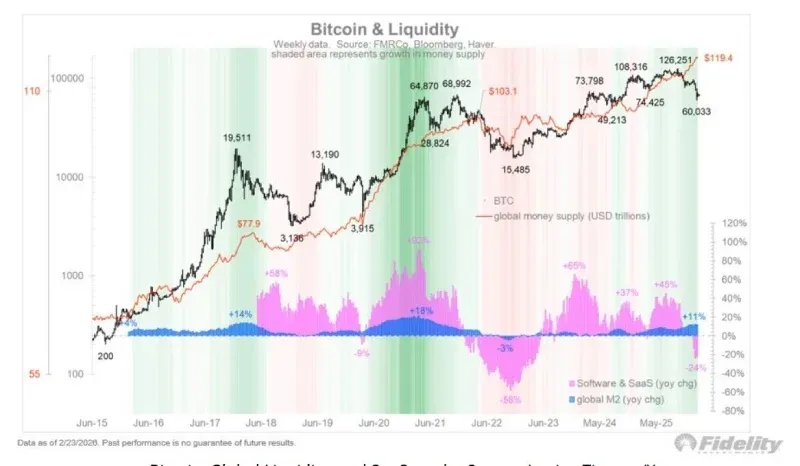
- Gold’s performance aligns tightly with its hard‑currency attributes and is strongly influenced by the global expansion of M2 money supply.
- Bitcoin, while also affected by liquidity, sees its price more closely tied to risk appetite in technology and SaaS equities.
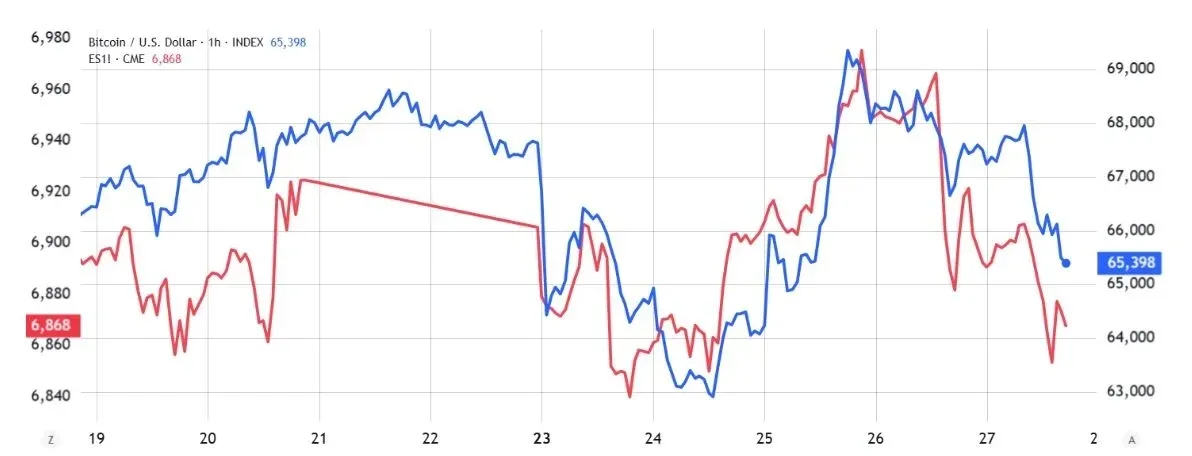
As of the end of February, Bitcoin slipped below $65,500, revealing heightened sensitivity to inflation data. After the U.S. Producer Price Index (PPI) rose 0.5 % in January, concerns over monetary tightening prompted a sell‑off.
Unlike gold, which tends to attract capital inflows during market turbulence, Bitcoin continues to behave like a high‑beta asset, often amplifying equity market swings and failing to deliver an independent safe‑haven function. This suggests that, in the short term, cryptocurrencies remain tightly linked on‑chain to U.S. equities.
Pressure from the U.S. Stock Market and Negative UBS Report
Cautious stances from major financial institutions toward the U.S. market are reshaping capital flow patterns. UBS Group recently downgraded its rating on U.S. equities to neutral and warned that current valuations appear overly generous relative to fundamentals.
- The UBS report states that U.S. equity valuations are 35 % higher than the global average, whereas the historical premium since 2010 has averaged only 4 %.
- Policy risks—such as caps on credit‑card rates and additional import tariffs—are creating structural downside pressure for investors.
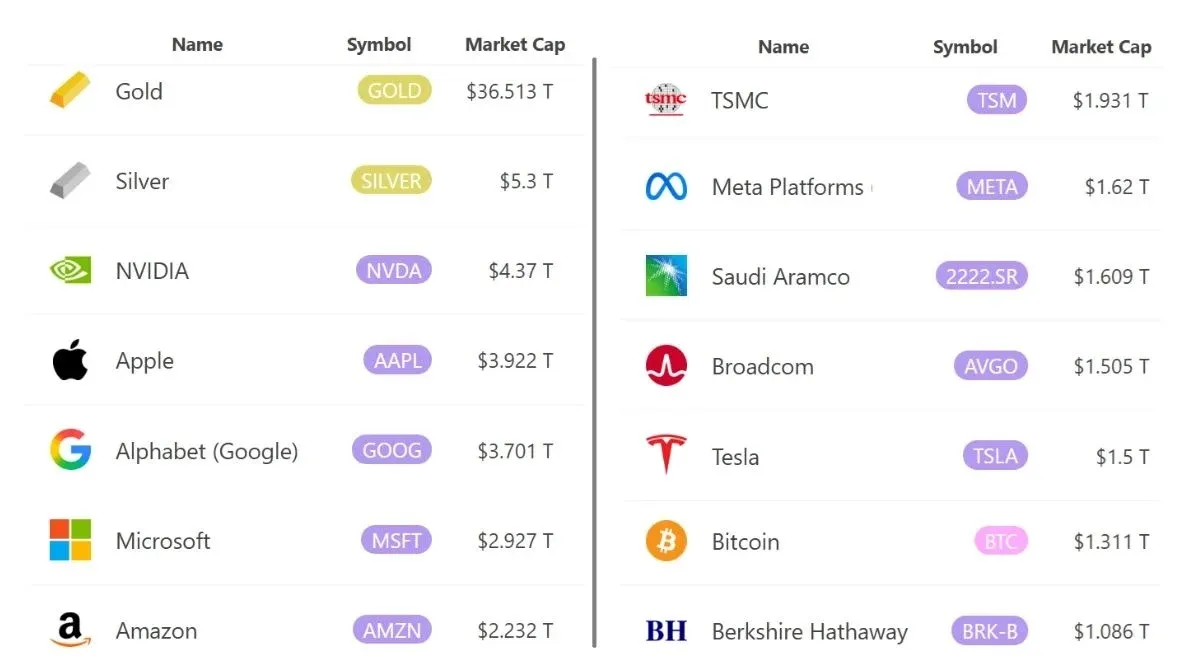
The U.S. 10‑year Treasury yield slipped to 3.97 %, indicating that investors are favoring the safety of fixed‑income assets. A stagnant equity market could become a potential catalyst for Bitcoin in the medium term; if the upside ceiling for the S&P 500 becomes clearer, roughly $70 trillion in equity capital might migrate to alternative investment channels.
- Should Bitcoin break the $100,000 threshold, its market cap would approach $2 trillion, still far below gold’s roughly $36.5 trillion market cap.
Shift Toward Real Assets Reflected in On‑Chain Data
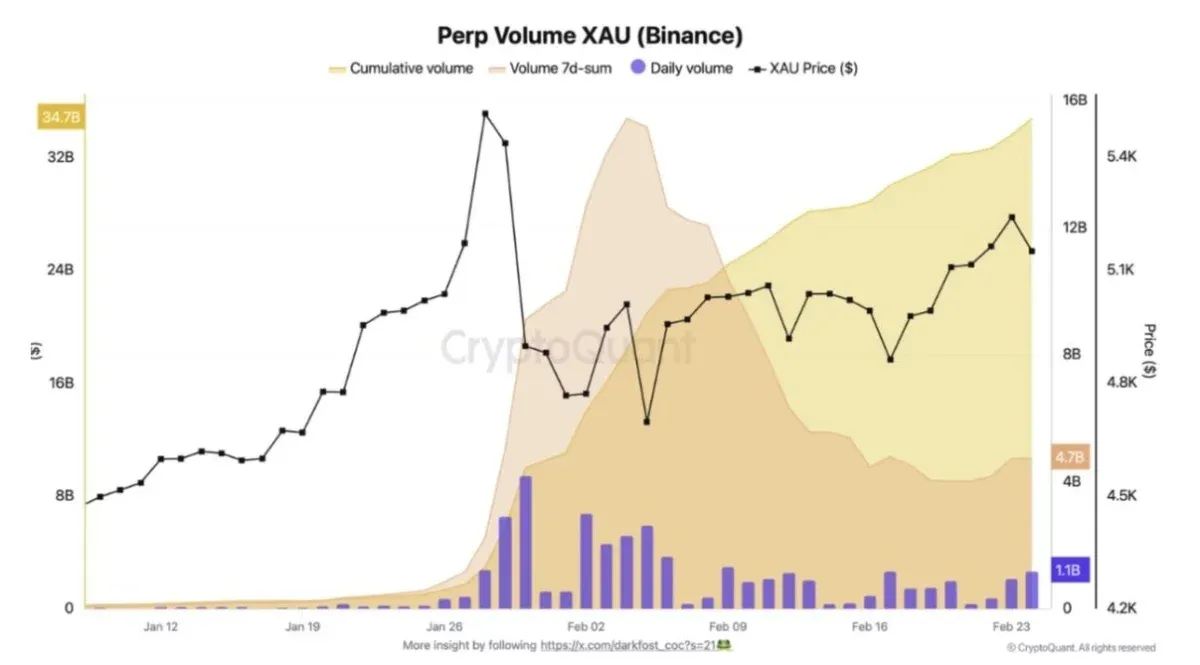
On‑chain data now reveals the latest trends in crypto investor behavior. On the Binance platform (U.S. residents should use Binance.US), interest in gold‑linked derivatives is rising sharply.
- Since the launch of gold futures trading in early January, cumulative turnover has neared $35 billion.
- Average weekly volume sits around $4.7 billion, indicating that users are directly hedging traditional hard‑asset risk via tokenized instruments on the blockchain.
At the same time, the total reserve value of major assets on Binance—Bitcoin, Ethereum, and stablecoins—has fallen to roughly $102 billion, the lowest level since April 2025. About $38 billion has flowed out, reflecting both price declines and a user preference during high‑volatility periods to move funds into personal wallets for self‑custody.
Insufficient exchange liquidity makes it harder for Bitcoin to generate rapid upward momentum; however, if sovereign wealth funds or large institutions announce renewed ETF‑based holdings of Bitcoin, the market landscape could shift dramatically.
---
This concludes our analysis of whether the weakening of Bitcoin‑against‑Gold signals a collapse or a “century‑long scam.” For further interpretations of Bitcoin‑to‑Gold movements, please search for past articles by Bitaigen (比特根) or continue reading the related content below. We appreciate your ongoing interest and support!
*Note: Crypto gains may be taxable in your jurisdiction; consult a tax professional for guidance. All fiat references use USD, and cross‑border transfers should follow SEPA or SWIFT standards where applicable.*
💡 Register on Binance with referral code B2345 for the maximum trading fee discount. See Binance complete guide.



