
 Bitaigen Research
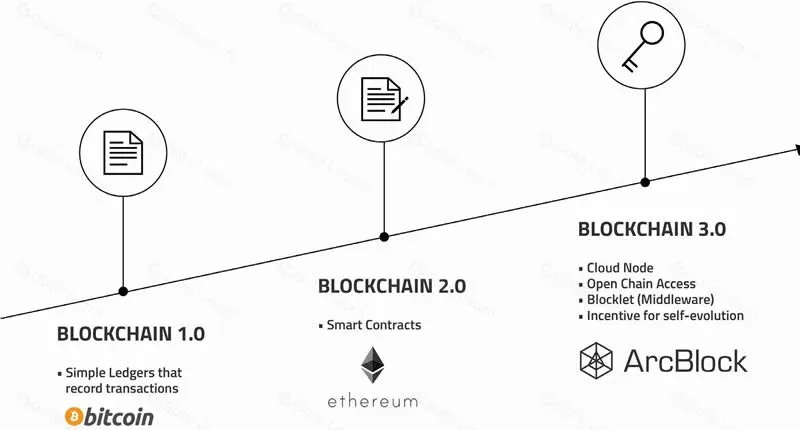
 ArcBlock stands at the forefront of Blockchain 3.0, aiming to make decentralized application (dApp) development simpler and more efficient. By abstracting underlying chain technology and providing a comprehensive development kit, the platform enables both seasoned engineers and newcomers to the blockchain space to quickly build and launch their own services. The following sections systematically introduce ArcBlock’s concepts, technical implementation, core features, and real‑world use cases within its ecosystem, helping readers fully grasp the platform’s value.
In this article we outline ArcBlock’s core philosophy and technical framework, reveal how it lowers the dApp development barrier by abstracting the underlying chain and modularizing Blocklets, and showcase typical examples from the ecosystem. If you want to learn about this complete solution built for Blockchain 3.0, keep reading.
What Is ArcBlock?
ArcBlock aims to break through the technical barriers that traditional blockchains present for enterprise adoption, offering a reliable and scalable infrastructure for decentralized applications. Through open‑source protocols and a multi‑chain compatible framework, developers can seamlessly bridge legacy systems and new blockchain solutions. In addition to providing the underlying chain network, ArcBlock has built a modular ecosystem centered on Blocklets, allowing developers to focus on user experience instead of wrestling with consensus mechanisms or data‑storage details.
ArcBlock’s History, Origin, and Key Figures
ArcBlock was formally established in 2018 and completed a large‑scale initial token offering (ICO) the same year, injecting ample capital for research, development, and ecosystem building. The company’s vision is to lower the entry threshold for blockchain usage, addressing common pain points such as platform lock‑in, high costs, and limited usability, thereby accelerating technology adoption across industries.
- Robert Mao – Chief Executive Officer and Chief Architect. A co‑founder of Pixomobile, he brings extensive mobile‑internet and social‑media experience. Mao positions ArcBlock as a “one‑stop blockchain development framework,” hoping that a mature toolchain will speed up engineers’ productivity.
- Flavien Charlon – Chief Scientist. An early contributor to the Coinprism project and co‑founder of Trezeo, he is responsible for the platform’s technical roadmap and consensus‑mechanism design.
- Jean Chen – Former journalist turned marketing and public‑relations lead, overseeing community operations and brand communication.
This team blends software engineering, entrepreneurial drive, and PR expertise, providing a solid foundation for ArcBlock’s rapid rise in the sector.
How Does ArcBlock Operate?
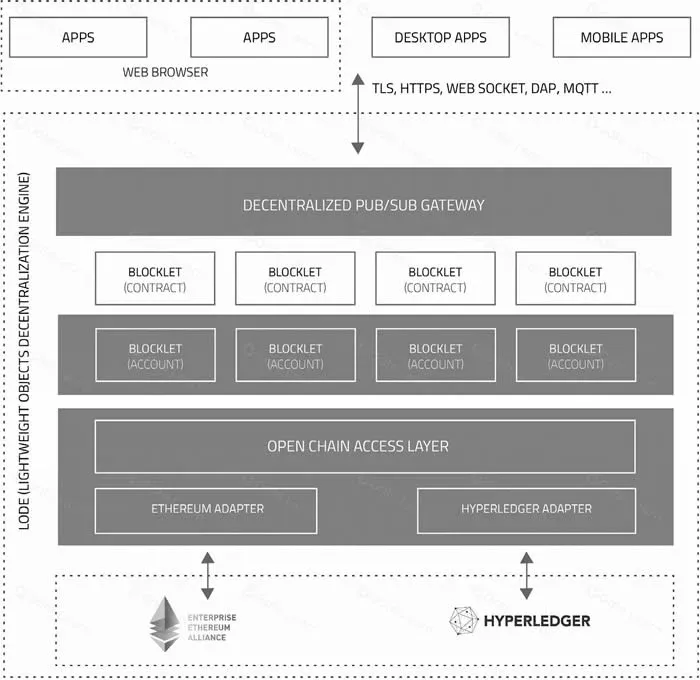
The platform adopts a three‑layer architecture that optimizes the entire lifecycle of dApp development, deployment, and operation.
Core Layer
Provides the blockchain network, consensus algorithms, and data‑storage services, ensuring a high‑throughput, highly secure foundation for upper‑layer applications.
Application Layer
Exposes a full suite of tools to developers, including code editors, debuggers, and deployment managers, facilitating everything from local coding to live production launch.
Ecosystem Layer
Focuses on community and partner engagement, linking developers, enterprises, and end‑users into a network of shared resources and collaborative innovation. An active community is a primary driver of continuous platform iteration.
ArcBlock achieves cross‑chain connectivity through the Open Chain Access Protocol (OCAP), allowing developers to select the chain that best fits their business needs without being locked to a single network. The platform is delivered in a cloud‑native fashion; users simply open a standard web browser—no extra plugins or dedicated clients are required.
Main Features of ArcBlock
Open Chain Access Protocol (OCAP)
OCAP supplies an abstraction layer for the platform’s cross‑chain capabilities, making interactions between disparate blockchains transparent and straightforward. Developers can switch the underlying chain within a single codebase, enabling genuine multi‑chain deployments.
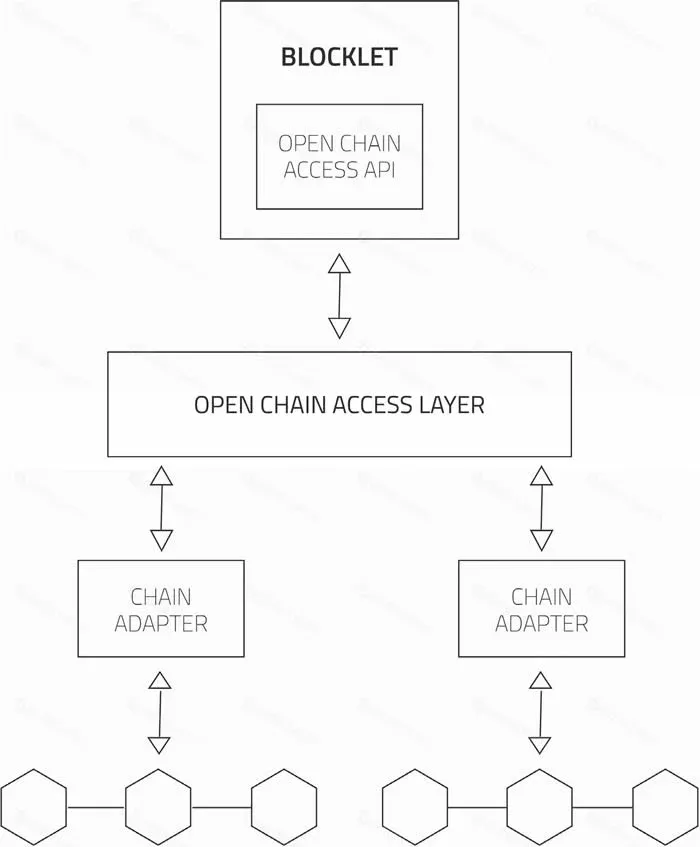
Blocklets and the Modular Ecosystem
Blocklets are ArcBlock’s fundamental building blocks, designed to make dApp development, deployment, and management more modular.
- Modularity & Reusability – Each Blocklet is an independent component that can be used alone or combined to form more complex business logic. Developers can reuse Blocklets contributed by the community or share their own, dramatically shortening development cycles.
- Chain Interaction – Blocklets can seamlessly interface with any blockchain, eliminating platform lock‑in risk.
- Blocklet Launcher – Supplies a runtime environment supporting testing, monitoring, and lifecycle management of Blocklets. The Launcher uses a subscription‑based pricing model; users pay only for the resources they actually consume and can view billing and usage metrics on a unified dashboard.
- Blocklet Store – Analogous to a mobile‑app store but dedicated to Blocklets and dApps. Developers publish their creations here, while users browse and deploy desired Blocklets directly into their projects.
- Blocklet Framework – Offers a standardized toolchain for developing, packaging, and distributing Blocklets, ensuring compatibility and security across the ecosystem. It integrates tightly with the ABT Node to help developers embed functionality quickly into ArcBlock.
- Blocklet Server – Handles hosting and execution of Blocklets, providing scalability, security, and the underlying support for cross‑chain communication.
Decentralized Identity (DID)
The platform adopts the DID standard, giving users sovereign control over their identity data and enhancing privacy and security.
Cloud‑Native Deployment
ArcBlock is built entirely on cloud‑native architecture, so developers do not need to maintain their own servers. Elastic scaling meets traffic spikes without manual intervention.
Developer Tools & SDKs
From visual editors to automated testing suites, ArcBlock offers a one‑stop development environment that lowers the learning curve for newcomers.
Token‑Economy Compatibility
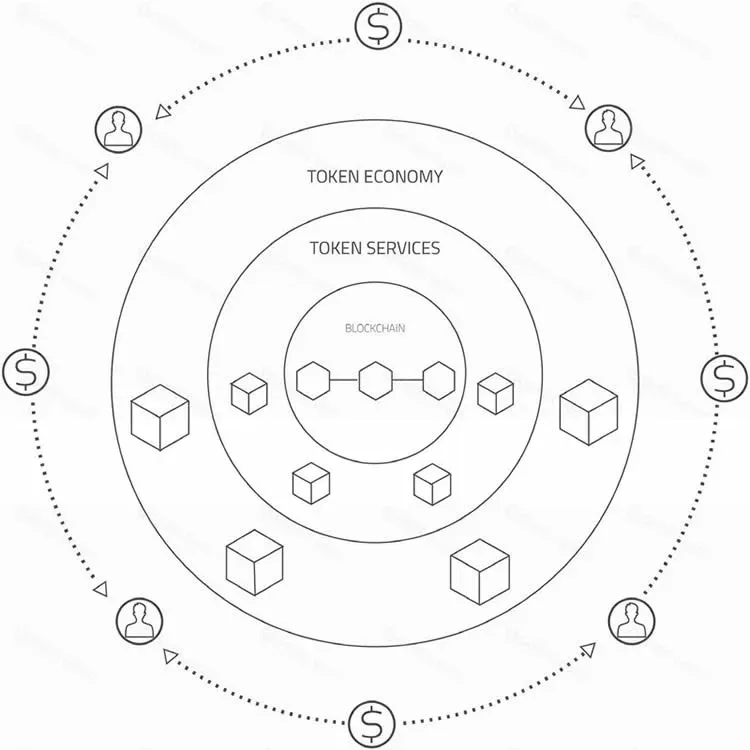
The native token ABT can be used to pay transaction fees, acquire service resources, and participate in ecosystem incentives, forming a closed‑loop economic model.
ArcBlock Use Cases

NFT Studio
A full‑stack NFT solution for artists, providing tools for minting, issuance, and secondary‑market management.
AIGNE
An AI development platform aimed at non‑technical users, exposing large language model (LLM) and generative AI (AIGC) APIs so users can build AI applications without writing code.
Creator Studio
Offers bloggers, ebook authors, and online‑course creators a unified management and monetization suite, lowering technical barriers and improving operational efficiency.
Aistro
An astrology‑app example built on AIGNE, showcasing innovative AI applications in niche interest areas.
Should You Pay Attention to the ABT Token?
ABT, as the core token of the ArcBlock ecosystem, exhibits considerable price volatility. Historically, it has experienced single‑day gains exceeding 40 %, indicating strong market interest. However, after reaching an all‑time high of $4.70 in May 2024, the price entered a correction phase, underscoring the inherent high‑risk nature of crypto assets. When evaluating ABT, investors should assess their own risk tolerance and stay informed about platform upgrades and regulatory developments.
How to Acquire ABT
- Obtain a Base Cryptocurrency – Purchase BTC, ETH, USDT, or another major crypto on a reputable exchange such as Coinbase (or, for U.S. residents, Binance.US) using fiat via USD, SEPA, or SWIFT transfers.
- Transfer to an Exchange Supporting ABT – For example, Gate.io lists ABT trading pairs (ABT/BTC, ABT/ETH, ABT/USDT). Send your base crypto to the exchange and place an order to acquire ABT.
- Secure Storage – To reduce theft risk, move ABT to a hardware wallet (e.g., Ledger Nano X or Trezor Model T). These devices support multi‑chain assets and keep private keys offline.
*Note: Cryptocurrency gains may be subject to taxation in many jurisdictions. Users should consult local tax regulations or a qualified professional to ensure compliance.*
Following these steps will allow you to safely obtain and store ABT.
ABT Token Economics
ArcBlock’s ABT token follows a fixed‑supply model, capped at 186 million units, with approximately 98.55 million currently circulating. The limited supply is intended to curb inflation. Within the ecosystem, ABT functions primarily as a utility token for paying transaction fees, purchasing services, and participating in on‑chain governance. The 2018 February ICO raised roughly $45 million at $0.50 per ABT, providing ample funding for early development. As platform features continue to evolve (e.g., the launch of OCAP), ABT’s utility cases are expected to expand, potentially influencing its long‑term value.
Latest ABT Developments
Staking Feature Launched – ArcBlock recently introduced a token‑staking mechanism that lets holders lock ABT to participate in consensus and earn rewards. After the feature’s release, ABT’s market price rose about 20 %, reflecting the community’s positive response to the new incentive model.
---
This concludes a comprehensive overview of ArcBlock and its native token ABT. For further details, follow Bitaigen and stay tuned for upcoming专题报道.
Related Reading
💡 Register on Binance with referral code B2345 for the maximum trading fee discount. See Binance complete guide.



