
 Bitaigen Research
 Base chain, as a Layer 2 solution for Ethereum, has its fee structure under close scrutiny.
Gas fees on the Base chain are paid with Ethereum (ETH) and priced in Gwei; users must hold ETH to complete transactions and contract executions.
In this article we outline the fee settlement mechanism of the Base chain, emphasizing why holding ETH is still required and why pricing is expressed in Gwei. We also explain how a Layer 2 can lower costs while preserving Ethereum’s security. For the details, keep reading.
Which token is used to pay Base chain gas fees?
The Base chain settles its gas fees with Ethereum (ETH), priced in Gwei. When a user initiates a transaction or executes a smart contract on Base, they must have a sufficient amount of ETH in advance to cover the corresponding gas.
- Purpose: Incentivize Ethereum main‑net validators (formerly miners) to write the transaction data onto blocks, ensuring accuracy and security.
- Pricing: Gas fees are quoted in Gwei (1 Gwei = 10⁻⁹ ETH), which allows finer granularity and improves the user experience.
As a Layer 2 solution, Base moves transaction processing off the Ethereum main net onto a secondary network, delivering faster confirmations and lower fees. Although execution occurs on Layer 2, final settlement and security still rely on Ethereum’s consensus mechanism. Consequently, fees remain payable in ETH, but the overall cost is markedly lower than transacting directly on the main net.
Note: Crypto gains, including any profit derived from arbitrage or fee savings on Layer 2 networks, may be taxable in your jurisdiction. Always consult a tax professional for guidance.
Advantages and Outlook for Base
- High throughput: Leveraging a hierarchical network architecture and a dedicated consensus mechanism, Base can process thousands of transactions within seconds.
- Low fees: Compared with the Ethereum main net, Base’s gas fees are more economical, making it suitable for frequent or low‑value transactions.
- Security reliance: By inheriting the decentralized security of the Ethereum main net, Base ensures finality for Layer 2 transactions.
- Ecosystem compatibility: Supports smart contracts and decentralized applications (DApps), remaining compatible with existing Ethereum toolchains and wallets.
These characteristics give Base a broad range of potential use cases in financial services, supply‑chain management, identity verification, cross‑border payments, and more. The protocol provides the technical foundation needed to scale blockchain applications to mainstream adoption.
What is the Base chain?
The Base chain is a blockchain built on a layered architecture designed to improve scalability and performance. Compared with traditional single‑layer chains, Base focuses on optimizing the following aspects:
- Transaction processing efficiency: A unique consensus mechanism and layered network enable near‑instant, second‑level confirmations.
- Cost effectiveness: Transaction costs are dramatically reduced while maintaining security and decentralization.
- Smart‑contract support: Offers a flexible, powerful contract platform that helps developers build complex and high‑throughput applications.
This design aims to preserve the core values of blockchain—security and decentralization—while meeting the demands of future large‑scale deployments.
Usage Tips
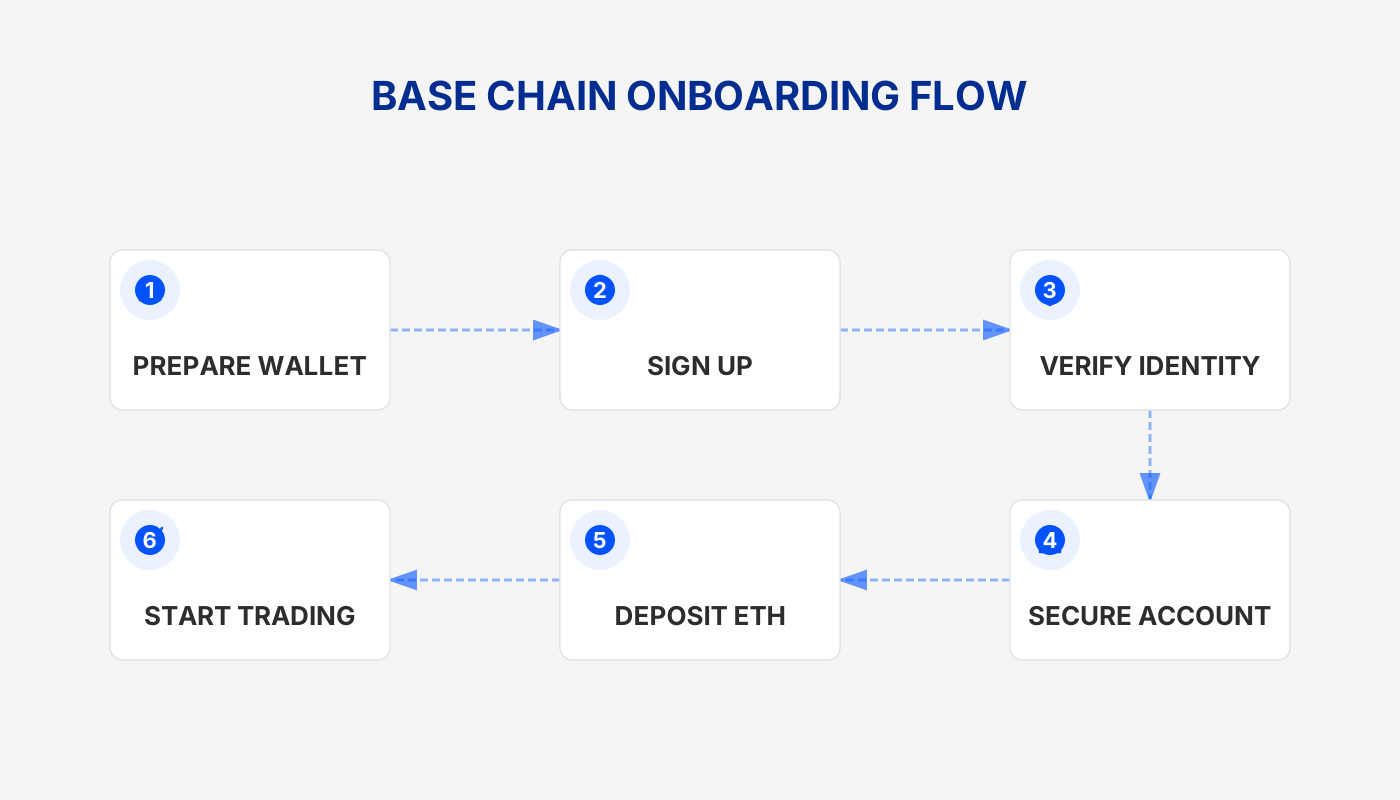
- Before interacting with Base, ensure your wallet holds enough ETH to cover gas fees.
- Use a compatible Ethereum wallet (such as MetaMask, Coinbase Wallet, or Binance US Wallet for U.S. users) for transactions and asset management.
- Monitor network status and gas‑price fluctuations, and set appropriate gas limits and fees to improve transaction success rates.
For fiat on‑ramps, most platforms accept USD via SEPA or SWIFT transfers; U.S. residents should use Binance.US rather than the global Binance platform.
The above provides a complete answer to the question “Which token pays Base chain gas fees?” Gas on Base is still denominated in Ethereum (ETH); users simply need to have the required amount of ETH to enjoy low‑cost, high‑speed transactions and contract interactions on this Layer 2 network.
Related Reading
- Base Chain AI Token Surge: $DRB, $BNKR & $PUBLIC Explode
- Ethereum (ETH) Overview: History, Use Cases & Vitalik Buterin
- Humanity Protocol: Ethereum L2 Biometric ID with ZK Proofs
💡 Register on Binance with referral code B2345 for the maximum trading fee discount. See Binance complete guide.



