
 Bitaigen Research
 In the practical flow of crypto assets, choosing the wrong network often causes more losses for beginners than price volatility. After you become familiar with the safety features of Ethereum ERC‑20 and the ultra‑low fees of Tron TRC‑20, the next network you’ll most likely encounter is BEP‑20.
This article approaches the topic from a hands‑on perspective, helping you identify BEP‑20 addresses, avoid common pitfalls, and compare the three major standards — ERC‑20, TRC‑20 and BEP‑20 — so you can complete transfers within the Binance ecosystem safely and at low cost.
From a practical‑combat standpoint, we systematically outline the characteristics of BEP‑20 addresses, its fee mechanism, and typical traps, helping newcomers select the correct chain inside the Binance ecosystem and avoid loss of funds. The article also contrasts the advantages of ERC‑20 and TRC‑20, enabling you to quickly master secure transfers. Continue reading for the details.
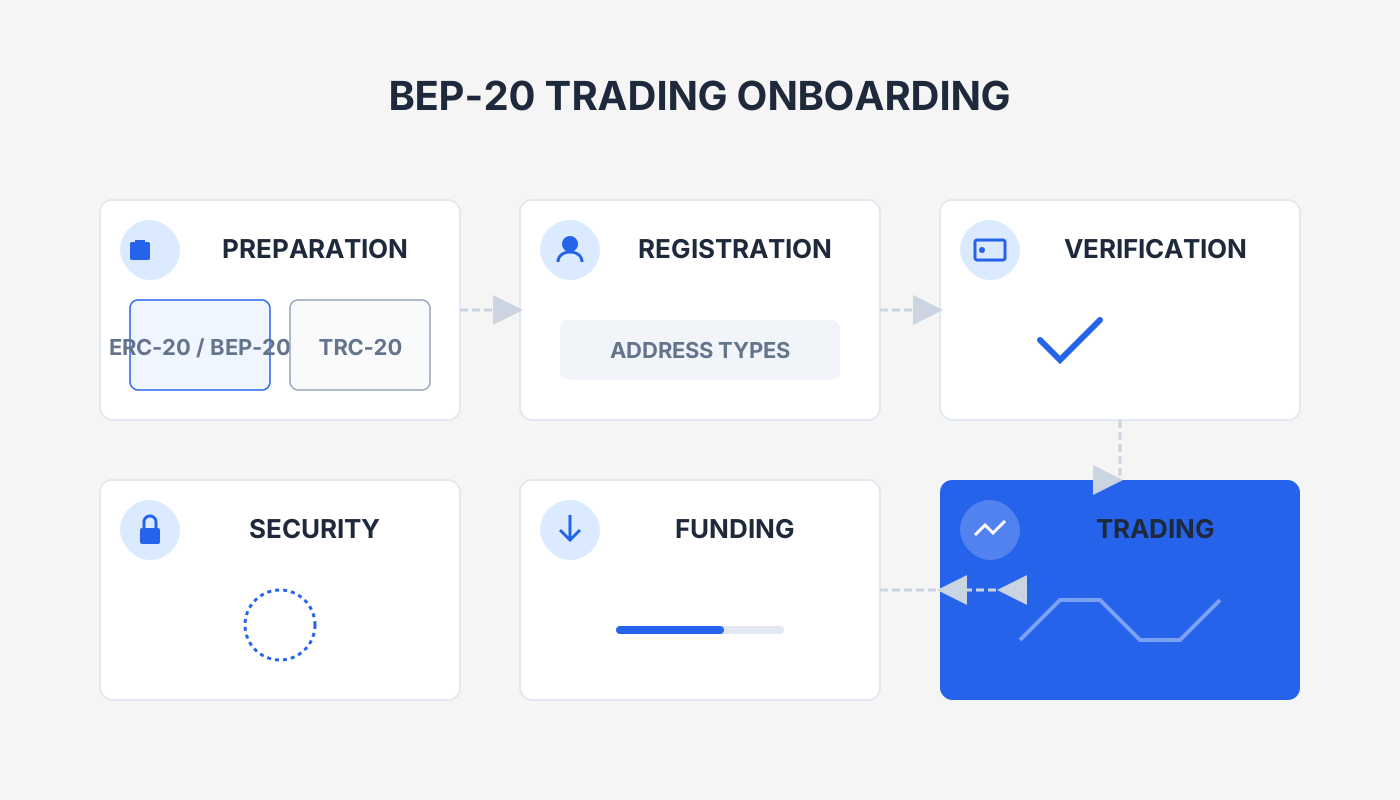
Practical Guide: Identifying BEP‑20 Addresses and Avoiding Pitfalls
Key Point 1 : Address Format Must Match the Selected Network
BEP‑20 uses exactly the same 0x‑prefixed address format as Ethereum (e.g., `0x123…`). This uniformity is convenient for cross‑chain usage but also the most common source of confusion. When withdrawing, even if the recipient address looks correct, you still need to explicitly select BNB Smart Chain (BEP‑20) in the “Withdrawal Network” field; otherwise the funds will be sent to the wrong chain and will not arrive in the intended wallet.
Key Point 2 : Reserve BNB for Gas Fees
When using decentralized wallets such as MetaMask or Trust Wallet to send BEP‑20 tokens or interact with DeFi protocols, the network only accepts BNB as gas. Many beginners find that their wallet holds only USDT (or another token) but no BNB, causing the assets to become “stuck.” It is advisable to keep roughly $5–10 USD worth of BNB on hand at all times to avoid transaction failure due to insufficient gas.
Tax note: In many jurisdictions, any gains realized from crypto transactions—including the receipt of BNB used for gas—may be subject to tax. Users should consult local tax regulations or a qualified professional.
Key Point 3 : Distinguish Legacy BEP‑2 from BEP‑20
Binance’s early BEP‑2 (Binance Chain) addresses start with `bnb` and require a Memo field. After the merger of Binance Chain and Binance Smart Chain into BNB Chain, most mainstream applications have migrated to BEP‑20. Before sending, always verify that the counterparty provides a 0x‑prefixed address; using the old chain can send your funds to an unrecoverable chain.
Key Point 4 : Handling “Invisible” Assets After a Cross‑Chain Withdrawal
Sometimes an exchange will show a successful withdrawal, yet the token does not appear in your wallet. This is usually because the wallet is defaulting to the Ethereum network or the token contract has not been manually added. Switch the wallet to BNB Smart Chain and use the “Import Token” (or “Add Custom Token”) function to enter the correct contract address; the assets will then become visible.
What Is BEP‑20
BEP‑20 is the token standard defined on BNB Smart Chain (formerly BSC), officially named *Binance Smart Chain Evolution Plan 20*. Technically, it is an extension and optimization of ERC‑20, retaining full compatibility with the Ethereum ecosystem while delivering significant improvements in transaction efficiency and fee structure. These enhancements make deploying smart contracts and DApps on the Binance chain more convenient.
Following the consolidation of Binance Smart Chain and the original Binance Chain into BNB Chain, BEP‑20 has become the core token format that supports smart contracts within this ecosystem. Whether it is USDT, BNB, or any other project token, they can all circulate rapidly on the network in BEP‑20 form.
Why You Often See BEP‑20 When Transferring
Balancing Low Fees and High Performance
Compared with the sometimes‑high gas fees on Ethereum during periods of congestion, BEP‑20 transaction costs are typically under $1 USD, even for frequent small‑value moves. For beginners, this means sending $100 does not require an extra $20 “road tax.”
The Binance Ecosystem’s All‑Chain Pass
As the token standard officially recommended by the world’s largest exchange, Binance, BEP‑20 enjoys native support on platforms such as PancakeSwap, liquidity mining programs, Launchpad projects, and more. Users can seamlessly switch between centralized exchanges and decentralized wallets, enjoying a full suite of financial services.
Regional note: Users in the United States must use Binance.US rather than the global Binance platform to remain compliant with local regulations.
Hands‑On Comparison: BEP‑20 / ERC‑20 / TRC‑20
| Feature | BEP‑20 (BNB Chain) | ERC‑20 (Ethereum) | TRC‑20 (Tron) |
|---|---|---|---|
| Fees | Low (≈ < $1 USD) | Higher (depends on network congestion) | Very low (often < $0.01 USD) |
| Transaction Speed | Fast | Slower | Very fast |
| Address Prefix | **0x** | **0x** | **T** |
| Gas Token | **BNB** | **ETH** | **TRX** |
| Primary Use‑Case | Binance ecosystem / DeFi | Highest security chain | Large‑value transfers / Minimal fees |
- If you only need to move USDT between exchanges, TRC‑20 is usually the cheapest and fastest option.
- If you plan to withdraw assets to a personal wallet for staking or to participate in Binance‑specific projects, BEP‑20 offers low fees while preserving full smart‑contract compatibility.
- ERC‑20 carries the highest fees, but when maximum security or large‑scale asset storage is required, its “digital gold” level of network defense remains advantageous.
Frequently Asked Questions (FAQ)
Q1: Can I send a BEP‑20 token directly to an ERC‑20 address?
A: Although the address formats are identical, the underlying networks are not interoperable. A direct cross‑chain transfer would deposit the assets on the wrong chain; you must use an exchange’s internal transfer function or an official bridge (e.g., Binance Bridge) to move funds safely.
Q2: Why does a BEP‑20 transfer consume BNB instead of the token being sent?
A: In blockchain networks, the native token always acts as “fuel.” All nodes accept BNB as payment for processing transactions, so regardless of which token you move, the transaction fee must be paid in BNB.
Q3: How do I assess the security of BEP‑20?
A: BEP‑20 benefits from strong backing by the Binance ecosystem. Its decentralization level is slightly lower than Ethereum’s, but for average users and retail investors it provides a solid degree of stability and industry acceptance.
Summary
BEP‑20 inherits ERC‑20’s compatibility while delivering significant fee and speed improvements, making it an indispensable token standard within the Binance ecosystem. Beginners only need to remember that a 0x address must be used on the BNB Smart Chain, and that a modest amount of BNB should be kept on hand for gas. By doing so, you can safely and cheaply perform a wide range of transfers and DeFi actions on the Binance chain.
When choosing a network, a practical rule of thumb is: prefer TRC‑20 for internal exchange transfers, and select BEP‑20 when moving into the Binance ecosystem. This approach helps control costs while maximizing liquidity and safety.
We hope this deep‑dive into BEP‑20, its differences from ERC‑20 and TRC‑20, fee structures, address formats, and typical mistakes proves useful. For more advanced guides, continue following Bitaigen (比特根) or explore the related articles linked below.
Related Reading
- What Is ERC‑20? Complete Guide to the Ethereum Token Standard
- Step-by-Step Guide: Transfer USDT from OKX to Binance (TRC‑20, ERC‑20, BEP‑20)
- What is WLFI Token? Tokenomics, Future Outlook & How to Buy
💡 Register on Binance with referral code B2345 for the maximum trading fee discount. See Binance complete guide.



