
 Bitaigen Research
 Adopting multi‑signature wallets, regular security audits, zero‑knowledge proofs, and pairing them with strict identity verification and player education can comprehensively reduce the security risks of blockchain games.
This article approaches the topic from both technical and managerial perspectives, outlining the most common security vulnerabilities in blockchain games and evaluating the practicality of cutting‑edge solutions such as multi‑signature wallets and zero‑knowledge proofs. We also explore how identity verification and player education can work together to help developers build a more reliable ecosystem. For the full protection framework, keep reading.
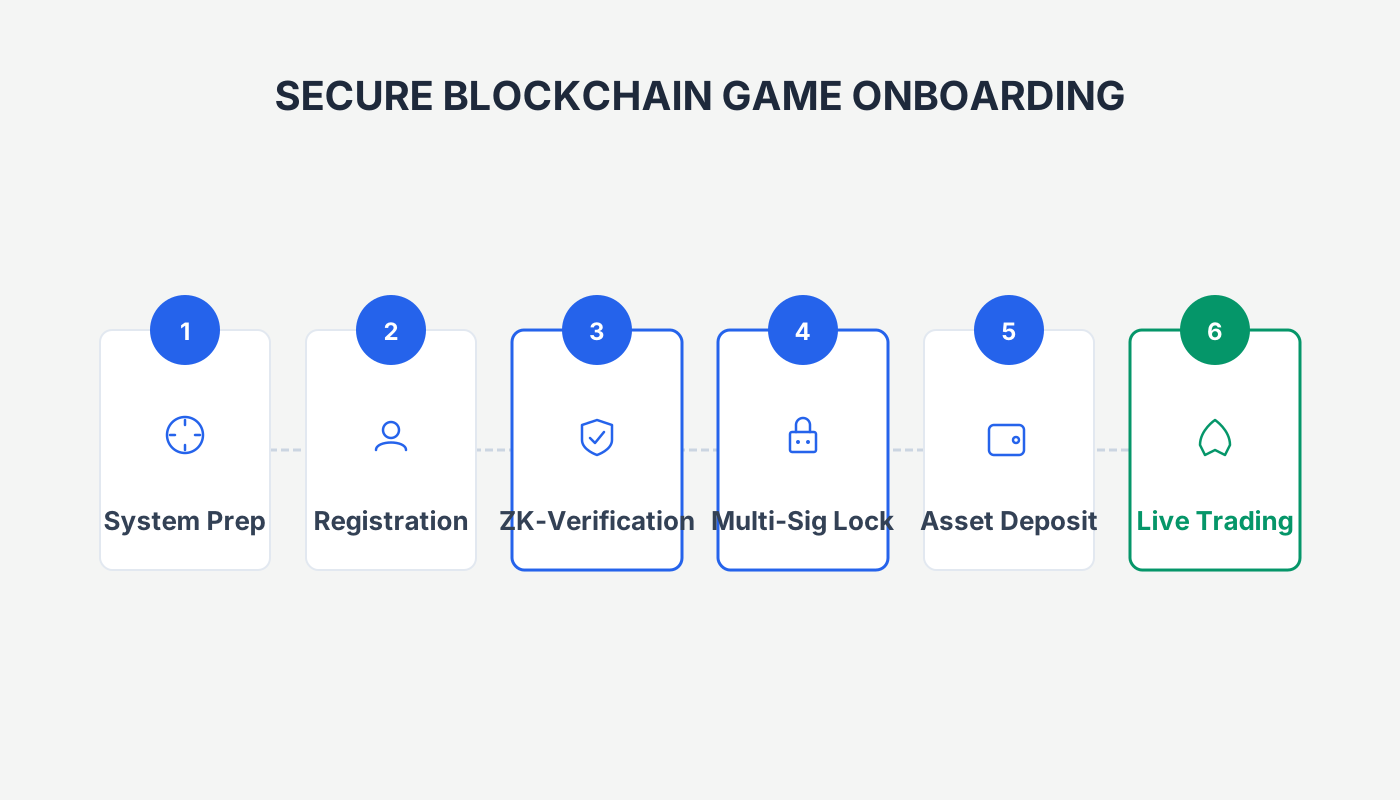
The Dark Side: Security Issues
Blockchain games face a variety of security challenges. While decentralization improves resistance to attacks, the actual security level depends on implementation details and user behavior. Below are the main risks identified by industry experts.
1. Insecure tokenized asset digital ownership
Tokenized assets are on‑chain representations of in‑game items, recorded as tokens that certify ownership. Control of these assets is tied to private keys; if a private key is lost or stolen, the asset is permanently unrecoverable. Common risks include players forgetting where they stored their keys and phishing attacks that expose private keys. Consequently, private‑key management has become a critical security concern.
2. Vulnerabilities in smart contracts
Smart contracts execute predefined conditions automatically, reducing human error and intermediary costs. Once deployed, contracts are costly to modify, and even minor code flaws can be exploited by attackers, leading to unpredictable outcomes. This risk is amplified when contracts interact with external data sources without proper safeguards, creating additional attack vectors. Contracts launched without thorough testing are a frequent source of insecurity.
3. Network risks of the underlying blockchain platform
Although blockchain’s multi‑node distribution lowers the probability of a single point of failure, many games still rely on centralized servers or publicly accessible nodes. These components become attractive targets for hackers. Typical attack methods include malware, account hijacking, and DDoS assaults, through which perpetrators can tamper with the game economy or directly steal assets.
4. Privacy and identity concerns
Players often provide personal data such as name, email, and payment information within the game. If this data is leaked, it can lead to identity theft and financial loss. The immutable and transparent nature of blockchain makes on‑chain data difficult to amend or delete; without proper anonymization, transaction records may indirectly reveal a player’s real identity. As tokenized assets acquire real‑world value, protecting identity information becomes especially crucial.
Strengthening the Security Net for Blockchain Games
Security enhancements should span technology, processes, and user education. The following strategies have been widely adopted across the industry:
- Multi‑signature wallets: Require several private keys to co‑sign a transaction, preventing asset theft if a single key is compromised.
- Regular security audits: Engage third‑party security firms to conduct comprehensive reviews of game code and smart contracts, identifying and fixing vulnerabilities promptly.
- Zero‑knowledge proofs: Leverage this cryptographic technique to verify transaction validity without exposing transaction details, thereby boosting privacy protection.
- Enhanced player verification: Implement KYC (Know‑Your‑Customer), two‑factor authentication, and similar measures to ensure accounts are genuine and reduce fraud risk.
- Player education and awareness: Use tutorials, announcements, and other channels to spread best practices for private‑key management, phishing avoidance, and general security hygiene.
- Off‑chain storage: Keep sensitive personal information off the blockchain, using the chain only for necessary transaction verification, which improves data confidentiality.
- Layered security controls: Deploy Web Application Firewalls (WAF), traffic‑analysis systems, and other multi‑layer defenses to monitor activity in real time and block malicious behavior.
- Regulatory compliance: Follow regional anti‑money‑laundering (AML) and KYC regulations to create a compliant operational environment.
Conclusion
The convergence of blockchain and gaming brings innovative opportunities to the industry, but it also introduces serious security challenges. By combining advanced technical measures, rigorous processes, and ongoing user education, developers can safeguard assets and privacy while delivering a reliable and smooth gaming experience.
*Original article written by David Balaban, Chinese version compiled by the Chain Marketplace team. English copyright belongs to the original author; for Chinese re‑publishing, please contact the translators.*
*Note for U.S. users: when dealing with fiat conversions, platforms such as Binance.US should be used instead of the global Binance service. Transactions involving fiat may be processed via USD, SEPA, or SWIFT, depending on the provider.*
Related Reading
- Binance Launchpool GUN: $100M Funding Boosts Gaming
- Top Cryptocurrency Investing Strategies for 2026
- Decentralized Networks: Security, Cost & Governance
💡 Register on Binance with referral code B2345 for the maximum trading fee discount. See Binance complete guide.



