
 Bitaigen Research
 Which Crypto Exchange Is Better – BTCC or Pionex? How to Choose?
As cryptocurrency continues to gain traction worldwide, selecting a crypto exchange that fits your needs is the first step toward entering the market.
BTCC is more suitable for users who require high compliance, low fees, and high leverage; Pionex is better for those who prefer automated bots and do not need fiat on‑ramps.
In this article we lay out the core differences between BTCC and Pionex – compliance, fee structure, leverage options, and bot functionality – so that investors with different requirements can quickly identify the platform that best matches their trading style. Keep scrolling for a detailed side‑by‑side comparison and selection guidance.
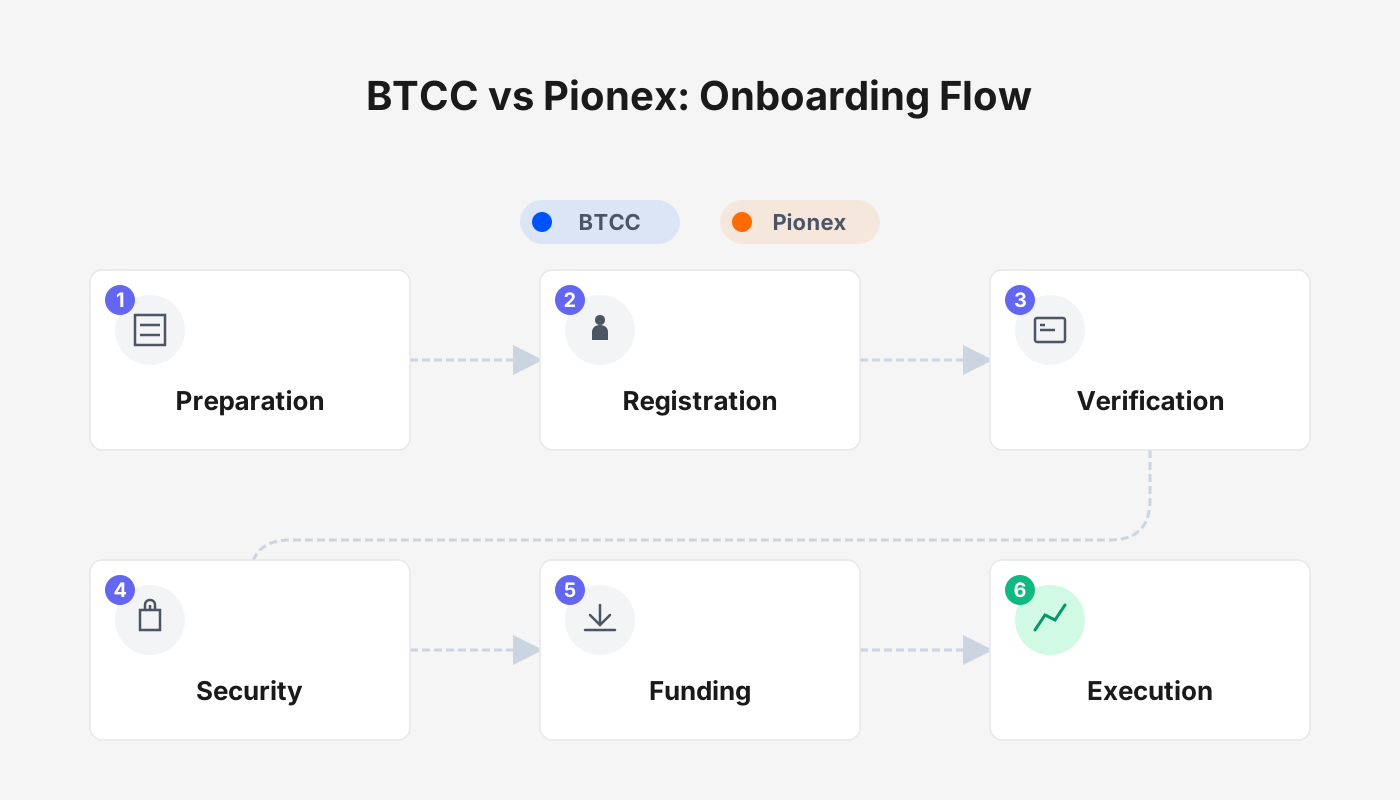
BTCC vs. Pionex Comparison
BTCC (founded in 2011) is one of the world’s oldest cryptocurrency exchanges. It holds financial licences in the United States, Canada, Europe and several other jurisdictions, and enforces strict KYC/AML procedures. Its product suite includes spot trading, perpetual contracts with up to 500× leverage, and copy‑trading. To date it has served more than 6 million users and processes over $20 billion in daily trading volume.
Pionex (founded in 2019) positions itself as a global‑focused exchange whose main selling point is a suite of 16 free trading bots. It offers spot, futures and staking services. Liquidity is aggregated from Binance, Huobi and other major venues, but its compliance disclosures are less comprehensive. Fiat support is limited to a handful of currencies such as EUR and GBP, and the geographic coverage is narrower.
1. Detailed Comparison Table
| Comparison Item | **BTCC** | **Pionex** |
|---|---|---|
| Supported cryptocurrencies | 300+ | 379 |
| Security measures | 2FA, cold storage, KYC, 14 years without a major security incident | 2FA, cold storage, past contract‑system vulnerability |
| Fee structure | Spot Maker/Taker 0.2% / 0.05%; Perpetual contracts 0.01%‑0.045% | Spot flat 0.05%; Perpetual contracts 0.05% |
| User‑friendliness | Clean interface, multi‑language tutorials | Feature‑rich UI, higher learning curve for bots |
| Service reach | 100+ countries/regions, 6 million registered users | 100+ countries, 100 k registered users |
| Customer support channels | Email + live chat, 24 h | Phone + live chat, 24 h |
| Advanced features | Spot, perpetual contracts, copy‑trading, paper trading, crypto loans | Spot, futures, staking, 16 free bots, PionexGPT AI assistant |
2. Core Functional Differences
(1) Trading Tools & Leverage
- BTCC: Offers perpetual contracts with up to 500× leverage on more than 300 major coins, plus a copy‑trading module for strategy replication.
- Pionex: Focuses on bots (grid, moving‑average, etc.) and provides up to 100× leverage on a more limited set of futures.
(2) Fee Structure
- BTCC: Spot Maker/Taker fees are 0.2% / 0.05%; perpetual contract fees range from 0.01%‑0.045%, making it one of the cheaper venues for high‑frequency traders.
- Pionex: Spot trades are charged a flat 0.05%, and perpetual contracts also cost 0.05%. While competitive, the overall cost is still higher than BTCC’s tiered rates.
(3) Security & Risk Management
- BTCC: Utilises cold wallets, two‑factor authentication (2FA) and real‑time monitoring. In 14 years of operation it has not suffered any major security breach.
- Pionex: Also provides 2FA and cold storage, but a past vulnerability in its contract system generated controversy, giving it a slightly lower security reputation.
(4) User Experience & Educational Resources
- BTCC: Minimalist UI, extensive multilingual support and systematic beginner tutorials.
- Pionex: Powerful bot suite, but the interface can feel dense and the platform lacks a comprehensive education hub.
3. Overall Recommendation & Selection Guidance
Users who should consider BTCC
- Investors who prioritize regulatory compliance and asset safety.
- Professional traders seeking ultra‑low fees and very high‑leverage contracts.
- Those who need fiat on‑ramps (USD, EUR, JPY, KRW, TWD) or diversified staking options.
Users who should consider Pionex
- Traders who favor automated strategies and do not rely on fiat deposits.
- Short‑term speculators looking to capture market swings with bots.
BTCC Exchange Overview
- Founded: June 2011
- Website: <https://www.btcc.com/>
- Blog: <https://www.btcc.com/blog/>
- Social media: <https://twitter.com/BTCCexchange>
- Maker fee: 0.01%‑0.045%
- Taker fee: 0.01%‑0.045%
- 24 h perpetual contract volume: $21.6 B
- Perpetual contract pairs: 362
- 24 h spot volume: $2.6 B (not updated)
- Spot pairs: 248 (not updated)
- Supported fiat: USD, KRW, JPY, TWD (U.S. residents should use Binance.US for any Binance‑related services)
- Last updated: 2025‑03‑20 07:16:01
BTCC’s core competitive edges are security, low fees, and high leverage. It offers spot trading, copy‑trading, paper trading, as well as USDT‑denominated and coin‑denominated perpetual contracts. The platform can handle up to 5,000 BTC of liquidity per day, ensuring rapid execution even during volatile market moves.
In addition, BTCC provides tokenised contracts for stocks, commodities and precious metals (e.g., Apple, Meta, Gold, Silver), delivering a “one‑stop” asset‑allocation experience. For Taiwanese users, both the website and mobile app are fully available in Traditional Chinese, support local bank transfers in TWD, and the support team operates 24 h in multiple languages.
BTCC Pros & Cons
Pros
- Industry‑leading security track record with zero major incidents.
- Multiple fiat deposit channels, including TWD.
- Competitive futures fee schedule.
- Over 300 crypto assets supported.
- Rich educational materials and responsive customer service.
- Broad product lineup: spot, copy‑trading, contracts, tokenised equities/gold, etc.
Cons
- No built‑in automated trading bots.
Pionex Exchange Overview
- Founded: June 2019
- Website: <https://www.pionex.com/>
- Blog: <https://www.pionex.com/blog/>
- Social media: <https://twitter.com/pionex_com>
- Maker fee: 0.02%
- Taker fee: 0.05%
- 24 h perpetual contract volume: $16.0 B
- Perpetual contract pairs: 493
- 24 h spot volume: $6.6 B
- Spot pairs: 287
- Supported fiat: USD, EUR, TWD, AUD, HKD, MYR (U.S. users should use Binance.US for any Binance‑related services)
- Last updated: 2025‑11‑19 19:28:01
Pionex’s hallmark is its trading bots. It ships 16 free, cloud‑based bots (grid, martingale, trend‑following, etc.) that let users run strategies without constantly monitoring the market. Liquidity is sourced from Binance, Huobi and other top exchanges, keeping trading costs low.
Beyond bots, Pionex offers institutional‑grade structured products, wealth‑management services, and the $10 M Brave Fund, all aimed at expanding its educational and bot‑ecosystem initiatives.
Pionex Pros & Cons
Pros
- Sixteen free bots lower the entry barrier for automated trading.
- Deep liquidity via Binance, Huobi, etc.
- Strong security (2FA, cold storage, FinCEN MSB licence).
- Supports spot, futures, crypto loans, staking, and the AI‑driven PionexGPT assistant.
Cons
- No support for TWD fiat deposits.
- Feature‑rich UI can be daunting for beginners; educational resources are less extensive than BTCC’s.
BTCC vs. Pionex – Evaluation Summary
In an environment of tightening regulation, BTCC leverages 14 years of industry experience, a spotless security record, and licences across the United States, Canada, Europe and other regions, delivering higher stability and reliability. Its advantages include:
- Deep liquidity & minimal slippage – ideal for large‑scale, high‑frequency leveraged contracts.
- Complete ecosystem – spot, perpetual contracts, fiat on‑ramps, tokenised assets, and more.
- Competitive rates – lower transaction costs boost net profitability.
Pionex, on the other hand, concentrates on the automation niche. Its 16 free bots have built a solid reputation among users who want to execute strategies without manual oversight. Typical use‑cases are:
- Traders needing rapid deployment of automated strategies and who are comfortable monitoring positions only occasionally.
- Users whose primary holdings are major coins such as ETH or USDT and who do not rely heavily on fiat gateways.
Overall, if you value compliance, security, ultra‑low fees and high‑leverage contracts, BTCC is the more appropriate choice. If you prefer a platform that equips you with free bots for short‑term, hands‑off trading and you have limited fiat‑deposit requirements, Pionex offers a more attractive toolbox.
Frequently Asked Questions
Q: Is BTCC safe?
A: Since its launch in 2011, BTCC has not experienced any major security breach affecting the platform’s backend or user accounts. It enforces mandatory KYC/AML and provides 2FA and other multi‑layer protections.
Q: Is BTCC legal?
A: BTCC holds financial licences in the United States, Canada, Europe and several other jurisdictions, operating in compliance with local regulatory frameworks.
Q: Is Pionex safe?
A: Pionex aggregates liquidity from Binance and Huobi, maintains high‑level security measures, and holds a FinCEN‑issued Money Services Business (MSB) licence. It supports 2FA, Google Authenticator and cold‑storage solutions.
Q: How many trading bots does Pionex offer?
A: The platform provides 16 free bots, all hosted in the cloud, so users do not need to keep a local device online.
Q: Can Taiwanese investors trade on BTCC?
A: Yes. BTCC accepts TWD bank transfers for deposits and withdrawals, offers a fully Traditional‑Chinese interface on both web and mobile, and provides a streamlined account‑opening process.
Note: Crypto gains may be subject to taxation in your jurisdiction. Always consult a tax professional to understand your local obligations.
Bottom Line
- BTCC: Best suited for professional or long‑term investors who demand high regulatory compliance, low fees, deep liquidity and high‑leverage contracts.
- Pionex: Ideal for short‑term traders who want to leverage free automation tools and have minimal fiat‑deposit needs.
Both platforms have distinct strengths; select the one that aligns with your compliance requirements, trading strategy and technical preferences. For deeper analysis of BTCC vs. Pionex, follow Bitaigen (比特根) and its related topic articles.
Related Reading
- Safest Ways to Buy USDT: Private Key, Fees & Risks
- BingX vs Binance vs Kraken: Best Crypto Exchange 2026 Review
💡 Register on Binance with referral code B2345 for the maximum trading fee discount. See Binance complete guide.



