
 Bitaigen Research
 We have conducted an in‑depth comparison of the world’s leading no‑KYC cryptocurrency exchanges across dimensions such as trust score, leverage multiplier, fee structure, and we have placed special emphasis on each platform’s daily maximum withdrawal limit and distinctive features. This article will help you quickly identify which platforms maintain the lowest compliance barriers while still offering ample liquidity and low‑cost trading.
Exchanges with the Highest No‑KYC Daily Withdrawal Limits
In 2026, the exchanges that offer the highest no‑KYC withdrawal limits are BloFin, MEXC, CoinEx, KCEX, BTCC, and CoinCatch, providing daily caps of 20,000 USDT, 1,000 USDT (≈30 BTC), 10,000 USDT, 30 BTC, 10,000 USDT, and 50,000 USDT respectively.
| Exchange | Trust Score | Max Leverage | Trading Fees (Maker / Taker) | **Daily No‑KYC Withdrawal Limit** | Notable Features |
|---|---|---|---|---|---|
| BloFin | 4.9/5 | 150x | 0.02 % / 0.06 % | 20,000 USDT | Whale‑level liquidity |
| MEXC | 4.8/5 | 500x | 0 % / 0.02 % | 1,000 USDT (≈30 BTC) | Zero‑fee spot, priority for alt‑coins |
| CoinEx | 4.8/5 | 100x | 0.1 % / 0.1 % | 10,000 USDT (30‑day rolling 50,000 USDT) | Simple no‑KYC sign‑up |
| KCEX | 4.7/5 | 200x | 0 % / 0.02 % | Not publicly disclosed (30 BTC after basic verification) | Low‑threshold KYC |
| BTCC | 4.7/5 | 225x | 0.045 % (parity) | 10,000 USDT | 13‑year performance record |
| CoinCatch | 4.6/5 | 125x | 0.02 % / 0.06 % | 50,000 USDT (monthly cap 200,000 USDT) | Advanced copy‑trading |
1. BloFin
BloFin provides a daily 20,000 USDT no‑KYC withdrawal allowance at the basic (Lv 0) tier, making it suitable for privacy‑focused users.
- Verification Levels: L1 raises the limit to 1,000,000 USDT, L2 to 2,000,000 USDT.
- Pros: Futures and leveraged products can be used without any KYC; withdrawal limits are clearly published.
- Cons: The USDT‑based cap is less convenient for large Bitcoin transfers; high‑value withdrawals require careful verification of network fees and destination addresses.

2. MEXC
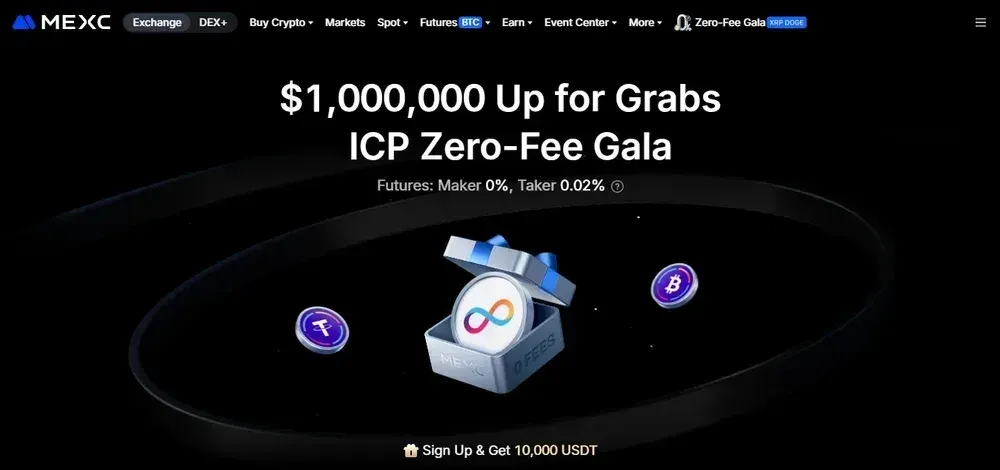
MEXC offers daily 1,000 USDT (≈30 BTC) no‑KYC withdrawal limits for high‑liquidity traders and supports zero‑fee spot trading.
- Pros: Spot trading is fee‑free for all pairs; early‑stage alt‑coins are readily accessible.
- Cons: The interface packs many features, which can feel cluttered; some jurisdictions face access restrictions.
3. CoinEx
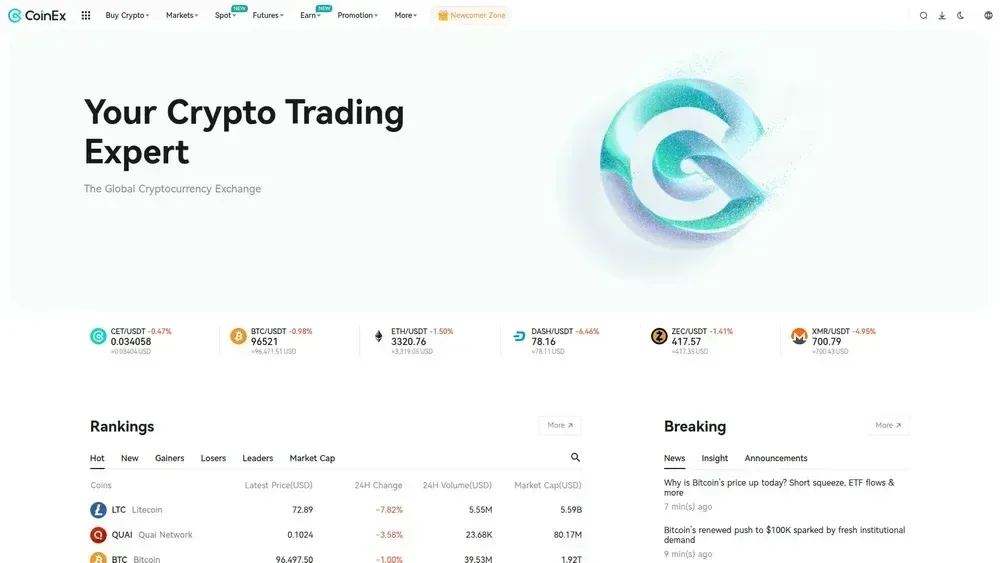
CoinEx sets a daily 10,000 USDT and 30‑day rolling 50,000 USDT withdrawal limit for unverified accounts. After completing primary verification, the limit jumps to 1,000,000 USDT per day and the 30‑day cap is removed.
- Pros: The tiered limit structure is transparent and works well for planned, recurring withdrawals.
- Cons: The no‑KYC ceiling is lower than that of Bitcoin‑focused rivals; fees vary with asset type and network conditions, requiring per‑transaction checks.
4. KCEX
KCEX adopts a lightweight KYC approach: after completing basic verification, users can withdraw up to 30 BTC per day. The platform highlights fee transparency, offering free deposits and potentially free internal transfers.
- Pros: High withdrawal limit after minimal verification; deposits are free; withdrawal workflow is straightforward.
- Cons: The platform does not disclose limits for completely unverified accounts; fees are subject to network‑level fluctuations.

5. BTCC
BTCC caps unverified accounts at daily 10,000 USDT. After identity verification, the limit rises to 100,000 USDT, and facial verification pushes it to 1,000,000 USDT.
- Pros: Multi‑layer verification progressively raises limits; security alerts and fee disclosure are prominent.
- Cons: The no‑KYC allowance is relatively modest; high‑risk activity may trigger additional review and delay withdrawals.

6. CoinCatch
CoinCatch offers the industry’s highest non‑KYC limits: daily 50,000 USDT and monthly 200,000 USDT. However, KYC is mandatory for deposits and trading; non‑KYC users can only employ the platform as a withdrawal conduit.
- Pros: Substantial non‑KYC withdrawal ceiling; futures tools enable rapid exit strategies.
- Cons: Non‑KYC users cannot access P2P features; the monthly cap restricts high‑frequency withdrawals.

How to Choose a No‑KYC Cryptocurrency Exchange
When selecting an anonymous trading platform, you must balance withdrawal limits, security, and regulatory risk.
Step 1: Verify the Daily Withdrawal Cap
- Limit Requirement: Ensure the platform’s unverified tier offers at least 10,000 USDT per day.
- Asset Coverage: Confirm that the limit applies to the specific coin you intend to move (e.g., BTC, USDT).
Step 2: Assess Security Protocols
- Security Record: Review whether the exchange has experienced any major security incidents.
- Cold Storage: Check that a substantial portion of assets is held in offline wallets.
- Two‑Factor Authentication: Verify that 2FA or equivalent safeguards are available.
Step 3: Compare Fee Structures
- Trading Fees: Compare maker fees against industry averages.
- Withdrawal Fees: Pay attention to fixed network fees, especially for smaller transfers.
Step 4: Test Liquidity and Execution Speed
- Order‑Book Depth: Monitor spread on major pairs during periods of volatility.
- Execution Latency: Ensure there is no significant slippage or delay.
Step 5: Review Regional Availability and VPN Policy
- Jurisdiction Restrictions: Read the terms of service to confirm your country is supported.
- VPN Compatibility: Verify that the platform permits access via encrypted tunnels.
Regulatory Landscape for No‑KYC Exchanges
- The FATF Recommendation 16 (“Travel Rule”) mandates that, from 2026 onward, virtual‑asset transfers exceeding $1,000 must collect and share originator information.
- The EU’s Markets in Crypto‑Assets Regulation (MiCA) imposes transparency duties on CASPs and curtails large anonymous transfers.
- FinCEN in the United States, operating under the Bank Secrecy Act, regulates digital‑asset intermediaries; recent legislation such as the Crypto‑Asset Tax Transparency Act and the Clear Act further tighten reporting obligations.
- Global regulatory convergence aims to apply uniform AML/CFT standards, limiting no‑KYC allowances to low‑risk, small‑value peer‑to‑peer movements.
Note for U.S. users: If you reside in the United States, you must use Binance.US rather than the global Binance platform to remain compliant with local regulations.
Tax reminder: Cryptocurrency gains may be taxable in your jurisdiction. Consult a tax professional to understand reporting obligations under local law.
How to Acquire Cryptocurrency Without KYC
Method A: Decentralized Exchanges (DEX)
- Set Up a Non‑Custodial Wallet – Install a reputable wallet app.
- Fund the Wallet – Transfer any existing crypto to the new address.
- Connect to a DEX – Examples include Uniswap (Ethereum) or Jupiter (Solana).
- Execute the Swap – Choose the desired pair and confirm the on‑chain transaction.

Method B: Peer‑to‑Peer (P2P) Platforms
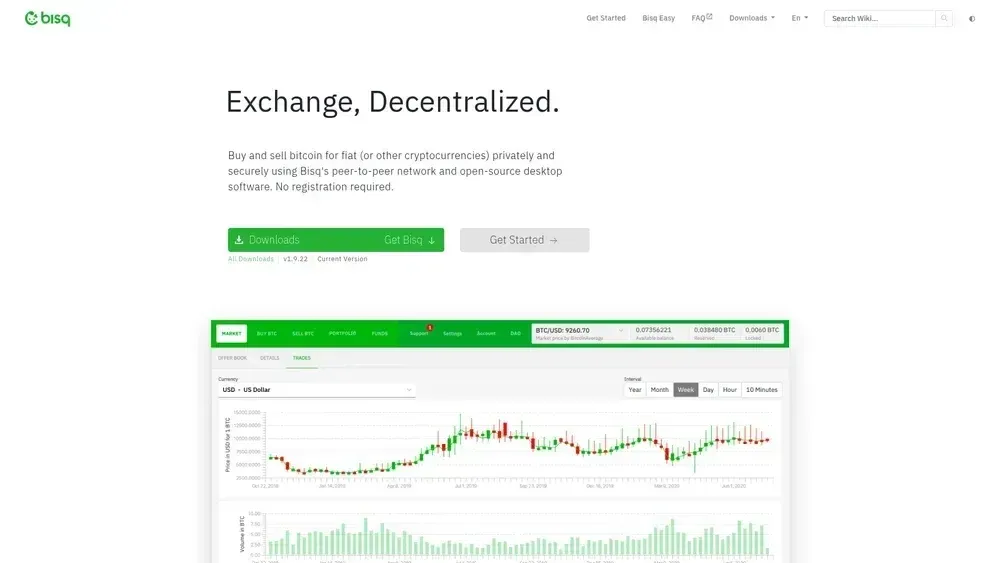
- Pick a Platform – Recommended options are Bisq (high security) or Hodl Hodl (escrow protection).
- Filter for No‑Verification Listings – Browse offers that do not require identity verification.
- Initiate the Trade – Lock funds in the platform’s escrow.
- Pay & Release – After completing the offline payment, the escrow releases the crypto to you.
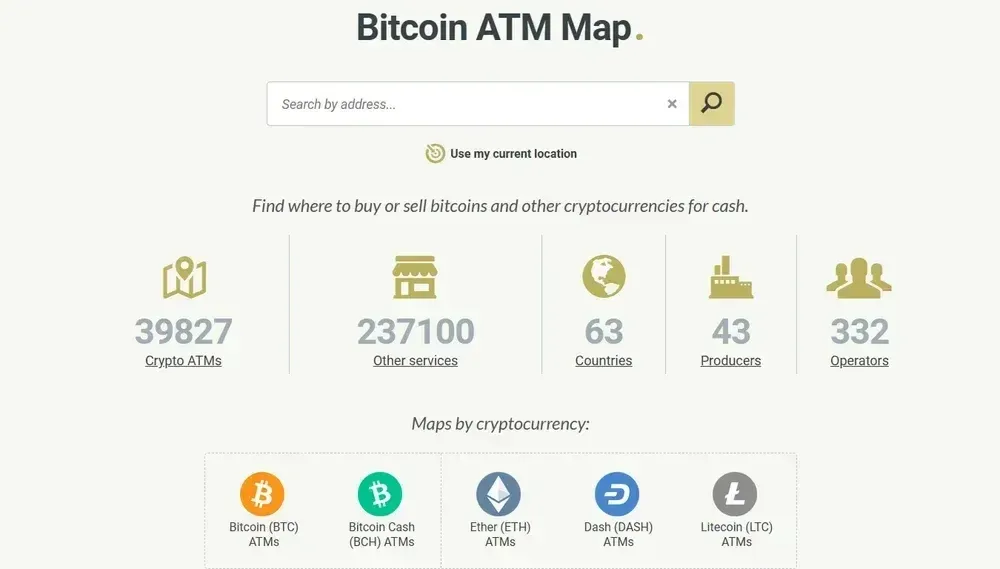
Method C: Bitcoin ATM (BTM)
- Locate a Machine – Use Coin ATM Radar to find a nearby Bitcoin ATM.
- Scan Your Receiving Address – Show the QR code from your mobile wallet to the ATM.
- Insert Cash – Complete the purchase and wait for network confirmations.
- Receive the Coins – The purchased crypto appears in your wallet after confirmation.
Pros and Cons of No‑KYC Exchanges
| Advantages | Disadvantages |
|---|---|
| **Data Privacy** – Keeps personal information out of centralized databases. | **Limited Legal Recourse** – If funds are stolen or the platform shuts down, users have few protections. |
| **Instant Access** – No waiting period for identity verification. | **Regulatory Shifts** – Exchanges may be forced to implement KYC as laws evolve. |
| **Global Inclusivity** – Users without bank accounts can still participate in the crypto market. | **Withdrawal Floors** – Unverified accounts typically have lower daily caps than fully verified ones. |
Final Thoughts
The 2026 market demonstrates that, provided you select platforms that prioritize user privacy over data collection, financial anonymity remains viable. Distributing assets across high‑limit venues such as BloFin and MEXC, while retaining control through self‑custody wallets, can preserve liquidity while mitigating risk.
This article constitutes the complete analysis of “Which Cryptocurrency Exchanges Operate Without KYC? 2026’s Highest No‑KYC Withdrawal Limits”. For further updates, follow Bitaigen (比特根) and its forthcoming publications.
Related Reading
- Top 10 High‑Volatility Cryptocurrencies Ideal for Day‑Trading
- Cryptocurrency Trading Price Gaps: Why Coins Vary Across Exchanges
- Crypto Arbitrage: Principles, Strategies & Risk Tips
💡 Register on Binance with referral code B2345 for the maximum trading fee discount. See Binance complete guide.



