
 Bitaigen Research
 Perpetual contract DEX has shown strong recent performance, Perp DEX is a decentralized perpetual‑contract trading platform where users self‑custody assets on‑chain and use smart contracts to enable leveraged trading, funding‑rate settlement, and automatic liquidation.
Key Points
- Perp DEX: a decentralized exchange that trades on‑chain perpetual futures contracts.
- CEX and Perp DEX sit at opposite ends of the trading‑model spectrum, each with its own strengths and limitations.
- The biggest selling point is self‑custody – assets remain in the user’s wallet at all times.
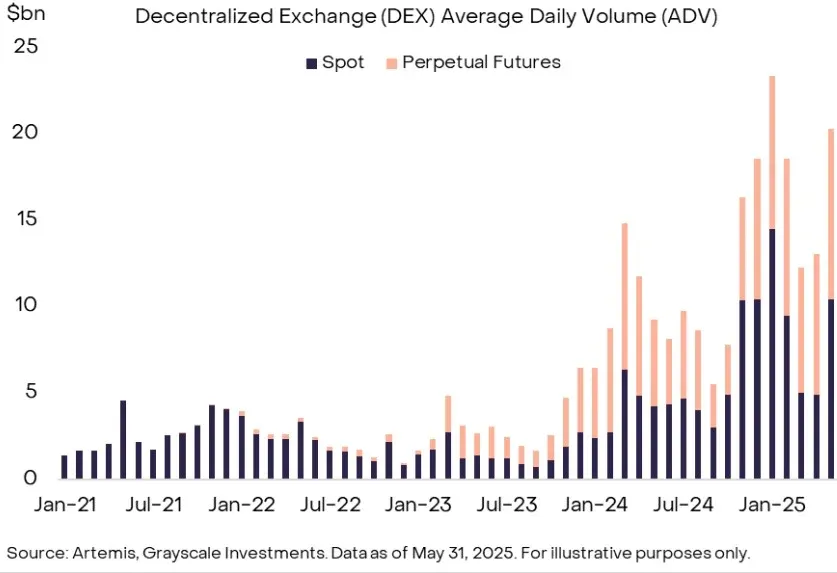
- In Q2 2025, total DEX perpetual‑contract volume reached roughly $898 billion, an all‑time high.
In this article we systematically outline the core mechanisms of Perp DEX, explain how decentralized perpetual contracts achieve leverage, funding‑rate settlement, and automatic liquidation on‑chain, and compare the advantages and constraints of centralized exchanges. By deeply dissecting self‑custody and oracle price sources, we help readers assess platform risk and opportunity; the discussion continues in the sections that follow.
What is Perp DEX
Perp DEX is a type of decentralized exchange where users can trade perpetual contracts that have no expiration date. The contract’s design allows positions to be held indefinitely, but participants must monitor the funding rate.
On‑chain, smart contracts manage and settle all trades, guaranteeing transparency and automation. To obtain accurate spot prices, the platform relies on oracles or indexed price feeds. Users’ assets stay in their own wallets until a trade is executed or a liquidation occurs.
Compared with perpetual futures offered by centralized exchanges (CEX), Perp DEX aims to reduce counter‑party risk and custodial risk. Unlike ordinary DEXs that only support spot trading, Perp DEX focuses on leveraged derivatives.
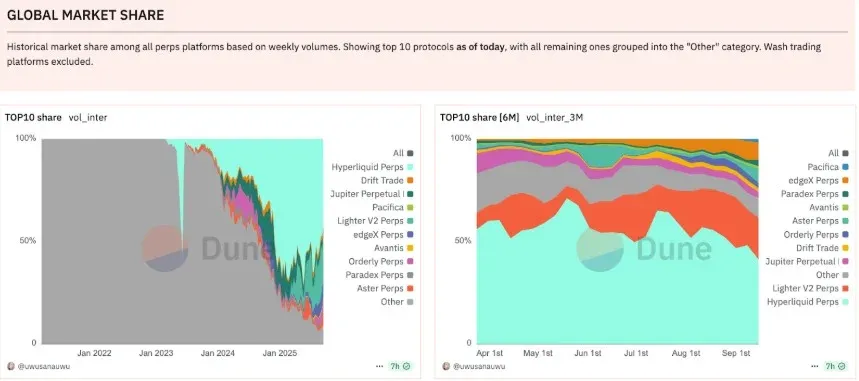
Source: Dune
Modern Perp DEX implementations use a variety of technical architectures:
| Architecture Type | Description | Representative Projects |
|---|---|---|
| Order‑book model (on‑chain/off‑chain) | Orders are recorded on‑chain or matched off‑chain and settled on‑chain | Hyperliquid |
| Automated Market Maker (**AMM**) / Virtual AMM (**vAMM**) | Liquidity pools provide depth; price is determined by the pool’s algorithm | GMX, GMX $16.07 |
How Perp DEX Works
1. Leverage Mechanism
Traders supply a supported asset as margin to open a position and can select leverage levels such as 10×, 20×, etc. If the position’s value falls below the maintenance‑margin threshold, the protocol automatically liquidates the position.
2. Funding‑Rate Mechanism
Because perpetual contracts never expire, the platform introduces a funding rate to keep the contract price aligned with the spot price.
- Contract price > spot price → longs pay shorts.
- Contract price < spot price → shorts pay longs.
The rate is settled every hour or even more frequently, based on the deviation between the contract price and the oracle price, and may include an interest component.
3. Matching and Liquidity Provision
Perp DEX matching can be categorized into two main approaches:
- AMM / vAMM: Liquidity is concentrated in a shared pool, and the pool itself acts as the counter‑party. This works well for low‑liquidity (“long‑tail”) tokens, but shallow pools can cause price slippage and impermanent loss.
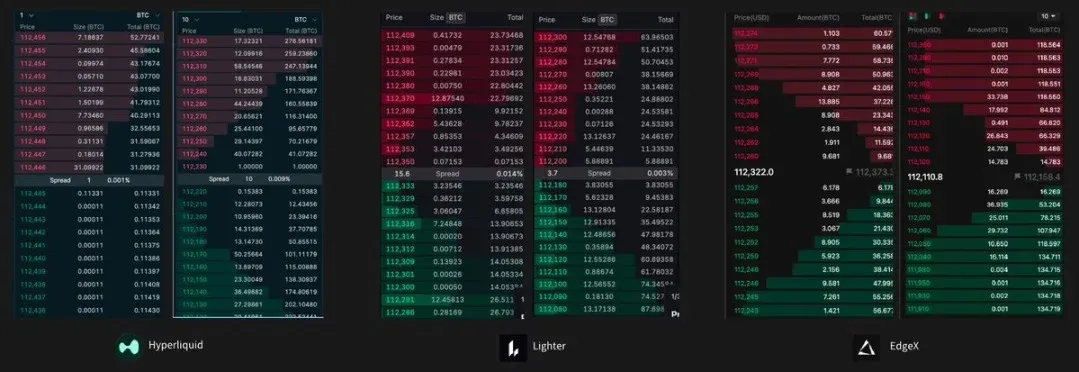
- Order‑book mode: Traders place orders themselves; the system matches them on‑chain or off‑chain. Price discovery is more responsive and large trades experience lower slippage, but achieving full decentralization requires additional technical effort.
4. Liquidation and Risk Management
Liquidation logic is embedded in the smart contracts:
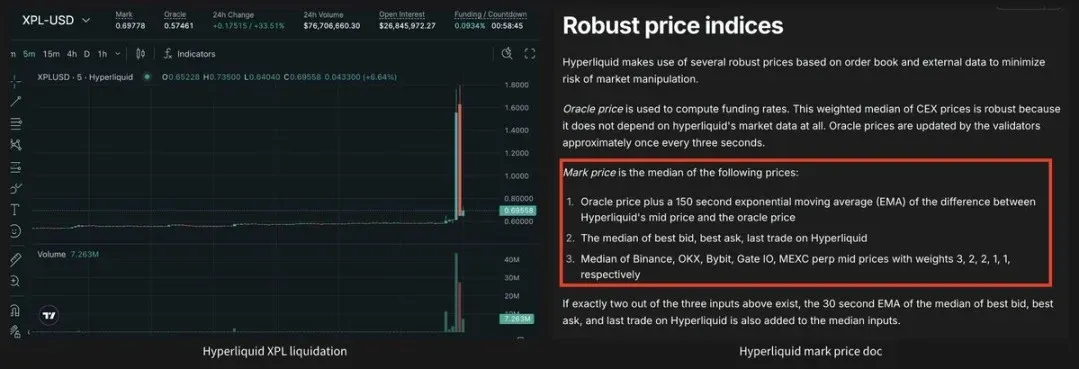
- Oracles supply real‑time price data.
- An insurance fund together with the maintenance‑margin threshold helps guard against extreme volatility.
- All key metrics (open interest, historic funding rates, margin status) are queryable on‑chain, enhancing transparency.
Perp DEX vs. CEX Comparison
| Dimension | **Perp DEX** | **CEX** |
|---|---|---|
| Asset control | Users hold assets themselves, non‑custodial | Assets custodial to the platform |
| Liquidity depth | Limited by pool or order‑book size | Generally deeper |
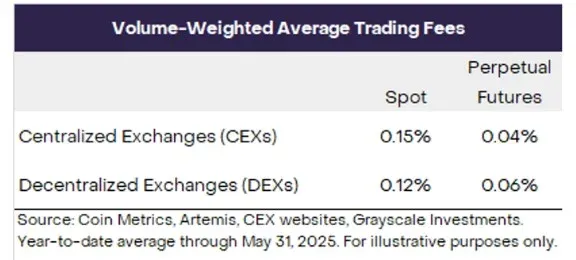
| Fee structure | Gas fees + trading fees, chain‑dependent | Low trading fees, no gas fees |
| Trading speed | Dependent on block confirmation times | Millisecond‑level matching |
| Transparency | On‑chain auditability | Off‑chain, not auditable |
| User experience | UI is basic; fiat on‑ramps often missing (US residents should use Binance.US for fiat, as the global Binance platform is unavailable to them) | Polished UI, fiat gateways available |
| Regulatory risk | Operates in a regulatory gray area | Subject to strict local regulations |
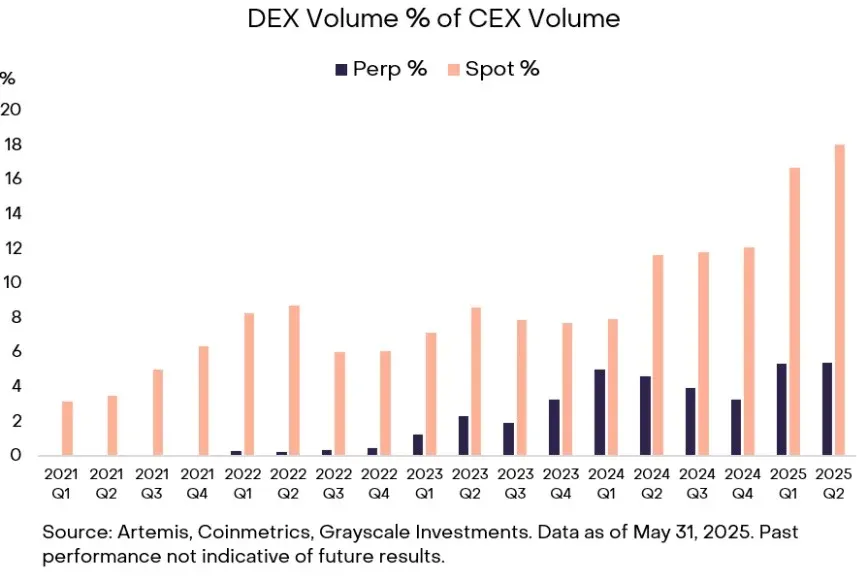
In a CEX, users must deposit funds with the platform and trust its order‑book and risk‑management systems; Perp DEX keeps assets in the user’s wallet at all times, but the user must also bear the contract‑specific risks.
Disadvantages of Perp DEX
- Gas fees can be high, especially during network congestion.
- Fully on‑chain operations introduce latency; large orders may suffer noticeable slippage.
- Customer support and fiat‑integration features are often underdeveloped.
- Regulatory uncertainty: decentralized derivatives remain on the regulatory frontier, and policy shifts could affect availability.
Advantages of Perp DEX
- Self‑custody: Collateral stays in the user’s wallet, reducing exposure to hacks or platform insolvency.
- Full‑chain transparency: Funding rates, margin levels, and liquidation records are publicly visible and can be audited in real time.
- 24/7 global access: Anyone with internet connectivity and a node can trade.
- Predictable costs: In many cases the fee structure is clearer than that of some CEXs.
- Token incentives: Platforms often distribute native tokens that grant fee discounts or reward allocations, encouraging participation.
Q2 2025 Perp DEX Trading‑Volume Overview
- Total volume: Approximately $898 billion (all‑time high).
- Hyperliquid alone contributed about 73 %, with monthly volume near $319 billion, giving it a market share between 65 %–80 %.
- The same period saw TVL reach $2.7 billion, ahead of most competitors.
These figures suggest that a technically mature, well‑incentivized and liquid Perp DEX has strong expansion potential.
Limitations and Risks of Perp DEX
- Insufficient liquidity: New platforms can experience high slippage on large trades.
- Volatile gas costs: Network congestion can cause fees to spike dramatically.
- Funding‑rate volatility: During turbulent market conditions, rates may swing quickly, leading to abrupt P&L changes.
- Smart‑contract risk: Bugs, oracle failures, or an underfunded insurance pool could result in loss of funds.
- Regulatory risk: Derivatives are heavily regulated in many jurisdictions; policy changes may force platforms to shut down or restrict features.
- Operational complexity: Managing leverage, monitoring funding rates, and preventing liquidation require a high level of expertise.
Token Economics (Example: Hyperliquid)
- Native token HYPE: Used for staking, governance, and fee discounts.
- Fee allocation: Roughly 93 % of trading fees are used to buy and burn HYPE, reducing supply; the remaining 7 % is injected into the market‑making liquidity pool (HLP) to support deep liquidity.
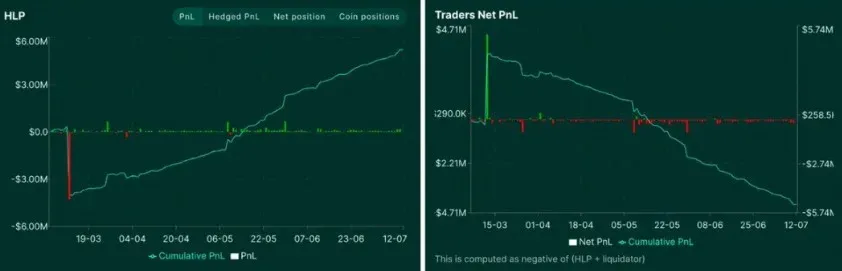
- Liquidity Provider Pool (HLP): Users deposit USDC and share profits and liquidation rewards, yielding an annualized return of about 6.7 %; withdrawals complete after a 4‑day waiting period.
- TVL: As of September 2025, Hyperliquid’s TVL stood at approximately $2.7 billion.
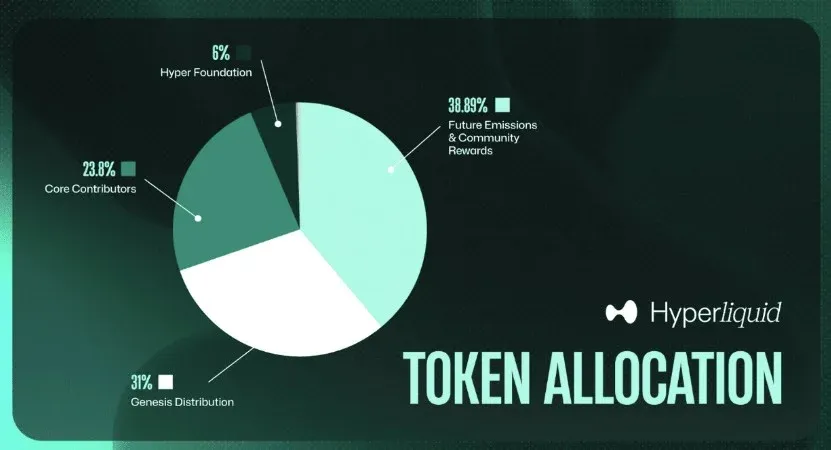
HYPE Token Distribution
The token model is designed to incentivize liquidity providers and align protocol revenue with user interests. However, token prices can be highly volatile, and if incentives disproportionately favor large holders, smaller participants may find it difficult to obtain equitable returns.
Frequently Asked Questions
What is a Perp DEX?
A Perp DEX is a decentralized platform that offers perpetual futures contracts with no expiry; trades are settled via smart contracts.
How does a Perp DEX make money?
The platform charges trading fees and collects funding‑rate payments; some also use native‑token buy‑backs or burns to recycle fees.
Which Perp DEX was the largest in 2025?
Hyperliquid dominated the market, handling over 70 % of perpetual‑contract trading and locking roughly $2.7 billion in value.
What risks are associated with trading on a Perp DEX?
Leverage can trigger rapid liquidation, funding rates may swing, liquidity can be thin, contracts or oracles may contain bugs, and regulatory shifts can impact availability.
Is a Perp DEX safer than a CEX?
Safety depends on risk tolerance: Perp DEX lets users keep assets in their own wallets, avoiding custodial risk, but smart‑contract risk remains. CEXs provide more mature risk‑management frameworks but require trust in the platform.
Is KYC required?
Most Perp DEXs do not require KYC—only a wallet connection—but local regulatory requirements may differ.
What are the top‑5 Perp DEXs?
Hyperliquid, Lighter, KiloEX, Aster, and Paradex.
---
This concludes the exploration of what a Perp DEX perpetual‑contract exchange is and how it works. For more details, search for prior Bitaigen (Bitroot) articles or continue reading the related links below. We appreciate your continued interest and support!
*Please note that cryptocurrency gains may be taxable in your jurisdiction; consult a tax professional for advice.*
Related Reading
- OKX Perpetual Contracts: Long, Short & Liquidation Basics
- Transfer HKD to Perpetual Futures via Hashkey & Backpack
- Hyperliquid: Decentralized Exchange with On‑Chain Order Book & Perps
💡 Register on Binance with referral code B2345 for the maximum trading fee discount. See Binance complete guide.



