
 Bitaigen Research
 U.S. Stock Tokenization refers to the process of converting shares of publicly listed U.S. companies into digital tokens through blockchain technology.
A tokenized stock maps a real U.S. equity to a blockchain token on a 1:1 basis, allowing holders to purchase it on an exchange and trade 24/7.
Below is a detailed introduction to the concept of tokenized stocks, their operating principles, and step‑by‑step purchase instructions on mainstream platforms.
In this article we systematically outline the core concepts and mechanisms of U.S. stock tokenization, and demonstrate the buying process on Binance and Gate.io. The guide helps investors quickly access 24/7 trading, highlights key considerations, and later chapters will dissect the regulatory framework and potential risks—worth a thorough read from start to finish.
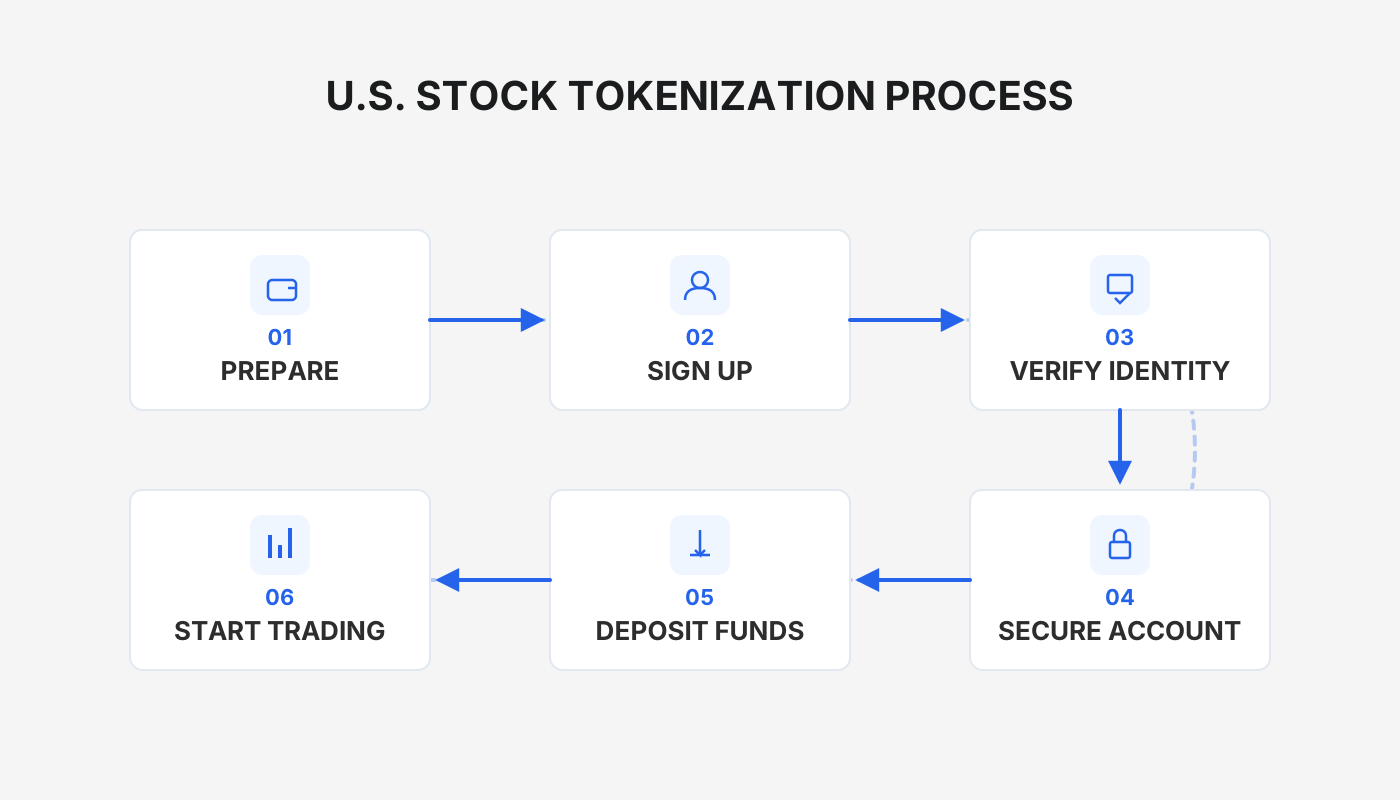
What Is U.S. Stock Tokenization and Tokenized Stocks?
U.S. stock tokenization simply means converting traditional American equities into digital tokens via blockchain technology. Each tokenized stock represents ownership of a real share, but exists on‑chain as a cryptocurrency‑style asset.
How Tokenized Stocks Work
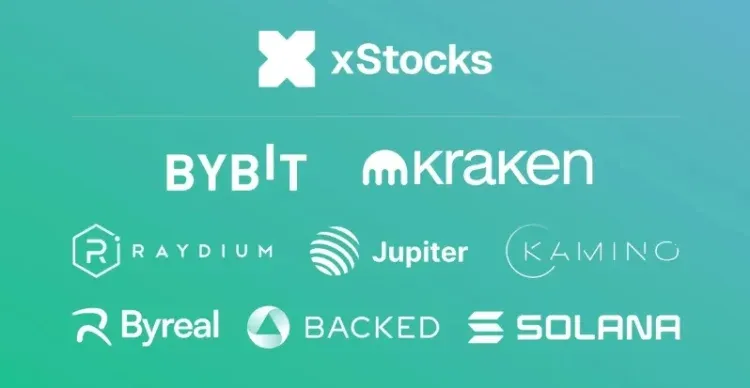
xStocks, launched by Backed on the evening of June 30, provides a variety of tokenized stocks and ETFs. According to Backed’s announcement, more than 60 tokenized stocks are now tradable on Bybit, Kraken, and several Solana‑based decentralized finance (DeFi) protocols.
The operating model of xStocks is as follows:
- Purchase of the underlying shares: A regulated custodian buys the actual U.S. equities with fiat money.
- 1:1 token minting: Corresponding tokens are minted on the blockchain at a 1:1 ratio to the shares held.
- On‑chain trading: Users can buy and sell these tokenized stocks on various platforms.
- Asset backing: Every token is fully collateralized by the underlying real‑world share.
For example, holding one TSLAx (Tesla token) is equivalent to indirectly holding one share of Tesla, with ownership represented as a blockchain token.
Tokenized Stocks vs. Traditional Stocks
| Comparison Item | Traditional Stock | Tokenized Stock |
|---|---|---|
| Trading Hours | 9:30 AM‑4:00 PM ET | 24/7, all day, every day |
| Minimum Purchase Unit | 1 share | As low as 0.01 share |
| Settlement Time | T+2 | Instant settlement |
| Account Opening Barrier | Requires an overseas brokerage account | No complex overseas account needed |
| Trading Geography | Subject to regional restrictions | Globally tradable |
| Shareholder Rights | Voting rights and dividends | No voting rights; dividend treatment varies by platform |
Risk Warning: Tokenized stocks generally have lower liquidity, which can lead to wider bid‑ask spreads; less‑popular symbols may experience higher slippage. Custodians and smart contracts also carry inherent risks. Crypto gains may be taxable in your local jurisdiction, so consult a tax professional.
How to Trade U.S. Tokenized Stocks: Examples Using Bybit, Gate, Jupiter, and OKX Web3 Wallet
Binance Trading Guide
Binance is the world’s largest cryptocurrency exchange. Users can acquire U.S. tokenized stocks via the Binance Wallet.
- Visit Binance, register an account and complete KYC verification (recommended).
*Note for U.S. residents: you must use Binance.US rather than the global Binance platform.*
- Deposit USDT into your Binance account (USDT can be transferred via SEPA, SWIFT, or other fiat‑to‑crypto bridges).
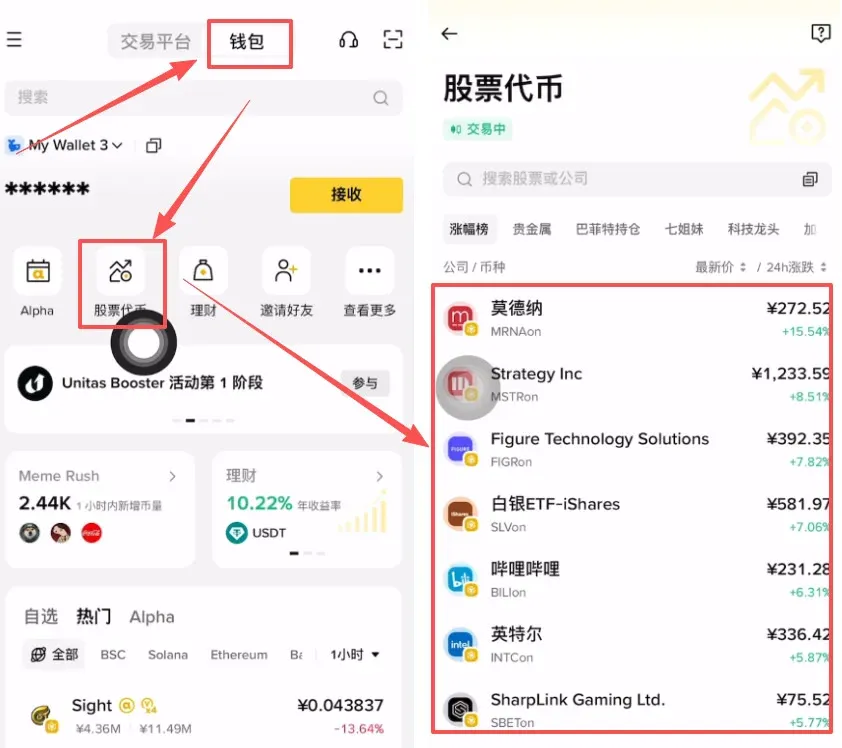
- Enable the Binance Wallet and transfer the funds into it.
- In the wallet interface, search for the stock token and open the trading page.
Gate.io Trading Guide
- Register a Gate.io account and finish KYC.
- Deposit USDT into your spot wallet.
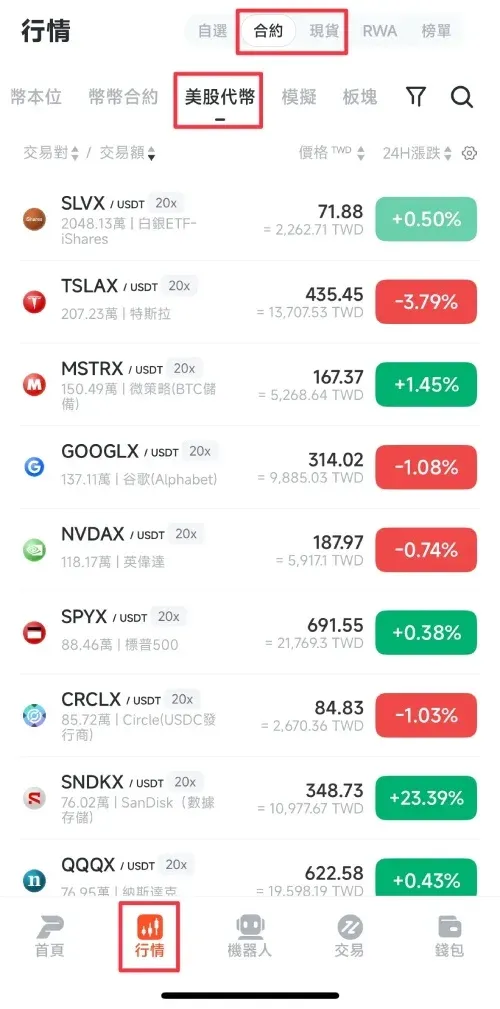
- Go to the “Markets” page, switch to the spot or futures tab, and look for U.S. tokenized stocks.
- Place your order.
Bybit Trading Guide
Bybit (ranked among the top five global crypto exchanges) was one of the first platforms to list tokenized stocks, though the token selection is relatively limited.
- Sign up for a Bybit account and complete KYC verification.
- Deposit USDT into your spot wallet (crypto deposits usually have lower fees than fiat deposits).
- Open the spot trading interface and search within the xStocks section.
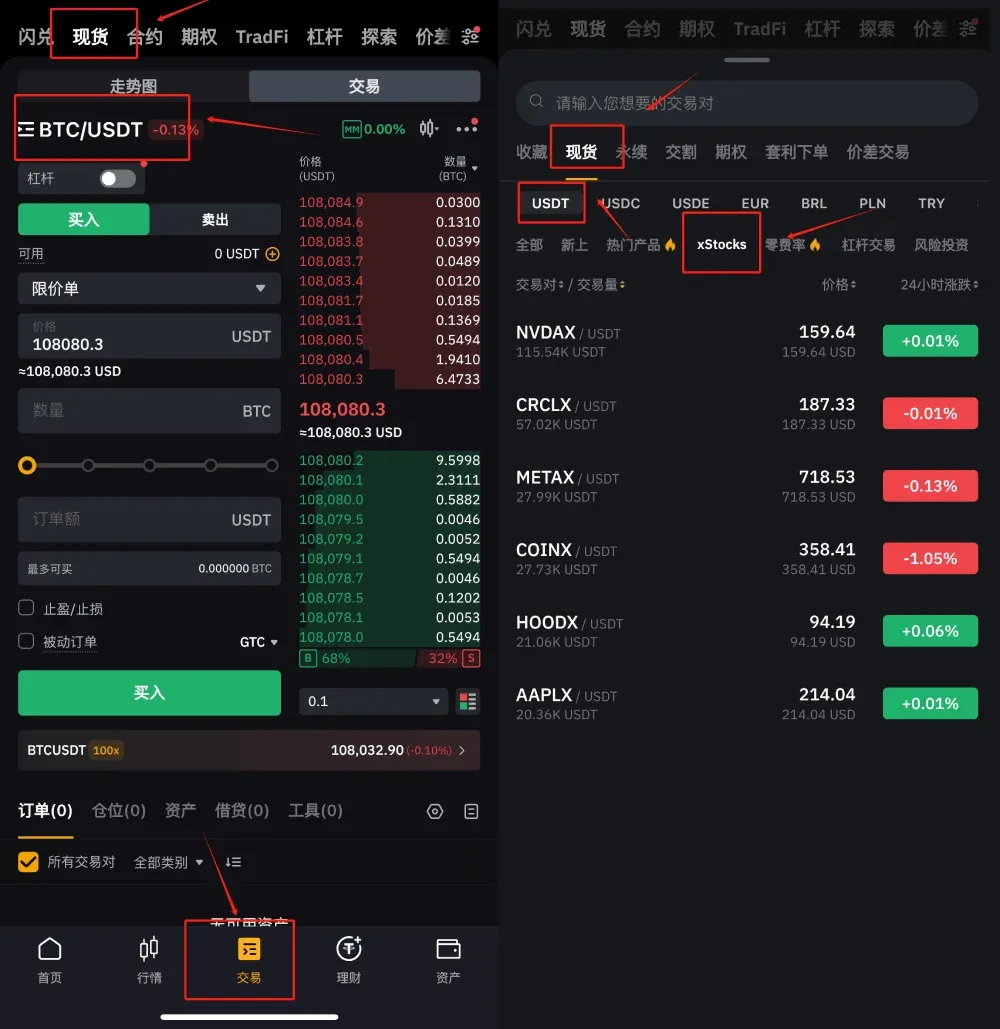
Gate.io (Continued) – Perpetual Contract Tutorial
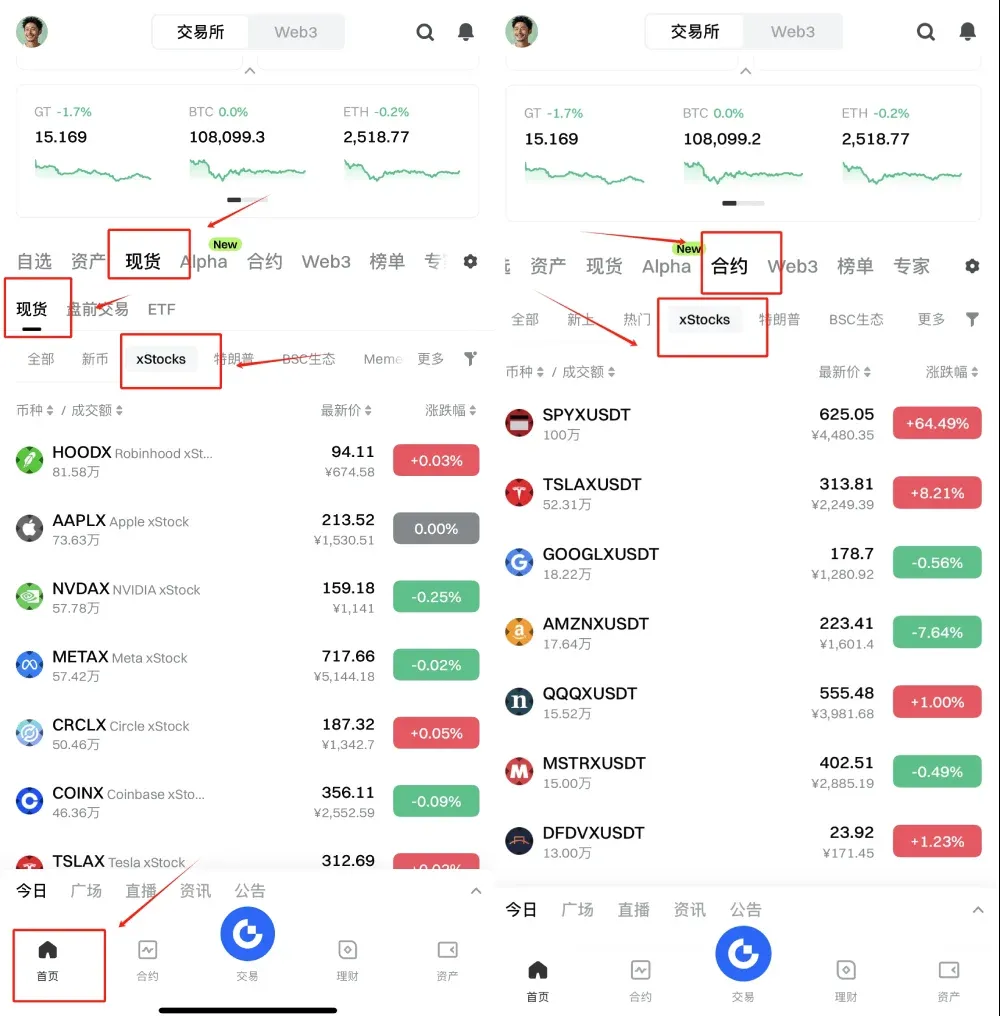
Gate.io was the world’s first exchange to launch tokenized‑stock perpetual contracts. The feature set is comprehensive, but the platform has experienced price volatility and liquidity fluctuations in the past, so users should assess risk independently.
- Register on Gate.io and finish KYC.
- Deposit funds (USDT, USDC, etc.).
- Pull down the home screen in the app to locate the spot xStocks zone.
- To trade contracts, switch to the derivatives area (note that perpetual contracts carry higher risk).
Bitget Exchange Guide
Bitget also ranks among the top five global exchanges and offers a wide range of wealth‑management products.
- Create a Bitget account and complete KYC (refer to the official step‑by‑step guide).
- Deposit USDT into your spot account.
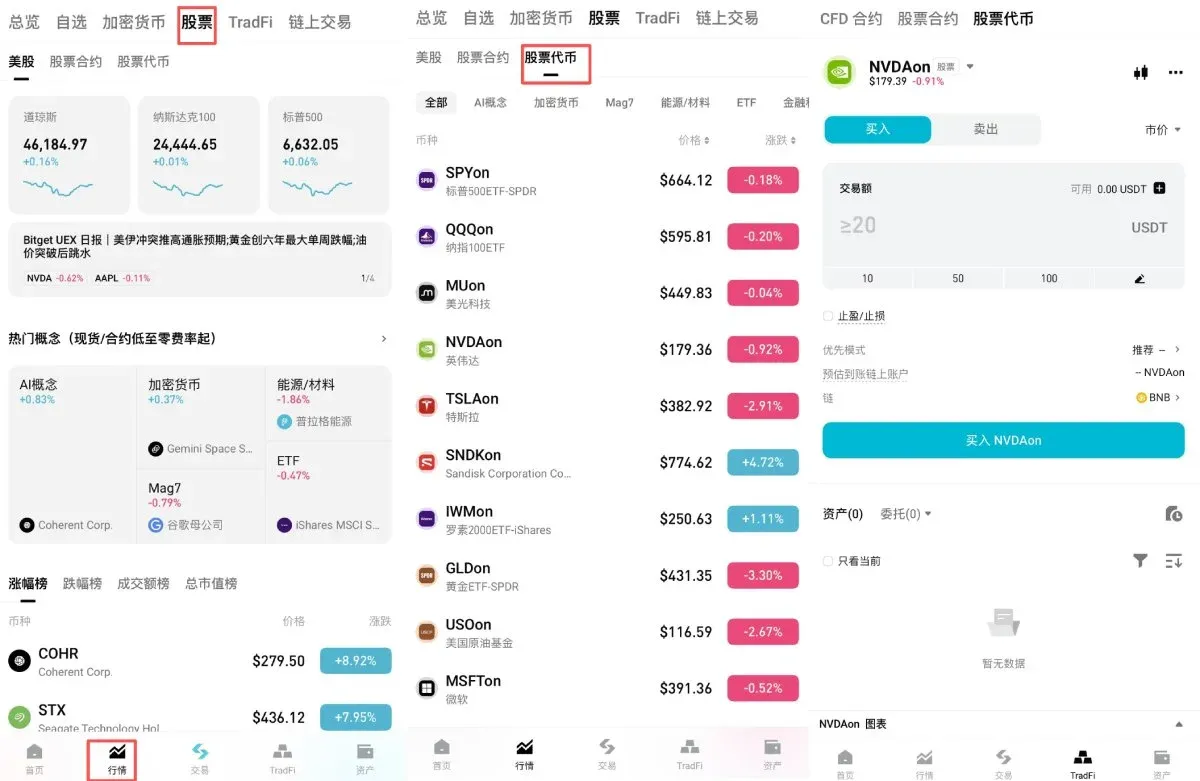
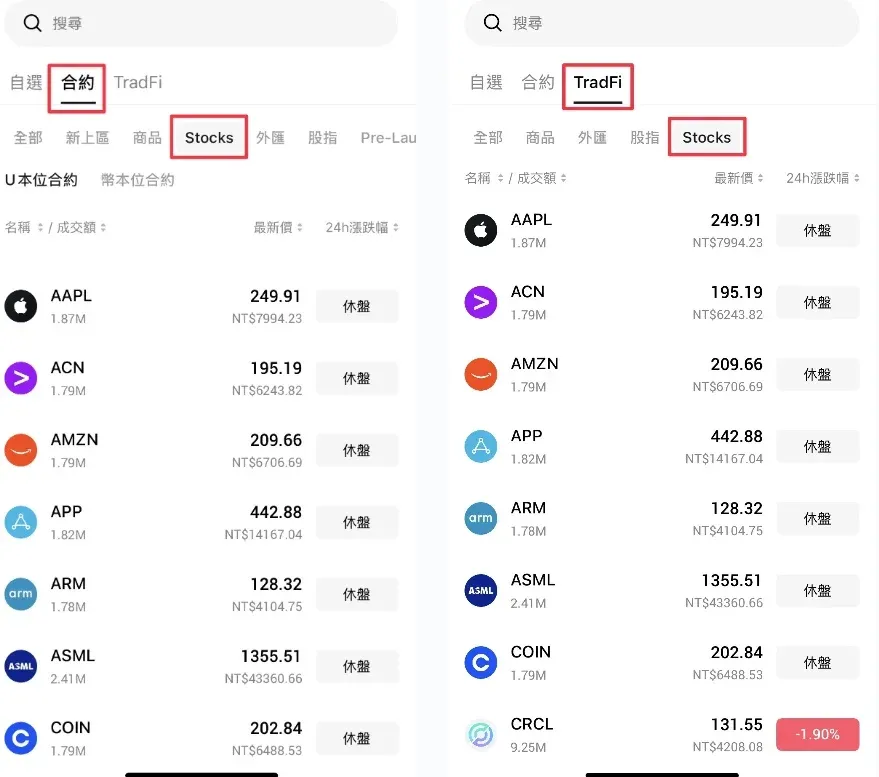
- Navigate to the market page and find the “Stocks” trading zone.
- Choose either “Futures” or “Tokenized Stock” to execute your trade.
BingX Trading Guide
BingX, an official partner of the Ferrari F1 team, supports popular tokenized stocks such as TSLAx, AAPLx, NVDAx.
- Register a BingX account and complete KYC.
- Deposit USDT into the spot wallet.
- Type the token symbol (e.g., TSLAx) into the search bar on the homepage.
- Open the trading screen, select the amount you wish to buy (minimum 0.01 share), and confirm the order.
Jupiter Decentralized Exchange Guide
Jupiter is the largest DEX aggregator in the Solana ecosystem and now supports xStocks tokenized equities.
- Prepare a wallet that works on the Solana chain (Backpack, OKX Web3, Phantom, etc.).
- Transfer SOL, USDC, or other supported assets onto the Solana network.
- Open the official Jupiter website (always verify the URL to avoid phishing).
- In the Pro section locate Stocks, connect your wallet, and start trading.
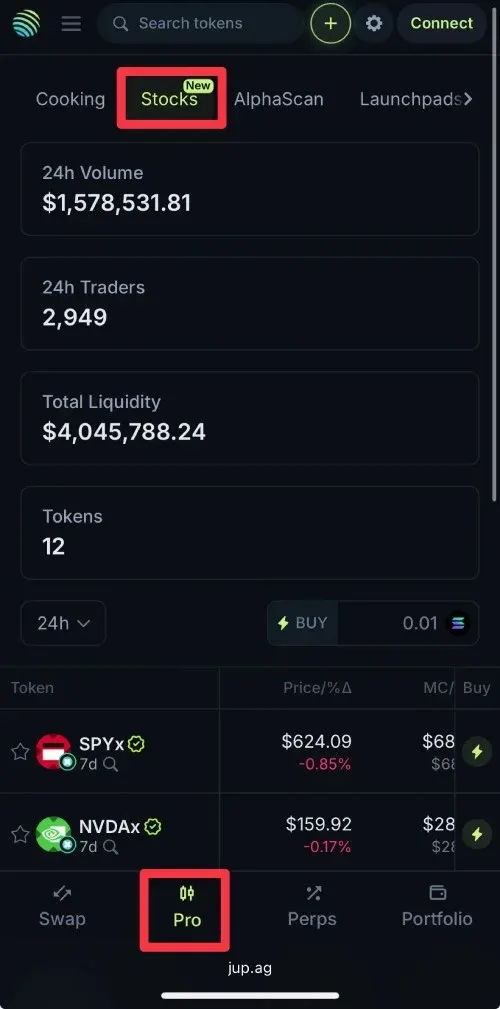
Using the OKX Web3 Wallet
Many wallets embed DEX aggregators; the OKX Web3 Wallet is one example. If you already know the contract address of a tokenized stock, you can trade directly within the wallet (avoid using only the token name to prevent name‑spoof scams).
- Download the OKX app and complete registration (follow the official KYC tutorial).
- Create a Web3 wallet and fund it with the necessary assets.
- Use the built‑in DEX feature, paste the contract address, and execute the trade.
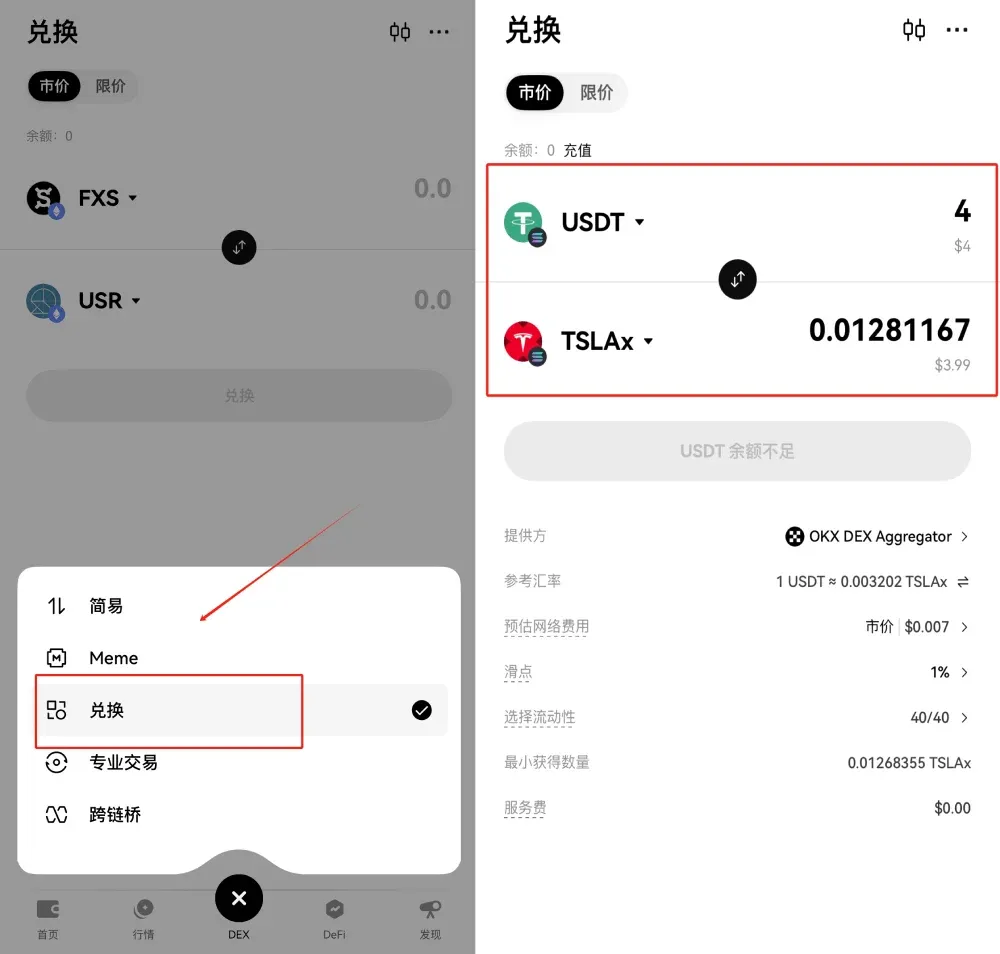
Frequently Asked Questions About U.S. Stock Tokenization and Tokenized Stocks
Are tokenized stocks safe?
Mainstream tokenized stocks (e.g., xStocks) are backed 1:1 by real shares, making the technical side relatively secure. Nonetheless, investors should:
- Choose reputable issuers (such as Backed Finance).
- Review the custodian’s credentials.
- Diversify holdings to avoid concentration risk.
Do tokenized stocks pay dividends?
Dividend distribution depends on each platform’s policy; some platforms issue dividends in token form.
Can I vote at shareholder meetings?
Typically, holders of tokenized stocks do not receive voting rights; they only benefit from price movements and any platform‑specific economic rewards.
What happens if the trading platform collapses?
Platform failure is a primary risk. It is advisable to transfer tokens to a personal, non‑custodial wallet promptly for self‑custody.
This concludes the full tutorial on “What are tokenized stocks and how to buy them?” For more hands‑on content, search for historical articles by Bitaigen or continue exploring the related links below. Wishing you successful management of your blockchain‑based assets!
Related Reading
- Asset Tokenization: Tokenized Stocks & Real‑World Assets
- Stock Tokenization on Blockchain: Liquidity & Transparency
- Tokenized Stocks: Unlock US Equity Access with Stablecoins
💡 Register on Binance with referral code B2345 for the maximum trading fee discount. See Binance complete guide.



