 Bitaigen Research
 February 2026 finds the entire crypto market at a pivotal turning point. The two flagship assets, Bitcoin (BTC) and Ethereum (ETH), have pulled back after reaching lofty levels in 2025, while institutional holdings and positive regulatory signals continue to underpin their long‑term trajectories. Many investors wonder: has the optimal entry window already passed? Below, I analyse four dimensions—future outlook, current market environment, historical performance, and potential risks and opportunities—to help you decide whether 2026 remains a suitable year to position BTC and ETH. Crypto investing carries high risk; diversify your assets and adopt a long‑term perspective.
In this article we outline the latest market environment for Bitcoin and Ethereum in 2026, combining institutional holdings, regulatory trends, and historical price action. By evaluating entry timing across four key dimensions, we aim to help readers assess whether there is still value in allocating capital now, avoiding blind herd behavior. Continue reading for specific forecasts and potential risks.
Future Outlook: Potential Entry Timing
Judging whether we are “late” hinges on price‑movement forecasts. A rainbow chart suggests BTC could touch $89,722 on January 3 and may climb further by the end of February.
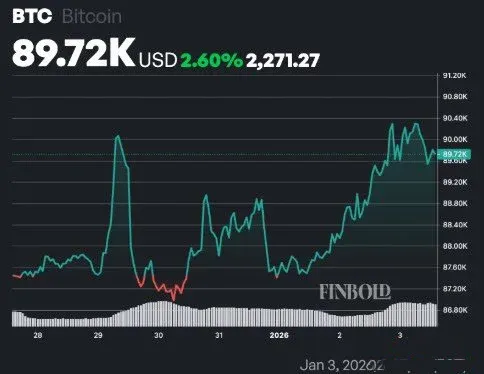
Binance’s internal model pegged BTC at $66,546 on February 25 and projects a price of $84,931 by 2031, implying a compound annual growth rate of roughly 27.63 %. Fundstrat’s Tom Lee believes the so‑called “winter” is ending, with a possible rebound in April. A more conservative view warns that a break below $50,000 could open the path to test the $20,000 region. Pantera Capital notes that, although non‑BTC tokens have been in a bear market for a year, a resurgence of venture‑capital funding in 2026 may usher in a fresh wave of inflows.
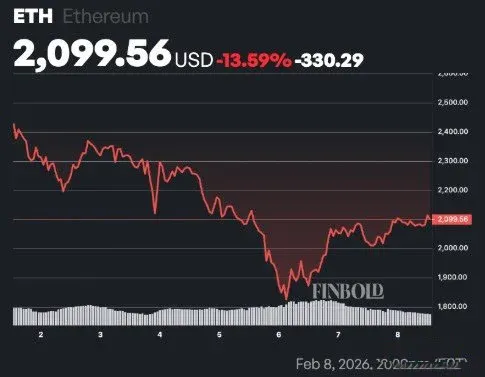
Ethereum forecasts are comparatively upbeat. The rainbow chart places a target of $2,099 on February 8, while Binance listed an instantaneous valuation of $1,968 on the same day and expects $2,512 by 2031.
Forbes argues that as real‑world asset (RWA) tokenisation gains traction, ETH could trade within a $2,200–$4,500 band, with a break above $5,000 not out of the question if the trend deepens. The Motley Fool recommends buying ETH before July, projecting a possible 50 % upside to around $4,000. Conversely, bearish analysts fear a “dead‑cat bounce,” forecasting drops to $1,390 or even $880.
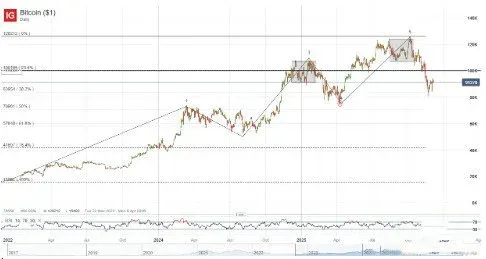
Overall, Fidelity sees short‑term entry as potentially slightly delayed, but still attractive from a long‑term perspective. Nasdaq’s comparative analysis favours ETH over BTC, citing a more vibrant developer ecosystem. IG points out that BTC may form new support ahead of the next halving or cyclical peak.
SVB’s research predicts that digital assets will achieve deeper integration in payments and commerce throughout 2026, with stablecoins and tokenised assets seeing sustained demand growth. If you believe in the long‑term value of blockchain, entering now is not “too late”; if you are focused on short‑term speculation, you may wish to wait for clearer bottom‑signalling patterns.
Current Market Overview
As of February 25, BTC closed around $66,707, up 4.71 % on the day, though the weekly chart still reflects a pull‑back from recent highs. Overall sentiment is modest, pressured by a weakening USD and a rebound in Asian equities; BTC briefly breached $66,000, gaining more than 3 %. Analyst opinions diverge sharply: some see a “double‑bottom” forming that could stabilise, while others warn of a possible slide below $50,000.
ETH traded at $1,988 on the same day, down 2.20 %, with futures pricing near $1,854. The total crypto market cap sits at roughly $2.5 trillion, with BTC accounting for 56 % and ETH for 10 %.
Three primary factors explain the current softness:
- Profit‑taking after the 2025 bull run;
- Geopolitical uncertainty, such as ongoing tariff disputes;
- Regulatory volatility—despite the EU’s MiCA framework and a generally supportive stance from U.S. regulators, short‑term market turbulence remains likely.
On the X platform’s discussion boards, investors commonly voice concerns that the “crypto winter” may linger, yet many also argue that the bottom is near. Peter Schiff cautions that BTC could tumble to $20,000, whereas Tom Lee maintains that $60,000 represents a floor, hinting at an imminent new bull market. For newcomers, today’s prices are 20‑40 % below historical peaks, which is not the worst possible timing.
Historical Review: Evolution of Bitcoin and Ethereum
Since its 2009 inception, Bitcoin has been hailed as “digital gold.” Its price rose from a few cents in 2010 to $73,172 in 2025—a cumulative gain of over one million percent. Key milestones include the 2024 halving, the approval of a Bitcoin ETF, and notable U.S. political shifts (e.g., the election of Donald Trump), all of which helped push BTC from $42,507 to a high of $106,407.
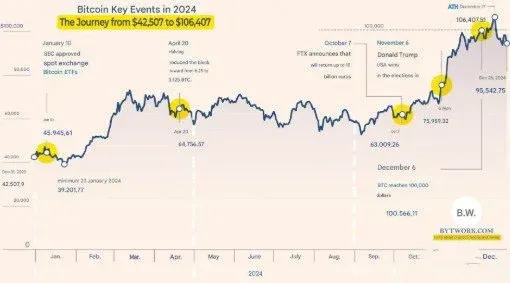
At the start of 2026, BTC fell from $78,693 to below $63,000, then rebounded to $66,707 by the end of February. This swing illustrates Bitcoin’s cyclical nature: history is littered with “death” proclamations, yet each time the asset has later forged new all‑time highs. Had an investor placed $100 at every proclaimed death point, the theoretical market value would be roughly $66 million by late February 2026.
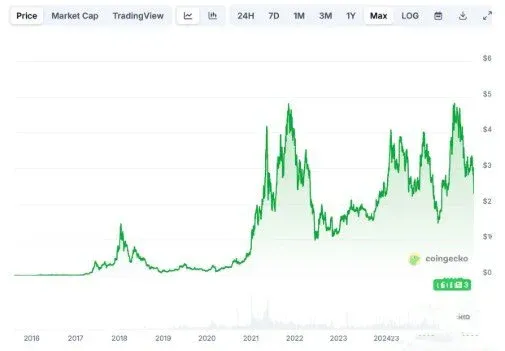
Ethereum, launched in 2015, has remained the leading smart‑contract platform. Its price peaked at $4,891 in 2021, plunged to a low of $880 in 2022, and climbed back above $3,000 in 2025. Throughout 2026, ETH has hovered between $1,800 and $2,000, reflecting a year‑to‑date decline of about 38 %. Ethereum’s growth drivers are largely technical: the 2022 “Merge” (transition from PoW to PoS) and the 2025 “Dencun” upgrade both markedly improved network efficiency and scalability. These historical patterns demonstrate that BTC and ETH do not follow a straight‑line ascent; instead, they exhibit alternating bull‑ and bear‑phases, with each bear market often preceding a fresh peak. The current pull‑back may resemble the 2022 correction, still offering entry potential.
Balancing Risks and Opportunities
Opportunities
- Accelerating institutionalisation: ETF inflows have already surpassed $100 billion;
- Halving‑cycle effect: Historical data show new bull markets often follow halving events;
- Growing global adoption: More sovereigns are adding crypto assets to foreign‑exchange reserves;
- Ethereum upgrades expanding the ecosystem: DeFi and real‑world asset tokenisation (RWA) are poised for broader deployment.
Risks
- Volatility remains high, with a noticeable correction already evident in 2026;
- Regulatory uncertainty could spark sudden sentiment swings;
- Competitive pressure, e.g., Solana eroding part of Ethereum’s ecosystem share;
- Macro‑economic headwinds, including inflation pressures and geopolitical tensions.
Reddit community sentiment leans toward caution, recommending continued observation throughout February to avoid getting caught in a prolonged bear market. Commonly discussed strategies include:
- DCA (Dollar‑Cost Averaging): Allocate 60 % to BTC and 40 % to ETH;
- Secure storage: Use hardware wallets to mitigate private‑key exposure;
- Technical indicators: Watch RSI and other oversold signals for potential buying opportunities.
Conclusion
In summary, entering the BTC and ETH markets in 2026 is not “too late”; rather, it coincides with a cyclical correction phase. From a long‑term viewpoint, Bitcoin could once again approach or surpass $100,000, while Ethereum may climb back above $3,000. Nonetheless, every investment carries uncertainty. Maintaining a rational mindset, diversifying allocations, and staying attuned to macro‑economic and regulatory developments are essential for achieving resilient returns in the Web 3 era.
This completes the full analysis titled “Is it too late to enter Bitcoin (BTC) and Ethereum (ETH) in 2026?”. For further updates on crypto‑asset entry strategies in 2026, follow Bitaigen’s upcoming articles.
*Note: Cryptocurrency gains may be taxable in your jurisdiction; consult a tax professional for guidance.*
*U.S. residents should use Binance.US rather than the global Binance platform when accessing the services referenced above.*
💡 Register on Binance with referral code B2345 for the maximum trading fee discount. See Binance complete guide.



