
 Bitaigen Research
 5 Major DeFi Development Trends and a Review of 14 DeFi Projects Worth Watching in 2024!
As the decentralized finance (DeFi) market continues to evolve, several new trends are quietly emerging. These trends not only drive industry innovation but also bring fresh opportunities for users and investors. So, what are the upcoming trends for DeFi? Which DeFi projects deserve attention in 2024? Let’s explore the details together with the editors at Bitaigen.
Starting from a panoramic view of the industry, we outline the key dynamics of DeFi in 2024 and select projects that show innovative potential. By dissecting trends such as lending convergence and vault rebalancing, we aim to help readers spot potential opportunities. The following sections will provide a detailed deep‑dive analysis.
5 Major DeFi Development Trends
1. Convergence of Lending Markets
In the DeFi lending space, platforms such as Aave, Morpho Labs, Silo Finance, Euler Finance, Kamino, and Fraxlend are gradually offering overlapping functionalities. Lending loops are becoming increasingly common, and feature development across platforms is becoming homogenous. This convergence means that competition will shift from pure feature‑by‑feature races to real‑world use‑case relevance, partnership building, and ecosystem maturation. Integrating these functionalities with tangible on‑chain and off‑chain applications will be a crucial next step.
2. Rebalancing Vaults
Rebalancing vaults use smart‑algorithmic strategies to dynamically adjust asset allocations, improving liquidity efficiency and boosting user yields. Projects like Tokemak, Cove, and Veda Labs employ this mechanism to achieve efficient asset distribution, optimizing liquidity management while introducing novel yield concepts to the market.
3. Term‑Based Assets
Infrastructure around assets that have explicit terms and expiry dates is being built at speed. Initiatives such as veTokens, Term Labs, Pendle, Hourglass, and Frax Bonds continuously develop protocols that make term‑based assets a core component of DeFi, enriching product variety and raising the professionalism of asset management.
4. Real‑World Assets (RWAs)
Although some skeptics label real‑world assets (RWAs) as “boring,” they are poised to become a pillar of on‑chain economic activity. Stablecoins, short‑term government bonds, and re‑insurance products are progressively integrating with DeFi. On‑chain capital seeks exposure to off‑chain markets, while off‑chain opportunities look to leverage the low‑cost, fast settlement that blockchain offers. This demand‑supply alignment provides a solid foundation for sustained DeFi growth. *(Note: Gains from tokenized real‑world assets may be subject to tax in your jurisdiction; consult a tax professional.)*
5. Restaking
Restaking is emerging as a hot trend in DeFi, with EigenLayer serving as a flagship example. Restaking allows users to redeploy assets that are already staked to provide collateral for other protocols, thereby increasing capital efficiency and enhancing security. This mechanism opens up additional avenues for innovative protocol design.
Potential Trends and Hotspots in DeFi for 2024
1. Rise of Cross‑Chain Solutions
With the explosion of DeFi projects, cross‑chain technology will become a critical focus. In 2024, innovative cross‑chain protocols such as Polkadot and Cosmos are expected to further break down barriers between blockchains, enabling seamless asset and data flow and fostering a more open, interconnected ecosystem.
2. Layer‑2 Scalability
On‑chain congestion and high transaction fees are driving rapid adoption of Layer‑2 solutions. By migrating workloads to secondary networks, users can relieve pressure on the base layer, increase throughput, and lower costs, delivering a smoother experience.
3. NFTs Meet DeFi
The non‑fungible token (NFT) market is set to grow quickly in 2024 and will intertwine deeply with DeFi. Using NFTs for portfolio construction, revenue sharing, and other financial primitives will spawn novel products and further accelerate DeFi innovation.
4. Artificial Intelligence
Artificial intelligence (AI) applications within DeFi are becoming mainstream. Projects like Aptos have already showcased AI’s potential for intelligent trading systems and optimized asset management, helping users capture more investment opportunities.
5. DePin
DePin (Decentralized Physical Infrastructure Networks) encourages users to share idle hardware resources to support blockchain network security and stability. This concept can enhance the resilience of DeFi systems and push the industry forward.
6. Restaking (Re‑emphasized)
Restaking lets holders of staked crypto assets support additional protocols, improving capital utilization. Ethereum stakers, for example, can move their staked ETH to other services to earn higher returns and boost ecosystem liquidity.
7. GameFi
GameFi merges blockchain with the gaming industry, aiming to deliver richer player experiences and innovative revenue models, positioning itself as a growth engine for the broader DeFi ecosystem.
14 DeFi Projects Worth Watching in 2024
1) Uniswap – The Leading Decentralized Exchange on Ethereum
Brief Overview
- Premier decentralized exchange (DEX)
- Pioneered and popularized the Automated Market Maker (AMM) model
- Broad user base with total value locked (TVL) approaching $180 million
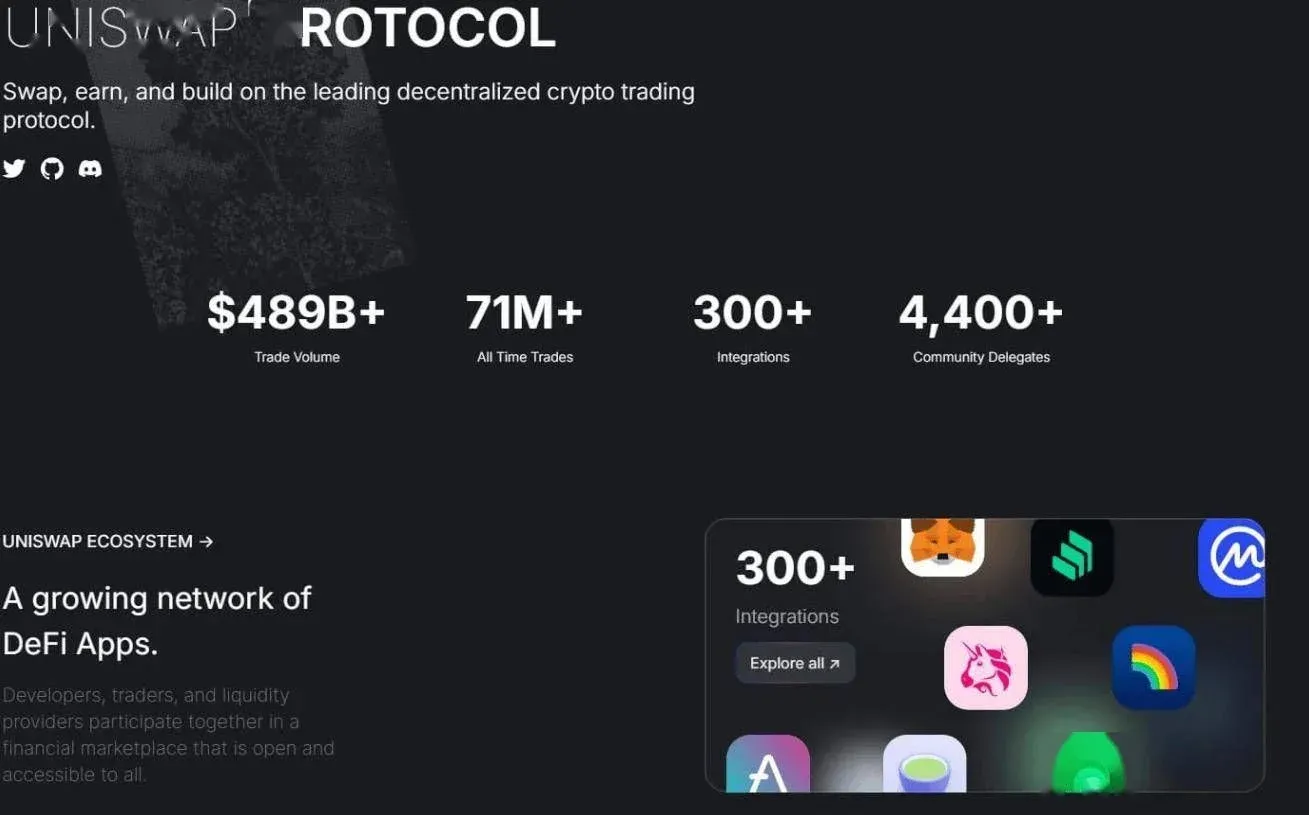
Uniswap (UNI) is an industry‑standard project with tens of billions of dollars in cumulative TVL. The platform supports token swaps, liquidity provision, and yield farming. Its fully open‑source codebase supplies developers with extensive resources and tooling, accelerating the launch of projects within the ecosystem. Uniswap’s constant‑product formula underpins the AMM model, ensuring stable asset values inside liquidity pools.
Founder
Uniswap was created by Hayden Adams in 2018, originally named Unipeg. After leaving Siemens in 2017, Adams devoted his time to learning Ethereum and Solidity, eventually launching Uniswap to great success. The protocol is now at version 3, offering concentrated liquidity and enhanced risk‑management features.
Investors & Backers
Uniswap has secured backing from 17 venture firms, raising a total of $176 million, including investors such as Andreessen Horowitz (a16z), Polychain, Paradigm, and Union Square Ventures.
2) Aave – The Largest Lending Platform on Ethereum
Brief Overview
- Mainstream stable‑coin collateral and lending hub
- Introduced the over‑collateralized stablecoin GHO
- Flash loans are a benchmark use‑case in DeFi
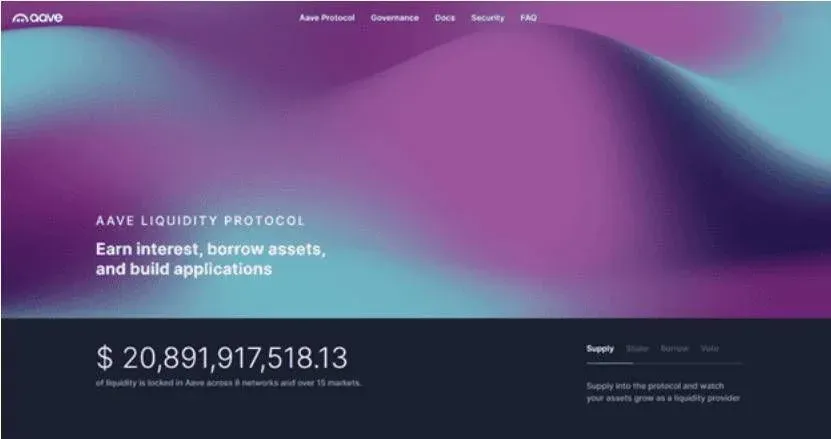
Aave (AAVE) is one of the most popular lending protocols in DeFi. Its TVL surpassed $18 billion in 2021 and remained around $13 billion as of July 2024. Originally launched as ETHLend, the platform now operates across multiple chains—including Polygon, BSC, Arbitrum, Avalanche, Harmony, and Fantom—supporting cross‑chain borrowing and staking.
Founder
Aave was founded by Stani Kulechov in 2017. Kulechov holds a law degree from the University of Helsinki and began programming at age 12, developing a strong passion for blockchain technology.
Investors & Backers
Aave has completed four funding rounds, raising roughly $50 million in total. The Fantom Foundation is a notable investor, contributing $10 million in May 2024.
3) Lido – Leading Staking Protocol on Ethereum
Brief Overview
- One of the largest dApps in the DeFi market
- TVL once topped $30 billion, a historic peak
- Pioneered the concept of liquid staking
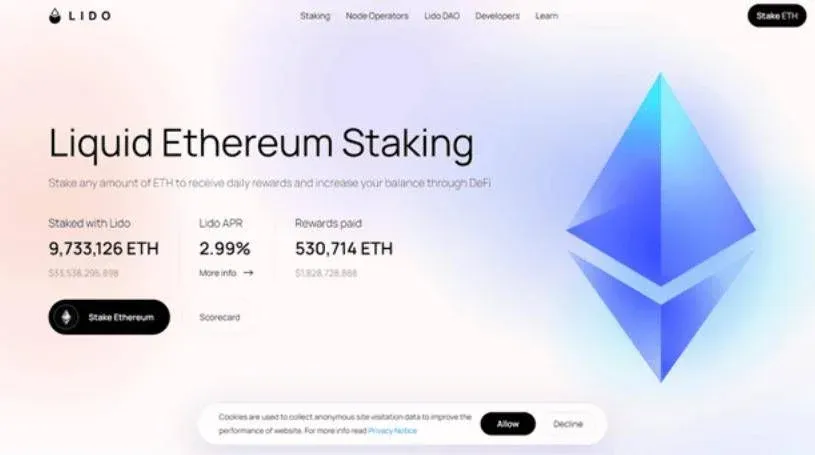
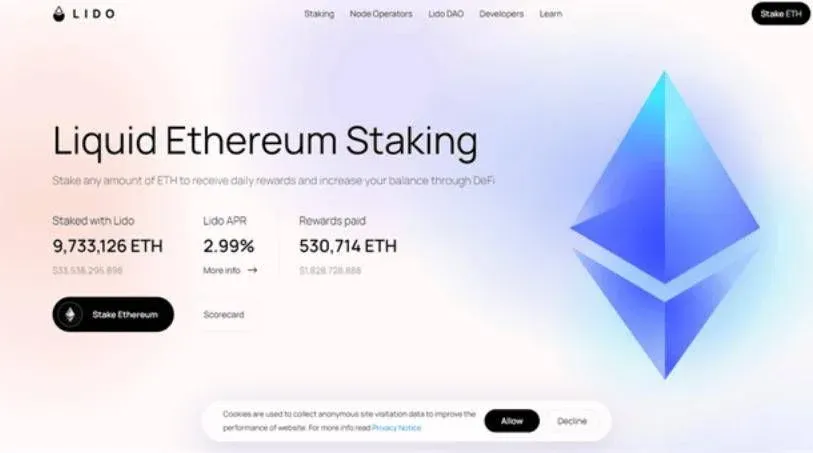
Lido (LDO) offers stETH, a liquid staking token that lets users earn ETH staking rewards while retaining the ability to deploy the token in other DeFi applications. The platform has allocated over $4 million for security audits and bug‑bounty programs.
4) EigenLayer – Top Restaking Protocol on Ethereum
Brief Overview
- heavyweight restaking protocol built on Ethereum
- Enhances security of liquidity pools and maximizes yield through restaking
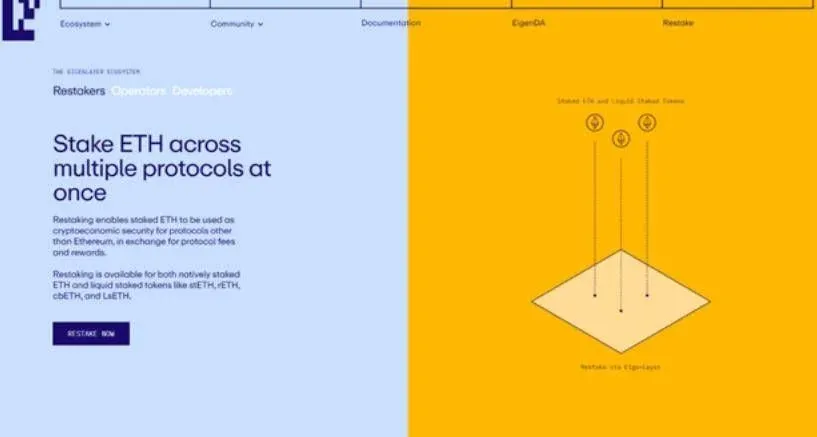
EigenLayer introduces the concept of restaking, allowing users to redeploy already‑staked ETH (or LSTs) as collateral for other protocols. Participants must agree to two conditions: (1) grant EigenLayer access to their staking credentials, and (2) accept slashing parameters set by validators. This creates an open security market where validators can select protocols that balance yield and safety.
Founder
EigenLayer was founded by Sreeram Kannan in 2021. Kannan holds academic credentials from Guindy Engineering College, IISc, and the University of Illinois Urbana‑Champaign, and has served as a post‑doctoral researcher at UC Berkeley and an associate professor at the University of Washington.
Investors & Backers
As of February 2024, EigenLayer has raised $164 million, with major investors including Blockchain Capital, a16z, WAGMI Ventures, and Ambush Capital.
5) Lido (Listed Again)
Brief Overview
- The largest dApp across Ethereum and broader DeFi markets
- TVL once exceeded $30 billion, one of the highest in DeFi history
- Invented the liquid staking paradigm
Founders
Lido was co‑founded in 2020 by Konstantin Lomashuk, Vasiliy Shapovalov, and Jordan Fish (alias “Cobie”). The trio brings extensive experience in blockchain development, smart‑contract engineering, and community operations.
Investors & Backers
Lido secured private‑round financing from eight investors, including Quiet Capital, Pareto Holdings, and NextView Ventures.
6) Ondo Finance – Largest RWA Protocol
Brief Overview
- Focused on tokenized treasury bills, the biggest RWA protocol of its kind
- Deployed across multiple chains such as Solana and Cosmos, with global offices
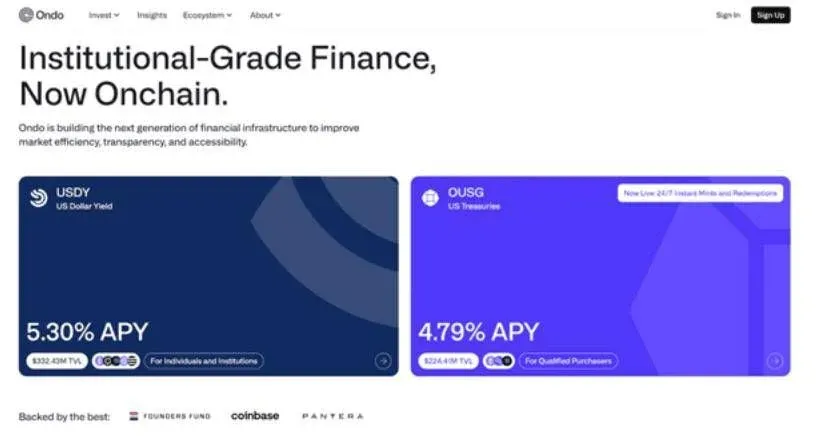
Ondo tokenizes real‑world assets (e.g., bonds, treasury bills) and brings them on‑chain to improve liquidity and reduce transaction costs. In June 2024, Ondo launched USDY on Cosmos, backed by short‑term U.S. Treasury bills, offering a 5.2% annual yield and connecting to over 90 chains via IBC.
Founder
Ondo was founded by Nathan Allman, a former member of Goldman Sachs’ digital assets team, in 2021. The team includes alumni from Goldman Sachs, McKinsey, BlackRock, and Bridgewater.
Investors & Backers
Ondo completed three financing rounds, raising roughly $34 million. Lead investors include Wintermute Ventures and Pantera Capital. The project also invested $95 million in BlackRock’s tokenized fund BUIDL and collaborates with regulated custodians such as Ankura and StoneX.
7) PancakeSwap – Top Decentralized Exchange on BNB Chain
Brief Overview
- The largest dApp on BNB Smart Chain (BSC)
- Extremely low fees and Ethereum‑compatible cross‑chain transfers
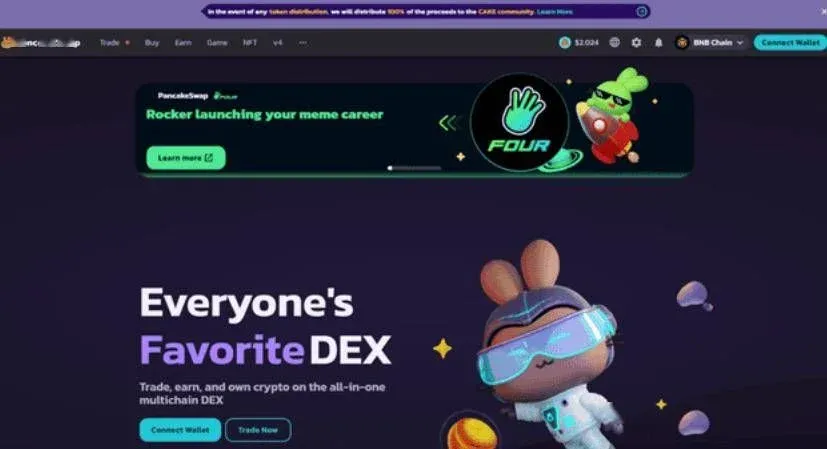
PancakeSwap (CAKE) utilizes an AMM model, offering low fees, a user‑friendly UI, and in its V4 upgrade introduced a native gas token, reduced slippage, and mitigated impermanent loss. The platform supports MetaMask, enabling seamless movement between BSC and Ethereum.
Founder
PancakeSwap launched in September 2020 by an anonymous team, quickly gaining community trust and rapid growth.
Investors & Backers
The project has raised over $4 million, primarily from investors like ICONIUM and Platinum, with additional support from BN Labs.
8) Jito – Leading dApp on Solana
Brief Overview
- The biggest liquid‑staking platform on Solana
- Boosts rewards and suppresses spam transactions through an innovative MEV auction mechanism
- Executed one of the largest airdrops in crypto history
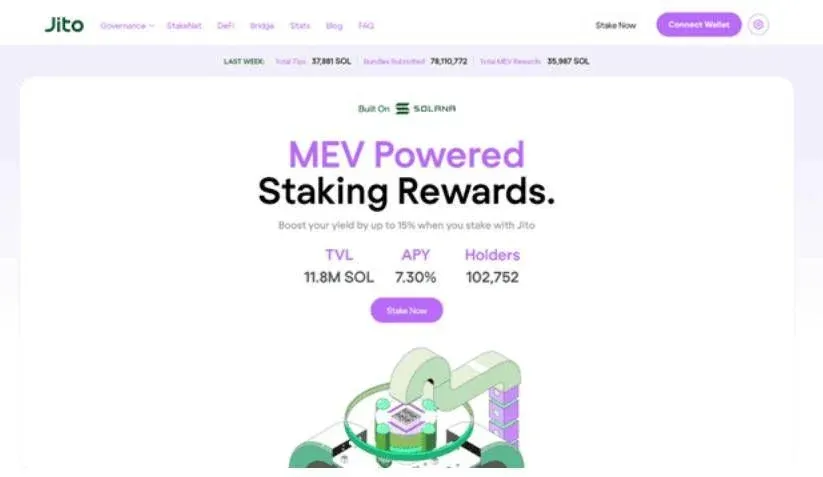
Jito (JTO) addresses the MEV (Maximum Extractable Value) problem with an auction system that lets stakers bid on transaction sequences optimized by third‑party block engines, earning higher returns. The design balances fairness and efficiency, contributing to a healthier Solana ecosystem.
Founders
Jito is led by Lucas Bruder (formerly at Ouster and Tesla robotics) and Zano Shermani (formerly a software engineer at Parsec). COO Brian Smith is also a core team member.
Investors & Backers
In 2022, Jito raised $12 million in a Series A led by Mult1C0in Capital and Framework Ventures. On December 7 2023, the project conducted a massive token airdrop, further solidifying its community base.
9) MakerDAO – Creator of the Decentralized Stablecoin DAI
Brief Overview
- Established in 2014, a veteran Ethereum protocol
- Issued the market‑largest decentralized stablecoin DAI
- Drives Maker RWA initiatives, investing in off‑chain assets
MakerDAO enables collateralized borrowing via smart contracts, allowing users to mint DAI using a variety of assets. MKR token holders govern the system, deciding on protocol parameters and risk management policies.
Founders
Rune Christensen (co‑founder and CEO) holds a background in biochemistry from the University of Copenhagen and has been involved in stablecoin development since his first encounter with Bitcoin in 2011. The late co‑founder **Nikolai
Related Reading
- BNB Chain Season 9 MVB Accelerator Announces 16 Projects
- BNB Chain Daily Tx Volume Jumps to 7M – Low Gas, High Speed
- 2025 Ethereum DeFi Landscape: $7.9B Spot ETF Fuels Maturity
💡 Register on Binance with referral code B2345 for the maximum trading fee discount. See Binance complete guide.
⚠️ Risk Disclaimer: Crypto prices are highly volatile. This is not investment advice.



