
 Bitaigen Research
 <article>
The rapid development of AI is reshaping the landscape of decentralized finance (DeFi).
AI brings capabilities such as real-time data analysis, automated strategies, and risk management to DeFi, improving capital efficiency, reducing reliance on centralized intermediaries, and enhancing the adaptability of protocols.
This article focuses on how AI technology injects real-time analysis, automated strategies, and risk management into decentralized finance, while exploring the challenges it faces in terms of decentralization and scalability, and providing a thinking framework from the perspective of technical architecture and ecological collaboration to help readers grasp the opportunities and challenges of the deep integration of AI and DeFi.
1. Introduction
With the advancement of information technology, the improvement of computing power, and the widespread application of big data, the performance of artificial intelligence (AI) models has significantly improved. In recent years, AI has reached or surpassed human levels in multiple fields such as healthcare, finance, and education, and has been rapidly commercialized.
- ChatGPT: The generative AI launched by OpenAI in November 2022 attracted 1 million users within 5 days and reached 100 million monthly active users in 2 months, becoming the fastest-growing consumer application in history.
- NVIDIA: As the main GPU supplier for the AI platform, NVIDIA's Q1 2024 net profit increased by 628% year-on-year to $14.8 billion, with a market value of approximately $3.2 trillion.
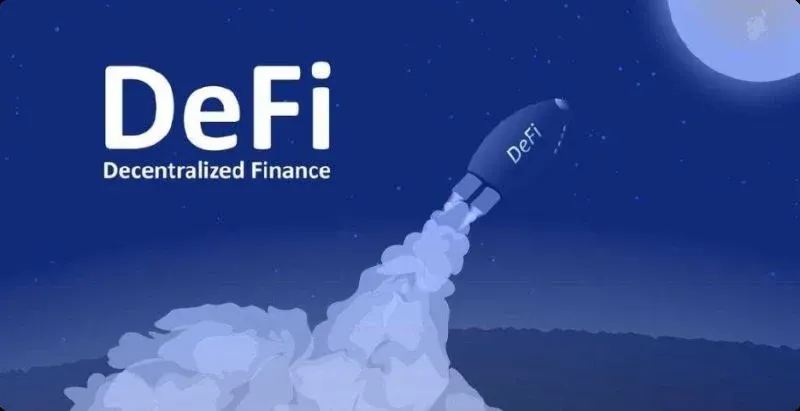
The rise of AI also affects the cryptocurrency market. In June 2022, OpenAI released DALL·E 2, which can generate high-quality images from text, causing the mention of AI keywords in major cryptocurrency Telegram channels in South Korea to surge 8 times. Since the second half of 2022, attempts to directly combine AI with blockchain have increased, and the mention volume has doubled again.
The cryptocurrency community's strong interest in AI is reflected in project investments. According to Coingecko data, as of August 20, 2024, the 277 AI blockchain projects that emerged since the second half of 2022 have a total market value of $21 billion, which is about 25% higher than the Layer‑2 category.
Main Application Scenarios
| Scenario | Typical Project | Functional Overview |
|---|---|---|
| Distributed GPU Network | IO.NET, Akash Network | Incentivizes users to contribute GPU computing power through blockchain rewards, reducing AI training costs |
| Decentralized AI Training | Bittensor | Multi-party collaborative model training to prevent bias caused by centralization |
| On-chain AI Market | SingularityNET, Autonolas | Transparent evaluation and trading of AI models or agents to meet industry demands |
These attempts leverage decentralized data markets, IP protocols, and other foundational infrastructure to provide more solid underlying support for the AI industry, and create synergies with DeFi.
2. Intelligent DeFi
The real-time data analysis capability of AI can provide DeFi users with precise revenue and risk assessments, primarily reflected in the user interface layer of DApps, without requiring major modifications to the protocol itself.
2.1. Fyde Treasury: AI Token Fund
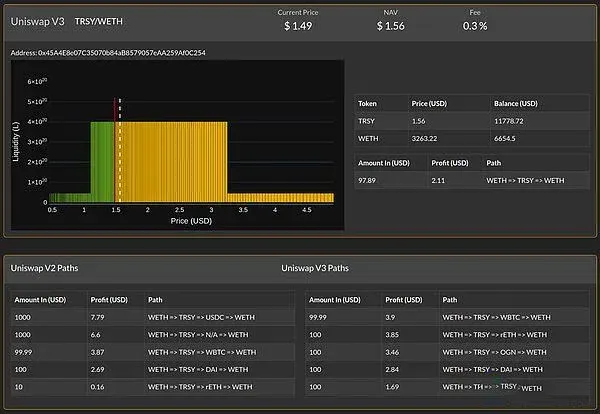
Fyde Treasury provides users with basket-type fund services through Liquid Vault, with asset management entirely driven by AI. Users hold the corresponding liquidity token $TRSY.
Asset Selection and Operational Process
- Liquidity Assessment: Confirm whether the trading pair has sufficient liquidity.
- Security Audit: Check the background of the protocol founders and contract audit reports.
- On-chain Analysis: AI detects wash trading, token concentration, and natural growth trends.
Tokens that meet the conditions will enter the Liquid Vault, after which AI performs the following tasks:
- Market Prediction: Combines on-chain transactions, news, and other information to predict market trends.
- Weight Rebalancing: Dynamically calculates and adjusts positions based on prediction results and token volatility.
- Risk Response: Monitors governance attacks, liquidity depletion, abnormal transactions, and other risks in real time, and promptly isolates or adjusts positions.
- Strategy Iteration: Continuously evaluates strategy effectiveness, extracts data for new strategy development, and conducts A/B testing.
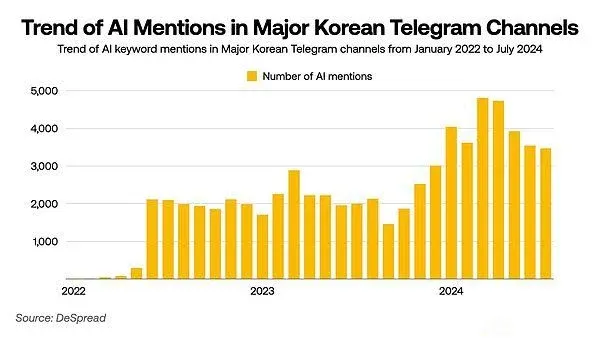
As of August 23, 2024, Liquid Vault contains 29 Ethereum-based industry tokens.
Additionally, users who deposit governance tokens can retain voting rights through $gTRSY, with voting rights dynamically adjusted according to asset weight changes.
Liquidity Mining Mechanism
- Reward System: Provides Fyde points, which can be exchanged for governance token $FYDE in the future.
- Uniswap v3 Integration: When providing liquidity, AI simulates the optimal path, converts part of $FYDE to $ETH, and optimizes the liquidity range in real time, increasing capital efficiency by approximately 4 times.
Performance Performance
Since its launch in January 2024, TVL has steadily risen to approximately $2 million. Although the overall market has been weak since May, the three-month return rate of $TRSY is -35%, but its volatility is relatively smaller compared to mainstream Ethereum tokens, showing certain anti-decline capability.
2.2. Mozaic Finance: AI Revenue Optimizer
Mozaic Finance uses two sets of AI models to achieve dynamic optimization of revenue farming:
| Model | Role | Main Function |
|---|---|---|
| **Conon** | Analyst | Real-time on-chain data analysis, predicting APY changes |
| **Archimedes** | Strategist | Calculates optimal asset allocation based on Conon's predictions and executes it |
Vault Types
- Hercules: Uses stablecoins to provide liquidity. After assets are bridged via Stargate, they are rebalanced into higher-yield pools.
- Theseus: Puts assets into the liquidity pool of GMX perpetual contracts, dynamically allocates based on volatility and interest rates, and may transfer part of the assets to Stargate to generate additional revenue.
- Perseus: Uses PoL consensus to provide liquidity for the upcoming Berachain to obtain network rewards.
As of January 2024, the expected APY for Hercules and Theseus are approximately 11% and 50%, respectively. However, in the same month, both vaults were forced to pause due to a funds theft incident.
Funds Theft Incident and Mozaic 2.0
On March 15, 2024, an internal developer used the core member's private key to steal approximately $2 million in assets. After the incident, the team:
- Suspended the affected vaults, causing the governance token $MOZ value to drop by about 80%.
- Publicly disclosed the incident's progress, collaborated with security companies to track and apply for asset freezing on centralized exchanges.
- Launched Mozaic 2.0, which includes:
- Security Upgrade: Full-chain audit by multiple audit institutions.
- AI Improvement: Upgraded Archimedes, adding black swan prediction and anomaly detection.
- User Experience: Optimized UI/UX, integrated account abstraction and cross-chain bridging.
3. Challenges: AI's Decentralization and Scalability Dilemma
From the above cases, we can see that AI brings the following advantages to DeFi:
- Autonomous Decision-making: Achieves asset management without human intervention.
- Capital Efficiency: Optimizes fund allocation in real time.
- Risk Monitoring: Quickly identifies and responds to abnormal transactions.
However, the current blockchain still faces bottlenecks in scalability and decentralization:
- **Com
Related Reading
- DeFi Insurance: Athena Ins & ATEN Token Overview
- DeFi Explained: How Decentralized Finance Works Without Banks
- DeFi Explained: Decentralized Finance Transforming Banking
💡 Register on Binance with referral code B2345 for the maximum trading fee discount. See Binance complete guide.



