
 Bitaigen Research
 We examine Bitcoin’s core concepts and common doubts from both technical and application perspectives, helping newcomers quickly build a reliable cognitive framework. We then delve into its decentralization advantages and payment scenarios, guiding you step‑by‑step to clarify the concepts. Continue reading to obtain complete answers.
Overview
Why do people trust Bitcoin?
Bitcoin’s trust foundation lies in the fact that it requires no third‑party endorsement. The entire system is open‑source and decentralized, allowing anyone to review the source code at any time and verify how it operates. All transaction records are publicly stored on the blockchain, and anyone can query the current circulating supply and historical trades in real time. Network security relies on cryptographic algorithms that have undergone extensive peer review and are also used in modern banking systems. Because no single entity can control the network, the system remains secure even if some participants are untrustworthy.
What is Bitcoin?
Bitcoin is a consensus‑based network that offers a brand‑new, fully digital means of payment. It is the first decentralized peer‑to‑peer settlement system, enabling users to manage assets themselves without the involvement of traditional financial institutions. For the average user, it functions like “cash on the internet” and also represents an innovative triple‑entry bookkeeping model.
Bitcoin’s Advantages
Payment Freedom
Any amount can be transferred instantly, anywhere, at any time, bypassing bank holidays and national borders. Users retain complete control over their funds.
Controllable Fees
Bitcoin transactions themselves incur virtually no mandatory fee. Users may add an optional miner fee to accelerate confirmation. Some merchant services can instantly convert Bitcoin to fiat (e.g., USD) and deposit the proceeds via SEPA or SWIFT, often at a lower cost than traditional payment channels.
Reduced Merchant Risk
Bitcoin payments are irreversible and do not carry personal sensitive information, eliminating credit‑card fraud and charge‑back disputes, and removing the need to comply with PCI standards. In regions where credit‑card usage is limited or fraud rates are high, merchants can use Bitcoin to tap new markets and lower operating costs.
Security and Control
Users keep their private keys, and transactions do not require identity linkage, reducing the risk of identity theft. Security is further enhanced through backups, encryption, and multi‑signature schemes.
Transparent and Neutral
All details about Bitcoin’s supply are recorded on the blockchain and can be inspected by anyone in real time. The protocol is secured by cryptography; no individual or organization can unilaterally modify or manipulate it, giving Bitcoin a high degree of transparency and neutrality.
Bitcoin’s Disadvantages
Limited Acceptance
Although an increasing number of businesses accept Bitcoin each day, overall acceptance remains relatively narrow. Stronger network effects require more merchants to join the payment ecosystem.
Price Volatility
The total circulating supply and real‑world use cases are still modest, so large trades or shifts in market sentiment can cause noticeable price swings. As the user base and supporting technology mature, volatility is expected to taper.
Still Evolving
Bitcoin software is continuously iterated, with many features still under development. Existing tools, features, and services do not yet satisfy every user need, and a mature insurance infrastructure is lacking. Overall, Bitcoin is progressing toward a more mature stage.
Who Created Bitcoin?
The “cryptocurrency” concept was first proposed in 1998 by Wei Dai on the cypherpunks mailing list, advocating for cryptographic control of money issuance and circulation without reliance on central authorities. In 2009, an individual (or group) using the pseudonym Satoshi Nakamoto posted the first Bitcoin specification and proof‑of‑concept on the cryptography mailing list. By the end of 2010, Nakamoto gradually stepped back, leaving the code and philosophy to be maintained by developers worldwide. Because the Bitcoin protocol and implementation are open source, anyone can audit or fork the code, and Satoshi does not retain any control over the network.
Who Controls the Bitcoin Network?
Bitcoin has no single owner, just as the email protocol has no central proprietor. The network runs on a distributed set of users and nodes worldwide. Developers can improve the software, but any change to the protocol rules requires consensus from the entire community and adoption of the same software version. This global, collaborative consensus mechanism enables Bitcoin to operate robustly.
How Does Bitcoin Work?
Ordinary users simply install a wallet app on a phone or computer, generate a personal Bitcoin address, and can send or receive payments. Behind the scenes, the network shares a public ledger called the “blockchain,” which records every confirmed transaction. Each transaction is signed with the sender’s private key to prove legitimate ownership transfer. Meanwhile, miners equipped with specialized hardware competitively process transactions and, through “mining,” earn newly created bitcoins and transaction fees as rewards. For deeper technical details, refer to the official documentation and the original whitepaper.
Do Real People Actually Use Bitcoin?
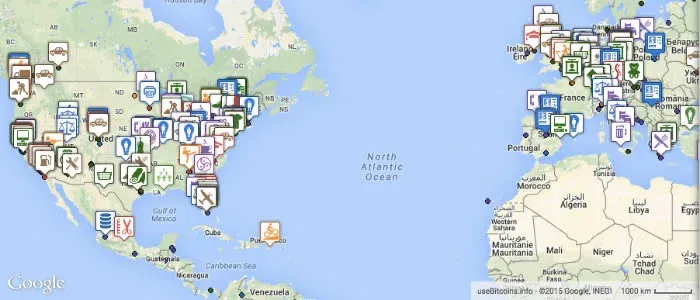
Yes. An ever‑growing number of brick‑and‑mortar stores, law firms, hospitality providers, and online platforms (such as Namecheap, Overstock.com, and Reddit) accept Bitcoin. By the end of August 2013, the market capitalization of circulating Bitcoin surpassed $1.5 billion, with daily trading volume reaching several million dollars.
How to Acquire Bitcoin?
- Accept Bitcoin as payment for goods or services.
- Purchase directly on a regulated Bitcoin exchange (U.S. residents should use Binance.US or another compliant U.S. exchange).
- Conduct offline swaps with acquaintances.
- Participate in competitive mining to earn newly minted coins.
Note that some platforms do not accept credit cards or PayPal to prevent buyers from reversing transactions after initiation.
How Convenient Is Paying with Bitcoin?
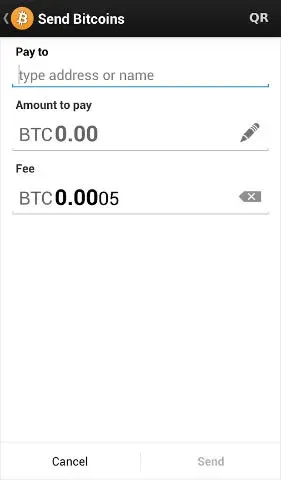
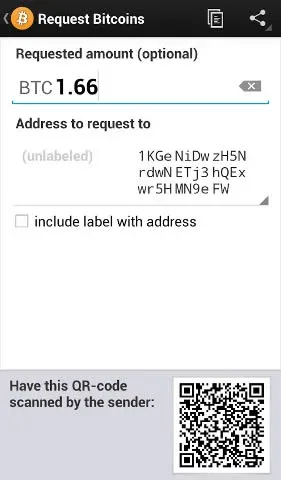
Compared with credit or debit cards, using Bitcoin does not require opening a merchant account. Users simply input the recipient’s address and amount in their wallet and click “send.” Most wallets support QR‑code or NFC scanning, further simplifying address entry.
What Happens If Bitcoin Is Lost?
If a user loses the wallet that holds the private key, the bitcoins recorded on the blockchain remain, but they become unusable without the unlocking key—effectively removed from circulation forever. Supply‑demand dynamics dictate that a reduced circulating supply can increase demand for the remaining coins, potentially driving up value.
Can Bitcoin Become a Mainstream Payment Network?
Today Bitcoin can process more transactions per second than many traditional payment systems of its era, yet it still falls short of the scale of major credit‑card networks. Ongoing research aims to boost throughput, and in the coming years, widespread adoption of lightweight clients and specialized nodes should improve scalability. For a technical deep‑dive, see the scalability section on Wikipedia.
Legality
Is Bitcoin Legal?
In most jurisdictions, Bitcoin has not been explicitly classified as illegal. A few regions (e.g., Argentina, Russia) impose limits on foreign‑currency usage, while countries such as Thailand require licensing for trading platforms. Regulators worldwide are gradually issuing guidance to fit this new technology into existing financial frameworks; for example, the U.S. Treasury’s FinCEN has published non‑binding guidelines.
Does Bitcoin Facilitate Illegal Activity?
Bitcoin is a form of money; it can be used for both lawful and unlawful purposes. Compared with cash or credit cards, the proportion of Bitcoin used for illicit activities remains relatively low at present. Its design aims to improve payment security, prevent forgery, fraud, and irreversible charge‑backs, and protect funds through backups, encryption, and multi‑signature schemes. While some worry about anonymity, similar privacy concerns exist with cash and wire transfers, and Bitcoin remains subject to prevailing legal regulations.
Can Bitcoin Be Regulated?
The Bitcoin protocol can only be altered when virtually the entire network agrees; no single jurisdiction can grant itself special rights over the code. In theory, an entity controlling more than 50 % of the network’s hashing power could temporarily influence block confirmation, but maintaining such dominance would require prohibitive investment and is unlikely to be sustainable. Regulatory focus is therefore on usage contexts (e.g., anti‑money‑laundering, taxation) rather than direct interference with the protocol itself.
Bitcoin and Taxation
Although Bitcoin is not a legal tender, income, capital gains, or wages derived from it are taxable in most jurisdictions. Tax rules for digital assets vary by country, so users should consult local regulations before transacting. Note that cryptocurrency gains may be taxable under the laws of your jurisdiction.
Consumer Protection
Bitcoin transactions leave an immutable public record that can be used for audit and dispute resolution. Multi‑signature technology allows transactions to be executed only under predefined conditions, providing a technical foundation for future arbitration services. Compared with traditional payments, merchants do not face charge‑back fraud, and consumers can request stricter safeguards when dealing with unknown parties.
Economics
How Are New Bitcoins Created?
New coins are generated through “mining,” a competitive and decentralized process. Miners use dedicated hardware to validate transactions and write them to the blockchain; once a proof‑of‑work is completed, the miner receives newly minted bitcoins plus any associated transaction fees. Bitcoin’s issuance rate is fixed, halving roughly every four years until the total supply caps at 21 million coins. After that point, miners will rely primarily on transaction fees for revenue.
Why Does Bitcoin Have Value?
Its value stems from monetary functional attributes: durability, portability, fungibility, scarcity, divisibility, and recognizability. Bitcoin does not depend on physical assets or government backing; trust is derived from mathematical models and network effects. The degree to which users, merchants, and projects accept it determines demand, which in turn creates value.
What Determines the Price?
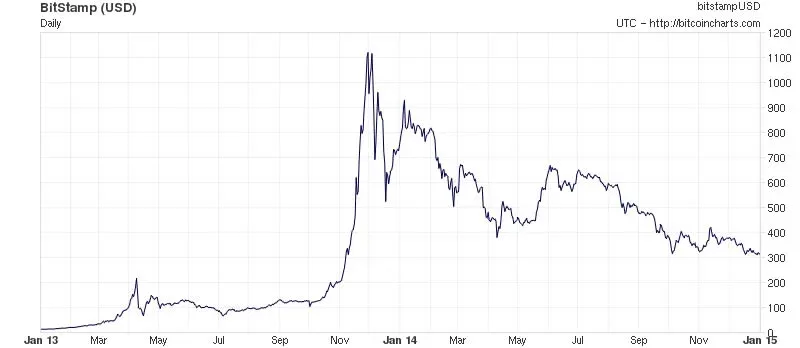
Supply and demand are the fundamental drivers of Bitcoin’s price. When demand rises, the price climbs; when demand falls, it retreats. Because the circulating supply is limited and the issuance schedule is predictable, market concerns about inflation are modest. However, the overall market cap remains relatively small, so modest capital inflows can cause pronounced price swings, leading to high volatility.
Could Bitcoin Lose Its Value?
History records numerous currencies that became worthless due to hyperinflation, political turmoil, or technical flaws (e.g., the Weimar Mark, Zimbabwean dollar). Bitcoin avoids inflation risk by design, yet it still faces potential threats such as technical failures, competition from other digital assets, or regulatory shifts. To date, it has demonstrated a relatively robust operating record, but future price trajectories remain uncertain.
Is Bitcoin a Bubble?
Rapid price appreciation alone does not constitute a bubble. A bubble is identified only when prices detach dramatically from fundamentals, become grossly overvalued, and then correct sharply. Bitcoin’s volatility originates from the behavior of a global, diverse participant base, news flow, sentiment, and differing expectations about its technological outlook.
Is Bitcoin a Ponzi Scheme?
A Ponzi scheme relies on new investors’ funds to pay returns to earlier participants, lacking genuine profit sources. Bitcoin is an open‑source, decentralized software project; no entity can promise or guarantee returns. Its price movements resemble those of gold, the U.S. dollar, and other conventional assets, driven by supply‑demand dynamics rather than internal fraud.
Do Early Holders Benefit More?
Some early participants who accumulated large amounts before Bitcoin gained widespread recognition realized substantial gains. Conversely, many early users spent their coins quickly or held only modest amounts, seeing modest or no returns. Bitcoin’s value growth is closely linked to real‑world use cases and technological progress, not merely the length of holding time.
Does the Fixed Supply Impose Limits?
Bitcoin’s total supply is capped at 21 million coins, but each coin can be divided down to 10⁻⁸ BTC (one satoshi), i.e., 1 BTC = 100 000 000 sat. If transaction amounts shrink further in the future, payments can still be made using finer units, so the supply ceiling does not hinder usability.
Could a Deflationary Spiral Occur?
The deflationary‑spiral hypothesis suggests that falling prices suppress demand, forcing merchants to cut prices further, creating a vicious cycle. Real‑world examples (e.g., continuously dropping electronic‑goods prices) have not led to economic collapse. Since Bitcoin’s inception, its overall value trajectory has been upward, and its design is not intended to engineer deflation; instead, it gradually reduces issuance to aim for long‑term stability.
Will Speculation and Volatility Be a Problem?
Price volatility and speculative activity influence each other. If more businesses and users build genuine economic activity on Bitcoin, demand should stabilize, helping to dampen extreme swings. Merchants can also employ instant conversion services to turn Bitcoin into fiat (USD) via SEPA or SWIFT, mitigating price risk. As the ecosystem matures, relative volatility is expected to become more manageable.
What If Someone Tries to Buy All Bitcoin?
To date, only a small fraction of Bitcoin is actively traded on markets. Even a massive infusion of capital could not purchase the entire circulating supply in one go, and new coins continue to be issued according to the predetermined halving schedule. Market supply‑demand dynamics would still affect price, preserving volatility.
What If a Superior Digital Currency Emerges?
The emergence of new digital assets is possible. Bitcoin remains the most widely recognized decentralized currency, but it does not preclude other projects from achieving technical or functional breakthroughs and capturing market share. Bitcoin itself can adopt improvements from other projects without altering its core protocol.
Transactions
Why Do Transactions Typically Take About 10 Minutes?
Before a transaction is written into a block, the Bitcoin network averages roughly ten minutes of confirmation time. Confirmation means the network has reached consensus on that transaction; once confirmed, subsequent blocks reference it, reducing the risk of reversal. Most users consider six confirmations (about one hour) comparable to the security level of a credit‑card transaction.
How Much Are Transaction Fees?
Bitcoin transactions can be sent with zero fee, but during periods of network congestion, fee‑free transactions may be delayed for days or longer. Fees are generally proportional to the transaction’s data size, not the amount of BTC transferred. Wallet software usually suggests a default fee rate while allowing users to adjust it manually.
What Happens If I Receive Bitcoin While My Computer Is Off?
Bitcoin does not require a locally running client to receive funds instantly. Once the transaction is recorded on the blockchain, the wallet will sync the latest blocks the next time it starts, and the balance updates automatically. The software only intervenes when you attempt to spend the bitcoins.
What Is “Syncing,” and Why Can It Take a Long Time?
A full node (e.g., Bitcoin Core) must download and verify the entire blockchain when it starts for the first time—a process called syncing. Because the blockchain contains a massive amount of data and each transaction must be validated, syncing consumes considerable bandwidth and storage. This step is essential for maintaining network security and decentralization.
Mining
What Is Bitcoin Mining?
Mining involves using computational resources to process transactions, secure the network, and synchronize information across all participants. Miners compete to solve a proof‑of‑work puzzle; the winner earns the right to add a new block, receiving newly created bitcoins and associated transaction fees as a reward. The mechanism resembles a decentralized lottery, ensuring no single entity can easily dominate the ledger.
How Does Mining Work?
Miners run specialized software that listens to peer‑to‑peer transaction broadcasts and assembles a set of transactions into a candidate block. They then perform massive hash calculations to find a block header that meets the network’s difficulty target. Upon discovering a valid block, the miner broadcasts it to the network; other nodes verify it and append it to the chain. As more miners join, the network automatically adjusts difficulty to
Related Reading
- Bitcoin Quarterly Contracts: Futures, Leverage & Hedging
- Bitcoin Transaction Fee Calculation: Set the Right Fee
- Bitcoin Wallets, Private Keys & Accounts: Beginner Guide
💡 Register on Binance with referral code B2345 for the maximum trading fee discount. See Binance complete guide.



