 Bitaigen Research
 We systematically outline the basic concepts and core architecture of blockchain in this article, helping readers with no prior knowledge quickly grasp how a decentralized ledger operates and revealing the intrinsic connections among blocks, consensus, and smart contracts. Continue reading to gain a panoramic understanding of blockchain technology.
What Is a Blockchain?
A blockchain consists of a series of blocks. A block is similar to a record in a database; each time data is written, a new block is created.
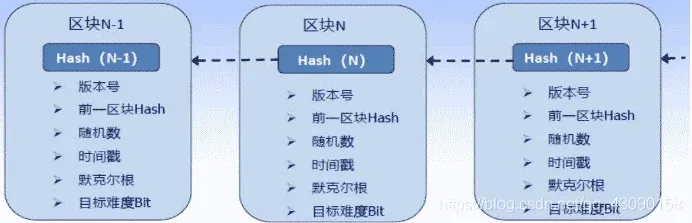
Figure 1. Rough structure of a blockchain
A blockchain is a decentralized, high‑trust distributed ledger technology. Nodes in the network can transact directly with each other on a peer‑to‑peer (P2P) basis and reach consensus on transaction data generated within a certain time frame, storing it independently yet maintaining it collectively. The technology uses asymmetric cryptography to ensure data security and trustworthiness, timestamps to make data traceable and verifiable, and distributed storage to keep data public and transparent. When malicious computing power is below 50 % of the total, the data cannot be forged or altered. The blockchain’s automated scripting system enables users to create smart contracts, cryptocurrencies, or other decentralized applications.
Key fields inside a block include:
- Difficulty target – the difficulty value of the proof‑of‑work algorithm.
- Timestamp – records the time the block was generated.
- Nonce – the counter used by the proof‑of‑work algorithm.
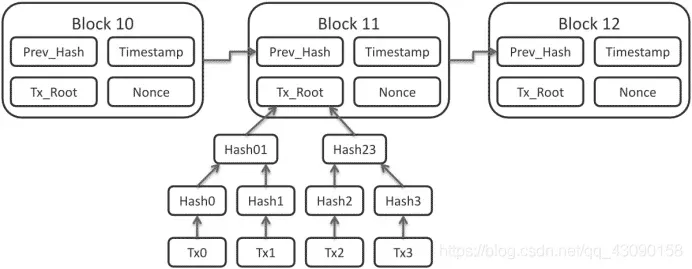
Three Fundamental Concepts of a Blockchain
Transaction – an operation on the ledger that changes its state, such as adding a transfer record.
Block – records all transactions that occurred within a certain period and their resulting state; it represents a consensus on the current ledger state.
Chain – a sequence of blocks linked in chronological order, documenting the evolution of the entire ledger state.
Decentralization
In traditional transaction systems, every transaction must be validated and confirmed by a trusted third‑party intermediary, which consumes additional resources and creates cost and performance bottlenecks for central servers. A blockchain allows transactions to occur directly between any two equal nodes in the network (P2P) without any central server authentication.
Persistency
Every transaction in the network is confirmed and recorded in blocks that are distributed across the whole network, making tampering virtually impossible. Each broadcast block is verified by other nodes, and any forged data can be detected quickly.
Advantages and Disadvantages of Blockchain Technology
Advantages
- Distributed and Decentralized
Utilizes distributed computing and storage without centralized hardware or governing bodies. All nodes have equal rights and obligations, and data blocks are maintained collaboratively by nodes with maintenance capabilities.
- Irreversible and Immutable
Because of the distributed nature, a single point of alteration cannot be recognized by the entire network, making data extremely difficult to modify.
- Openness
The system is open to the public; apart from the private information of transaction participants, blockchain data is visible to everyone. Anyone can query data or develop applications via public APIs, resulting in high transparency.
- Autonomy
Consensus‑based protocols (such as publicly auditable algorithms) enable all nodes to exchange data securely without needing trust in each other, shifting trust from “people” to “machines” and limiting human interference.
- Pseudonymity
Interactions between nodes follow fixed algorithms; data exchange does not require trust, and counterparties can complete transactions without revealing their identities, aiding the accumulation of reputation.
Disadvantages
Compared with traditional databases, current blockchains still have several limitations:
- Irreversibility
Mistakes or loss of private keys result in unrecoverable losses.
- Insufficient Privacy
The ledger must remain transparent, making full privacy protection difficult.
- Large Storage Requirements
Retaining all historical records means that high transaction volumes put pressure on storage and performance.
- Latency
Distributed consensus requires verification by multiple nodes, so transaction confirmation experiences noticeable delay.
- Performance Degrades with Data Growth
Each transaction must reference historical records to verify balances; as data volume increases, verification costs rise.
- Energy Consumption
Block creation depends on miners performing extensive computations, leading to significant energy use.
Three Typical Evolutionary Scenarios for Blockchain Technology
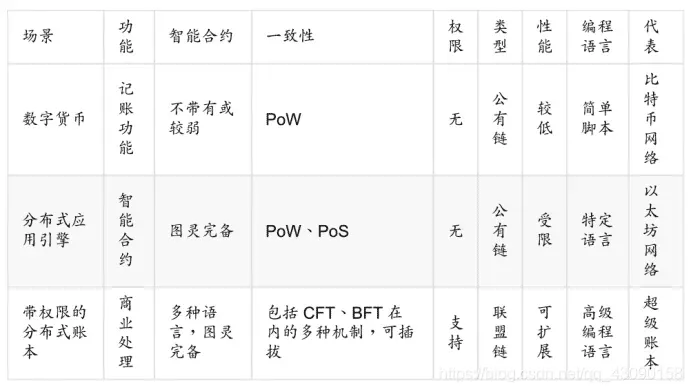
When compared with traditional accounting technologies, a blockchain‑based distributed ledger exhibits the following characteristics:
- It maintains a continuously growing chain that can only be appended to; once a record is confirmed, it cannot be altered.
- Decentralized or multi‑centralized consensus mechanisms eliminate the need for a single controlling authority, striving for maximal distribution.
- Cryptographic techniques ensure transactions are non‑repudiable and tamper‑proof while striving to protect user information and the privacy of records.
Global‑Market Context Note: In most jurisdictions, fiat on‑ramps for blockchain services accept USD via SEPA or SWIFT transfers. Users in the United States should use Binance.US rather than the global Binance platform for compliant trading.
This “Blockchain Basics Compilation” concludes here. For more articles on “What Is a Blockchain,” you can search the previous posts by Bitaigen (比特根) or continue browsing the related links below. We look forward to your continued interest and support for Bitaigen (比特根)!
💡 Register on Binance with referral code B2345 for the maximum trading fee discount. See Binance complete guide.



