
 Bitaigen Research
 "DCA" (Dollar‑Cost Averaging), also known as “regular fixed‑amount investing,” is a common investment strategy. Its core principle is “buy a fixed amount of assets at regular intervals,” smoothing the purchase price to reduce the risk of buying at a single high point. This article outlines the pros and cons of using DCA to purchase cryptocurrencies, explains how to set it up, and discusses the risks you may encounter.
Stocks can be bought using a DCA approach, and the same applies to cryptocurrencies. Many investors believe that DCA helps avoid a one‑off purchase at a market peak, thereby achieving an averaged cost basis.
For example: “Buy 10,000 USD worth of crypto at the beginning of each month, no matter the price” is a typical DCA plan.
But is DCA really low‑risk? Below we examine Binance’s DCA feature as a case study, analysing how regular‑amount purchases work and what potential pitfalls exist.

From a practical investing perspective, we systematically dissect the operational points and hidden risks of DCA‑ing Bitcoin, helping readers decide whether the strategy fits their asset allocation. We also provide step‑by‑step instructions for implementing it on major exchanges, compare fee structures and automation features across platforms, and give you confidence when you actually execute the trades.
Advantages of Regular‑Amount, DCA, or Fixed‑Interval Crypto Purchases
The main advantage of DCA is that you buy less when prices are high and more when prices are low, moving the overall average cost toward the midpoint of the price range.
Because DCA uses a *fixed monetary amount* each time, a price dip lets the same amount purchase more tokens, while a price peak results in a smaller quantity bought.
Example: Suppose you have 100,000 USDT to allocate to Bitcoin. You could choose between two approaches:
- Invest the full 100,000 USDT in a single lump‑sum (all‑in)
- Split the 100,000 USDT into 12 monthly purchases of 8,333 USDT each
1. Buying More at Lows Improves Returns if the Market Recovers
Assume Bitcoin’s price over a year follows this simulated path: start of year = 100,000 USDT, mid‑year dip to 50,000 USDT, end‑year rebound to 90,000 USDT.
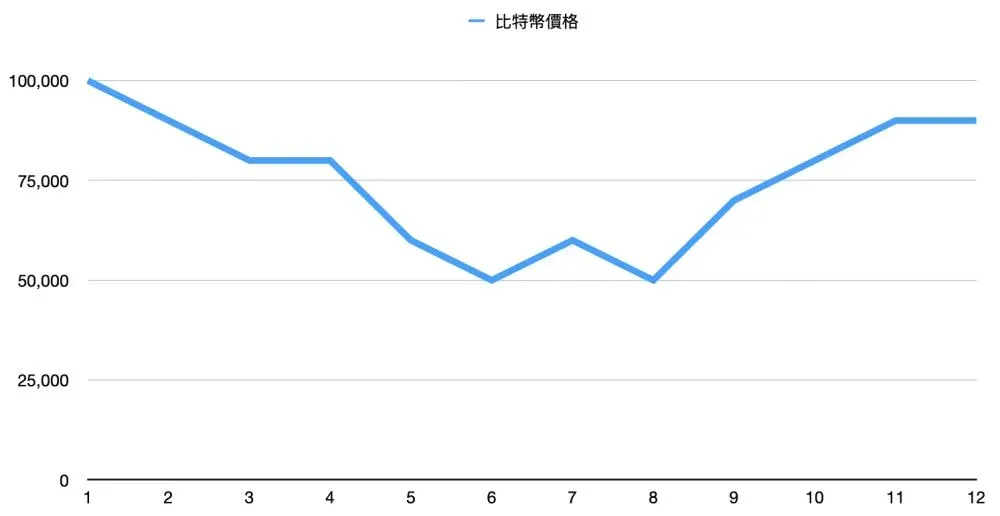
If you invest the entire 100,000 USDT at the start, you acquire 1 BTC. When the price falls to the low, the paper loss is 50,000 USDT, and by year‑end you are down 10,000 USDT, still holding 1 BTC.
With a monthly DCA of 8,333 USDT, the BTC purchased each month would be:
| Month | Price (USDT) | BTC Bought | Cumulative Position Value (USDT) |
|------|--------------|------------|----------------------------------|
| 1 | 100,000 | 0.0833 | 8,330 |
| 2 | 90,000 | 0.0926 | 15,833 |
| 3 | 80,000 | 0.1042 | 22,407 |
| 4 | 80,000 | 0.1042 | 30,741 |
| 5 | 70,000 | 0.1190 | 39,722 |
| 6 | 60,000 | 0.1389 | 49,491 |
| 7 | 70,000 | 0.1190 | 59,722 |
| 8 | 80,000 | 0.1042 | 69,769 |
| 9 | 90,000 | 0.0926 | 78,009 |
| 10 | 100,000 | 0.0833 | 87,487 |
| 11 | 110,000 | 0.0758 | 97,118 |
| 12 | 120,000 | 0.0694 | 106,339 |
| Total | — | 1.404 | 126,339 |
Even though the price fell from 100,000 USDT to 90,000 USDT over the year, the DCA portfolio ends the year worth 126,339 USDT—higher than the lump‑sum approach. This illustrates the DCA effect: buying more at lows means those cheaper units rise together when the price recovers, boosting overall returns.
2. Staggered Purchases Limit Paper Losses During Downturns
Because DCA spreads capital over time, only part of your funds are exposed when the market crashes. In the scenario above, during the sharp dip in month 6 only about half of the total capital has been deployed, leaving roughly 50,000 USDT still in cash. The paper value of the BTC held at that point is about 34,491 USDT, so the psychological pressure is lower.
If you had invested the entire 100,000 USDT at the start, the same dip would have reduced the portfolio value from 100,000 USDT to 50,000 USDT instantly, creating far greater stress.
Disadvantages of Regular‑Amount or DCA Investing
1. Buying Less at Peaks Leads to Opportunity Cost
The flip side of DCA is that when prices keep rising, each fixed‑amount purchase buys fewer tokens, resulting in a smaller overall position and a higher opportunity cost.
Using the same 100,000 USDT example, imagine a steadily upward price trajectory (illustrated below):
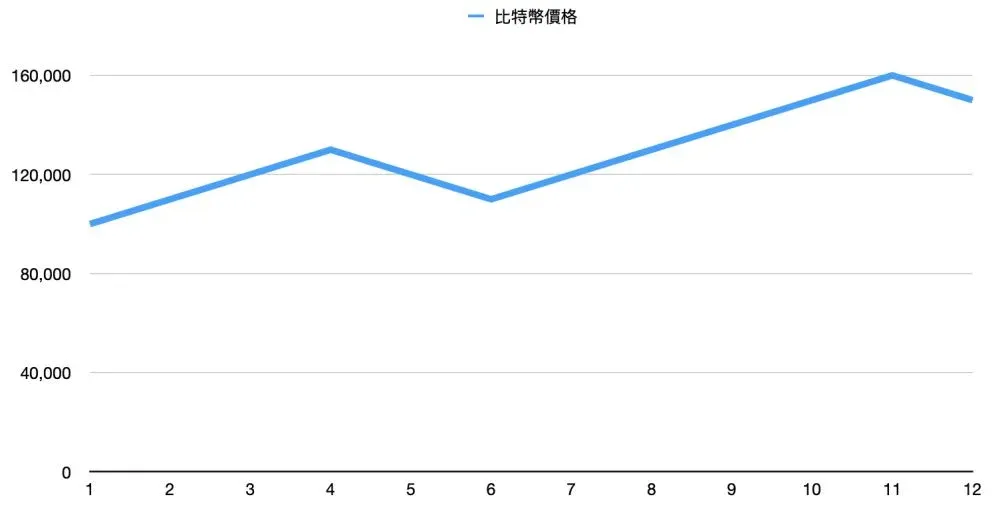
A lump‑sum investor would hold 1 BTC at year‑end, valued at roughly 150,000 USDT, netting a 50,000 USDT profit.
A DCA investor buying each month would accumulate the following BTC:
| Month | Price (USDT) | BTC Bought | Cumulative Position Value (USDT) |
|------|--------------|------------|----------------------------------|
| 1 | 100,000 | 0.0833 | 8,330 |
| 2 | 110,000 | 0.0758 | 17,500 |
| 3 | 120,000 | 0.0694 | 27,424 |
| 4 | 130,000 | 0.0641 | 38,043 |
| 5 | 140,000 | 0.0595 | 48,450 |
| 6 | 150,000 | 0.0556 | 58,162 |
| 7 | 160,000 | 0.0521 | 68,874 |
| 8 | 170,000 | 0.0490 | 74,280 |
| 9 | 180,000 | 0.0463 | 88,328 |
| 10 | 190,000 | 0.0439 | 101,970 |
| 11 | 200,000 | 0.0417 | 118,168 |
| 12 | 210,000 | 0.0397 | 119,116 |
| Total | — | 0.794 | 119,116 |
After a year the DCA investor has acquired only 0.794 BTC, with an average cost that rises as the price climbs. The final portfolio value is about 119,116 USDT, far below the 150,000 USDT achieved by the lump‑sum approach, reflecting a sizable opportunity cost in a bull market.
2. Still a Long‑Only Strategy—Downward Markets Still Cause Losses
DCA is fundamentally a buy‑and‑hold (long) strategy. If the underlying cryptocurrency experiences a prolonged decline, even staggered purchases cannot prevent a loss. Some assets may fall below 10 % of their peak and never fully recover; in such cases, any long‑only approach will incur losses.
3. The Average‑Cost Benefit Can Be Diluted
Consider a DCA plan that runs for one year. If Bitcoin trades around 100,000 USDT for the first 11 months and then crashes to 50,000 USDT in month 12, the overall average cost would be roughly 95,833 USDT—still close to the original price. The early, larger capital allocations dominate the average, so the late‑stage cheap purchases have limited impact. This is known as the “dilution” of the DCA effect.
Setting Up a DCA (Regular‑Amount) Strategy on Binance
After understanding DCA’s mechanics, here’s how to create a DCA plan on the Binance platform.
Important for U.S. residents: Use Binance.US instead of the global Binance website, as the latter is not available to U.S. customers.
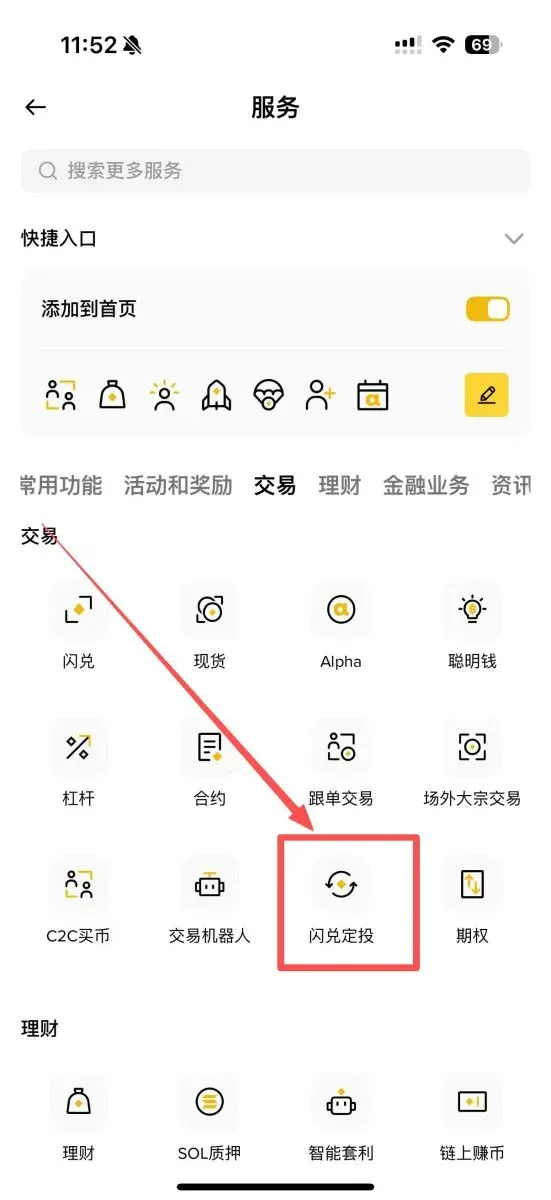
- From the Binance homepage, click “More” → “Trade” → “Recurring Buy” (or “DCA” depending on UI):
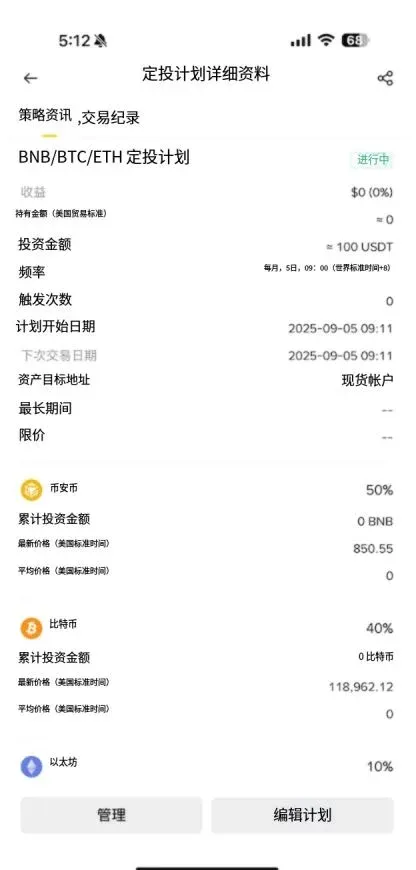
- Choose the cryptocurrency you wish to purchase. You can add multiple assets in one plan and allocate a percentage of the total fiat amount to each. For example, the screenshot below shows a distribution of 100 USD: 50 % to BNB, 40 % to BTC, 10 % to ETH (illustrative only, not investment advice):
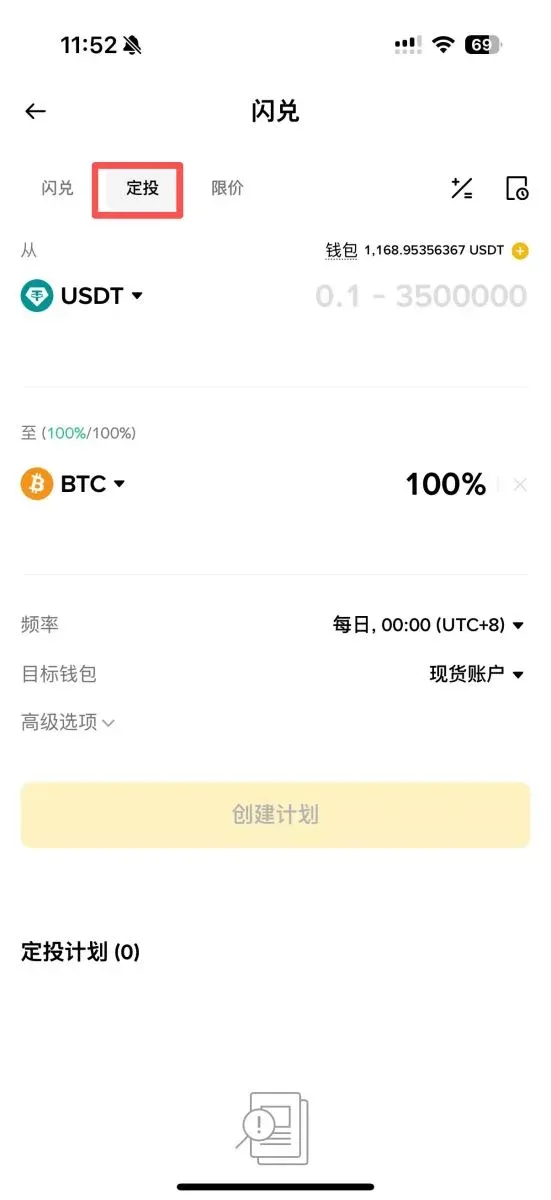
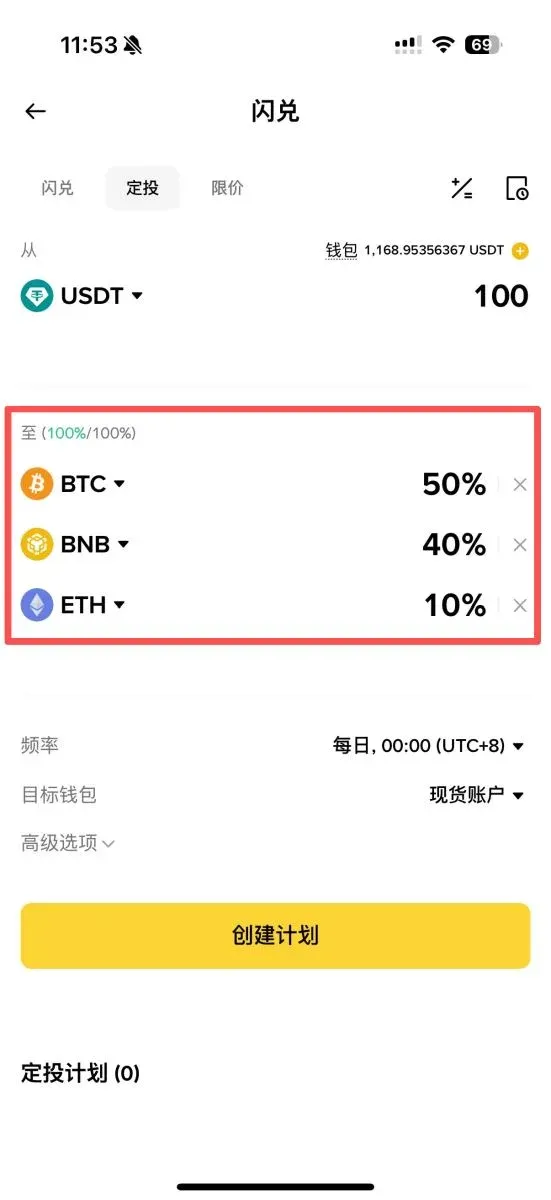
- In the “Frequency” section, select the specific day of each month for the purchase, or refine the schedule to an interval of a few hours, days, etc.
- After confirming the parameters, create the recurring buy plan. To edit or cancel the plan later, simply click the relevant entry in the list below:
Fees Associated with Binance Recurring Buy
According to Binance’s official documentation, the original “Binance Recurring Buy” feature has been merged into “Recurring Convert”, which is now tied to the standard “Convert” function and executes automatically at the scheduled time.
Currently, Recurring Convert does not charge an extra fee, but the conversion rate may differ slightly from the spot market limit order price. For instance, the spot BTC/USDT price might be 66,978 USDT, while the conversion rate is 67,051 USDT—a spread of about 0.3 %:
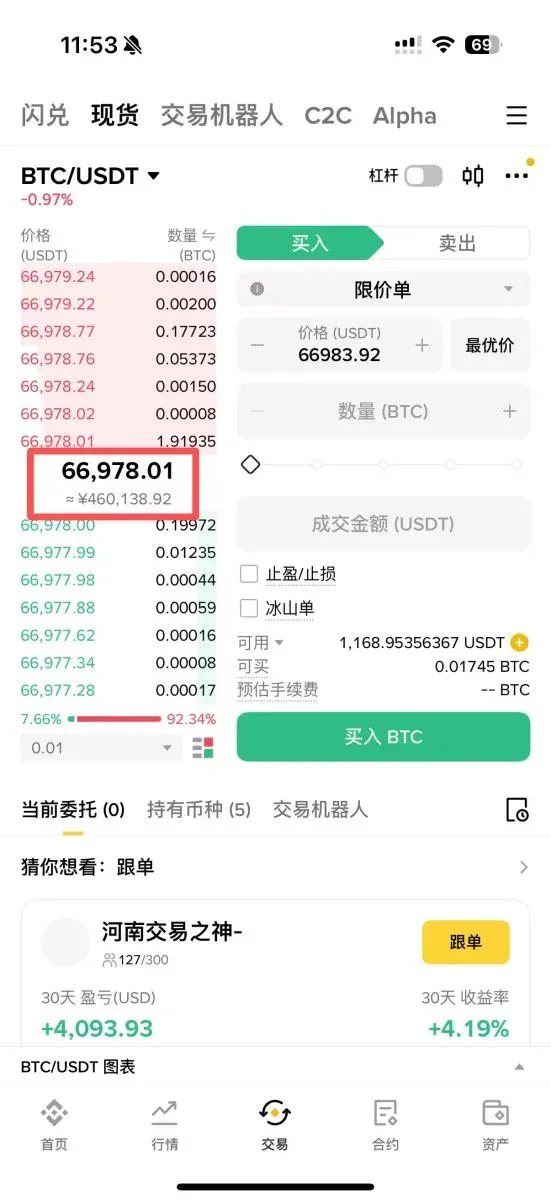
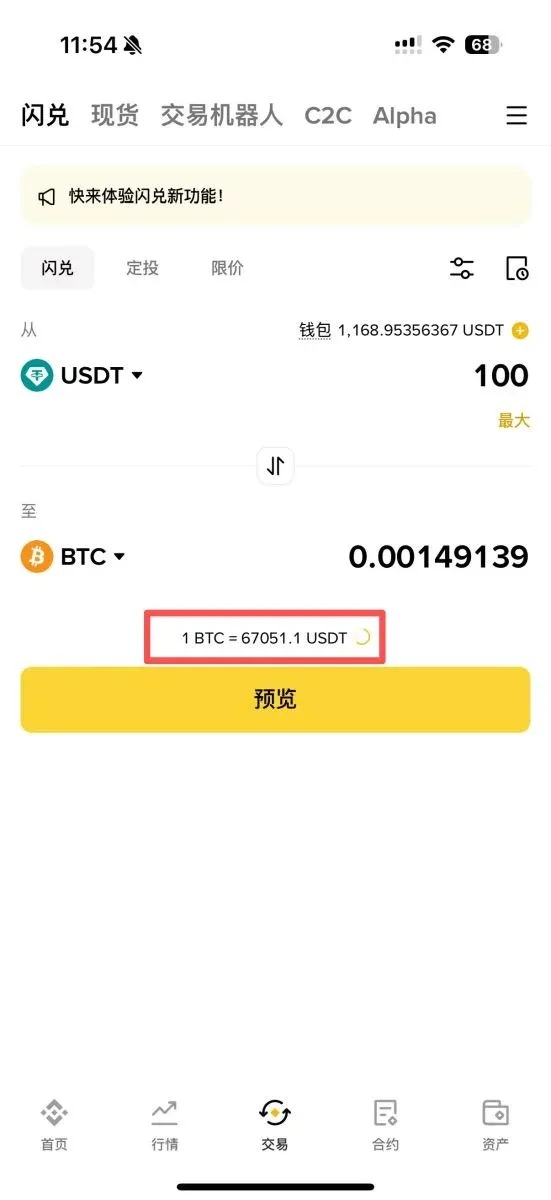
Thus, while there is no explicit additional fee, you should still monitor the actual conversion rate you receive. If you opt to buy on the spot market manually, the typical trading fee is ≈0.1 % (you can obtain a 20 % discount with the referral code provided on this site, and an extra 25 % discount if you also use BNB for fee payment).
---
*The above constitutes the full translation of “Is Dollar‑Cost Averaging (DCA) or regular fixed‑amount buying good for Bitcoin or cryptocurrencies? DCA tutorial and risk analysis.” For more DCA‑related resources, please follow Bitaigen’s other articles.*
Note: Cryptocurrency transactions may be subject to taxation in your jurisdiction. Consult a tax professional to understand how gains or losses could affect your tax obligations.
💡 Register on Binance with referral code B2345 for the maximum trading fee discount. See Binance complete guide.



